
#web3education
web3education
57,451 penayangan
853 Berdiskusi
Populer
Terbaru
·
--
Artikel
Jurnal web3 seorang ojol - Bagian 11: Bagaimana Basecamp Ojol Menjelaskan Royalti Domain Web3?Prolog: Kopi, Pangkalan (Basecamp), dan Waralaba Identitas
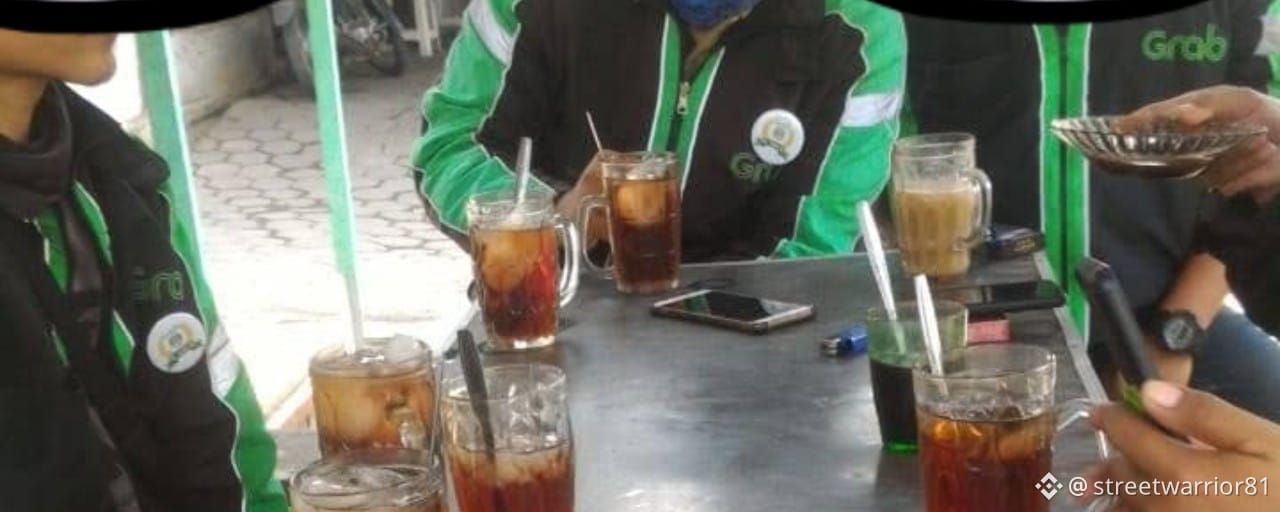
Setiap hari sebelum jam sibuk pagi dimulai di Kabupaten Kendal, saya dan para pengemudi lain berkumpul di tempat penampungan pinggir jalan biasa—yang biasanya kami sebut pangkalan (basecamp) dalam bahasa setempat (seperti yang bisa Anda lihat di foto pinggir jalan saya di bawah). Kami duduk di bangku kayu, minum kopi hitam murah, memeriksa layar ponsel, dan menunggu algoritma aplikasi menjatuhkan pesanan.
Di dunia fisik, sebuah Pangkalan (basecamp) adalah wilayah kita, identitas kita, dan titik awal kita · Tapi tahukah Anda bahwa di belantara digital Web3, Anda sebenarnya bisa membangun, memiliki, dan memonetisasi pangkalan virtual Anda sendiri?
Jurnal web3 seorang ojol - Bagian 11: Bagaimana Basecamp Ojol Menjelaskan Royalti Domain Web3?
Prolog: Kopi, Pangkalan (Basecamp), dan Waralaba Identitas
Setiap hari sebelum jam sibuk pagi dimulai di Kabupaten Kendal, saya dan para pengemudi lain berkumpul di tempat penampungan pinggir jalan biasa—yang biasanya kami sebut pangkalan (basecamp) dalam bahasa setempat (seperti yang bisa Anda lihat di foto pinggir jalan saya di bawah). Kami duduk di bangku kayu, minum kopi hitam murah, memeriksa layar ponsel, dan menunggu algoritma aplikasi menjatuhkan pesanan.
Di dunia fisik, sebuah Pangkalan (basecamp) adalah wilayah kita, identitas kita, dan titik awal kita · Tapi tahukah Anda bahwa di belantara digital Web3, Anda sebenarnya bisa membangun, memiliki, dan memonetisasi pangkalan virtual Anda sendiri?
Setiap hari sebelum jam sibuk pagi dimulai di Kabupaten Kendal, saya dan para pengemudi lain berkumpul di tempat penampungan pinggir jalan biasa—yang biasanya kami sebut pangkalan (basecamp) dalam bahasa setempat (seperti yang bisa Anda lihat di foto pinggir jalan saya di bawah). Kami duduk di bangku kayu, minum kopi hitam murah, memeriksa layar ponsel, dan menunggu algoritma aplikasi menjatuhkan pesanan.
Di dunia fisik, sebuah Pangkalan (basecamp) adalah wilayah kita, identitas kita, dan titik awal kita · Tapi tahukah Anda bahwa di belantara digital Web3, Anda sebenarnya bisa membangun, memiliki, dan memonetisasi pangkalan virtual Anda sendiri?
120

·
--
Mengapa Pendidikan di Web3 adalah Game-Changer Terunggul! 📚🚀
Menyimak diskusi panel Komunitas Binance TG hari ini, dan topiknya tidak bisa lebih penting: Mengapa belajar sebelum berinvestasi kini lebih penting dari sebelumnya?
Di pasar yang bergerak secepat kilat, mengejar hype tanpa fondasi yang kuat adalah risiko besar. Keberhasilan sejati di dunia Web3 bukan tentang mengejar candle hijau berikutnya; ini tentang memahami teknologinya dan mengelola risiko dengan benar.
Saran utama saya untuk siapa pun yang sedang membangun fondasinya:
1️⃣ Teknologi Mengungguli Harga: Fokus untuk mempelajari cara kerja blockchain dan jaringan terdesentralisasi, bukan hanya menonton chart harga 📊
2️⃣ Manfaatkan Sumber Daya Gratis: Platform seperti #BinanceAcademy menawarkan materi edukasi gratis yang luar biasa—pakai itu 💡🔥
3️⃣ Manajemen Risiko Utama: Hanya investasikan yang mampu Anda tanggung kerugiannya saat masih dalam fase belajar; bahkan para pro pun tetap mengikuti aturan itu ⚠️👀
Mari beralih dari sekadar trading menuju partisipasi aktif dan berpengetahuan dalam ekonomi digital global! 🌐✨
Apa satu nasihat terbaik yang pernah Anda terima dalam crypto? 🤔😁 Jangan balas dendam saat trading setelah mengalami kerugian—itu yang terbaik bagi saya 😁
#DYOR
#BinanceTGCommunity #TGTalks
#Web3Education @BinanceTG
Mengapa Pendidikan di Web3 adalah Game-Changer Terunggul! 📚🚀
Menyimak diskusi panel Komunitas Binance TG hari ini, dan topiknya tidak bisa lebih penting: Mengapa belajar sebelum berinvestasi kini lebih penting dari sebelumnya?
Di pasar yang bergerak secepat kilat, mengejar hype tanpa fondasi yang kuat adalah risiko besar. Keberhasilan sejati di dunia Web3 bukan tentang mengejar candle hijau berikutnya; ini tentang memahami teknologinya dan mengelola risiko dengan benar.
Saran utama saya untuk siapa pun yang sedang membangun fondasinya:
1️⃣ Teknologi Mengungguli Harga: Fokus untuk mempelajari cara kerja blockchain dan jaringan terdesentralisasi, bukan hanya menonton chart harga 📊
2️⃣ Manfaatkan Sumber Daya Gratis: Platform seperti #BinanceAcademy menawarkan materi edukasi gratis yang luar biasa—pakai itu 💡🔥
3️⃣ Manajemen Risiko Utama: Hanya investasikan yang mampu Anda tanggung kerugiannya saat masih dalam fase belajar; bahkan para pro pun tetap mengikuti aturan itu ⚠️👀
Mari beralih dari sekadar trading menuju partisipasi aktif dan berpengetahuan dalam ekonomi digital global! 🌐✨
Apa satu nasihat terbaik yang pernah Anda terima dalam crypto? 🤔😁 Jangan balas dendam saat trading setelah mengalami kerugian—itu yang terbaik bagi saya 😁
#DYOR
#BinanceTGCommunity #TGTalks
#Web3Education @Binance TG Community
Menyimak diskusi panel Komunitas Binance TG hari ini, dan topiknya tidak bisa lebih penting: Mengapa belajar sebelum berinvestasi kini lebih penting dari sebelumnya?
Di pasar yang bergerak secepat kilat, mengejar hype tanpa fondasi yang kuat adalah risiko besar. Keberhasilan sejati di dunia Web3 bukan tentang mengejar candle hijau berikutnya; ini tentang memahami teknologinya dan mengelola risiko dengan benar.
Saran utama saya untuk siapa pun yang sedang membangun fondasinya:
1️⃣ Teknologi Mengungguli Harga: Fokus untuk mempelajari cara kerja blockchain dan jaringan terdesentralisasi, bukan hanya menonton chart harga 📊
2️⃣ Manfaatkan Sumber Daya Gratis: Platform seperti #BinanceAcademy menawarkan materi edukasi gratis yang luar biasa—pakai itu 💡🔥
3️⃣ Manajemen Risiko Utama: Hanya investasikan yang mampu Anda tanggung kerugiannya saat masih dalam fase belajar; bahkan para pro pun tetap mengikuti aturan itu ⚠️👀
Mari beralih dari sekadar trading menuju partisipasi aktif dan berpengetahuan dalam ekonomi digital global! 🌐✨
Apa satu nasihat terbaik yang pernah Anda terima dalam crypto? 🤔😁 Jangan balas dendam saat trading setelah mengalami kerugian—itu yang terbaik bagi saya 😁
#DYOR
#BinanceTGCommunity #TGTalks
#Web3Education @Binance TG Community

280

·
--
Pengetahuan adalah salah satu bentuk modal yang paling kurang dihargai di Web3.
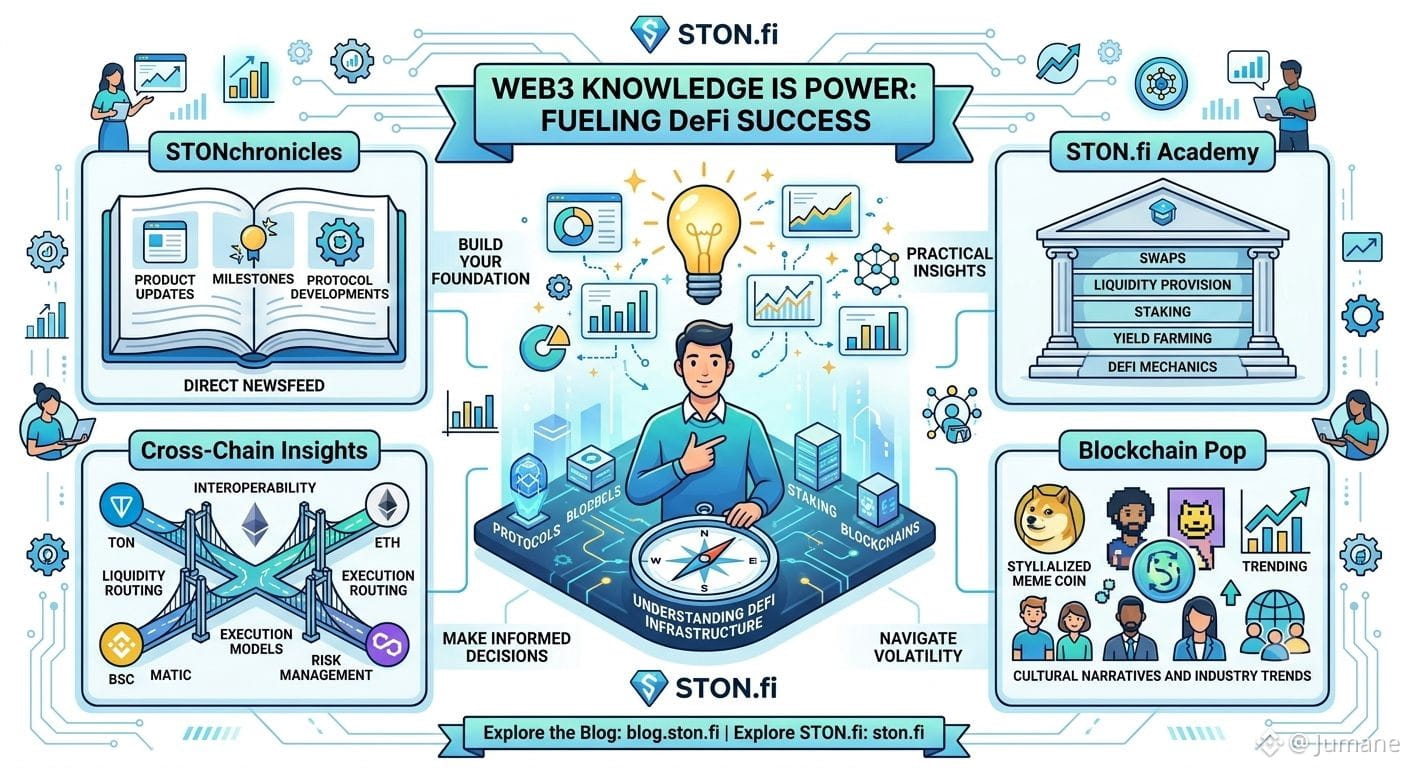
Saat keuangan terdesentralisasi terus berkembang, untuk menavigasi ekosistem diperlukan lebih dari sekadar akses ke protokol—dibutuhkan pemahaman yang kuat tentang infrastruktur, dinamika pasar, dan mekanisme yang menggerakkan keuangan on-chain.@ston_fi
Blog STON.fi berfungsi sebagai pusat edukasi yang dirancang untuk membantu pengguna membangun fondasi tersebut melalui wawasan praktis, penjelasan teknis, dan analisis ekosistem.
📖 Jelajahi Blog: blog.ston.fi
Konten utama meliputi:
🔹 STONchronicles — Pembaruan produk resmi, tonggak ekosistem, dan pengembangan protokol langsung dari tim STON.fi.
🔹 STON.fi Academy — Konten edukasi terstruktur yang membahas swap, penyediaan likuiditas, staking, yield farming, serta mekanisme dasar DeFi dalam format yang jelas dan mudah diakses.
🔹 Wawasan Lintas-Rantai — Pembahasan mendalam tentang interoperabilitas, routing likuiditas, model eksekusi, dan manajemen risiko di berbagai ekosistem blockchain.
🔹 Blockchain Pop — Perspektif mengenai evolusi budaya Web3, mengeksplorasi narasi dan tren yang membentuk industri aset digital yang lebih luas.
💡 Jelajahi STON.fi: ston.fi
Seiring infrastruktur blockchain menjadi semakin canggih, edukasi tetap menjadi pendorong adopsi yang kritis. Pengguna yang memahami desain protokol, dinamika likuiditas, dan arsitektur lintas-rantai akan lebih siap menghadapi volatilitas pasar dan membuat keputusan yang tepat.
Generasi berikutnya peserta Web3 tidak hanya akan menggunakan DeFi—mereka akan memahami cara kerjanya.
#Web3 #DeFi #STONfi #TON #BlockchainEducation #CrossChain #OnChainFinance #CryptoResearch #Blockchain #Web3Education
Pengetahuan adalah salah satu bentuk modal yang paling kurang dihargai di Web3.
Saat keuangan terdesentralisasi terus berkembang, untuk menavigasi ekosistem diperlukan lebih dari sekadar akses ke protokol—dibutuhkan pemahaman yang kuat tentang infrastruktur, dinamika pasar, dan mekanisme yang menggerakkan keuangan on-chain.@ston_fi
Blog STON.fi berfungsi sebagai pusat edukasi yang dirancang untuk membantu pengguna membangun fondasi tersebut melalui wawasan praktis, penjelasan teknis, dan analisis ekosistem.
📖 Jelajahi Blog: blog.ston.fi
Konten utama meliputi:
🔹 STONchronicles — Pembaruan produk resmi, tonggak ekosistem, dan pengembangan protokol langsung dari tim STON.fi.
🔹 STON.fi Academy — Konten edukasi terstruktur yang membahas swap, penyediaan likuiditas, staking, yield farming, serta mekanisme dasar DeFi dalam format yang jelas dan mudah diakses.
🔹 Wawasan Lintas-Rantai — Pembahasan mendalam tentang interoperabilitas, routing likuiditas, model eksekusi, dan manajemen risiko di berbagai ekosistem blockchain.
🔹 Blockchain Pop — Perspektif mengenai evolusi budaya Web3, mengeksplorasi narasi dan tren yang membentuk industri aset digital yang lebih luas.
💡 Jelajahi STON.fi: ston.fi
Seiring infrastruktur blockchain menjadi semakin canggih, edukasi tetap menjadi pendorong adopsi yang kritis. Pengguna yang memahami desain protokol, dinamika likuiditas, dan arsitektur lintas-rantai akan lebih siap menghadapi volatilitas pasar dan membuat keputusan yang tepat.
Generasi berikutnya peserta Web3 tidak hanya akan menggunakan DeFi—mereka akan memahami cara kerjanya.
#Web3 #DeFi #STONfi #TON #BlockchainEducation #CrossChain #OnChainFinance #CryptoResearch #Blockchain #Web3Education
Saat keuangan terdesentralisasi terus berkembang, untuk menavigasi ekosistem diperlukan lebih dari sekadar akses ke protokol—dibutuhkan pemahaman yang kuat tentang infrastruktur, dinamika pasar, dan mekanisme yang menggerakkan keuangan on-chain.@ston_fi
Blog STON.fi berfungsi sebagai pusat edukasi yang dirancang untuk membantu pengguna membangun fondasi tersebut melalui wawasan praktis, penjelasan teknis, dan analisis ekosistem.
📖 Jelajahi Blog: blog.ston.fi
Konten utama meliputi:
🔹 STONchronicles — Pembaruan produk resmi, tonggak ekosistem, dan pengembangan protokol langsung dari tim STON.fi.
🔹 STON.fi Academy — Konten edukasi terstruktur yang membahas swap, penyediaan likuiditas, staking, yield farming, serta mekanisme dasar DeFi dalam format yang jelas dan mudah diakses.
🔹 Wawasan Lintas-Rantai — Pembahasan mendalam tentang interoperabilitas, routing likuiditas, model eksekusi, dan manajemen risiko di berbagai ekosistem blockchain.
🔹 Blockchain Pop — Perspektif mengenai evolusi budaya Web3, mengeksplorasi narasi dan tren yang membentuk industri aset digital yang lebih luas.
💡 Jelajahi STON.fi: ston.fi
Seiring infrastruktur blockchain menjadi semakin canggih, edukasi tetap menjadi pendorong adopsi yang kritis. Pengguna yang memahami desain protokol, dinamika likuiditas, dan arsitektur lintas-rantai akan lebih siap menghadapi volatilitas pasar dan membuat keputusan yang tepat.
Generasi berikutnya peserta Web3 tidak hanya akan menggunakan DeFi—mereka akan memahami cara kerjanya.
#Web3 #DeFi #STONfi #TON #BlockchainEducation #CrossChain #OnChainFinance #CryptoResearch #Blockchain #Web3Education
1
85

·
--
#genius $GENIUS
🧠 Tokenisasi pengetahuan memasuki era baru dengan @GeniusOfficial
Di mana kebanyakan proyek hanya memberikan janji, Genius membangun jembatan nyata antara pendidikan terdesentralisasi dan penciptaan nilai. Dengan AI dan blockchain, Genius mendemokratisasi akses ke pengetahuan premium sambil secara aktif memberi imbalan kepada pelajar dan kontributor.
Ekosistem ini didasarkan pada token $GENIUS : staking, akses ke kursus eksklusif, tata kelola, dan imbalan untuk penciptaan konten edukatif. Tidak seperti "learn-to-earn" yang hanya sementara, Genius fokus pada kualitas dan keberlanjutan pengetahuan.
Tim saat ini sedang mengembangkan modul verifikasi keterampilan melalui NFT, yang memungkinkan setiap pengguna untuk memvalidasi pembelajaran mereka di blockchain. Ini adalah kemajuan besar untuk employability Web3.
Jangan remehkan potensi proyek ini. Pendidikan adalah bahan bakar sejati untuk adopsi massal. Dan Genius sedang membangun relnya.
🔐 Staker, belajar, berkontribusi, tumbuh – semua menjadi lebih cerdas dengan $GENIUS
#genius #Web3Education
#genius $GENIUS
🧠 Tokenisasi pengetahuan memasuki era baru dengan @GeniusOfficial
Di mana kebanyakan proyek hanya memberikan janji, Genius membangun jembatan nyata antara pendidikan terdesentralisasi dan penciptaan nilai. Dengan AI dan blockchain, Genius mendemokratisasi akses ke pengetahuan premium sambil secara aktif memberi imbalan kepada pelajar dan kontributor.
Ekosistem ini didasarkan pada token $GENIUS : staking, akses ke kursus eksklusif, tata kelola, dan imbalan untuk penciptaan konten edukatif. Tidak seperti "learn-to-earn" yang hanya sementara, Genius fokus pada kualitas dan keberlanjutan pengetahuan.
Tim saat ini sedang mengembangkan modul verifikasi keterampilan melalui NFT, yang memungkinkan setiap pengguna untuk memvalidasi pembelajaran mereka di blockchain. Ini adalah kemajuan besar untuk employability Web3.
Jangan remehkan potensi proyek ini. Pendidikan adalah bahan bakar sejati untuk adopsi massal. Dan Genius sedang membangun relnya.
🔐 Staker, belajar, berkontribusi, tumbuh – semua menjadi lebih cerdas dengan $GENIUS
#genius #Web3Education
🧠 Tokenisasi pengetahuan memasuki era baru dengan @GeniusOfficial
Di mana kebanyakan proyek hanya memberikan janji, Genius membangun jembatan nyata antara pendidikan terdesentralisasi dan penciptaan nilai. Dengan AI dan blockchain, Genius mendemokratisasi akses ke pengetahuan premium sambil secara aktif memberi imbalan kepada pelajar dan kontributor.
Ekosistem ini didasarkan pada token $GENIUS : staking, akses ke kursus eksklusif, tata kelola, dan imbalan untuk penciptaan konten edukatif. Tidak seperti "learn-to-earn" yang hanya sementara, Genius fokus pada kualitas dan keberlanjutan pengetahuan.
Tim saat ini sedang mengembangkan modul verifikasi keterampilan melalui NFT, yang memungkinkan setiap pengguna untuk memvalidasi pembelajaran mereka di blockchain. Ini adalah kemajuan besar untuk employability Web3.
Jangan remehkan potensi proyek ini. Pendidikan adalah bahan bakar sejati untuk adopsi massal. Dan Genius sedang membangun relnya.
🔐 Staker, belajar, berkontribusi, tumbuh – semua menjadi lebih cerdas dengan $GENIUS
#genius #Web3Education
1
181

·
--
Opn (EDU) – Masa Depan Pendidikan Web3?
Open Campus (EDU) membuat gebrakan dengan menjembatani kesenjangan antara pendidikan tradisional dan ekosistem Web3. Inilah alasannya sampai menarik perhatian semua orang:
✅ Memberdayakan para pendidik untuk memonetisasi konten mereka melalui Web3.
✅ Platform pendidikan yang benar-benar terdesentralisasi.
✅ Potensi besar karena EdTech dan Blockchain terus bertemu.
Bagaimana menurutmu posisi pasar saat ini untuk $EDU? Apakah kamu melihatnya sebagai langkah jangka panjang? Ayo diskusikan di komentar!
#BinanceSquare #EDU #Web3Education #CryptoAnalysis" $EDU
Opn (EDU) – Masa Depan Pendidikan Web3?
Open Campus (EDU) membuat gebrakan dengan menjembatani kesenjangan antara pendidikan tradisional dan ekosistem Web3. Inilah alasannya sampai menarik perhatian semua orang:
✅ Memberdayakan para pendidik untuk memonetisasi konten mereka melalui Web3.
✅ Platform pendidikan yang benar-benar terdesentralisasi.
✅ Potensi besar karena EdTech dan Blockchain terus bertemu.
Bagaimana menurutmu posisi pasar saat ini untuk $EDU ? Apakah kamu melihatnya sebagai langkah jangka panjang? Ayo diskusikan di komentar!
#BinanceSquare #EDU #Web3Education #CryptoAnalysis" $EDU
Open Campus (EDU) membuat gebrakan dengan menjembatani kesenjangan antara pendidikan tradisional dan ekosistem Web3. Inilah alasannya sampai menarik perhatian semua orang:
✅ Memberdayakan para pendidik untuk memonetisasi konten mereka melalui Web3.
✅ Platform pendidikan yang benar-benar terdesentralisasi.
✅ Potensi besar karena EdTech dan Blockchain terus bertemu.
Bagaimana menurutmu posisi pasar saat ini untuk $EDU ? Apakah kamu melihatnya sebagai langkah jangka panjang? Ayo diskusikan di komentar!
#BinanceSquare #EDU #Web3Education #CryptoAnalysis" $EDU
196

·
--
Artikel
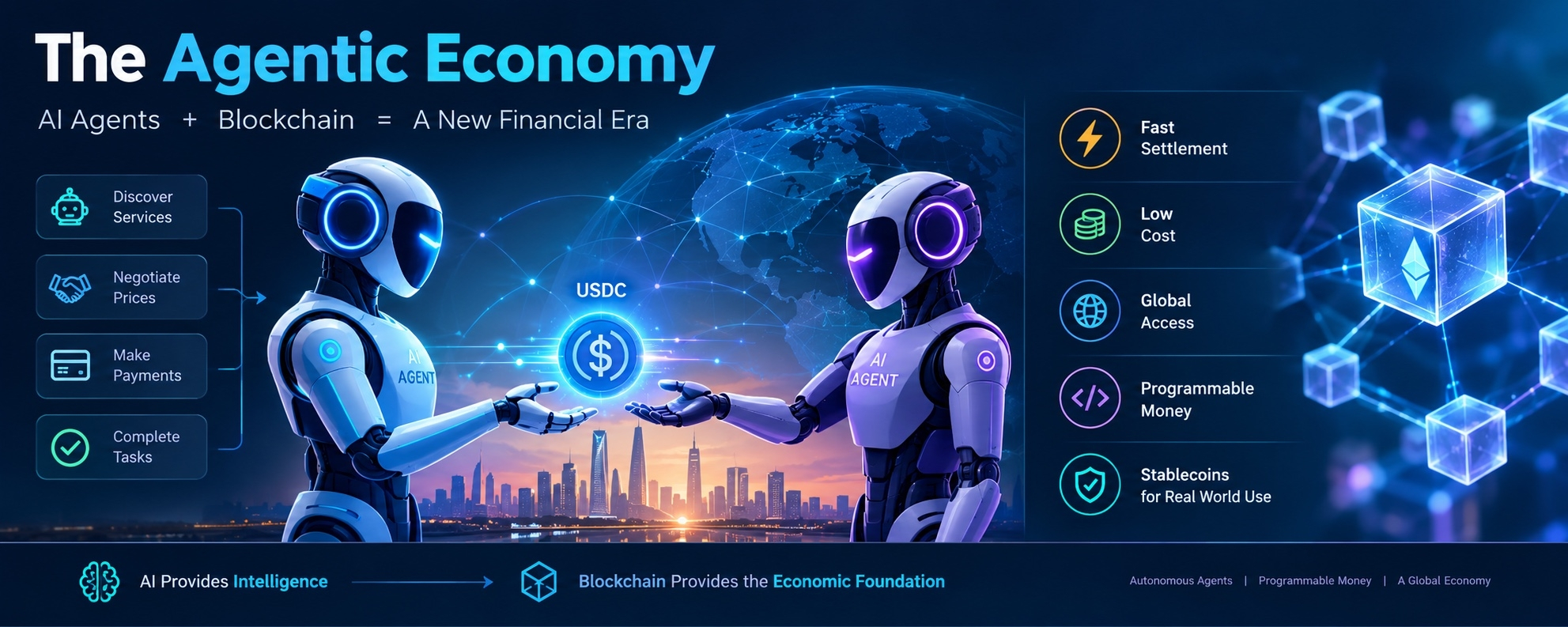
Ekonomi Agentik: Mengapa Kripto Mungkin Menjadi Saluran Pembayaran Default untuk Kecerdasan BuatanKecerdasan buatan berkembang dengan cepat dari alat yang menyediakan informasi menjadi sistem yang mampu mengambil tindakan.
Sementara itu, teknologi blockchain berkembang dari spekulasi menjadi infrastruktur keuangan yang dapat diprogram, mampu mendukung bentuk-bentuk aktivitas ekonomi yang sama sekali baru.
Kombinasi dari kedua teknologi ini menciptakan sesuatu yang belum pernah ada sebelumnya: sebuah sistem ekonomi yang tersusun dari agen-agen AI otonom, di mana agen-agen AI dapat bernegosiasi, melakukan perdagangan, dan menyelesaikan nilai tanpa campur tangan manusia.
Ekonomi Agentik: Mengapa Kripto Mungkin Menjadi Saluran Pembayaran Default untuk Kecerdasan Buatan
Kecerdasan buatan berkembang dengan cepat dari alat yang menyediakan informasi menjadi sistem yang mampu mengambil tindakan.
Sementara itu, teknologi blockchain berkembang dari spekulasi menjadi infrastruktur keuangan yang dapat diprogram, mampu mendukung bentuk-bentuk aktivitas ekonomi yang sama sekali baru.
Kombinasi dari kedua teknologi ini menciptakan sesuatu yang belum pernah ada sebelumnya: sebuah sistem ekonomi yang tersusun dari agen-agen AI otonom, di mana agen-agen AI dapat bernegosiasi, melakukan perdagangan, dan menyelesaikan nilai tanpa campur tangan manusia.
Sementara itu, teknologi blockchain berkembang dari spekulasi menjadi infrastruktur keuangan yang dapat diprogram, mampu mendukung bentuk-bentuk aktivitas ekonomi yang sama sekali baru.
Kombinasi dari kedua teknologi ini menciptakan sesuatu yang belum pernah ada sebelumnya: sebuah sistem ekonomi yang tersusun dari agen-agen AI otonom, di mana agen-agen AI dapat bernegosiasi, melakukan perdagangan, dan menyelesaikan nilai tanpa campur tangan manusia.
72

·
--
🪂 Beberapa Orang Mendapatkan Lebih Banyak Dari Airdrop Daripada Trading
Ketika kebanyakan orang mendengar tentang keuntungan crypto, mereka berpikir tentang membeli di harga rendah dan menjual di harga tinggi.
Namun, beberapa imbalan terbesar dalam crypto datang dari sesuatu yang sama sekali berbeda:
Airdrop.$BTC
Airdrop adalah ketika proyek blockchain memberikan imbalan kepada pengguna awal dengan token gratis untuk berpartisipasi dalam ekosistemnya.
Selama bertahun-tahun, beberapa proyek besar telah mendistribusikan token senilai ratusan — dan kadang-kadang ribuan — dolar kepada pengguna yang memenuhi syarat.
Mengapa proyek melakukan ini?
✅ Menghadiahkan pendukung awal
✅ Membangun komunitas mereka
✅ Mendorong adopsi ekosistem
✅ Meningkatkan aktivitas jaringan
Namun, penting untuk dipahami bahwa tidak setiap proyek akan meluncurkan token yang bernilai, dan tidak ada jaminan imbalan.
Peserta yang paling pintar fokus pada belajar, menjelajahi ekosistem baru, dan menggunakan produk yang mereka anggap menarik.
Dalam crypto, terkadang menjadi yang pertama bisa sama berharganya dengan menjadi yang benar.$BNB
💬 Pertanyaan:
Apakah Anda pernah menerima airdrop crypto?
🔹 Ya, beberapa kali
🔹 Hanya sekali
🔹 Belum pernah
Beritahu kami di bawah! 👇
#Airdrop #Crypto #Bitcoin #Blockchain #Web3 #BinanceSquare #DeFi #Investing #CryptoCommunity #Web3Education
🪂 Beberapa Orang Mendapatkan Lebih Banyak Dari Airdrop Daripada Trading
Ketika kebanyakan orang mendengar tentang keuntungan crypto, mereka berpikir tentang membeli di harga rendah dan menjual di harga tinggi.
Namun, beberapa imbalan terbesar dalam crypto datang dari sesuatu yang sama sekali berbeda:
Airdrop.$BTC
Airdrop adalah ketika proyek blockchain memberikan imbalan kepada pengguna awal dengan token gratis untuk berpartisipasi dalam ekosistemnya.
Selama bertahun-tahun, beberapa proyek besar telah mendistribusikan token senilai ratusan — dan kadang-kadang ribuan — dolar kepada pengguna yang memenuhi syarat.
Mengapa proyek melakukan ini?
✅ Menghadiahkan pendukung awal
✅ Membangun komunitas mereka
✅ Mendorong adopsi ekosistem
✅ Meningkatkan aktivitas jaringan
Namun, penting untuk dipahami bahwa tidak setiap proyek akan meluncurkan token yang bernilai, dan tidak ada jaminan imbalan.
Peserta yang paling pintar fokus pada belajar, menjelajahi ekosistem baru, dan menggunakan produk yang mereka anggap menarik.
Dalam crypto, terkadang menjadi yang pertama bisa sama berharganya dengan menjadi yang benar.$BNB
💬 Pertanyaan:
Apakah Anda pernah menerima airdrop crypto?
🔹 Ya, beberapa kali
🔹 Hanya sekali
🔹 Belum pernah
Beritahu kami di bawah! 👇
#Airdrop #Crypto #Bitcoin #Blockchain #Web3 #BinanceSquare #DeFi #Investing #CryptoCommunity #Web3Education
Ketika kebanyakan orang mendengar tentang keuntungan crypto, mereka berpikir tentang membeli di harga rendah dan menjual di harga tinggi.
Namun, beberapa imbalan terbesar dalam crypto datang dari sesuatu yang sama sekali berbeda:
Airdrop.$BTC
Airdrop adalah ketika proyek blockchain memberikan imbalan kepada pengguna awal dengan token gratis untuk berpartisipasi dalam ekosistemnya.
Selama bertahun-tahun, beberapa proyek besar telah mendistribusikan token senilai ratusan — dan kadang-kadang ribuan — dolar kepada pengguna yang memenuhi syarat.
Mengapa proyek melakukan ini?
✅ Menghadiahkan pendukung awal
✅ Membangun komunitas mereka
✅ Mendorong adopsi ekosistem
✅ Meningkatkan aktivitas jaringan
Namun, penting untuk dipahami bahwa tidak setiap proyek akan meluncurkan token yang bernilai, dan tidak ada jaminan imbalan.
Peserta yang paling pintar fokus pada belajar, menjelajahi ekosistem baru, dan menggunakan produk yang mereka anggap menarik.
Dalam crypto, terkadang menjadi yang pertama bisa sama berharganya dengan menjadi yang benar.$BNB
💬 Pertanyaan:
Apakah Anda pernah menerima airdrop crypto?
🔹 Ya, beberapa kali
🔹 Hanya sekali
🔹 Belum pernah
Beritahu kami di bawah! 👇
#Airdrop #Crypto #Bitcoin #Blockchain #Web3 #BinanceSquare #DeFi #Investing #CryptoCommunity #Web3Education

69
Cara Cepat Mengenali Email Palsu: Siapkan Kode Anti-Phishing Anda 🔒
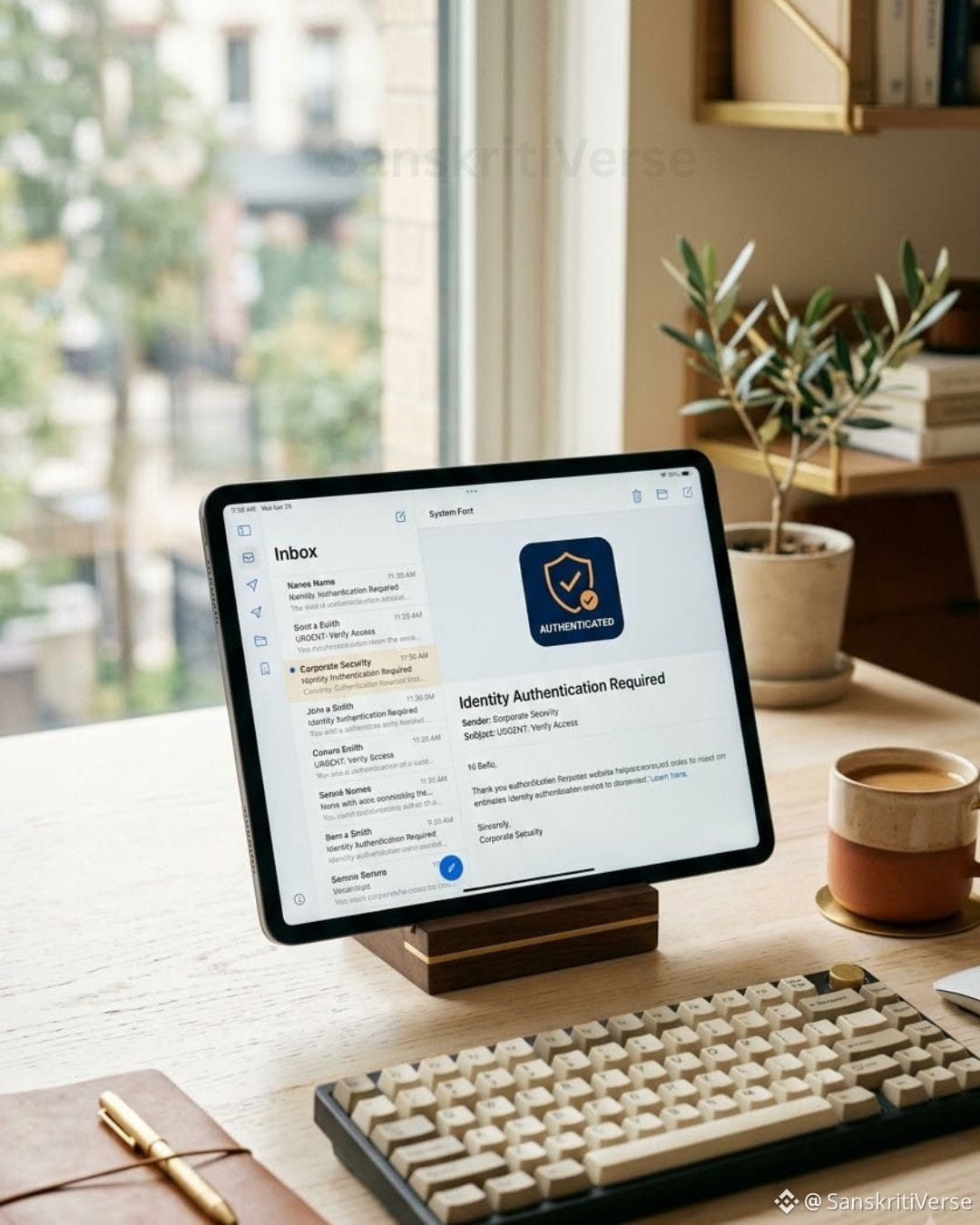
Serangan phishing sering menyalin logo dan tata letak resmi untuk menipu pengguna agar mengklik tautan berbahaya. Meskipun pelaku jahat dapat dengan mudah meniru desain email, mereka tidak dapat mengakses pengaturan keamanan akun pribadi Anda.
Kode Anti-Phishing adalah frasa unik yang Anda tentukan sendiri dan dikonfigurasi di pengaturan keamanan Anda. Setelah diaktifkan, Binance akan otomatis menyematkan kode ini di bagian atas setiap email notifikasi resmi yang dikirimkan kepada Anda. Jika sebuah email yang mengaku resmi tidak menyertakan kode Anda, maka itu palsu.
3 Langkah untuk Mengamankan Akun Anda:
1. Buat Kode Anda: Buka Akun > Keamanan > Kode Anti-Phishing > Pilih Buat Kode (minimal 8 karakter).
2. Verifikasi Email Masuk: Selalu pastikan kode pribadi Anda ada sebelum mengklik tombol atau tautan apa pun.
3. Cocokkan Tautan: Gunakan alat Verifikasi Binance resmi untuk memverifikasi tautan, nama domain, atau akun dukungan yang belum dikenal.
Tetap proaktif terhadap keamanan akun Anda. Siapkan kode verifikasi Anda hari ini.
#CryptoSecurity #BinanceSquare #Web3Education
Cara Cepat Mengenali Email Palsu: Siapkan Kode Anti-Phishing Anda 🔒
Serangan phishing sering menyalin logo dan tata letak resmi untuk menipu pengguna agar mengklik tautan berbahaya. Meskipun pelaku jahat dapat dengan mudah meniru desain email, mereka tidak dapat mengakses pengaturan keamanan akun pribadi Anda.
Kode Anti-Phishing adalah frasa unik yang Anda tentukan sendiri dan dikonfigurasi di pengaturan keamanan Anda. Setelah diaktifkan, Binance akan otomatis menyematkan kode ini di bagian atas setiap email notifikasi resmi yang dikirimkan kepada Anda. Jika sebuah email yang mengaku resmi tidak menyertakan kode Anda, maka itu palsu.
3 Langkah untuk Mengamankan Akun Anda:
1. Buat Kode Anda: Buka Akun > Keamanan > Kode Anti-Phishing > Pilih Buat Kode (minimal 8 karakter).
2. Verifikasi Email Masuk: Selalu pastikan kode pribadi Anda ada sebelum mengklik tombol atau tautan apa pun.
3. Cocokkan Tautan: Gunakan alat Verifikasi Binance resmi untuk memverifikasi tautan, nama domain, atau akun dukungan yang belum dikenal.
Tetap proaktif terhadap keamanan akun Anda. Siapkan kode verifikasi Anda hari ini.
#CryptoSecurity #BinanceSquare #Web3Education
Serangan phishing sering menyalin logo dan tata letak resmi untuk menipu pengguna agar mengklik tautan berbahaya. Meskipun pelaku jahat dapat dengan mudah meniru desain email, mereka tidak dapat mengakses pengaturan keamanan akun pribadi Anda.
Kode Anti-Phishing adalah frasa unik yang Anda tentukan sendiri dan dikonfigurasi di pengaturan keamanan Anda. Setelah diaktifkan, Binance akan otomatis menyematkan kode ini di bagian atas setiap email notifikasi resmi yang dikirimkan kepada Anda. Jika sebuah email yang mengaku resmi tidak menyertakan kode Anda, maka itu palsu.
3 Langkah untuk Mengamankan Akun Anda:
1. Buat Kode Anda: Buka Akun > Keamanan > Kode Anti-Phishing > Pilih Buat Kode (minimal 8 karakter).
2. Verifikasi Email Masuk: Selalu pastikan kode pribadi Anda ada sebelum mengklik tombol atau tautan apa pun.
3. Cocokkan Tautan: Gunakan alat Verifikasi Binance resmi untuk memverifikasi tautan, nama domain, atau akun dukungan yang belum dikenal.
Tetap proaktif terhadap keamanan akun Anda. Siapkan kode verifikasi Anda hari ini.
#CryptoSecurity #BinanceSquare #Web3Education
65

·
--

Artikel
Tutorial (TUT) di $0,044: Kenaikan 15% – Apakah Ini Awal Baru?Angkanya Tepat Sekarang:
Harga: $0,044
Perubahan 24 jam: +15,3%
ATH: $0,242
Tertinggi 24 jam: $0,0596
Terendah 24 jam: $0,0347
Kapitalisasi Pasar: $36,6Juta
Volume 24 jam: $208,7Juta
Pasokan Beredar: 832,2M (83,22% dari maksimum)
Rasio Pembeli/Penjual: 55,1% Pembeli / 44,9% Penjual
Apa Itu Tutorial?
Tutorial adalah sebuah proyek yang, seperti banyak token baru lainnya, masih menentukan tempatnya di ekosistem kripto. Ini termasuk bagian dari kategori platform yang terus berkembang, berfokus pada edukasi Web3 dan proses onboarding.
Idenya sederhana: buat kripto lebih mudah dipahami.
Seiring industri berkembang, kebutuhan akan pendidikan berkualitas meningkat. Tutorial bertujuan untuk menjembatani kesenjangan antara teknologi blockchain yang kompleks dan pengguna sehari-hari.
Tutorial (TUT) di $0,044: Kenaikan 15% – Apakah Ini Awal Baru?
Angkanya Tepat Sekarang:
Harga: $0,044
Perubahan 24 jam: +15,3%
ATH: $0,242
Tertinggi 24 jam: $0,0596
Terendah 24 jam: $0,0347
Kapitalisasi Pasar: $36,6Juta
Volume 24 jam: $208,7Juta
Pasokan Beredar: 832,2M (83,22% dari maksimum)
Rasio Pembeli/Penjual: 55,1% Pembeli / 44,9% Penjual
Apa Itu Tutorial?
Tutorial adalah sebuah proyek yang, seperti banyak token baru lainnya, masih menentukan tempatnya di ekosistem kripto. Ini termasuk bagian dari kategori platform yang terus berkembang, berfokus pada edukasi Web3 dan proses onboarding.
Idenya sederhana: buat kripto lebih mudah dipahami.
Seiring industri berkembang, kebutuhan akan pendidikan berkualitas meningkat. Tutorial bertujuan untuk menjembatani kesenjangan antara teknologi blockchain yang kompleks dan pengguna sehari-hari.
Harga: $0,044
Perubahan 24 jam: +15,3%
ATH: $0,242
Tertinggi 24 jam: $0,0596
Terendah 24 jam: $0,0347
Kapitalisasi Pasar: $36,6Juta
Volume 24 jam: $208,7Juta
Pasokan Beredar: 832,2M (83,22% dari maksimum)
Rasio Pembeli/Penjual: 55,1% Pembeli / 44,9% Penjual
Apa Itu Tutorial?
Tutorial adalah sebuah proyek yang, seperti banyak token baru lainnya, masih menentukan tempatnya di ekosistem kripto. Ini termasuk bagian dari kategori platform yang terus berkembang, berfokus pada edukasi Web3 dan proses onboarding.
Idenya sederhana: buat kripto lebih mudah dipahami.
Seiring industri berkembang, kebutuhan akan pendidikan berkualitas meningkat. Tutorial bertujuan untuk menjembatani kesenjangan antara teknologi blockchain yang kompleks dan pengguna sehari-hari.
80

·
--
Bullish
🎓 EDU/USDT: Mendekati Level Support Utama untuk Potensi Double-Bottom
EDU diperdagangkan pada $0.04609, mengalami pullback ringan sebesar -3.44% dalam 6 jam terakhir. Sebagai pemain utama di sektor pendidikan terdesentralisasi, EDU sering berperilaku sebagai altcoin likuiditas rendah yang mengalami pergeseran momentum mendadak berdasarkan pengumuman ekosistem dan peluncuran platform pendidikan.
Secara teknis, EDU terjebak dalam tren penurunan yang lambat di timeframe lebih rendah, tetapi cepat mendekati level support historis yang signifikan di $0.04200. RSI 4-jam berada di 38, melayang dekat ambang oversold. MACD menunjukkan crossover bearish yang kehilangan intensitas penurunannya, mengindikasikan fase kelelahan penjual yang potensial. Volume perdagangan telah turun secara signifikan selama koreksi minor ini, yang merupakan indikator klasik bahwa penjual kehabisan tenaga dan bahwa pergerakan menurun ini kurang didukung oleh institusi. Pembeli agresif akan mencari tanda-tanda struktur double-bottom untuk terbentuk di sekitar zona $0.04300 sebelum menginvestasikan modal besar.
Pertahanan yang sukses dari level ini dapat memicu rally pemulihan eksplosif kembali ke kisaran distribusi lokal.
$EDU
{future}(EDUUSDT)
📊 SINYAL PERDAGANGAN TEPAT
Arah: LONG (Pengaturan Bounce Support)
Zona Masuk: $0.04350 – $0.04610
Target Ambil Untung:
TP1: $0.05200 (Resistensi EMA segera)
TP2: $0.05800 (Titik breakdown sebelumnya)
TP3: $0.06500 (Likuiditas kisaran tinggi)
Stop Loss: $0.04100 (Di bawah support historis kunci)
Leverage: 2x – 3x (Isolasi)
#OpenCampus #EDU #educational_post Tech #Web3Education #BinanceSquare
🎓 EDU/USDT: Mendekati Level Support Utama untuk Potensi Double-Bottom
EDU diperdagangkan pada $0.04609, mengalami pullback ringan sebesar -3.44% dalam 6 jam terakhir. Sebagai pemain utama di sektor pendidikan terdesentralisasi, EDU sering berperilaku sebagai altcoin likuiditas rendah yang mengalami pergeseran momentum mendadak berdasarkan pengumuman ekosistem dan peluncuran platform pendidikan.
Secara teknis, EDU terjebak dalam tren penurunan yang lambat di timeframe lebih rendah, tetapi cepat mendekati level support historis yang signifikan di $0.04200. RSI 4-jam berada di 38, melayang dekat ambang oversold. MACD menunjukkan crossover bearish yang kehilangan intensitas penurunannya, mengindikasikan fase kelelahan penjual yang potensial. Volume perdagangan telah turun secara signifikan selama koreksi minor ini, yang merupakan indikator klasik bahwa penjual kehabisan tenaga dan bahwa pergerakan menurun ini kurang didukung oleh institusi. Pembeli agresif akan mencari tanda-tanda struktur double-bottom untuk terbentuk di sekitar zona $0.04300 sebelum menginvestasikan modal besar.
Pertahanan yang sukses dari level ini dapat memicu rally pemulihan eksplosif kembali ke kisaran distribusi lokal.
$EDU
📊 SINYAL PERDAGANGAN TEPAT
Arah: LONG (Pengaturan Bounce Support)
Zona Masuk: $0.04350 – $0.04610
Target Ambil Untung:
TP1: $0.05200 (Resistensi EMA segera)
TP2: $0.05800 (Titik breakdown sebelumnya)
TP3: $0.06500 (Likuiditas kisaran tinggi)
Stop Loss: $0.04100 (Di bawah support historis kunci)
Leverage: 2x – 3x (Isolasi)
#OpenCampus #EDU #educational_post Tech #Web3Education #BinanceSquare
EDU diperdagangkan pada $0.04609, mengalami pullback ringan sebesar -3.44% dalam 6 jam terakhir. Sebagai pemain utama di sektor pendidikan terdesentralisasi, EDU sering berperilaku sebagai altcoin likuiditas rendah yang mengalami pergeseran momentum mendadak berdasarkan pengumuman ekosistem dan peluncuran platform pendidikan.
Secara teknis, EDU terjebak dalam tren penurunan yang lambat di timeframe lebih rendah, tetapi cepat mendekati level support historis yang signifikan di $0.04200. RSI 4-jam berada di 38, melayang dekat ambang oversold. MACD menunjukkan crossover bearish yang kehilangan intensitas penurunannya, mengindikasikan fase kelelahan penjual yang potensial. Volume perdagangan telah turun secara signifikan selama koreksi minor ini, yang merupakan indikator klasik bahwa penjual kehabisan tenaga dan bahwa pergerakan menurun ini kurang didukung oleh institusi. Pembeli agresif akan mencari tanda-tanda struktur double-bottom untuk terbentuk di sekitar zona $0.04300 sebelum menginvestasikan modal besar.
Pertahanan yang sukses dari level ini dapat memicu rally pemulihan eksplosif kembali ke kisaran distribusi lokal.
$EDU
📊 SINYAL PERDAGANGAN TEPAT
Arah: LONG (Pengaturan Bounce Support)
Zona Masuk: $0.04350 – $0.04610
Target Ambil Untung:
TP1: $0.05200 (Resistensi EMA segera)
TP2: $0.05800 (Titik breakdown sebelumnya)
TP3: $0.06500 (Likuiditas kisaran tinggi)
Stop Loss: $0.04100 (Di bawah support historis kunci)
Leverage: 2x – 3x (Isolasi)
#OpenCampus #EDU #educational_post Tech #Web3Education #BinanceSquare
2
245

·
--
EDU (Kampus Terbuka)
$EDU Rockets Lebih Tinggi: Masa Depan Pendidikan Terdesentralisasi!
Kampus Terbuka ($EDU) menunjukkan momentum yang kuat, didorong oleh perhatian modal yang meningkat terhadap protokol pendidikan Web3. Sebagai protokol yang dipimpin oleh komunitas, tujuannya untuk mendesentralisasi pendidikan dan memberikan imbalan kepada pencipta semakin mendapatkan perhatian di kalangan investor jangka panjang. Aksi harga terbaru menunjukkan kemungkinan terjadinya breakout dari fase konsolidasi yang panjang, didorong oleh aliran masuk yang marginal dan rally yang lebih luas di pasar altcoin. Dengan posisinya yang unik di sektor kripto "EdTech", EDU menawarkan kesempatan langka bagi trader yang mencari proyek dengan dampak sosial dunia nyata. Perhatikan volume dengan seksama—ini bisa jadi baru permulaan!
Pertanyaan: Apakah protokol pendidikan Web3 seperti $EDU akan menggantikan model pembelajaran tradisional?❓❓❓❓❓❓
👉👉👉Perdagangan Hare👇👇👇
#OpenCampus #Web3Education #AltcoinSeason #TradingSignals💹💬
{spot}(EDUUSDT)
EDU (Kampus Terbuka)
$EDU Rockets Lebih Tinggi: Masa Depan Pendidikan Terdesentralisasi!
Kampus Terbuka ($EDU ) menunjukkan momentum yang kuat, didorong oleh perhatian modal yang meningkat terhadap protokol pendidikan Web3. Sebagai protokol yang dipimpin oleh komunitas, tujuannya untuk mendesentralisasi pendidikan dan memberikan imbalan kepada pencipta semakin mendapatkan perhatian di kalangan investor jangka panjang. Aksi harga terbaru menunjukkan kemungkinan terjadinya breakout dari fase konsolidasi yang panjang, didorong oleh aliran masuk yang marginal dan rally yang lebih luas di pasar altcoin. Dengan posisinya yang unik di sektor kripto "EdTech", EDU menawarkan kesempatan langka bagi trader yang mencari proyek dengan dampak sosial dunia nyata. Perhatikan volume dengan seksama—ini bisa jadi baru permulaan!
Pertanyaan: Apakah protokol pendidikan Web3 seperti $EDU akan menggantikan model pembelajaran tradisional?❓❓❓❓❓❓
👉👉👉Perdagangan Hare👇👇👇
#OpenCampus #Web3Education #AltcoinSeason #TradingSignals💹💬
$EDU Rockets Lebih Tinggi: Masa Depan Pendidikan Terdesentralisasi!
Kampus Terbuka ($EDU ) menunjukkan momentum yang kuat, didorong oleh perhatian modal yang meningkat terhadap protokol pendidikan Web3. Sebagai protokol yang dipimpin oleh komunitas, tujuannya untuk mendesentralisasi pendidikan dan memberikan imbalan kepada pencipta semakin mendapatkan perhatian di kalangan investor jangka panjang. Aksi harga terbaru menunjukkan kemungkinan terjadinya breakout dari fase konsolidasi yang panjang, didorong oleh aliran masuk yang marginal dan rally yang lebih luas di pasar altcoin. Dengan posisinya yang unik di sektor kripto "EdTech", EDU menawarkan kesempatan langka bagi trader yang mencari proyek dengan dampak sosial dunia nyata. Perhatikan volume dengan seksama—ini bisa jadi baru permulaan!
Pertanyaan: Apakah protokol pendidikan Web3 seperti $EDU akan menggantikan model pembelajaran tradisional?❓❓❓❓❓❓
👉👉👉Perdagangan Hare👇👇👇
#OpenCampus #Web3Education #AltcoinSeason #TradingSignals💹💬

159

·
--
$EDU : Lompatan Edukasi Web3**
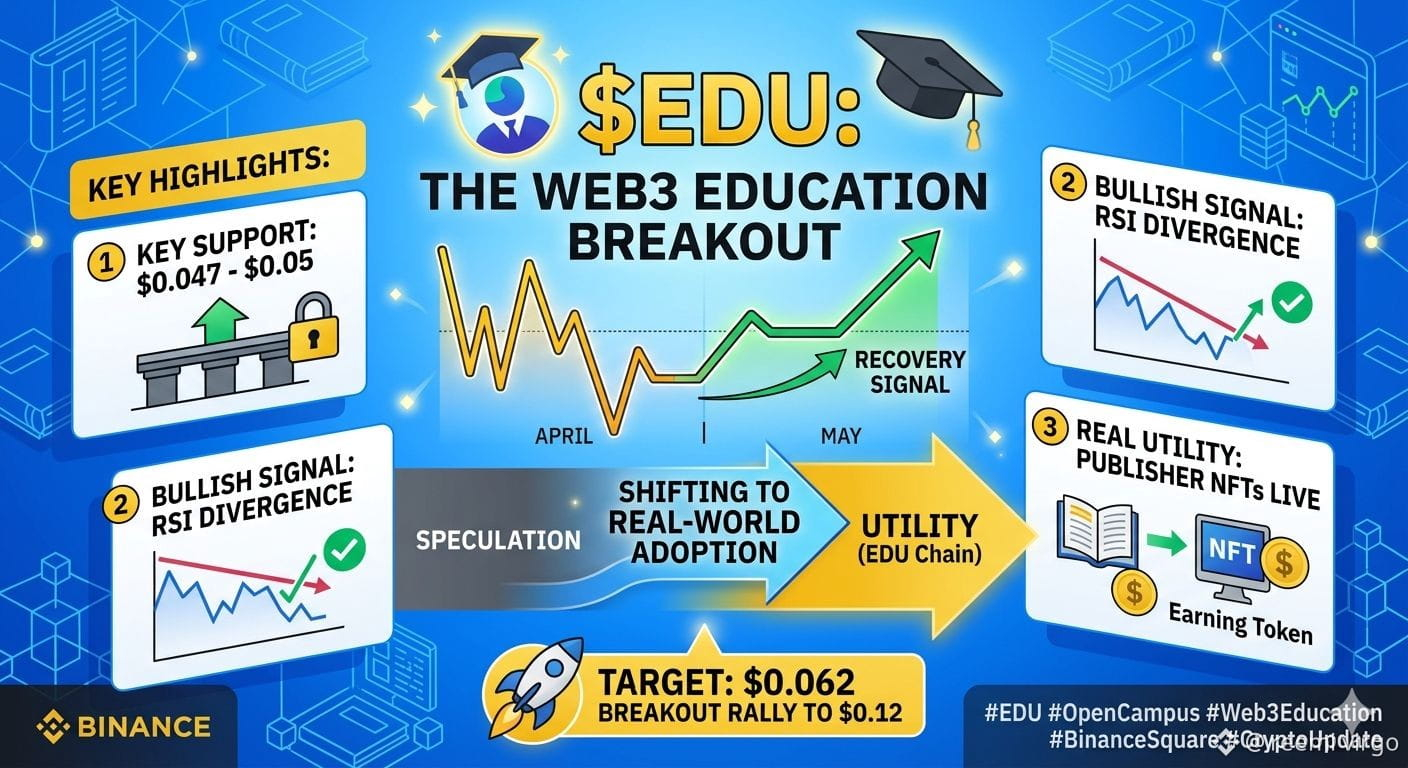
Pada **Mei 2026**, **Open Campus ($EDU)** menunjukkan tanda-tanda pemulihan yang kuat. Setelah April yang volatil, token ini mulai stabil dan menarik "uang pintar" yang tertarik pada masa depan pendidikan terdesentralisasi.
### **Sorotan Singkat:**
* **Dukungan Kunci:** Bertahan kuat antara **$0.047 – $0.05**.
* **Sinyal Bullish:** RSI menunjukkan **divergensi bullish**, mengisyaratkan bahwa potensi pembalikan harga dekat.
* **Utilitas Nyata:** Dengan **NFT Penerbit** yang kini aktif, pendidik dapat menghasilkan langsung di EDU Chain, mengalihkan proyek dari spekulasi ke adopsi dunia nyata.
**Langkahnya:** Jika $EDU menembus di atas **$0.062**, kita bisa melihat reli cepat menuju **$0.12**. Untuk pemegang jangka panjang, tujuan mendesentralisasi pasar pendidikan senilai $5 triliun tetap menjadi permainan besar.
#EDU #OpenCampus #Web3Education #BinanceSquareFamily #CryptoUpdate
{future}(EDUUSDT)
$EDU : Lompatan Edukasi Web3**
Pada **Mei 2026**, **Open Campus ($EDU )** menunjukkan tanda-tanda pemulihan yang kuat. Setelah April yang volatil, token ini mulai stabil dan menarik "uang pintar" yang tertarik pada masa depan pendidikan terdesentralisasi.
### **Sorotan Singkat:**
* **Dukungan Kunci:** Bertahan kuat antara **$0.047 – $0.05**.
* **Sinyal Bullish:** RSI menunjukkan **divergensi bullish**, mengisyaratkan bahwa potensi pembalikan harga dekat.
* **Utilitas Nyata:** Dengan **NFT Penerbit** yang kini aktif, pendidik dapat menghasilkan langsung di EDU Chain, mengalihkan proyek dari spekulasi ke adopsi dunia nyata.
**Langkahnya:** Jika $EDU menembus di atas **$0.062**, kita bisa melihat reli cepat menuju **$0.12**. Untuk pemegang jangka panjang, tujuan mendesentralisasi pasar pendidikan senilai $5 triliun tetap menjadi permainan besar.
#EDU #OpenCampus #Web3Education #BinanceSquareFamily #CryptoUpdate
Pada **Mei 2026**, **Open Campus ($EDU )** menunjukkan tanda-tanda pemulihan yang kuat. Setelah April yang volatil, token ini mulai stabil dan menarik "uang pintar" yang tertarik pada masa depan pendidikan terdesentralisasi.
### **Sorotan Singkat:**
* **Dukungan Kunci:** Bertahan kuat antara **$0.047 – $0.05**.
* **Sinyal Bullish:** RSI menunjukkan **divergensi bullish**, mengisyaratkan bahwa potensi pembalikan harga dekat.
* **Utilitas Nyata:** Dengan **NFT Penerbit** yang kini aktif, pendidik dapat menghasilkan langsung di EDU Chain, mengalihkan proyek dari spekulasi ke adopsi dunia nyata.
**Langkahnya:** Jika $EDU menembus di atas **$0.062**, kita bisa melihat reli cepat menuju **$0.12**. Untuk pemegang jangka panjang, tujuan mendesentralisasi pasar pendidikan senilai $5 triliun tetap menjadi permainan besar.
#EDU #OpenCampus #Web3Education #BinanceSquareFamily #CryptoUpdate
1
250

·
--
Bullish
Dampak di Luar Perdagangan: Komitmen Kami pada Tanggung Jawab Sosial Perusahaan
Di Binance, kami percaya pada kekuatan blockchain untuk membangun masa depan yang lebih baik. Ini bukan hanya soal inovasi finansial; ini tentang menciptakan dampak positif dan berkelanjutan bagi dunia. Inisiatif Tanggung Jawab Sosial Perusahaan (CSR) kami menjadi bagian inti dari misi kami, dan kami sangat bangga atas kemajuan yang telah kami capai di empat pilar utama:
🌱 Binance Green Initiative: Melindungi planet ini untuk generasi mendatang adalah hal yang utama. Kami berhasil menanam lebih dari 1 juta pohon, berkontribusi pada upaya reboisasi penting di seluruh dunia. Bersama, kita dapat menciptakan masa depan yang lebih hijau.
🎓 Binance Charity: Pendidikan membuka peluang. Upaya filantropi kami telah menggalang lebih dari $10 juta yang didedikasikan untuk meningkatkan akses terhadap pendidikan berkualitas secara global. Kami berkomitmen untuk memberdayakan individu dan komunitas melalui pembelajaran.
🤝 Dukungan Komunitas: Kami percaya pada kekuatan sebuah hubungan. Kami telah menyelenggarakan lebih dari 50+ Workshop Global, berinteraksi langsung dengan pengguna dan mitra untuk memahami kebutuhan mereka serta memberikan dukungan. Kami berdedikasi untuk membangun komunitas yang kuat dan inklusif.
🚀 Binance Lab 2.0: Inovasi mendorong kemajuan. Program Binance Lab 2.0 kami menyediakan pendampingan penting bagi startup Web3.0, membekali generasi berikutnya para wirausaha dengan alat dan pengetahuan yang mereka perlukan untuk meraih kesuksesan.
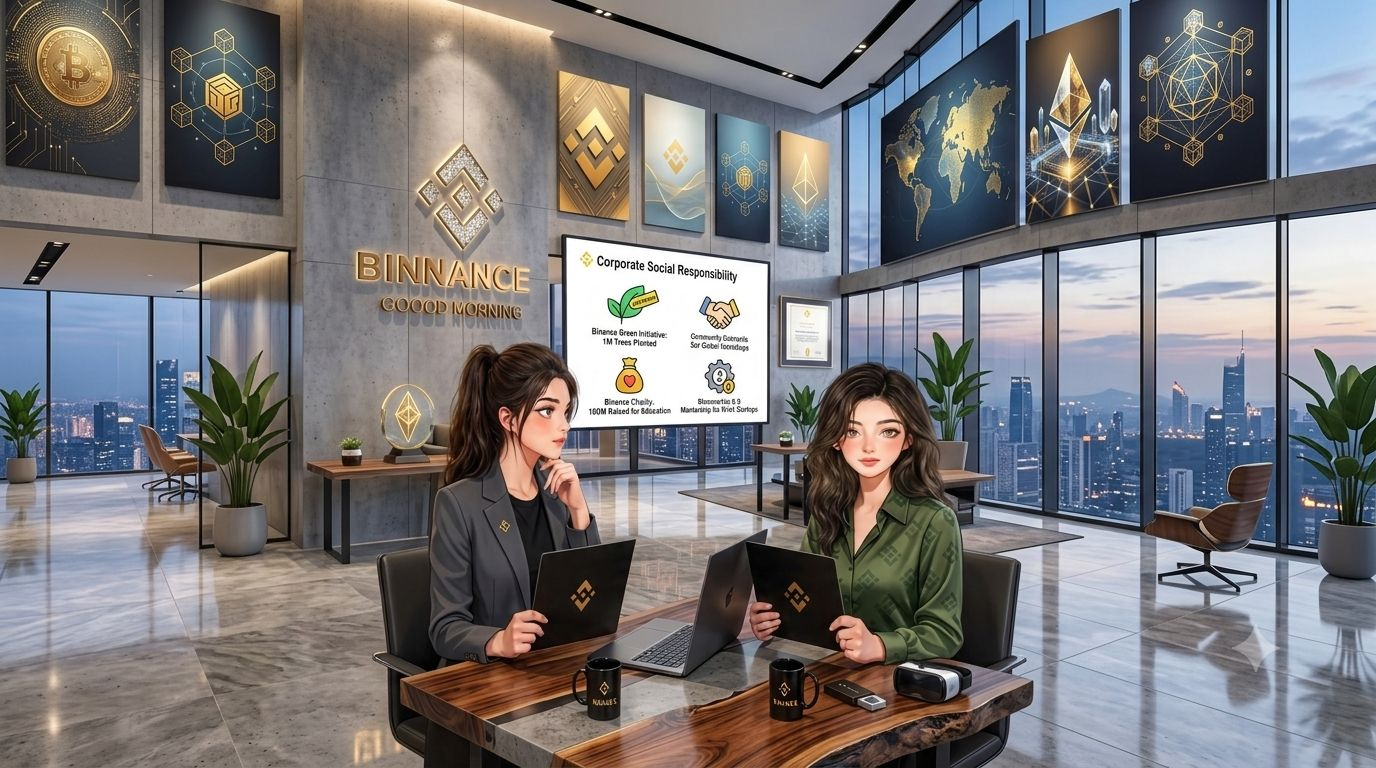
Gambar ini, dengan suasana profesional dan modern, mencerminkan pendekatan kami yang berorientasi ke masa depan. Karya seni dinding yang menampilkan peta dunia dan konsep blockchain melambangkan jangkauan global dan inovasi teknologi kami, yang menjadi dasar dari seluruh upaya CSR kami.
Terima kasih kepada komunitas global kami yang luar biasa atas dukungan berkelanjutan Anda! Bersama, kami tidak hanya membangun masa depan keuangan, tetapi juga menciptakan dunia yang lebih berkelanjutan dan lebih adil.
#BinanceCSR #Sustainability #CryptoForGood #Web3Education #InnovationWithPurpose
{future}(BTCUSDT)
{future}(BNBUSDT)
{future}(ETHUSDT)
Dampak di Luar Perdagangan: Komitmen Kami pada Tanggung Jawab Sosial Perusahaan
Di Binance, kami percaya pada kekuatan blockchain untuk membangun masa depan yang lebih baik. Ini bukan hanya soal inovasi finansial; ini tentang menciptakan dampak positif dan berkelanjutan bagi dunia. Inisiatif Tanggung Jawab Sosial Perusahaan (CSR) kami menjadi bagian inti dari misi kami, dan kami sangat bangga atas kemajuan yang telah kami capai di empat pilar utama:
🌱 Binance Green Initiative: Melindungi planet ini untuk generasi mendatang adalah hal yang utama. Kami berhasil menanam lebih dari 1 juta pohon, berkontribusi pada upaya reboisasi penting di seluruh dunia. Bersama, kita dapat menciptakan masa depan yang lebih hijau.
🎓 Binance Charity: Pendidikan membuka peluang. Upaya filantropi kami telah menggalang lebih dari $10 juta yang didedikasikan untuk meningkatkan akses terhadap pendidikan berkualitas secara global. Kami berkomitmen untuk memberdayakan individu dan komunitas melalui pembelajaran.
🤝 Dukungan Komunitas: Kami percaya pada kekuatan sebuah hubungan. Kami telah menyelenggarakan lebih dari 50+ Workshop Global, berinteraksi langsung dengan pengguna dan mitra untuk memahami kebutuhan mereka serta memberikan dukungan. Kami berdedikasi untuk membangun komunitas yang kuat dan inklusif.
🚀 Binance Lab 2.0: Inovasi mendorong kemajuan. Program Binance Lab 2.0 kami menyediakan pendampingan penting bagi startup Web3.0, membekali generasi berikutnya para wirausaha dengan alat dan pengetahuan yang mereka perlukan untuk meraih kesuksesan.
Gambar ini, dengan suasana profesional dan modern, mencerminkan pendekatan kami yang berorientasi ke masa depan. Karya seni dinding yang menampilkan peta dunia dan konsep blockchain melambangkan jangkauan global dan inovasi teknologi kami, yang menjadi dasar dari seluruh upaya CSR kami.
Terima kasih kepada komunitas global kami yang luar biasa atas dukungan berkelanjutan Anda! Bersama, kami tidak hanya membangun masa depan keuangan, tetapi juga menciptakan dunia yang lebih berkelanjutan dan lebih adil.
#BinanceCSR #Sustainability #CryptoForGood #Web3Education #InnovationWithPurpose
Di Binance, kami percaya pada kekuatan blockchain untuk membangun masa depan yang lebih baik. Ini bukan hanya soal inovasi finansial; ini tentang menciptakan dampak positif dan berkelanjutan bagi dunia. Inisiatif Tanggung Jawab Sosial Perusahaan (CSR) kami menjadi bagian inti dari misi kami, dan kami sangat bangga atas kemajuan yang telah kami capai di empat pilar utama:
🌱 Binance Green Initiative: Melindungi planet ini untuk generasi mendatang adalah hal yang utama. Kami berhasil menanam lebih dari 1 juta pohon, berkontribusi pada upaya reboisasi penting di seluruh dunia. Bersama, kita dapat menciptakan masa depan yang lebih hijau.
🎓 Binance Charity: Pendidikan membuka peluang. Upaya filantropi kami telah menggalang lebih dari $10 juta yang didedikasikan untuk meningkatkan akses terhadap pendidikan berkualitas secara global. Kami berkomitmen untuk memberdayakan individu dan komunitas melalui pembelajaran.
🤝 Dukungan Komunitas: Kami percaya pada kekuatan sebuah hubungan. Kami telah menyelenggarakan lebih dari 50+ Workshop Global, berinteraksi langsung dengan pengguna dan mitra untuk memahami kebutuhan mereka serta memberikan dukungan. Kami berdedikasi untuk membangun komunitas yang kuat dan inklusif.
🚀 Binance Lab 2.0: Inovasi mendorong kemajuan. Program Binance Lab 2.0 kami menyediakan pendampingan penting bagi startup Web3.0, membekali generasi berikutnya para wirausaha dengan alat dan pengetahuan yang mereka perlukan untuk meraih kesuksesan.
Gambar ini, dengan suasana profesional dan modern, mencerminkan pendekatan kami yang berorientasi ke masa depan. Karya seni dinding yang menampilkan peta dunia dan konsep blockchain melambangkan jangkauan global dan inovasi teknologi kami, yang menjadi dasar dari seluruh upaya CSR kami.
Terima kasih kepada komunitas global kami yang luar biasa atas dukungan berkelanjutan Anda! Bersama, kami tidak hanya membangun masa depan keuangan, tetapi juga menciptakan dunia yang lebih berkelanjutan dan lebih adil.
#BinanceCSR #Sustainability #CryptoForGood #Web3Education #InnovationWithPurpose
8
513
·
--
Artikel
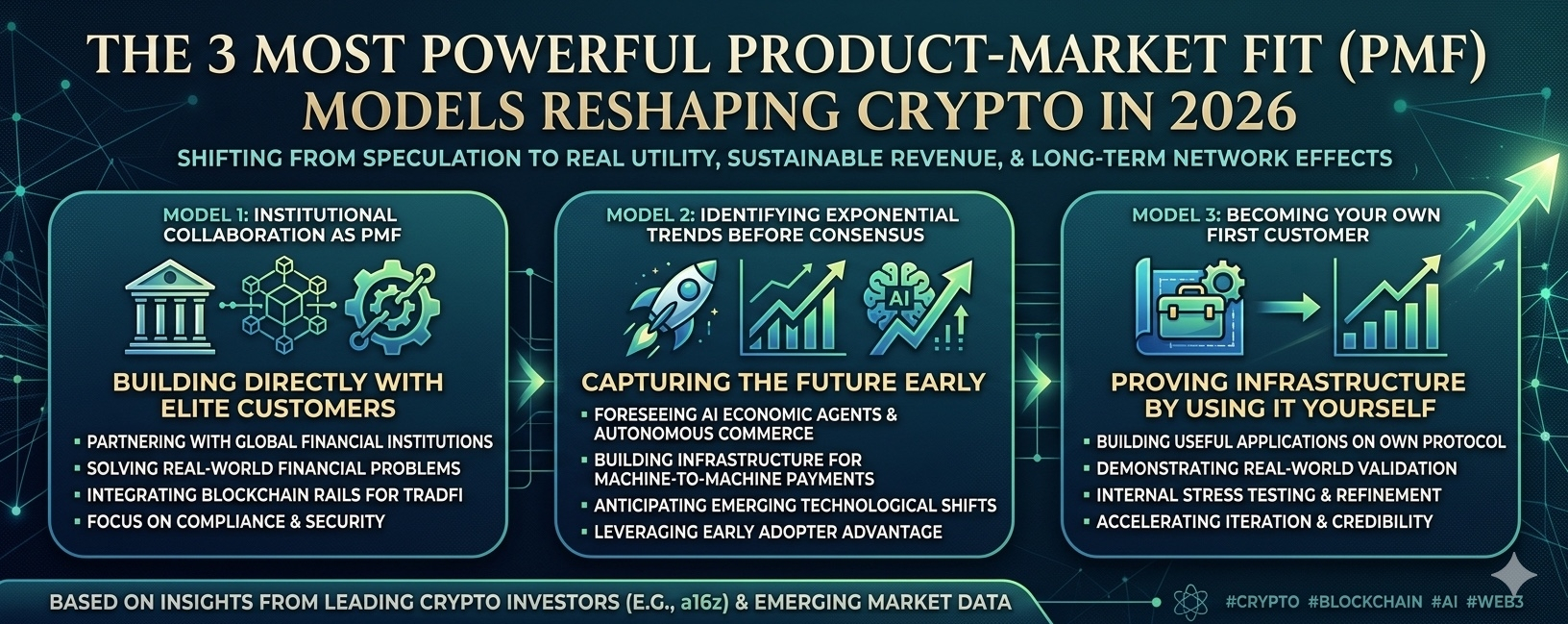
3 Model Product-Market Fit (PMF) Paling Kuat yang Mengubah Crypto di 2026Product-Market Fit (PMF) selalu menjadi faktor penentu antara proyek crypto yang bertahan dan yang menghilang. Dalam siklus sebelumnya, banyak startup sementara menyamarkan fundamental yang lemah melalui insentif token yang agresif, airdrop, Total Value Locked (TVL) yang terinflasi, dan hype spekulatif. Tapi pasar crypto 2026 berbeda.
Modal saja tidak lagi cukup.
Pasar hari ini semakin menghargai proyek yang menyelesaikan masalah nyata, menarik permintaan institusional, dan membangun ekosistem yang berkelanjutan. Menurut wawasan yang dibagikan oleh Andreessen Horowitz (a16z), tiga pola PMF saat ini muncul sebagai model terkuat dan paling kredibel di industri crypto.
3 Model Product-Market Fit (PMF) Paling Kuat yang Mengubah Crypto di 2026
Product-Market Fit (PMF) selalu menjadi faktor penentu antara proyek crypto yang bertahan dan yang menghilang. Dalam siklus sebelumnya, banyak startup sementara menyamarkan fundamental yang lemah melalui insentif token yang agresif, airdrop, Total Value Locked (TVL) yang terinflasi, dan hype spekulatif. Tapi pasar crypto 2026 berbeda.
Modal saja tidak lagi cukup.
Pasar hari ini semakin menghargai proyek yang menyelesaikan masalah nyata, menarik permintaan institusional, dan membangun ekosistem yang berkelanjutan. Menurut wawasan yang dibagikan oleh Andreessen Horowitz (a16z), tiga pola PMF saat ini muncul sebagai model terkuat dan paling kredibel di industri crypto.
Modal saja tidak lagi cukup.
Pasar hari ini semakin menghargai proyek yang menyelesaikan masalah nyata, menarik permintaan institusional, dan membangun ekosistem yang berkelanjutan. Menurut wawasan yang dibagikan oleh Andreessen Horowitz (a16z), tiga pola PMF saat ini muncul sebagai model terkuat dan paling kredibel di industri crypto.
123

·
--
Bullish
Dulu saya pikir crypto hanya tentang trading.
Kemudian saya menemukan cara yang lebih cerdas untuk belajar dan berkembang.
Apa pelajaran crypto pertama kamu?
#CryptoJourney
#Web3Education
#BeyondTrading
#BlockchainInnovation
#CryptoCommunity
Dulu saya pikir crypto hanya tentang trading.
Kemudian saya menemukan cara yang lebih cerdas untuk belajar dan berkembang.
Apa pelajaran crypto pertama kamu?
#CryptoJourney
#Web3Education
#BeyondTrading
#BlockchainInnovation
#CryptoCommunity
Kemudian saya menemukan cara yang lebih cerdas untuk belajar dan berkembang.
Apa pelajaran crypto pertama kamu?
#CryptoJourney
#Web3Education
#BeyondTrading
#BlockchainInnovation
#CryptoCommunity

135
·
--
Bullish
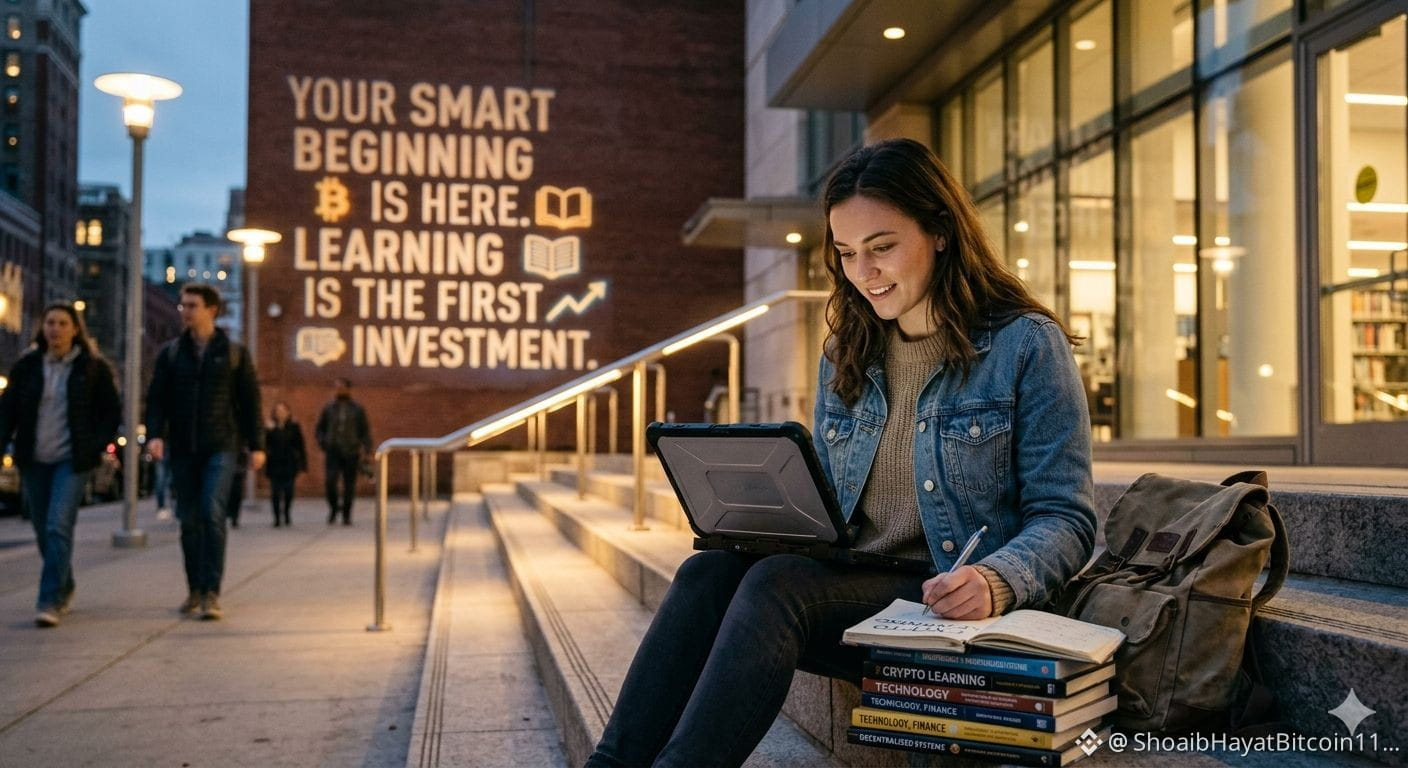
Kamu nggak selalu butuh uang untuk mulai di crypto.
Kadang, belajar jadi investasi pertamamu.
Itu adalah awal yang paling cerdas.
Bener kan?
#CryptoLearning #CryptoEducation #SmartInvestment #CryptoBeginner #Web3Education
Kamu nggak selalu butuh uang untuk mulai di crypto.
Kadang, belajar jadi investasi pertamamu.
Itu adalah awal yang paling cerdas.
Bener kan?
#CryptoLearning #CryptoEducation #SmartInvestment #CryptoBeginner #Web3Education
Kadang, belajar jadi investasi pertamamu.
Itu adalah awal yang paling cerdas.
Bener kan?
#CryptoLearning #CryptoEducation #SmartInvestment #CryptoBeginner #Web3Education
1
89

#OCT Stop Kejar Candle Hijau: 3 Metrik yang Harus Dicek SEBELUM Trading Crypto Berikutnya 🚨
Saat pasar memompa, FOMO membuatnya mudah untuk masuk tanpa melihat. Trading yang sukses bukan soal menebak. Ini tentang mengelola risiko. Sebelum Anda menekan tombol beli pada token apa pun hari ini, cek 3 metrik penting ini:
1. Volume Profile vs. Price Action: Jika harga naik tetapi volume perdagangan turun, pergerakan tersebut tidak punya kekuatan. Waspadai potensi jebakan. Cari volume yang mengonfirmasi breakout.
2. Funding Rate (Untuk Trader Futures): Apakah funding rate sangat positif? Posisi long membayar posisi short. Ini berarti pasar dipenuhi pembeli. Pembersihan leverage secara tiba-tiba bisa terjadi berikutnya.
3. Data Inflow/Outflow: Apakah whale memindahkan token ke bursa? Inflow besar ke bursa biasanya menandakan niat untuk menjual. Pantau data on-chain sebelum mengalokasikan modal.
Metrik mana yang paling Anda andalkan sebelum masuk ke sebuah trade? Beri tahu saya di bawah! 👇
#cryptotrading #TechnicalAnalysis #Web3Education $BTC ETH BNB
Disclaimer: Konten ini hanya untuk tujuan edukasi dan tidak merupakan nasihat keuangan. Selalu lakukan riset Anda sendiri (DYOR).
#OCT Stop Kejar Candle Hijau: 3 Metrik yang Harus Dicek SEBELUM Trading Crypto Berikutnya 🚨
Saat pasar memompa, FOMO membuatnya mudah untuk masuk tanpa melihat. Trading yang sukses bukan soal menebak. Ini tentang mengelola risiko. Sebelum Anda menekan tombol beli pada token apa pun hari ini, cek 3 metrik penting ini:
1. Volume Profile vs. Price Action: Jika harga naik tetapi volume perdagangan turun, pergerakan tersebut tidak punya kekuatan. Waspadai potensi jebakan. Cari volume yang mengonfirmasi breakout.
2. Funding Rate (Untuk Trader Futures): Apakah funding rate sangat positif? Posisi long membayar posisi short. Ini berarti pasar dipenuhi pembeli. Pembersihan leverage secara tiba-tiba bisa terjadi berikutnya.
3. Data Inflow/Outflow: Apakah whale memindahkan token ke bursa? Inflow besar ke bursa biasanya menandakan niat untuk menjual. Pantau data on-chain sebelum mengalokasikan modal.
Metrik mana yang paling Anda andalkan sebelum masuk ke sebuah trade? Beri tahu saya di bawah! 👇
#cryptotrading #TechnicalAnalysis #Web3Education $BTC ETH BNB
Disclaimer: Konten ini hanya untuk tujuan edukasi dan tidak merupakan nasihat keuangan. Selalu lakukan riset Anda sendiri (DYOR).
Saat pasar memompa, FOMO membuatnya mudah untuk masuk tanpa melihat. Trading yang sukses bukan soal menebak. Ini tentang mengelola risiko. Sebelum Anda menekan tombol beli pada token apa pun hari ini, cek 3 metrik penting ini:
1. Volume Profile vs. Price Action: Jika harga naik tetapi volume perdagangan turun, pergerakan tersebut tidak punya kekuatan. Waspadai potensi jebakan. Cari volume yang mengonfirmasi breakout.
2. Funding Rate (Untuk Trader Futures): Apakah funding rate sangat positif? Posisi long membayar posisi short. Ini berarti pasar dipenuhi pembeli. Pembersihan leverage secara tiba-tiba bisa terjadi berikutnya.
3. Data Inflow/Outflow: Apakah whale memindahkan token ke bursa? Inflow besar ke bursa biasanya menandakan niat untuk menjual. Pantau data on-chain sebelum mengalokasikan modal.
Metrik mana yang paling Anda andalkan sebelum masuk ke sebuah trade? Beri tahu saya di bawah! 👇
#cryptotrading #TechnicalAnalysis #Web3Education $BTC ETH BNB
Disclaimer: Konten ini hanya untuk tujuan edukasi dan tidak merupakan nasihat keuangan. Selalu lakukan riset Anda sendiri (DYOR).
130

Artikel
Apa Itu Blockchain? Panduan untuk Pemula tentang Cara KerjanyaPendahuluan
Blockchain adalah salah satu gagasan terpenting dalam kripto, tetapi sering kali dijelaskan dengan cara yang membuatnya terdengar lebih rumit daripada yang sebenarnya. Pada intinya, blockchain hanyalah sistem pencatatan digital yang dibagikan yang menyimpan data di banyak komputer, bukan di satu server pusat.
Jika Anda memahami blockchain, Anda akan merasa jauh lebih mudah untuk memahami $BTC $ETH wallet, smart contract, dan banyak topik kripto lainnya. Panduan ini menjelaskan konsep tersebut dengan bahasa yang sederhana, dengan contoh-contoh praktis dan struktur yang ramah untuk pemula.
Apa Itu Blockchain? Panduan untuk Pemula tentang Cara Kerjanya
Pendahuluan
Blockchain adalah salah satu gagasan terpenting dalam kripto, tetapi sering kali dijelaskan dengan cara yang membuatnya terdengar lebih rumit daripada yang sebenarnya. Pada intinya, blockchain hanyalah sistem pencatatan digital yang dibagikan yang menyimpan data di banyak komputer, bukan di satu server pusat.
Jika Anda memahami blockchain, Anda akan merasa jauh lebih mudah untuk memahami $BTC $ETH wallet, smart contract, dan banyak topik kripto lainnya. Panduan ini menjelaskan konsep tersebut dengan bahasa yang sederhana, dengan contoh-contoh praktis dan struktur yang ramah untuk pemula.
Blockchain adalah salah satu gagasan terpenting dalam kripto, tetapi sering kali dijelaskan dengan cara yang membuatnya terdengar lebih rumit daripada yang sebenarnya. Pada intinya, blockchain hanyalah sistem pencatatan digital yang dibagikan yang menyimpan data di banyak komputer, bukan di satu server pusat.
Jika Anda memahami blockchain, Anda akan merasa jauh lebih mudah untuk memahami $BTC $ETH wallet, smart contract, dan banyak topik kripto lainnya. Panduan ini menjelaskan konsep tersebut dengan bahasa yang sederhana, dengan contoh-contoh praktis dan struktur yang ramah untuk pemula.
112

·
--
Mencoba mengikuti semua yang terjadi di crypto bisa terasa seperti pekerjaan penuh waktu, kan? Mudah untuk tersesat dalam aliran berita dan spekulasi yang tiada henti.
Tapi bayangkan memiliki sumber andalan untuk wawasan yang benar-benar berguna dan tepat waktu yang memotong semua kebisingan. Kami berbicara tentang informasi yang begitu dapat diandalkan, sampai dipercaya oleh bursa crypto terbesar di dunia sendiri. Dukungan itu saja sudah berbicara banyak tentang kualitas yang bisa kamu harapkan, baik kamu sedang melacak $BTC gerakan atau menyelami perkembangan ekosistem $ETH .
Ini bukan hanya tentang headline; ini tentang analisis yang nyata dan mendalam dari kreator yang benar-benar ahli yang terverifikasi di bidang ini. Mereka menghubungkan titik-titik pada tren dan memecah topik yang kompleks sehingga kamu bisa memahami apa yang benar-benar menggerakkan pasar, mungkin bahkan mempengaruhi proyek seperti $SOL. Ini tentang mendapatkan kejelasan langsung dari mereka yang tahu.
#CryptoInsights #Web3Education #BlockchainNews #MarketAnalysis #KontenTerverifikasi
Mencoba mengikuti semua yang terjadi di crypto bisa terasa seperti pekerjaan penuh waktu, kan? Mudah untuk tersesat dalam aliran berita dan spekulasi yang tiada henti.
Tapi bayangkan memiliki sumber andalan untuk wawasan yang benar-benar berguna dan tepat waktu yang memotong semua kebisingan. Kami berbicara tentang informasi yang begitu dapat diandalkan, sampai dipercaya oleh bursa crypto terbesar di dunia sendiri. Dukungan itu saja sudah berbicara banyak tentang kualitas yang bisa kamu harapkan, baik kamu sedang melacak $BTC gerakan atau menyelami perkembangan ekosistem $ETH .
Ini bukan hanya tentang headline; ini tentang analisis yang nyata dan mendalam dari kreator yang benar-benar ahli yang terverifikasi di bidang ini. Mereka menghubungkan titik-titik pada tren dan memecah topik yang kompleks sehingga kamu bisa memahami apa yang benar-benar menggerakkan pasar, mungkin bahkan mempengaruhi proyek seperti $SOL . Ini tentang mendapatkan kejelasan langsung dari mereka yang tahu.
#CryptoInsights #Web3Education #BlockchainNews #MarketAnalysis #KontenTerverifikasi
Tapi bayangkan memiliki sumber andalan untuk wawasan yang benar-benar berguna dan tepat waktu yang memotong semua kebisingan. Kami berbicara tentang informasi yang begitu dapat diandalkan, sampai dipercaya oleh bursa crypto terbesar di dunia sendiri. Dukungan itu saja sudah berbicara banyak tentang kualitas yang bisa kamu harapkan, baik kamu sedang melacak $BTC gerakan atau menyelami perkembangan ekosistem $ETH .
Ini bukan hanya tentang headline; ini tentang analisis yang nyata dan mendalam dari kreator yang benar-benar ahli yang terverifikasi di bidang ini. Mereka menghubungkan titik-titik pada tren dan memecah topik yang kompleks sehingga kamu bisa memahami apa yang benar-benar menggerakkan pasar, mungkin bahkan mempengaruhi proyek seperti $SOL . Ini tentang mendapatkan kejelasan langsung dari mereka yang tahu.
#CryptoInsights #Web3Education #BlockchainNews #MarketAnalysis #KontenTerverifikasi
60
·
--
Rahasia untuk Tetap Berada di Permainan 🛡️
Mengapa 90% Trader Gagal (Dan Bagaimana Anda Bisa Menjadi 1%)
Kebanyakan orang masuk ke pasar crypto mencari "kekayaan dalam semalam," tetapi pemenang sejati adalah mereka yang menguasai Manajemen Risiko. Sebelum Anda khawatir tentang berapa banyak yang bisa Anda menangkan, fokuslah pada berapa banyak yang bisa Anda rugikan. Jangan pernah menaruh semua telur Anda dalam satu keranjang!
3 Aturan Utama Saya:
Hanya investasikan apa yang Anda mampu untuk kehilangan.
Selalu gunakan Stop-Loss.
Jangan biarkan FOMO (Fear Of Missing Out) mengendalikan keputusan Anda.
Apakah Anda trader yang disiplin atau emosional? Mari jujur di kolom komentar! 👇
#CryptoTips #ManajemenRisiko #Vincekhayyam #StrategiTrading #Web3Education
Rahasia untuk Tetap Berada di Permainan 🛡️
Mengapa 90% Trader Gagal (Dan Bagaimana Anda Bisa Menjadi 1%)
Kebanyakan orang masuk ke pasar crypto mencari "kekayaan dalam semalam," tetapi pemenang sejati adalah mereka yang menguasai Manajemen Risiko. Sebelum Anda khawatir tentang berapa banyak yang bisa Anda menangkan, fokuslah pada berapa banyak yang bisa Anda rugikan. Jangan pernah menaruh semua telur Anda dalam satu keranjang!
3 Aturan Utama Saya:
Hanya investasikan apa yang Anda mampu untuk kehilangan.
Selalu gunakan Stop-Loss.
Jangan biarkan FOMO (Fear Of Missing Out) mengendalikan keputusan Anda.
Apakah Anda trader yang disiplin atau emosional? Mari jujur di kolom komentar! 👇
#CryptoTips #ManajemenRisiko #Vincekhayyam #StrategiTrading #Web3Education
Mengapa 90% Trader Gagal (Dan Bagaimana Anda Bisa Menjadi 1%)
Kebanyakan orang masuk ke pasar crypto mencari "kekayaan dalam semalam," tetapi pemenang sejati adalah mereka yang menguasai Manajemen Risiko. Sebelum Anda khawatir tentang berapa banyak yang bisa Anda menangkan, fokuslah pada berapa banyak yang bisa Anda rugikan. Jangan pernah menaruh semua telur Anda dalam satu keranjang!
3 Aturan Utama Saya:
Hanya investasikan apa yang Anda mampu untuk kehilangan.
Selalu gunakan Stop-Loss.
Jangan biarkan FOMO (Fear Of Missing Out) mengendalikan keputusan Anda.
Apakah Anda trader yang disiplin atau emosional? Mari jujur di kolom komentar! 👇
#CryptoTips #ManajemenRisiko #Vincekhayyam #StrategiTrading #Web3Education
9
137
Masuk untuk menjelajahi konten lainnya
Bergabunglah dengan pengguna kripto global di Binance Square
⚡️ Dapatkan informasi terbaru dan berguna tentang kripto.
💬 Dipercayai oleh bursa kripto terbesar di dunia.
👍 Temukan wawasan nyata dari kreator terverifikasi.
Email/Nomor Ponsel
Topik Sedang Tren
1
#BitcoinSurpasses$77000
13,812 penayangan
203 Berdiskusi
2
#ParadigmDisclosesZECHolding
53,572 penayangan
920 Berdiskusi
3
#BitcoinETFsShed$450M
23,333 penayangan
208 Berdiskusi
4
#USWeeklyJoblessClaimsFallTo196K
29,091 penayangan
539 Berdiskusi
5
#ArkhamSaysBlackRockBuys$1.5BInETH
5,294 penayangan
67 Berdiskusi
6
#ElSalvadorBTCHoldingsRiseTo7777
57,535 penayangan
829 Berdiskusi
7
#MemeLaunchpads82%OfArcDayOneVolume
58,929 penayangan
1,000 Berdiskusi
8
#OstiumLoanDisputeHearingSetInNYFederalCourt
47,703 penayangan
716 Berdiskusi
9
#HyperliquidUSDCSupplyOvertakesSolana
21,845 penayangan
364 Berdiskusi
10
#SKPoliceRefer18PolymarketUsersToProsecutors
26,823 penayangan
518 Berdiskusi