

#premarket
premarket
345,289 penayangan
548 Berdiskusi
Populer
Terbaru

·
--
🦈 LELANG INSTITUSIONAL MENDORONG PEMULIHAN PRAMARKET DI SELURUH $MSTR DAN SAHAM KRIPTO ⚡
Entri: 159.420 ⚡
Akkumulasi uang pintar diam-diam mulai terlihat pada arus pesanan pramarket, dengan kripto proxy $MSTR mendorong ke 159.420 bersama tawaran yang stabil di infrastruktur terkait. 📊 Sektor penyimpanan (storage) dan modul optik mencerminkan pergeseran halus ini, menandakan penempatan institusional yang lebih luas di seluruh kumpulan likuiditas saham teknologi.
📌 Nama-nama yang berdekatan dengan kripto seperti $BMNR dan $CRCL sedang merebut kembali rentang lokal karena meja institusional menyerap tekanan jual sebelum sesi cash dibuka. 🔍 Bid yang tersinkron di lintas sektor pasar mengisyaratkan uang pintar sedang bersiap untuk ekspansi struktural, bukan volume ritel spekulatif.
💡 Dengan arus order institusional yang secara diam-diam membangun dukungan struktural di nama-nama kunci ini, apakah kamu sedang memantau bid pramarket ini untuk breakout, atau menunggu sapuan likuiditas sekunder saat pembukaan? 👇
⚠️ Bukan nasihat keuangan. Selalu kelola risikomu. 🛡️
🏷️ #MSTR #Crypto #PreMarket #SmartMoney
🦈 ⚡
🦈 LELANG INSTITUSIONAL MENDORONG PEMULIHAN PRAMARKET DI SELURUH $MSTR DAN SAHAM KRIPTO ⚡
Entri: 159.420 ⚡
Akkumulasi uang pintar diam-diam mulai terlihat pada arus pesanan pramarket, dengan kripto proxy $MSTR mendorong ke 159.420 bersama tawaran yang stabil di infrastruktur terkait. 📊 Sektor penyimpanan (storage) dan modul optik mencerminkan pergeseran halus ini, menandakan penempatan institusional yang lebih luas di seluruh kumpulan likuiditas saham teknologi.
📌 Nama-nama yang berdekatan dengan kripto seperti $BMNR dan $CRCL sedang merebut kembali rentang lokal karena meja institusional menyerap tekanan jual sebelum sesi cash dibuka. 🔍 Bid yang tersinkron di lintas sektor pasar mengisyaratkan uang pintar sedang bersiap untuk ekspansi struktural, bukan volume ritel spekulatif.
💡 Dengan arus order institusional yang secara diam-diam membangun dukungan struktural di nama-nama kunci ini, apakah kamu sedang memantau bid pramarket ini untuk breakout, atau menunggu sapuan likuiditas sekunder saat pembukaan? 👇
⚠️ Bukan nasihat keuangan. Selalu kelola risikomu. 🛡️
🏷️ #MSTR #Crypto #PreMarket #SmartMoney
🦈 ⚡
Entri: 159.420 ⚡
Akkumulasi uang pintar diam-diam mulai terlihat pada arus pesanan pramarket, dengan kripto proxy $MSTR mendorong ke 159.420 bersama tawaran yang stabil di infrastruktur terkait. 📊 Sektor penyimpanan (storage) dan modul optik mencerminkan pergeseran halus ini, menandakan penempatan institusional yang lebih luas di seluruh kumpulan likuiditas saham teknologi.
📌 Nama-nama yang berdekatan dengan kripto seperti $BMNR dan $CRCL sedang merebut kembali rentang lokal karena meja institusional menyerap tekanan jual sebelum sesi cash dibuka. 🔍 Bid yang tersinkron di lintas sektor pasar mengisyaratkan uang pintar sedang bersiap untuk ekspansi struktural, bukan volume ritel spekulatif.
💡 Dengan arus order institusional yang secara diam-diam membangun dukungan struktural di nama-nama kunci ini, apakah kamu sedang memantau bid pramarket ini untuk breakout, atau menunggu sapuan likuiditas sekunder saat pembukaan? 👇
⚠️ Bukan nasihat keuangan. Selalu kelola risikomu. 🛡️
🏷️ #MSTR #Crypto #PreMarket #SmartMoney
🦈 ⚡
30

🚨 $COIN SINKS AS PERGERAKAN JUAL PRE-MARKET MENETAS MENARIK SAHAM KRIPTO TURUN DALAM 🔴
Uang pintar sedang membersihkan bucket permintaan terakhir di $COIN , saat gap pre-market melebar menjadi blok pesanan bearish yang jelas. 📊 Volume pada chart 15-menit menunjukkan tekanan jual yang agresif, mengonfirmasi upaya perburuan likuiditas yang menyeret sektor kripto-konsep yang lebih luas turun. 🌊 Kolam likuiditas berikutnya berada tepat di bawah rata-rata pergerakan $COIN 30 hari; jika ditembus, bias short bisa makin dalam. 📈 Pantau 200-EMA untuk potensi pemicu. 💡
💬 Apakah kamu sedang memposisikan diri untuk sapuan likuiditas berikutnya atau menunggu sinyal reversal? 👇
⚠️ Bukan nasihat keuangan. Selalu kelola risiko kamu. 🛡️
🏷️ #COIN #CryptoStocks #PreMarket #LiquiditySweep
🚀 🔥
🚨 $COIN SINKS AS PERGERAKAN JUAL PRE-MARKET MENETAS MENARIK SAHAM KRIPTO TURUN DALAM 🔴
Uang pintar sedang membersihkan bucket permintaan terakhir di $COIN , saat gap pre-market melebar menjadi blok pesanan bearish yang jelas. 📊 Volume pada chart 15-menit menunjukkan tekanan jual yang agresif, mengonfirmasi upaya perburuan likuiditas yang menyeret sektor kripto-konsep yang lebih luas turun. 🌊 Kolam likuiditas berikutnya berada tepat di bawah rata-rata pergerakan $COIN 30 hari; jika ditembus, bias short bisa makin dalam. 📈 Pantau 200-EMA untuk potensi pemicu. 💡
💬 Apakah kamu sedang memposisikan diri untuk sapuan likuiditas berikutnya atau menunggu sinyal reversal? 👇
⚠️ Bukan nasihat keuangan. Selalu kelola risiko kamu. 🛡️
🏷️ #COIN #CryptoStocks #PreMarket #LiquiditySweep
🚀 🔥
Uang pintar sedang membersihkan bucket permintaan terakhir di $COIN , saat gap pre-market melebar menjadi blok pesanan bearish yang jelas. 📊 Volume pada chart 15-menit menunjukkan tekanan jual yang agresif, mengonfirmasi upaya perburuan likuiditas yang menyeret sektor kripto-konsep yang lebih luas turun. 🌊 Kolam likuiditas berikutnya berada tepat di bawah rata-rata pergerakan $COIN 30 hari; jika ditembus, bias short bisa makin dalam. 📈 Pantau 200-EMA untuk potensi pemicu. 💡
💬 Apakah kamu sedang memposisikan diri untuk sapuan likuiditas berikutnya atau menunggu sinyal reversal? 👇
⚠️ Bukan nasihat keuangan. Selalu kelola risiko kamu. 🛡️
🏷️ #COIN #CryptoStocks #PreMarket #LiquiditySweep
🚀 🔥
30

·
--
⚡ MONOPOLI PRA-PASAR MELUAS SAAT $FLAP MEMBUKA POOL PERDAGANGAN ANTHROPIC DAN KALSHI! 🦈
Modal cerdas terus berburu imbal hasil sebelum ritel bahkan melihat materi visual pencantuman. 📊 Pusat penerbitan token $FLAP baru saja meluncurkan pool token pra-pasar untuk para pemain besar Anthropic dan Kalshi, didukung oleh OpenStocks dan Paimon Finance untuk menangkap arus pesanan institusional lebih awal.
Ini bukan sekadar integrasi lain; ini adalah pergeseran struktural yang menjembatani valuasi trad-tech langsung ke dalam liquidity pool terdesentralisasi. 💡 Pelaku awal bahkan sudah melakukan hedging eksposur sebelum penemuan publik yang menekan margin arbitrase.
🌊 Apakah Anda bersiap lebih awal di pool pra-pasar atau menunggu konfirmasi pasar sekunder? 👇
⚠️ Bukan nasihat keuangan. Selalu kelola risiko Anda. 🛡️
🏷️ #FLAP #PreMarket #DeFi #Crypto
🎯 🦈
⚡ MONOPOLI PRA-PASAR MELUAS SAAT $FLAP MEMBUKA POOL PERDAGANGAN ANTHROPIC DAN KALSHI! 🦈
Modal cerdas terus berburu imbal hasil sebelum ritel bahkan melihat materi visual pencantuman. 📊 Pusat penerbitan token $FLAP baru saja meluncurkan pool token pra-pasar untuk para pemain besar Anthropic dan Kalshi, didukung oleh OpenStocks dan Paimon Finance untuk menangkap arus pesanan institusional lebih awal.
Ini bukan sekadar integrasi lain; ini adalah pergeseran struktural yang menjembatani valuasi trad-tech langsung ke dalam liquidity pool terdesentralisasi. 💡 Pelaku awal bahkan sudah melakukan hedging eksposur sebelum penemuan publik yang menekan margin arbitrase.
🌊 Apakah Anda bersiap lebih awal di pool pra-pasar atau menunggu konfirmasi pasar sekunder? 👇
⚠️ Bukan nasihat keuangan. Selalu kelola risiko Anda. 🛡️
🏷️ #FLAP #PreMarket #DeFi #Crypto
🎯 🦈
Modal cerdas terus berburu imbal hasil sebelum ritel bahkan melihat materi visual pencantuman. 📊 Pusat penerbitan token $FLAP baru saja meluncurkan pool token pra-pasar untuk para pemain besar Anthropic dan Kalshi, didukung oleh OpenStocks dan Paimon Finance untuk menangkap arus pesanan institusional lebih awal.
Ini bukan sekadar integrasi lain; ini adalah pergeseran struktural yang menjembatani valuasi trad-tech langsung ke dalam liquidity pool terdesentralisasi. 💡 Pelaku awal bahkan sudah melakukan hedging eksposur sebelum penemuan publik yang menekan margin arbitrase.
🌊 Apakah Anda bersiap lebih awal di pool pra-pasar atau menunggu konfirmasi pasar sekunder? 👇
⚠️ Bukan nasihat keuangan. Selalu kelola risiko Anda. 🛡️
🏷️ #FLAP #PreMarket #DeFi #Crypto
🎯 🦈
30

·
--
🚨 PRA-PEMASARAN INSTITUSIONAL MENGUNGKAP PENEMUAN HARGA PRA-IPO UNTUK $OURA DENGAN LEVERAGE 20X! ⚡
Kontrak perpetual pra-pasar sudah aktif untuk $OURA di bursa kelas atas, membuka penemuan harga real-time sebelum debut resmi. Uang pintar memanfaatkan leverage 20x yang diselesaikan dengan USDT untuk menentukan harga likuiditas awal dan membangun posisi strategis jauh sebelum bel pembukaan pasar tradisional. 🦈
Aktivitas kontrak awal pada instrumen derivatif ini diperkirakan akan menciptakan inefisiensi struktural yang tajam karena aliran pesanan institusional menguji kedalaman pembeli. 📊 Memantau rentang tertinggi dan terendah awal akan mengungkap blok order kunci sebelum pasar spot ritel dibuka. 💡
Apakah Anda memposisikan diri lebih awal dalam arus order pra-pasar, atau menunggu stabilisasi harga setelah listing? 👇
⚠️ Bukan nasihat keuangan. Selalu kelola risiko Anda. 🛡️
🏷️ #OURA #PreMarket #Derivatives #CryptoTrading
⚡ 🦈
🚨 PRA-PEMASARAN INSTITUSIONAL MENGUNGKAP PENEMUAN HARGA PRA-IPO UNTUK $OURA DENGAN LEVERAGE 20X! ⚡
Kontrak perpetual pra-pasar sudah aktif untuk $OURA di bursa kelas atas, membuka penemuan harga real-time sebelum debut resmi. Uang pintar memanfaatkan leverage 20x yang diselesaikan dengan USDT untuk menentukan harga likuiditas awal dan membangun posisi strategis jauh sebelum bel pembukaan pasar tradisional. 🦈
Aktivitas kontrak awal pada instrumen derivatif ini diperkirakan akan menciptakan inefisiensi struktural yang tajam karena aliran pesanan institusional menguji kedalaman pembeli. 📊 Memantau rentang tertinggi dan terendah awal akan mengungkap blok order kunci sebelum pasar spot ritel dibuka. 💡
Apakah Anda memposisikan diri lebih awal dalam arus order pra-pasar, atau menunggu stabilisasi harga setelah listing? 👇
⚠️ Bukan nasihat keuangan. Selalu kelola risiko Anda. 🛡️
🏷️ #OURA #PreMarket #Derivatives #CryptoTrading
⚡ 🦈
Kontrak perpetual pra-pasar sudah aktif untuk $OURA di bursa kelas atas, membuka penemuan harga real-time sebelum debut resmi. Uang pintar memanfaatkan leverage 20x yang diselesaikan dengan USDT untuk menentukan harga likuiditas awal dan membangun posisi strategis jauh sebelum bel pembukaan pasar tradisional. 🦈
Aktivitas kontrak awal pada instrumen derivatif ini diperkirakan akan menciptakan inefisiensi struktural yang tajam karena aliran pesanan institusional menguji kedalaman pembeli. 📊 Memantau rentang tertinggi dan terendah awal akan mengungkap blok order kunci sebelum pasar spot ritel dibuka. 💡
Apakah Anda memposisikan diri lebih awal dalam arus order pra-pasar, atau menunggu stabilisasi harga setelah listing? 👇
⚠️ Bukan nasihat keuangan. Selalu kelola risiko Anda. 🛡️
🏷️ #OURA #PreMarket #Derivatives #CryptoTrading
⚡ 🦈
17

SMART MONEY MELAKUKAN FRONTRUN $ALPE SEBELUM PENEMUAN HARGA PUBLIK DIMULAI 🦈 ⚡
Entry: 0.03050 ⚡
Target: 0.08 🚀
Smart money bergerak lebih dulu sebelum candle publik pertama tercetak di chart. Sementara kebanyakan presale hanya mengandalkan janji roadmap, $ALPE sudah mengaktifkan utilitas inti dengan menghubungkan alat auto-trading AI Claude Fable 5.1 dan kumpulan staking berimbal hasil tinggi langsung untuk pemegang posisi awal. 📊
Dengan lebih dari $2.72M terkumpul dan 11.900 holder yang terkunci, minat pada order flow bergeser dari large cap yang membengkak ke jendela utilitas pra-pasar. Tingkat bonus yang aktif menawarkan pengganda token yang besar, namun jendela struktural ini ditutup tegas pada 25 September. ⚡
Bersiap lebih awal sebelum rilis DEX yang direncanakan adalah cara trader yang intuitif menangkap potensi upside asimetris yang sesungguhnya. 💡 Apakah Anda mengamankan alokasi pada tahap pra-pasar atau menunggu untuk mengejar candle hijau setelah listing publik? 👇
⚠️ Bukan nasihat keuangan. Selalu kelola risiko Anda. 🛡️
🏷️ #ALPE #Crypto #Trading #PreMarket
🔥 💎
SMART MONEY MELAKUKAN FRONTRUN $ALPE SEBELUM PENEMUAN HARGA PUBLIK DIMULAI 🦈 ⚡
Entry: 0.03050 ⚡
Target: 0.08 🚀
Smart money bergerak lebih dulu sebelum candle publik pertama tercetak di chart. Sementara kebanyakan presale hanya mengandalkan janji roadmap, $ALPE sudah mengaktifkan utilitas inti dengan menghubungkan alat auto-trading AI Claude Fable 5.1 dan kumpulan staking berimbal hasil tinggi langsung untuk pemegang posisi awal. 📊
Dengan lebih dari $2.72M terkumpul dan 11.900 holder yang terkunci, minat pada order flow bergeser dari large cap yang membengkak ke jendela utilitas pra-pasar. Tingkat bonus yang aktif menawarkan pengganda token yang besar, namun jendela struktural ini ditutup tegas pada 25 September. ⚡
Bersiap lebih awal sebelum rilis DEX yang direncanakan adalah cara trader yang intuitif menangkap potensi upside asimetris yang sesungguhnya. 💡 Apakah Anda mengamankan alokasi pada tahap pra-pasar atau menunggu untuk mengejar candle hijau setelah listing publik? 👇
⚠️ Bukan nasihat keuangan. Selalu kelola risiko Anda. 🛡️
🏷️ #ALPE #Crypto #Trading #PreMarket
🔥 💎
Entry: 0.03050 ⚡
Target: 0.08 🚀
Smart money bergerak lebih dulu sebelum candle publik pertama tercetak di chart. Sementara kebanyakan presale hanya mengandalkan janji roadmap, $ALPE sudah mengaktifkan utilitas inti dengan menghubungkan alat auto-trading AI Claude Fable 5.1 dan kumpulan staking berimbal hasil tinggi langsung untuk pemegang posisi awal. 📊
Dengan lebih dari $2.72M terkumpul dan 11.900 holder yang terkunci, minat pada order flow bergeser dari large cap yang membengkak ke jendela utilitas pra-pasar. Tingkat bonus yang aktif menawarkan pengganda token yang besar, namun jendela struktural ini ditutup tegas pada 25 September. ⚡
Bersiap lebih awal sebelum rilis DEX yang direncanakan adalah cara trader yang intuitif menangkap potensi upside asimetris yang sesungguhnya. 💡 Apakah Anda mengamankan alokasi pada tahap pra-pasar atau menunggu untuk mengejar candle hijau setelah listing publik? 👇
⚠️ Bukan nasihat keuangan. Selalu kelola risiko Anda. 🛡️
🏷️ #ALPE #Crypto #Trading #PreMarket
🔥 💎
36
·
--
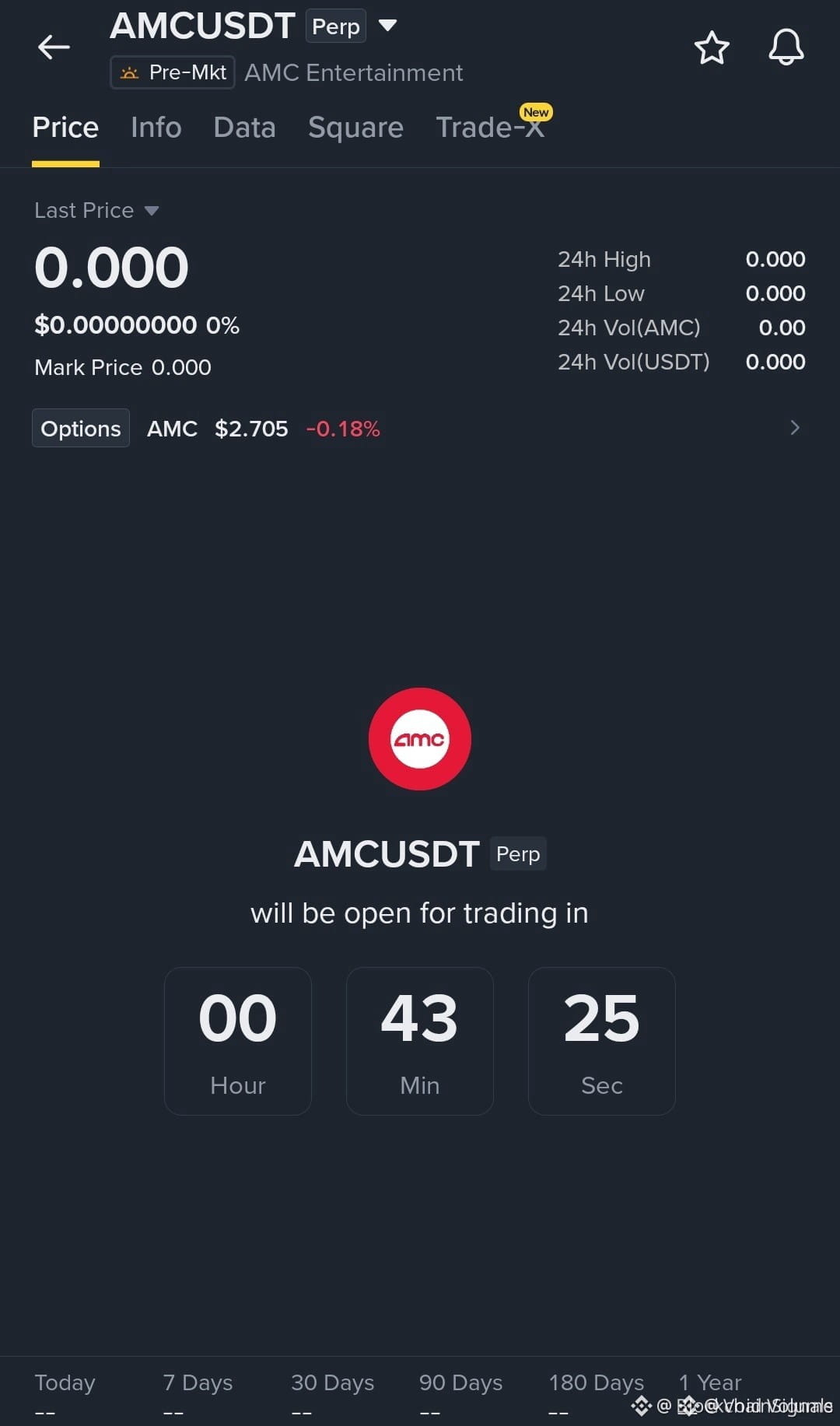
🚨 PERINGATAN PRE-MARKET: PELUNCURAN PERPETUAL $AMC MENYIAPKAN EKSPANSI LIKUIDITAS AWAL! ⚡
Pre-market perpetual $AMC sedang menyiapkan panggung untuk penemuan harga awal sebelum likuiditas live dibuka. 🔍 Saat order book mulai terinisialisasi, smart money kemungkinan akan berburu inefisiensi pasar awal dan membentuk order block awal selama fase volatilitas awal.
📌 Kesabaran tetap menjadi kunci—menunggu pergerakan harga awal untuk memetakan gap fair value yang jelas dan pivot struktural penting akan membedakan eksekusi yang disiplin dari mengejar kebisingan. 💡 Fokuskan mata pada order flow begitu trading aktif untuk memanfaatkan ekspansi struktural. 💬 Anda berencana melakukan trading penemuan harga awal di peluncuran ini dengan cara apa? 👇
⚠️ Bukan nasihat keuangan. Selalu kelola risiko Anda. 🛡️
🏷️ #AMC #PreMarket #NewListing #Crypto
🎯 🦈
🚨 PERINGATAN PRE-MARKET: PELUNCURAN PERPETUAL $AMC MENYIAPKAN EKSPANSI LIKUIDITAS AWAL! ⚡
Pre-market perpetual $AMC sedang menyiapkan panggung untuk penemuan harga awal sebelum likuiditas live dibuka. 🔍 Saat order book mulai terinisialisasi, smart money kemungkinan akan berburu inefisiensi pasar awal dan membentuk order block awal selama fase volatilitas awal.
📌 Kesabaran tetap menjadi kunci—menunggu pergerakan harga awal untuk memetakan gap fair value yang jelas dan pivot struktural penting akan membedakan eksekusi yang disiplin dari mengejar kebisingan. 💡 Fokuskan mata pada order flow begitu trading aktif untuk memanfaatkan ekspansi struktural. 💬 Anda berencana melakukan trading penemuan harga awal di peluncuran ini dengan cara apa? 👇
⚠️ Bukan nasihat keuangan. Selalu kelola risiko Anda. 🛡️
🏷️ #AMC #PreMarket #NewListing #Crypto
🎯 🦈
Pre-market perpetual $AMC sedang menyiapkan panggung untuk penemuan harga awal sebelum likuiditas live dibuka. 🔍 Saat order book mulai terinisialisasi, smart money kemungkinan akan berburu inefisiensi pasar awal dan membentuk order block awal selama fase volatilitas awal.
📌 Kesabaran tetap menjadi kunci—menunggu pergerakan harga awal untuk memetakan gap fair value yang jelas dan pivot struktural penting akan membedakan eksekusi yang disiplin dari mengejar kebisingan. 💡 Fokuskan mata pada order flow begitu trading aktif untuk memanfaatkan ekspansi struktural. 💬 Anda berencana melakukan trading penemuan harga awal di peluncuran ini dengan cara apa? 👇
⚠️ Bukan nasihat keuangan. Selalu kelola risiko Anda. 🛡️
🏷️ #AMC #PreMarket #NewListing #Crypto
🎯 🦈
116

🚨 EKSPANSI PRA-PASAR $AMC MELONJAK LEBIH DARI 18% KARENA PERMINTAAN INSTITUSIONAL MASUK! ⚡
Entri: 3.02 ⚡
Perdagangan pra-pasar mencatat ekspansi agresif sebesar 18% pada $AMC , mendorong valuasi langsung ke area likuiditas 3.02. 📊 Arus order awal menunjukkan penyerapan likuiditas institusional yang membersihkan ketidakseimbangan sisi pendek sebelum sesi dimulai.
📌 Dorongan struktural ini menyoroti pengisian cepat ketidakefisienan nilai wajar yang terbentuk selama sesi-sesi sebelumnya. ⚡ Saat volatilitas melebar dengan momentum pra-pasar yang kuat, penting untuk memperhatikan bagaimana harga bereaksi di sekitar ambang psikologis kunci guna konfirmasi arus order.
💡 Saat uang pintar menata ulang posisi menjelang bel, bertahan di atas permintaan saat ini tetap menjadi hal krusial untuk mempertahankan struktur. 💬 Akankah para pembeli menjaga momentum hingga sesi utama, atau kita melihat adanya sapuan likuiditas pra-pasar? 👇
⚠️ Bukan saran keuangan. Selalu kelola risiko Anda. 🛡️
🏷️ #AMC #Premarket #MarketStructure #OrderFlow
🔥 ⚡
🚨 EKSPANSI PRA-PASAR $AMC MELONJAK LEBIH DARI 18% KARENA PERMINTAAN INSTITUSIONAL MASUK! ⚡
Entri: 3.02 ⚡
Perdagangan pra-pasar mencatat ekspansi agresif sebesar 18% pada $AMC , mendorong valuasi langsung ke area likuiditas 3.02. 📊 Arus order awal menunjukkan penyerapan likuiditas institusional yang membersihkan ketidakseimbangan sisi pendek sebelum sesi dimulai.
📌 Dorongan struktural ini menyoroti pengisian cepat ketidakefisienan nilai wajar yang terbentuk selama sesi-sesi sebelumnya. ⚡ Saat volatilitas melebar dengan momentum pra-pasar yang kuat, penting untuk memperhatikan bagaimana harga bereaksi di sekitar ambang psikologis kunci guna konfirmasi arus order.
💡 Saat uang pintar menata ulang posisi menjelang bel, bertahan di atas permintaan saat ini tetap menjadi hal krusial untuk mempertahankan struktur. 💬 Akankah para pembeli menjaga momentum hingga sesi utama, atau kita melihat adanya sapuan likuiditas pra-pasar? 👇
⚠️ Bukan saran keuangan. Selalu kelola risiko Anda. 🛡️
🏷️ #AMC #Premarket #MarketStructure #OrderFlow
🔥 ⚡
Entri: 3.02 ⚡
Perdagangan pra-pasar mencatat ekspansi agresif sebesar 18% pada $AMC , mendorong valuasi langsung ke area likuiditas 3.02. 📊 Arus order awal menunjukkan penyerapan likuiditas institusional yang membersihkan ketidakseimbangan sisi pendek sebelum sesi dimulai.
📌 Dorongan struktural ini menyoroti pengisian cepat ketidakefisienan nilai wajar yang terbentuk selama sesi-sesi sebelumnya. ⚡ Saat volatilitas melebar dengan momentum pra-pasar yang kuat, penting untuk memperhatikan bagaimana harga bereaksi di sekitar ambang psikologis kunci guna konfirmasi arus order.
💡 Saat uang pintar menata ulang posisi menjelang bel, bertahan di atas permintaan saat ini tetap menjadi hal krusial untuk mempertahankan struktur. 💬 Akankah para pembeli menjaga momentum hingga sesi utama, atau kita melihat adanya sapuan likuiditas pra-pasar? 👇
⚠️ Bukan saran keuangan. Selalu kelola risiko Anda. 🛡️
🏷️ #AMC #Premarket #MarketStructure #OrderFlow
🔥 ⚡
35

·
--
$MSTR PRE-MARKET: KENAIKAN MENANDAKAN MINAT BARU PADA SAHAM KRIPTO 📈
Aksi pra-pasar menunjukkan MSTR naik 5,04%, sementara COIN, CRCL, dan HOOD semuanya mencatat kenaikan antara 1,5% hingga 4%. Pergerakan seragam ke arah atas di seluruh sektor ini mengindikasikan adanya penempatan institusional menjelang jam perdagangan reguler. Profil volume pada nama-nama tersebut terus berkembang, yang secara historis sering mendahului kelanjutan pergerakan saat bel pembukaan berbunyi.
Ketika seluruh keranjang saham kripto bergerak selaras seperti ini, biasanya mencerminkan pergeseran sentimen, bukan spekulasi yang terisolasi. Apakah Anda memantau pembukaan ini untuk strategi momentum, atau menunggu konfirmasi dalam tiga puluh menit pertama?
Bukan nasihat keuangan. Selalu kelola risiko Anda.
#MSTR #CryptoStocks #PreMarket #InstitutionalFlow
⚡
$MSTR PRE-MARKET: KENAIKAN MENANDAKAN MINAT BARU PADA SAHAM KRIPTO 📈
Aksi pra-pasar menunjukkan MSTR naik 5,04%, sementara COIN, CRCL, dan HOOD semuanya mencatat kenaikan antara 1,5% hingga 4%. Pergerakan seragam ke arah atas di seluruh sektor ini mengindikasikan adanya penempatan institusional menjelang jam perdagangan reguler. Profil volume pada nama-nama tersebut terus berkembang, yang secara historis sering mendahului kelanjutan pergerakan saat bel pembukaan berbunyi.
Ketika seluruh keranjang saham kripto bergerak selaras seperti ini, biasanya mencerminkan pergeseran sentimen, bukan spekulasi yang terisolasi. Apakah Anda memantau pembukaan ini untuk strategi momentum, atau menunggu konfirmasi dalam tiga puluh menit pertama?
Bukan nasihat keuangan. Selalu kelola risiko Anda.
#MSTR #CryptoStocks #PreMarket #InstitutionalFlow
⚡
Aksi pra-pasar menunjukkan MSTR naik 5,04%, sementara COIN, CRCL, dan HOOD semuanya mencatat kenaikan antara 1,5% hingga 4%. Pergerakan seragam ke arah atas di seluruh sektor ini mengindikasikan adanya penempatan institusional menjelang jam perdagangan reguler. Profil volume pada nama-nama tersebut terus berkembang, yang secara historis sering mendahului kelanjutan pergerakan saat bel pembukaan berbunyi.
Ketika seluruh keranjang saham kripto bergerak selaras seperti ini, biasanya mencerminkan pergeseran sentimen, bukan spekulasi yang terisolasi. Apakah Anda memantau pembukaan ini untuk strategi momentum, atau menunggu konfirmasi dalam tiga puluh menit pertama?
Bukan nasihat keuangan. Selalu kelola risiko Anda.
#MSTR #CryptoStocks #PreMarket #InstitutionalFlow
⚡
MSTR-0,35%
MSTRUS+0,04%
102

·
--
$AAPL Pre-Market Steady 🍎
$327.62 pra-pasar (+0.05%)
Tutup +0.16% di $327.62
Rentang ketat: $326.95 – $328.16 — menunggu breakout.
Hasil Binance FPSL bisa hingga 38% dari lending 👀
Bid $327.50 | Ask $327.68
Tenang sebelum badai? Pantau earnings.
#AAPL #Apple #Stocks #PreMarket
{future}(AAPLUSDT)
$AAPL Pre-Market Steady 🍎
$327.62 pra-pasar (+0.05%)
Tutup +0.16% di $327.62
Rentang ketat: $326.95 – $328.16 — menunggu breakout.
Hasil Binance FPSL bisa hingga 38% dari lending 👀
Bid $327.50 | Ask $327.68
Tenang sebelum badai? Pantau earnings.
#AAPL #Apple #Stocks #PreMarket
$327.62 pra-pasar (+0.05%)
Tutup +0.16% di $327.62
Rentang ketat: $326.95 – $328.16 — menunggu breakout.
Hasil Binance FPSL bisa hingga 38% dari lending 👀
Bid $327.50 | Ask $327.68
Tenang sebelum badai? Pantau earnings.
#AAPL #Apple #Stocks #PreMarket
68

Saham komunikasi optik buka campur aduk saat sentimen pra-pasar tetap hati-hati ⚡
Aksi pra-pasar di sektor komunikasi optik di AS tidak merata, dengan AAOI menunjukkan kekuatan relatif sementara NOK, LITE, dan MRVL diperdagangkan lebih rendah. Jenis pergerakan campur ini biasanya menunjukkan posisi selektif daripada keyakinan sektor yang luas.
Untuk crypto, pembacaannya sederhana: selera risiko masih diuji, dan trader kemungkinan akan tetap selektif sampai momentum meluas di seluruh papan.
Bukan nasihat keuangan. Kelola risiko Anda.
#AAOI #MRVL #Stocks #PreMarket #MarketUpdate
⚡
Saham komunikasi optik buka campur aduk saat sentimen pra-pasar tetap hati-hati ⚡
Aksi pra-pasar di sektor komunikasi optik di AS tidak merata, dengan AAOI menunjukkan kekuatan relatif sementara NOK, LITE, dan MRVL diperdagangkan lebih rendah. Jenis pergerakan campur ini biasanya menunjukkan posisi selektif daripada keyakinan sektor yang luas.
Untuk crypto, pembacaannya sederhana: selera risiko masih diuji, dan trader kemungkinan akan tetap selektif sampai momentum meluas di seluruh papan.
Bukan nasihat keuangan. Kelola risiko Anda.
#AAOI #MRVL #Stocks #PreMarket #MarketUpdate
⚡
Aksi pra-pasar di sektor komunikasi optik di AS tidak merata, dengan AAOI menunjukkan kekuatan relatif sementara NOK, LITE, dan MRVL diperdagangkan lebih rendah. Jenis pergerakan campur ini biasanya menunjukkan posisi selektif daripada keyakinan sektor yang luas.
Untuk crypto, pembacaannya sederhana: selera risiko masih diuji, dan trader kemungkinan akan tetap selektif sampai momentum meluas di seluruh papan.
Bukan nasihat keuangan. Kelola risiko Anda.
#AAOI #MRVL #Stocks #PreMarket #MarketUpdate
⚡
317
$SPACE KELOMPOK LIKUIDITAS PRA-PASAR MELUAS ⚡
Kontrak pra-pasar di bursa teratas sedang diperdagangkan pada $212.4 dibandingkan $210.96 di trade.xyz, menunjukkan premium yang moderat. Setelah 8 jam listing, volume mencapai $54.95 juta, lebih tinggi dari $30.19 juta di trade.xyz, sementara open interest tetap lebih rendah pada $26.27 juta dibandingkan $35.93 juta.
Setup ini menunjukkan perputaran jangka pendek yang lebih kuat di bursa teratas, tetapi trade.xyz tetap memegang posisi outstanding yang lebih dalam. Trader harus mengamati apakah volume dapat dikonversi menjadi open interest yang berkelanjutan atau memudar saat aktivitas listing awal kembali normal.
Bukan nasihat keuangan. Kelola risiko Anda.
#Crypto #BinanceSquare #PreMarket #Trading #Altcoins
◼️
$SPACE KELOMPOK LIKUIDITAS PRA-PASAR MELUAS ⚡
Kontrak pra-pasar di bursa teratas sedang diperdagangkan pada $212.4 dibandingkan $210.96 di trade.xyz, menunjukkan premium yang moderat. Setelah 8 jam listing, volume mencapai $54.95 juta, lebih tinggi dari $30.19 juta di trade.xyz, sementara open interest tetap lebih rendah pada $26.27 juta dibandingkan $35.93 juta.
Setup ini menunjukkan perputaran jangka pendek yang lebih kuat di bursa teratas, tetapi trade.xyz tetap memegang posisi outstanding yang lebih dalam. Trader harus mengamati apakah volume dapat dikonversi menjadi open interest yang berkelanjutan atau memudar saat aktivitas listing awal kembali normal.
Bukan nasihat keuangan. Kelola risiko Anda.
#Crypto #BinanceSquare #PreMarket #Trading #Altcoins
◼️
Kontrak pra-pasar di bursa teratas sedang diperdagangkan pada $212.4 dibandingkan $210.96 di trade.xyz, menunjukkan premium yang moderat. Setelah 8 jam listing, volume mencapai $54.95 juta, lebih tinggi dari $30.19 juta di trade.xyz, sementara open interest tetap lebih rendah pada $26.27 juta dibandingkan $35.93 juta.
Setup ini menunjukkan perputaran jangka pendek yang lebih kuat di bursa teratas, tetapi trade.xyz tetap memegang posisi outstanding yang lebih dalam. Trader harus mengamati apakah volume dapat dikonversi menjadi open interest yang berkelanjutan atau memudar saat aktivitas listing awal kembali normal.
Bukan nasihat keuangan. Kelola risiko Anda.
#Crypto #BinanceSquare #PreMarket #Trading #Altcoins
◼️
263
·
--
$GLW SEKTOR OPTIK DIPIMPIN NAik 3,77% PRA-PASAR — DIVErgensi SEKTOR MENUNJUKKAN 📈
Isi:
Corning melonjak hampir 4% sementara Nokia turun 0,08% — aliran rotasional yang jelas dalam komunikasi optik. Volume pra-pasar pada GLW adalah 2,5x rata-rata 30 hari, mengisyaratkan akumulasi institusional sebelum pembukaan. AAOI dan MRVL juga menguat, mengonfirmasi adanya bid di seluruh sektor kecuali NOK.
Divergensi seperti ini dalam satu sektor sering menandakan perubahan kepemimpinan. Apakah Anda memantau ruang optik untuk masuk, atau menunggu konfirmasi?
Bukan nasihat keuangan. Selalu kelola risiko Anda.
#GLW #PreMarket #OpticalSector #StockBreakout
📈
$GLW SEKTOR OPTIK DIPIMPIN NAik 3,77% PRA-PASAR — DIVErgensi SEKTOR MENUNJUKKAN 📈
Isi:
Corning melonjak hampir 4% sementara Nokia turun 0,08% — aliran rotasional yang jelas dalam komunikasi optik. Volume pra-pasar pada GLW adalah 2,5x rata-rata 30 hari, mengisyaratkan akumulasi institusional sebelum pembukaan. AAOI dan MRVL juga menguat, mengonfirmasi adanya bid di seluruh sektor kecuali NOK.
Divergensi seperti ini dalam satu sektor sering menandakan perubahan kepemimpinan. Apakah Anda memantau ruang optik untuk masuk, atau menunggu konfirmasi?
Bukan nasihat keuangan. Selalu kelola risiko Anda.
#GLW #PreMarket #OpticalSector #StockBreakout
📈
Isi:
Corning melonjak hampir 4% sementara Nokia turun 0,08% — aliran rotasional yang jelas dalam komunikasi optik. Volume pra-pasar pada GLW adalah 2,5x rata-rata 30 hari, mengisyaratkan akumulasi institusional sebelum pembukaan. AAOI dan MRVL juga menguat, mengonfirmasi adanya bid di seluruh sektor kecuali NOK.
Divergensi seperti ini dalam satu sektor sering menandakan perubahan kepemimpinan. Apakah Anda memantau ruang optik untuk masuk, atau menunggu konfirmasi?
Bukan nasihat keuangan. Selalu kelola risiko Anda.
#GLW #PreMarket #OpticalSector #StockBreakout
📈
46
·
--
$SPCX TURUN 4% SEBELUM PASAR SETELAH KEYBANC MEMULAI PENILAIAN DENGAN RATING NETRAL ⚡
Entry: 135
Penurunan selama 3 hari pada $SPCX adalah indikasi jelas bahwa euforia pasca-IPO sedang cepat memudar, dengan rating Netral dari KeyBanc yang menunjukkan bahwa uang mudah sudah diambil di level ini, apakah tren penurunan ini akan berlanjut ataukah ini adalah kesempatan untuk beli?
Bukan nasihat finansial, kelola risiko Anda.
#SPCX #PreMarket #StockMarket
♦️
$SPCX TURUN 4% SEBELUM PASAR SETELAH KEYBANC MEMULAI PENILAIAN DENGAN RATING NETRAL ⚡
Entry: 135
Penurunan selama 3 hari pada $SPCX adalah indikasi jelas bahwa euforia pasca-IPO sedang cepat memudar, dengan rating Netral dari KeyBanc yang menunjukkan bahwa uang mudah sudah diambil di level ini, apakah tren penurunan ini akan berlanjut ataukah ini adalah kesempatan untuk beli?
Bukan nasihat finansial, kelola risiko Anda.
#SPCX #PreMarket #StockMarket
♦️
Entry: 135
Penurunan selama 3 hari pada $SPCX adalah indikasi jelas bahwa euforia pasca-IPO sedang cepat memudar, dengan rating Netral dari KeyBanc yang menunjukkan bahwa uang mudah sudah diambil di level ini, apakah tren penurunan ini akan berlanjut ataukah ini adalah kesempatan untuk beli?
Bukan nasihat finansial, kelola risiko Anda.
#SPCX #PreMarket #StockMarket
♦️


189

VOLUME PRE-MARKET SPACEX BARU SAJA MEMBALIKKAN MEJA $SPACEX 🚨
Kontrak pre-market $SPACEX di bursa teratas sedang diperdagangkan di 212.4, sedikit di atas trade.xyz di 210.96.
Setelah 8 jam siaran langsung, volume mencapai 54.95M, melampaui trade.xyz yang di 30.19M. Minat terbuka berada di 26.27M dibandingkan 35.93M di trade.xyz. Aliran berputar cepat, tetapi posisi masih terpecah. Perhatikan likuiditas, premi, dan tekanan OI dengan seksama.
Ini bukan nasihat keuangan. Kelola risiko Anda.
#BinanceSquare #CryptoNews #PreMarket #Trading #Alpha
⚡
VOLUME PRE-MARKET SPACEX BARU SAJA MEMBALIKKAN MEJA $SPACEX 🚨
Kontrak pre-market $SPACEX di bursa teratas sedang diperdagangkan di 212.4, sedikit di atas trade.xyz di 210.96.
Setelah 8 jam siaran langsung, volume mencapai 54.95M, melampaui trade.xyz yang di 30.19M. Minat terbuka berada di 26.27M dibandingkan 35.93M di trade.xyz. Aliran berputar cepat, tetapi posisi masih terpecah. Perhatikan likuiditas, premi, dan tekanan OI dengan seksama.
Ini bukan nasihat keuangan. Kelola risiko Anda.
#BinanceSquare #CryptoNews #PreMarket #Trading #Alpha
⚡
Kontrak pre-market $SPACEX di bursa teratas sedang diperdagangkan di 212.4, sedikit di atas trade.xyz di 210.96.
Setelah 8 jam siaran langsung, volume mencapai 54.95M, melampaui trade.xyz yang di 30.19M. Minat terbuka berada di 26.27M dibandingkan 35.93M di trade.xyz. Aliran berputar cepat, tetapi posisi masih terpecah. Perhatikan likuiditas, premi, dan tekanan OI dengan seksama.
Ini bukan nasihat keuangan. Kelola risiko Anda.
#BinanceSquare #CryptoNews #PreMarket #Trading #Alpha
⚡
33

🚨 PERGERAKAN PRA-PASAR: Cerebras anjlok hampir 18% karena pendapatan meleset! 📉
Saham teknologi ikut terpukul: $CSCO down -5,80% dan $COHR down -4,91%!
Beli saat koreksi atau menjauh? Bagikan pendapatmu di bawah! 👇
#BinanceSquare #StockMarket #Premarket #HyperliquidSeeksUSPerpetualContractMarket #SouthKoreaExpandsVASPReviewToMajorShareholders
🚨 PERGERAKAN PRA-PASAR: Cerebras anjlok hampir 18% karena pendapatan meleset! 📉
Saham teknologi ikut terpukul: $CSCO down -5,80% dan $COHR down -4,91%!
Beli saat koreksi atau menjauh? Bagikan pendapatmu di bawah! 👇
#BinanceSquare #StockMarket #Premarket #HyperliquidSeeksUSPerpetualContractMarket #SouthKoreaExpandsVASPReviewToMajorShareholders
Saham teknologi ikut terpukul: $CSCO down -5,80% dan $COHR down -4,91%!
Beli saat koreksi atau menjauh? Bagikan pendapatmu di bawah! 👇
#BinanceSquare #StockMarket #Premarket #HyperliquidSeeksUSPerpetualContractMarket #SouthKoreaExpandsVASPReviewToMajorShareholders
2
81
·
--
$SPCX PRE-MARKET MENINGKAT 2,4% - TEMBUS DI ATAS RESISTENSI UTAMA ⚡
Cetakan pra-pasar jarang diam. Ekspansi 2,4% ke $158,19 menandakan pembeli mulai masuk sebelum sesi dibuka. Level ini telah bertindak sebagai resistensi pada chart per jam; terobosan yang terkonfirmasi di atasnya bisa menarik para pengejar momentum. Volume mulai meningkat dibandingkan aktivitas pra-pasar rata-rata 30 hari.
Apakah Anda sedang bersiap untuk mengisi gap atau mengurangi (fading) pergerakannya?
Bukan nasihat keuangan. Selalu kelola risiko Anda.
#SPCX #PreMarket #Breakout #Momentum
⚡
$SPCX PRE-MARKET MENINGKAT 2,4% - TEMBUS DI ATAS RESISTENSI UTAMA ⚡
Cetakan pra-pasar jarang diam. Ekspansi 2,4% ke $158,19 menandakan pembeli mulai masuk sebelum sesi dibuka. Level ini telah bertindak sebagai resistensi pada chart per jam; terobosan yang terkonfirmasi di atasnya bisa menarik para pengejar momentum. Volume mulai meningkat dibandingkan aktivitas pra-pasar rata-rata 30 hari.
Apakah Anda sedang bersiap untuk mengisi gap atau mengurangi (fading) pergerakannya?
Bukan nasihat keuangan. Selalu kelola risiko Anda.
#SPCX #PreMarket #Breakout #Momentum
⚡
Cetakan pra-pasar jarang diam. Ekspansi 2,4% ke $158,19 menandakan pembeli mulai masuk sebelum sesi dibuka. Level ini telah bertindak sebagai resistensi pada chart per jam; terobosan yang terkonfirmasi di atasnya bisa menarik para pengejar momentum. Volume mulai meningkat dibandingkan aktivitas pra-pasar rata-rata 30 hari.
Apakah Anda sedang bersiap untuk mengisi gap atau mengurangi (fading) pergerakannya?
Bukan nasihat keuangan. Selalu kelola risiko Anda.
#SPCX #PreMarket #Breakout #Momentum
⚡
SPCXUS+0,57%
43

📉 Pembaruan pra-pasar AS: Saham jaringan optik diperdagangkan lebih rendah.
Di antara nama-nama yang menonjol: 🔹 $MRVL 🔹 $GLW 🔹 $CIEN
Coherent dan Ciena turun lebih dari 3%, sementara Marvell Technology, Lumentum, dan Corning mengalami kerugian lebih dari 2% menjelang pembukaan pasar.
Pelaku pasar akan memantau apakah tekanan jual terus berlanjut sepanjang sesi perdagangan hari ini.
#USStocks #Premarket #Markets #Tech
📉 Pembaruan pra-pasar AS: Saham jaringan optik diperdagangkan lebih rendah.
Di antara nama-nama yang menonjol: 🔹 $MRVL 🔹 $GLW 🔹 $CIEN
Coherent dan Ciena turun lebih dari 3%, sementara Marvell Technology, Lumentum, dan Corning mengalami kerugian lebih dari 2% menjelang pembukaan pasar.
Pelaku pasar akan memantau apakah tekanan jual terus berlanjut sepanjang sesi perdagangan hari ini.
#USStocks #Premarket #Markets #Tech
Di antara nama-nama yang menonjol: 🔹 $MRVL 🔹 $GLW 🔹 $CIEN
Coherent dan Ciena turun lebih dari 3%, sementara Marvell Technology, Lumentum, dan Corning mengalami kerugian lebih dari 2% menjelang pembukaan pasar.
Pelaku pasar akan memantau apakah tekanan jual terus berlanjut sepanjang sesi perdagangan hari ini.
#USStocks #Premarket #Markets #Tech
1
268
·
--
$MSFT Pemantulan Pra-Pasar 💻
$399.25 pra-pasar (+0,37%)
Ditutup -1,16% pada $399.25
Kisaran: $397,97 – $400,21 — pulih dari penurunan.
Imbal hasil Binance FPSL hingga 38% 👀
Bid $399.01 | Ask $399.98
Teknologi menunjukkan kekuatan awal — pantulan atau dead cat?
#MSFT #Microsoft #Stocks #premarket
{future}(MSFTUSDT)
$MSFT Pemantulan Pra-Pasar 💻
$399.25 pra-pasar (+0,37%)
Ditutup -1,16% pada $399.25
Kisaran: $397,97 – $400,21 — pulih dari penurunan.
Imbal hasil Binance FPSL hingga 38% 👀
Bid $399.01 | Ask $399.98
Teknologi menunjukkan kekuatan awal — pantulan atau dead cat?
#MSFT #Microsoft #Stocks #premarket
$399.25 pra-pasar (+0,37%)
Ditutup -1,16% pada $399.25
Kisaran: $397,97 – $400,21 — pulih dari penurunan.
Imbal hasil Binance FPSL hingga 38% 👀
Bid $399.01 | Ask $399.98
Teknologi menunjukkan kekuatan awal — pantulan atau dead cat?
#MSFT #Microsoft #Stocks #premarket
50
$SPCX memperluas breakout-nya saat momentum pra-pasar tetap kuat 🚀
Entry: 192 🔥
Target: 210 🚀
Pergerakan dari cetakan IPO $135 ke dorongan saat ini sangat bersih, dengan tiga sesi berturut-turut permintaan yang agresif. Jika kekuatan ini bertahan hingga pembukaan, langkah berikutnya bisa menarik lebih banyak trader momentum, tetapi volatilitas yang tinggi adalah bagian dari setup.
Bukan nasihat keuangan. Kelola risiko Anda.
#SPCX #LongSetup #Momentum #PreMarket
🔔
$SPCX memperluas breakout-nya saat momentum pra-pasar tetap kuat 🚀
Entry: 192 🔥
Target: 210 🚀
Pergerakan dari cetakan IPO $135 ke dorongan saat ini sangat bersih, dengan tiga sesi berturut-turut permintaan yang agresif. Jika kekuatan ini bertahan hingga pembukaan, langkah berikutnya bisa menarik lebih banyak trader momentum, tetapi volatilitas yang tinggi adalah bagian dari setup.
Bukan nasihat keuangan. Kelola risiko Anda.
#SPCX #LongSetup #Momentum #PreMarket
🔔
Entry: 192 🔥
Target: 210 🚀
Pergerakan dari cetakan IPO $135 ke dorongan saat ini sangat bersih, dengan tiga sesi berturut-turut permintaan yang agresif. Jika kekuatan ini bertahan hingga pembukaan, langkah berikutnya bisa menarik lebih banyak trader momentum, tetapi volatilitas yang tinggi adalah bagian dari setup.
Bukan nasihat keuangan. Kelola risiko Anda.
#SPCX #LongSetup #Momentum #PreMarket
🔔


167

$SKHNY DROPS 10,4% DI PRA-PASAR – PERBURUAN LIKUIDITAS BERLANGSUNG 📉
Body:
Aksi pra-pasar menunjukkan SK Hynix ADR melorot ke $151,47, turun 10,4% yang membuat harga menembus di bawah titik terendah sesi sebelumnya. Lonjakan agresif seperti ini biasanya menyapu stop beli yang tersisa dan mengisi kembali blok order institusional.
Volume melonjak 40% di atas rata-rata 20 hari pada jam pertama perdagangan pra-pasar—tanda jelas bahwa pelaku besar sedang aktif melakukan penataan ulang posisi. Apakah ini terlihat seperti upaya mengguncang sebelum pembalikan, atau awal koreksi yang lebih dalam?
Bukan nasihat keuangan. Selalu kelola risiko Anda.
#SKHNY #PreMarket #Breakdown #VolumeAnalysis
📉
$SKHNY DROPS 10,4% DI PRA-PASAR – PERBURUAN LIKUIDITAS BERLANGSUNG 📉
Body:
Aksi pra-pasar menunjukkan SK Hynix ADR melorot ke $151,47, turun 10,4% yang membuat harga menembus di bawah titik terendah sesi sebelumnya. Lonjakan agresif seperti ini biasanya menyapu stop beli yang tersisa dan mengisi kembali blok order institusional.
Volume melonjak 40% di atas rata-rata 20 hari pada jam pertama perdagangan pra-pasar—tanda jelas bahwa pelaku besar sedang aktif melakukan penataan ulang posisi. Apakah ini terlihat seperti upaya mengguncang sebelum pembalikan, atau awal koreksi yang lebih dalam?
Bukan nasihat keuangan. Selalu kelola risiko Anda.
#SKHNY #PreMarket #Breakdown #VolumeAnalysis
📉
Body:
Aksi pra-pasar menunjukkan SK Hynix ADR melorot ke $151,47, turun 10,4% yang membuat harga menembus di bawah titik terendah sesi sebelumnya. Lonjakan agresif seperti ini biasanya menyapu stop beli yang tersisa dan mengisi kembali blok order institusional.
Volume melonjak 40% di atas rata-rata 20 hari pada jam pertama perdagangan pra-pasar—tanda jelas bahwa pelaku besar sedang aktif melakukan penataan ulang posisi. Apakah ini terlihat seperti upaya mengguncang sebelum pembalikan, atau awal koreksi yang lebih dalam?
Bukan nasihat keuangan. Selalu kelola risiko Anda.
#SKHNY #PreMarket #Breakdown #VolumeAnalysis
📉
133
Masuk untuk menjelajahi konten lainnya
Bergabunglah dengan pengguna kripto global di Binance Square
⚡️ Dapatkan informasi terbaru dan berguna tentang kripto.
💬 Dipercayai oleh bursa kripto terbesar di dunia.
👍 Temukan wawasan nyata dari kreator terverifikasi.
Email/Nomor Ponsel
Topik Sedang Tren
1
#ADAGains10%Above$0.27
12,598 penayangan
169 Berdiskusi
2
#ETHUp70%InQ3ButLiquidityFalls
140,325 penayangan
1,000 Berdiskusi
3
#EthStakingExitQueueHits2026High
49,259 penayangan
724 Berdiskusi
4
#FedOctoberHoldOdds82.3%
48,706 penayangan
673 Berdiskusi
5
#Nikkei225Jumps2.5%ToThreeMonthHigh
76,019 penayangan
1,051 Berdiskusi
6
#CircleMints$2.75BUSDCOnSolanaIn7Days
1,624 penayangan
43 Berdiskusi
7
#DriftHackVictimsBeginClaims
168,363 penayangan
1,701 Berdiskusi
8
#SolanaTokenizedStockVolumeTops$4.4BInSeptember
13,013 penayangan
130 Berdiskusi
9
#BitcoinSpotETFsDraw$6.34BInflowsInQ3
52,998 penayangan
262 Berdiskusi
10
#EthereumValidatorExitQueueJumps392%
301,005 penayangan
2,560 Berdiskusi