
Coinstages
6k Posts

Coinstages
 Square Verified+
Report
Block User
We Show The Invisible :) | #News | #Articles | #PressRelease | #TradingSignal | #PricePredictions | #Altcoin | #Memecoin | #BinancePride

Top Voices

Level 2 Creator
Open Trade

SOLV Holder
Frequent Trader
5.7 Years
17 Following
131.1K+ Followers
96.1K+ Liked
2 Badges
Posts
Portfolio
All
Quotes
Videos
PINNED
·
--
🤩We are excited to announce that we are getting Binance 6th Anniversary gifts 🎁
Thanks a lot #binance team
What’s in the box📦
~ Mini Luggage
~ Hoodies
~ Yoga Mat
~ Zipper Pouch
#Binanceturns6
🤩We are excited to announce that we are getting Binance 6th Anniversary gifts 🎁
Thanks a lot #binance team
What’s in the box📦
~ Mini Luggage
~ Hoodies
~ Yoga Mat
~ Zipper Pouch
#Binanceturns6
Thanks a lot #binance team
What’s in the box📦
~ Mini Luggage
~ Hoodies
~ Yoga Mat
~ Zipper Pouch
#Binanceturns6

133
10
365
41.3k
·
--
Article
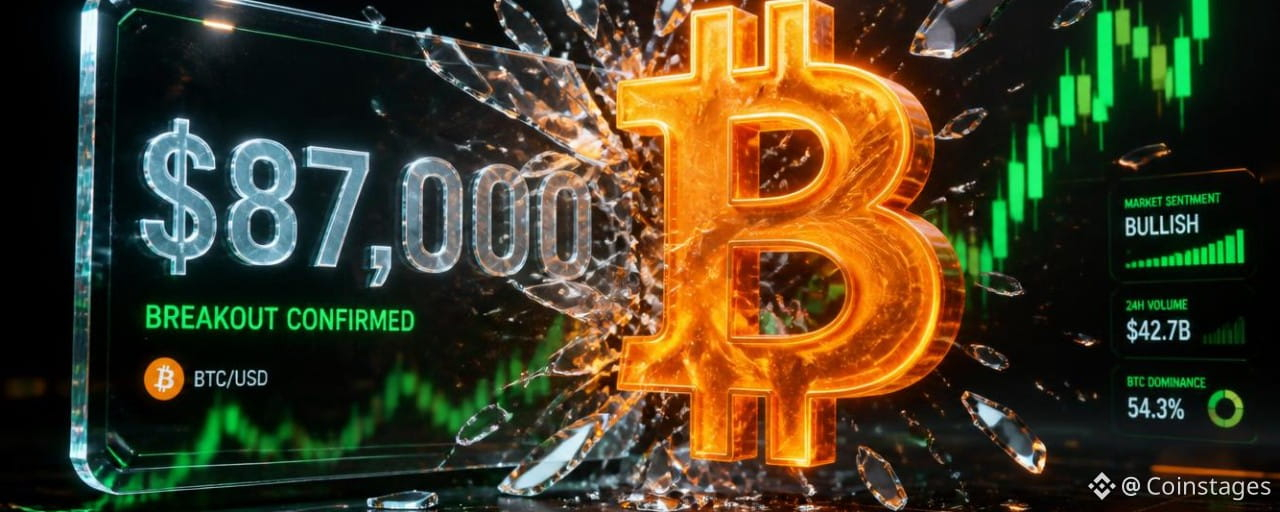
Bitcoin Reclaims $87K as Short Squeeze & Institutional Flows Ignites RallyBitcoin ($BTC) has surged past the critical $87,000 zone, marking a sharp multi-month high and triggering over $1 billion in derivatives liquidations across digital asset markets. What started as steady spot accumulation accelerated into an explosive short squeeze, flipping broader crypto market sentiment heavily bullish.
The sudden breakout highlights a major shift in market structure as seller resistance yielded to overwhelming institutional and retail demand.
1. Short Squeeze & Macro Catalyst Drive the Reclaim
The engine behind Bitcoin’s swift reclaim of $87,000 was a cascade of forced short liquidations combined with improving risk-on macro conditions:
Derivatives Squeeze: Aggressive leverage on short positions was caught off-guard, liquidating over $1B across exchanges within 24 hours.Macro Risk Sentiment: Easing U.S. Treasury yields, declining oil prices, and renewed institutional ETF accumulation provided strong tailwinds for risk assets.Spot Market Demand: Coinbase premium index uptick and spot ETF inflows confirmed true institutional backing behind the price expansion.
2. On-Chain Metrics & Market-Wide Impact
Unlike brief speculation-led pumps, this move reflects tightening liquidity and strong structural support across the ecosystem:
[Macro Alignment & ETF Inflows] ──> [$1B+ Liquidation Squeeze] ──> [BTC Reclaims $87K Level]
Supply Migration: Exchange outflows remain steady as long-term holders continue moving coins to non-custodial storage.Altcoin Momentum: The $87K milestone ignited secondary market rallies across major networks, lifting the total cryptocurrency market cap back toward $1.8 Trillion.
3. Path Forward: Is $90K Next?
With $87,000 reclaimed, traders and technical analysts are targeting the psychological $90,000 milestone. Establishing a solid support floor around $85,000–$87,000 will be key to sustaining this momentum leg and invalidating fakeout risks.
Sustained spot volume through this level could set up a clean continuation toward fresh macro highs.
Essential Financial Disclaimer
This article is provided strictly for educational, news, and informational purposes only. Cryptocurrency assets, including Bitcoin ($BTC), are subject to extreme price volatility, leverage risk, and regulatory changes. Nothing contained herein constitutes financial, legal, or investment advice. Always perform independent research (DYOR) and evaluate your personal risk tolerance before making trading or investment decisions.
📢 Are you positioned for the $90K rally? Don't get caught on the wrong side of market volatility!
Bitcoin Reclaims $87K as Short Squeeze & Institutional Flows Ignites Rally
Bitcoin ($BTC) has surged past the critical $87,000 zone, marking a sharp multi-month high and triggering over $1 billion in derivatives liquidations across digital asset markets. What started as steady spot accumulation accelerated into an explosive short squeeze, flipping broader crypto market sentiment heavily bullish.
The sudden breakout highlights a major shift in market structure as seller resistance yielded to overwhelming institutional and retail demand.
1. Short Squeeze & Macro Catalyst Drive the Reclaim
The engine behind Bitcoin’s swift reclaim of $87,000 was a cascade of forced short liquidations combined with improving risk-on macro conditions:
Derivatives Squeeze: Aggressive leverage on short positions was caught off-guard, liquidating over $1B across exchanges within 24 hours.Macro Risk Sentiment: Easing U.S. Treasury yields, declining oil prices, and renewed institutional ETF accumulation provided strong tailwinds for risk assets.Spot Market Demand: Coinbase premium index uptick and spot ETF inflows confirmed true institutional backing behind the price expansion.
2. On-Chain Metrics & Market-Wide Impact
Unlike brief speculation-led pumps, this move reflects tightening liquidity and strong structural support across the ecosystem:
[Macro Alignment & ETF Inflows] ──> [$1B+ Liquidation Squeeze] ──> [BTC Reclaims $87K Level]
Supply Migration: Exchange outflows remain steady as long-term holders continue moving coins to non-custodial storage.Altcoin Momentum: The $87K milestone ignited secondary market rallies across major networks, lifting the total cryptocurrency market cap back toward $1.8 Trillion.
3. Path Forward: Is $90K Next?
With $87,000 reclaimed, traders and technical analysts are targeting the psychological $90,000 milestone. Establishing a solid support floor around $85,000–$87,000 will be key to sustaining this momentum leg and invalidating fakeout risks.
Sustained spot volume through this level could set up a clean continuation toward fresh macro highs.
Essential Financial Disclaimer
This article is provided strictly for educational, news, and informational purposes only. Cryptocurrency assets, including Bitcoin ($BTC), are subject to extreme price volatility, leverage risk, and regulatory changes. Nothing contained herein constitutes financial, legal, or investment advice. Always perform independent research (DYOR) and evaluate your personal risk tolerance before making trading or investment decisions.
📢 Are you positioned for the $90K rally? Don't get caught on the wrong side of market volatility!
The sudden breakout highlights a major shift in market structure as seller resistance yielded to overwhelming institutional and retail demand.
1. Short Squeeze & Macro Catalyst Drive the Reclaim
The engine behind Bitcoin’s swift reclaim of $87,000 was a cascade of forced short liquidations combined with improving risk-on macro conditions:
Derivatives Squeeze: Aggressive leverage on short positions was caught off-guard, liquidating over $1B across exchanges within 24 hours.Macro Risk Sentiment: Easing U.S. Treasury yields, declining oil prices, and renewed institutional ETF accumulation provided strong tailwinds for risk assets.Spot Market Demand: Coinbase premium index uptick and spot ETF inflows confirmed true institutional backing behind the price expansion.
2. On-Chain Metrics & Market-Wide Impact
Unlike brief speculation-led pumps, this move reflects tightening liquidity and strong structural support across the ecosystem:
[Macro Alignment & ETF Inflows] ──> [$1B+ Liquidation Squeeze] ──> [BTC Reclaims $87K Level]
Supply Migration: Exchange outflows remain steady as long-term holders continue moving coins to non-custodial storage.Altcoin Momentum: The $87K milestone ignited secondary market rallies across major networks, lifting the total cryptocurrency market cap back toward $1.8 Trillion.
3. Path Forward: Is $90K Next?
With $87,000 reclaimed, traders and technical analysts are targeting the psychological $90,000 milestone. Establishing a solid support floor around $85,000–$87,000 will be key to sustaining this momentum leg and invalidating fakeout risks.
Sustained spot volume through this level could set up a clean continuation toward fresh macro highs.
Essential Financial Disclaimer
This article is provided strictly for educational, news, and informational purposes only. Cryptocurrency assets, including Bitcoin ($BTC), are subject to extreme price volatility, leverage risk, and regulatory changes. Nothing contained herein constitutes financial, legal, or investment advice. Always perform independent research (DYOR) and evaluate your personal risk tolerance before making trading or investment decisions.
📢 Are you positioned for the $90K rally? Don't get caught on the wrong side of market volatility!
212
·
--
Verified

Article
SAYLOR HINTS AT NEW MICROSTRATEGY BITCOIN BUYS FOLLOWING 'DEAD CAT BOUNCE' DEBATEMicroStrategy Executive Chairman Michael Saylor has reignited market excitement after posting a subtle social media hint suggesting the firm may have resumed its Bitcoin purchases. Sharing an updated holdings chart with the caption "A little more orange," Saylor utilized a familiar formula that historically precedes official corporate SEC buying disclosures.
This teaser comes directly on the heels of a high-profile debate on social media where critics labeled Bitcoin's recent price recovery a temporary "dead cat bounce".
🍊 The Teaser & Corporate Holdings Context
"A Little More Orange": Saylor's cryptic post signals a potential end to MicroStrategy's two-week buying pause between September 8 and September 13.Massive Treasury Reserve: MicroStrategy currently holds 845,050 BTC acquired for approximately $63.73 billion, representing an average purchase price of $75,412 per coin.Dry Powder Ready: Regulatory filings indicate the company retained $1.30 billion in its purchase account as of mid-September, providing substantial capital runway for additional spot acquisitions.
🐱 The "Dead Cat Bounce" Debated & Refuted
The Critic's Claim: Angel investor Jason Calacanis sparked controversy by sharing a 1-year chart showing Bitcoin down 31%, claiming the current recovery is a "dead cat bounce" and arguing Bitcoin has lost public excitement.Saylor's Rebuttal: Saylor defended the digital asset, emphasizing its evolution into a $1.6 trillion network and framing "Digital Capital" as the ultimate store-of-value application for generational wealth preservation.Cathie Wood & Technicals: ARK Invest founder Cathie Wood similarly rejected the "dead cat" label. Furthermore, technical market definitions require price action to breakdown below previous lows (~$75,000) to confirm a dead cat bounce—whereas Bitcoin continues trading comfortably above $81,000.
Essential Financial Disclaimer
This article is strictly for educational and informational purposes only and does not constitute financial, investment, legal, or trading advice. Corporate Treasury balance sheet moves, digital assets, and high-beta market cycles carry significant volatility and risk. Always perform independent research (DYOR) and consult a certified financial advisor before making any investment decisions.
Do you think Saylor’s latest hint confirms a massive new Bitcoin buy, or is the market facing macro resistance ahead? Share your thoughts and price predictions in the comments below! 📊⚡
SAYLOR HINTS AT NEW MICROSTRATEGY BITCOIN BUYS FOLLOWING 'DEAD CAT BOUNCE' DEBATE
MicroStrategy Executive Chairman Michael Saylor has reignited market excitement after posting a subtle social media hint suggesting the firm may have resumed its Bitcoin purchases. Sharing an updated holdings chart with the caption "A little more orange," Saylor utilized a familiar formula that historically precedes official corporate SEC buying disclosures.
This teaser comes directly on the heels of a high-profile debate on social media where critics labeled Bitcoin's recent price recovery a temporary "dead cat bounce".
🍊 The Teaser & Corporate Holdings Context
"A Little More Orange": Saylor's cryptic post signals a potential end to MicroStrategy's two-week buying pause between September 8 and September 13.Massive Treasury Reserve: MicroStrategy currently holds 845,050 BTC acquired for approximately $63.73 billion, representing an average purchase price of $75,412 per coin.Dry Powder Ready: Regulatory filings indicate the company retained $1.30 billion in its purchase account as of mid-September, providing substantial capital runway for additional spot acquisitions.
🐱 The "Dead Cat Bounce" Debated & Refuted
The Critic's Claim: Angel investor Jason Calacanis sparked controversy by sharing a 1-year chart showing Bitcoin down 31%, claiming the current recovery is a "dead cat bounce" and arguing Bitcoin has lost public excitement.Saylor's Rebuttal: Saylor defended the digital asset, emphasizing its evolution into a $1.6 trillion network and framing "Digital Capital" as the ultimate store-of-value application for generational wealth preservation.Cathie Wood & Technicals: ARK Invest founder Cathie Wood similarly rejected the "dead cat" label. Furthermore, technical market definitions require price action to breakdown below previous lows (~$75,000) to confirm a dead cat bounce—whereas Bitcoin continues trading comfortably above $81,000.
Essential Financial Disclaimer
This article is strictly for educational and informational purposes only and does not constitute financial, investment, legal, or trading advice. Corporate Treasury balance sheet moves, digital assets, and high-beta market cycles carry significant volatility and risk. Always perform independent research (DYOR) and consult a certified financial advisor before making any investment decisions.
Do you think Saylor’s latest hint confirms a massive new Bitcoin buy, or is the market facing macro resistance ahead? Share your thoughts and price predictions in the comments below! 📊⚡
This teaser comes directly on the heels of a high-profile debate on social media where critics labeled Bitcoin's recent price recovery a temporary "dead cat bounce".
🍊 The Teaser & Corporate Holdings Context
"A Little More Orange": Saylor's cryptic post signals a potential end to MicroStrategy's two-week buying pause between September 8 and September 13.Massive Treasury Reserve: MicroStrategy currently holds 845,050 BTC acquired for approximately $63.73 billion, representing an average purchase price of $75,412 per coin.Dry Powder Ready: Regulatory filings indicate the company retained $1.30 billion in its purchase account as of mid-September, providing substantial capital runway for additional spot acquisitions.
🐱 The "Dead Cat Bounce" Debated & Refuted
The Critic's Claim: Angel investor Jason Calacanis sparked controversy by sharing a 1-year chart showing Bitcoin down 31%, claiming the current recovery is a "dead cat bounce" and arguing Bitcoin has lost public excitement.Saylor's Rebuttal: Saylor defended the digital asset, emphasizing its evolution into a $1.6 trillion network and framing "Digital Capital" as the ultimate store-of-value application for generational wealth preservation.Cathie Wood & Technicals: ARK Invest founder Cathie Wood similarly rejected the "dead cat" label. Furthermore, technical market definitions require price action to breakdown below previous lows (~$75,000) to confirm a dead cat bounce—whereas Bitcoin continues trading comfortably above $81,000.
Essential Financial Disclaimer
This article is strictly for educational and informational purposes only and does not constitute financial, investment, legal, or trading advice. Corporate Treasury balance sheet moves, digital assets, and high-beta market cycles carry significant volatility and risk. Always perform independent research (DYOR) and consult a certified financial advisor before making any investment decisions.
Do you think Saylor’s latest hint confirms a massive new Bitcoin buy, or is the market facing macro resistance ahead? Share your thoughts and price predictions in the comments below! 📊⚡
1
3.1k
·
--
Partly True
Article
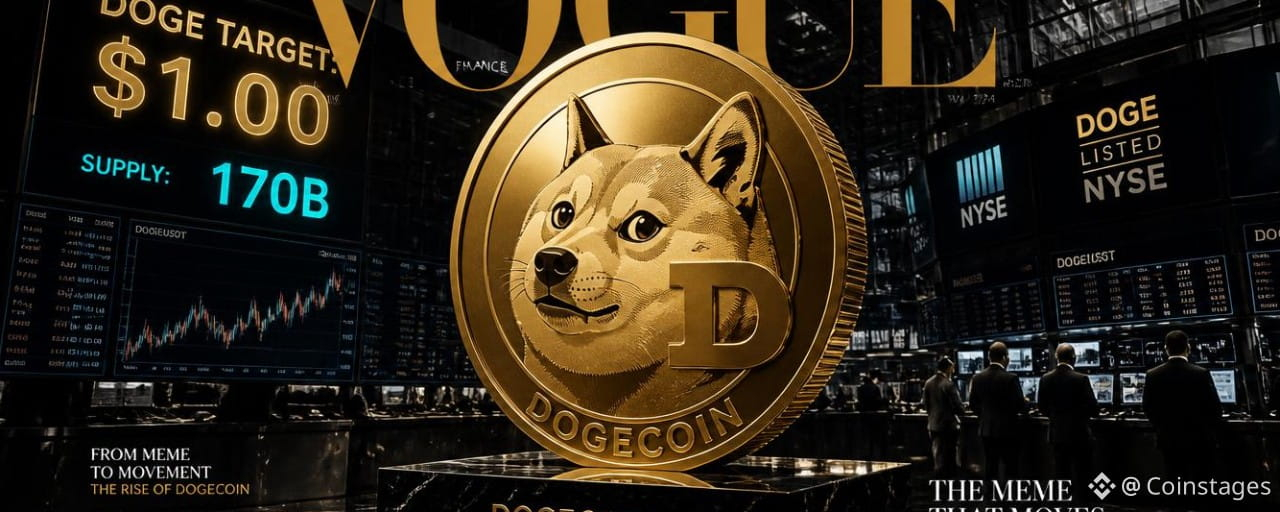
WILL DOGECOIN REACH $1 BY THE END OF 2026? HERE’S WHAT THE DATA SHOWS!The elusive $1 target for Dogecoin (DOGE) remains the ultimate rally cry for the meme coin community. Following recent macro-driven market rebounds, analysts and investors are once again debating whether the original meme asset can finally break its previous all-time high of $0.73 and cross the dollar milestone.
However, evaluating DOGE's journey to $1 requires looking past social media hype to analyze the stark mathematical, structural, and fundamental realities governing its supply dynamics.
🧮 The $1 Math: Market Cap & Supply Realities
To understand if $1 is achievable by the end of 2026, traders must evaluate the tokenomics behind the network:
Unlimited Supply Mechanics: Unlike Bitcoin's hard cap of 21 million coins, Dogecoin features an inflationary supply model that introduces 5 billion new DOGE into circulation every year.The $170B+ Threshold: With circulating supply exceeding 170 billion tokens, a $1 Dogecoin would require a massive market capitalization of over $170 billion, a valuation that would eclipse many major Fortune 500 corporations and rival primary Layer-1 networks.Capital Inflow Requirements: Reaching a $170B valuation demands billions of dollars in sustained, organic capital inflows rather than short-lived speculative retail spikes.
📊 Structural Challenges vs. Ecosystem Catalysts
Lack of Core Utility Drivers: Analysts point out that Dogecoin still faces fundamental headwinds. Without large-scale burn mechanisms, major smart contract utility, or native DeFi integration, price surges remain highly dependent on macro market sentiment and social volume.Institutional & Payment Integration: On the bullish side, long-term adoption through X payment integrations, retail merchant acceptance, and spot ETF products (such as Grayscale’s trust conversions) represent the primary structural catalysts that could drive long-term institutional demand.Macro Risk-On Waves: As seen during recent Fed rate decisions and broader altcoin rallies, DOGE continues to act as a high-beta proxy for market liquidity, surging rapidly when overall risk asset demand turns positive.
⚠️ Essential Financial Disclaimer
This article is strictly for educational and informational purposes only and does not constitute financial, investment, legal, or trading advice. Digital assets, meme coins, and price prediction scenarios carry extreme volatility and financial risk. Always perform independent research (DYOR) and consult a certified financial advisor before making any investment decisions.
Do you think Dogecoin has what it takes to reach $1 by the end of 2026, or will supply inflation keep it below its all-time high? Share your target price predictions in the comments below! 🐕📈
WILL DOGECOIN REACH $1 BY THE END OF 2026? HERE’S WHAT THE DATA SHOWS!
The elusive $1 target for Dogecoin (DOGE) remains the ultimate rally cry for the meme coin community. Following recent macro-driven market rebounds, analysts and investors are once again debating whether the original meme asset can finally break its previous all-time high of $0.73 and cross the dollar milestone.
However, evaluating DOGE's journey to $1 requires looking past social media hype to analyze the stark mathematical, structural, and fundamental realities governing its supply dynamics.
🧮 The $1 Math: Market Cap & Supply Realities
To understand if $1 is achievable by the end of 2026, traders must evaluate the tokenomics behind the network:
Unlimited Supply Mechanics: Unlike Bitcoin's hard cap of 21 million coins, Dogecoin features an inflationary supply model that introduces 5 billion new DOGE into circulation every year.The $170B+ Threshold: With circulating supply exceeding 170 billion tokens, a $1 Dogecoin would require a massive market capitalization of over $170 billion, a valuation that would eclipse many major Fortune 500 corporations and rival primary Layer-1 networks.Capital Inflow Requirements: Reaching a $170B valuation demands billions of dollars in sustained, organic capital inflows rather than short-lived speculative retail spikes.
📊 Structural Challenges vs. Ecosystem Catalysts
Lack of Core Utility Drivers: Analysts point out that Dogecoin still faces fundamental headwinds. Without large-scale burn mechanisms, major smart contract utility, or native DeFi integration, price surges remain highly dependent on macro market sentiment and social volume.Institutional & Payment Integration: On the bullish side, long-term adoption through X payment integrations, retail merchant acceptance, and spot ETF products (such as Grayscale’s trust conversions) represent the primary structural catalysts that could drive long-term institutional demand.Macro Risk-On Waves: As seen during recent Fed rate decisions and broader altcoin rallies, DOGE continues to act as a high-beta proxy for market liquidity, surging rapidly when overall risk asset demand turns positive.
⚠️ Essential Financial Disclaimer
This article is strictly for educational and informational purposes only and does not constitute financial, investment, legal, or trading advice. Digital assets, meme coins, and price prediction scenarios carry extreme volatility and financial risk. Always perform independent research (DYOR) and consult a certified financial advisor before making any investment decisions.
Do you think Dogecoin has what it takes to reach $1 by the end of 2026, or will supply inflation keep it below its all-time high? Share your target price predictions in the comments below! 🐕📈
However, evaluating DOGE's journey to $1 requires looking past social media hype to analyze the stark mathematical, structural, and fundamental realities governing its supply dynamics.
🧮 The $1 Math: Market Cap & Supply Realities
To understand if $1 is achievable by the end of 2026, traders must evaluate the tokenomics behind the network:
Unlimited Supply Mechanics: Unlike Bitcoin's hard cap of 21 million coins, Dogecoin features an inflationary supply model that introduces 5 billion new DOGE into circulation every year.The $170B+ Threshold: With circulating supply exceeding 170 billion tokens, a $1 Dogecoin would require a massive market capitalization of over $170 billion, a valuation that would eclipse many major Fortune 500 corporations and rival primary Layer-1 networks.Capital Inflow Requirements: Reaching a $170B valuation demands billions of dollars in sustained, organic capital inflows rather than short-lived speculative retail spikes.
📊 Structural Challenges vs. Ecosystem Catalysts
Lack of Core Utility Drivers: Analysts point out that Dogecoin still faces fundamental headwinds. Without large-scale burn mechanisms, major smart contract utility, or native DeFi integration, price surges remain highly dependent on macro market sentiment and social volume.Institutional & Payment Integration: On the bullish side, long-term adoption through X payment integrations, retail merchant acceptance, and spot ETF products (such as Grayscale’s trust conversions) represent the primary structural catalysts that could drive long-term institutional demand.Macro Risk-On Waves: As seen during recent Fed rate decisions and broader altcoin rallies, DOGE continues to act as a high-beta proxy for market liquidity, surging rapidly when overall risk asset demand turns positive.
⚠️ Essential Financial Disclaimer
This article is strictly for educational and informational purposes only and does not constitute financial, investment, legal, or trading advice. Digital assets, meme coins, and price prediction scenarios carry extreme volatility and financial risk. Always perform independent research (DYOR) and consult a certified financial advisor before making any investment decisions.
Do you think Dogecoin has what it takes to reach $1 by the end of 2026, or will supply inflation keep it below its all-time high? Share your target price predictions in the comments below! 🐕📈
1
5
1.4k
·
--
Article
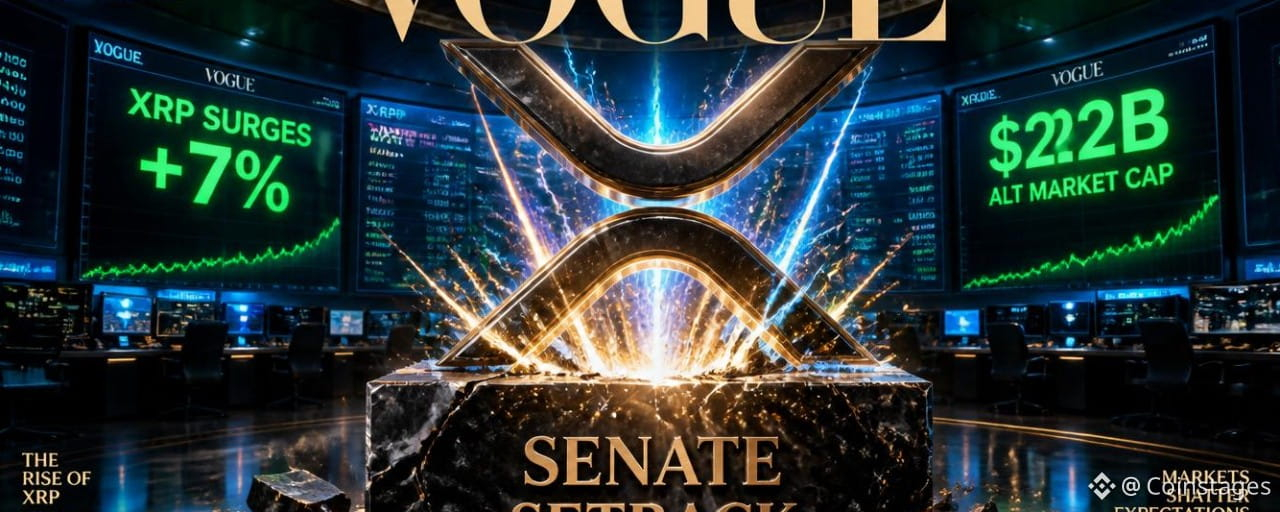
XRP SHAKES OFF SENATE CLARITY ACT FAILURE AND FED RATE HIKE TO SURGE OVER 7%!Digital asset markets have demonstrated remarkable resilience following a volatile week. After a double blow from the U.S. Senate blocking the CLARITY Act (H.R. 3633) procedural vote and an unexpected 25 bps Federal Reserve rate hike, XRP completely absorbed the selling pressure. Rebounding from local lows of $1.27, XRP surged over 7% to reclaim the $1.39 mark alongside a broader altcoin market rally.
🏛️ The Dual Setback: Senate Failure & Fed Hawkishness
Market participants were hit by two macro headwinds in short succession earlier this week:
CLARITY Act Stalls: On September 15, the Senate cloture vote fell narrow at 50-49, missing the 60-vote threshold required to advance statutory market structure rules. XRP immediately dropped 8% toward $1.27.Federal Reserve Rate Increase: The macro pressure intensified when the Fed bumped its benchmark interest rate by 25 basis points to a 3.75%–4.00% range, tightening financial liquidity.Fast Absorption: Despite the initial panic liquidations, the drawdown proved exceptionally short-lived as spot buyers stepped in to absorb supply, driving trading volume near its 30-day average of $3.9 billion.
📊 On-Chain Whales & Technical Inverse Head-and-Shoulders
Technical and on-chain metrics point toward steady accumulation rather than low-liquidity speculation:
Institutional Futures & Whale Inflows: CryptoQuant data revealed Binance whale deposits reaching 6-month highs, while futures open interest fully erased its post-vote decline, signaling institutional position rebuilding.Altcoin Market Cap Highs: Broad crypto sentiment turned sharply bullish as the total altcoin market capitalization broke $222 billion for the first time in eight months, led by Solana (+10.75%), Bitcoin ($80,750+), and Ethereum ($2,595+).The $1.55 Neckline Breakout: Chart analysts highlight a developing inverse head-and-shoulders pattern. A confirmed daily close above the $1.41-$1.55 resistance zone could validate a bullish reversal targeting $2.00.
⚠️ Essential Financial Disclaimer
This article is strictly for educational and informational purposes only and does not constitute financial, investment, legal, or trading advice. Digital assets carry high price volatility and legislative uncertainty. Always perform independent research (DYOR) and consult a certified financial advisor before making any investment decisions.
Will XRP break above the crucial $1.55 technical neckline to target $2.00, or will macro consolidation continue? Share your technical analysis and target predictions in the comments below! 📊⚡
XRP SHAKES OFF SENATE CLARITY ACT FAILURE AND FED RATE HIKE TO SURGE OVER 7%!
Digital asset markets have demonstrated remarkable resilience following a volatile week. After a double blow from the U.S. Senate blocking the CLARITY Act (H.R. 3633) procedural vote and an unexpected 25 bps Federal Reserve rate hike, XRP completely absorbed the selling pressure. Rebounding from local lows of $1.27, XRP surged over 7% to reclaim the $1.39 mark alongside a broader altcoin market rally.
🏛️ The Dual Setback: Senate Failure & Fed Hawkishness
Market participants were hit by two macro headwinds in short succession earlier this week:
CLARITY Act Stalls: On September 15, the Senate cloture vote fell narrow at 50-49, missing the 60-vote threshold required to advance statutory market structure rules. XRP immediately dropped 8% toward $1.27.Federal Reserve Rate Increase: The macro pressure intensified when the Fed bumped its benchmark interest rate by 25 basis points to a 3.75%–4.00% range, tightening financial liquidity.Fast Absorption: Despite the initial panic liquidations, the drawdown proved exceptionally short-lived as spot buyers stepped in to absorb supply, driving trading volume near its 30-day average of $3.9 billion.
📊 On-Chain Whales & Technical Inverse Head-and-Shoulders
Technical and on-chain metrics point toward steady accumulation rather than low-liquidity speculation:
Institutional Futures & Whale Inflows: CryptoQuant data revealed Binance whale deposits reaching 6-month highs, while futures open interest fully erased its post-vote decline, signaling institutional position rebuilding.Altcoin Market Cap Highs: Broad crypto sentiment turned sharply bullish as the total altcoin market capitalization broke $222 billion for the first time in eight months, led by Solana (+10.75%), Bitcoin ($80,750+), and Ethereum ($2,595+).The $1.55 Neckline Breakout: Chart analysts highlight a developing inverse head-and-shoulders pattern. A confirmed daily close above the $1.41-$1.55 resistance zone could validate a bullish reversal targeting $2.00.
⚠️ Essential Financial Disclaimer
This article is strictly for educational and informational purposes only and does not constitute financial, investment, legal, or trading advice. Digital assets carry high price volatility and legislative uncertainty. Always perform independent research (DYOR) and consult a certified financial advisor before making any investment decisions.
Will XRP break above the crucial $1.55 technical neckline to target $2.00, or will macro consolidation continue? Share your technical analysis and target predictions in the comments below! 📊⚡
🏛️ The Dual Setback: Senate Failure & Fed Hawkishness
Market participants were hit by two macro headwinds in short succession earlier this week:
CLARITY Act Stalls: On September 15, the Senate cloture vote fell narrow at 50-49, missing the 60-vote threshold required to advance statutory market structure rules. XRP immediately dropped 8% toward $1.27.Federal Reserve Rate Increase: The macro pressure intensified when the Fed bumped its benchmark interest rate by 25 basis points to a 3.75%–4.00% range, tightening financial liquidity.Fast Absorption: Despite the initial panic liquidations, the drawdown proved exceptionally short-lived as spot buyers stepped in to absorb supply, driving trading volume near its 30-day average of $3.9 billion.
📊 On-Chain Whales & Technical Inverse Head-and-Shoulders
Technical and on-chain metrics point toward steady accumulation rather than low-liquidity speculation:
Institutional Futures & Whale Inflows: CryptoQuant data revealed Binance whale deposits reaching 6-month highs, while futures open interest fully erased its post-vote decline, signaling institutional position rebuilding.Altcoin Market Cap Highs: Broad crypto sentiment turned sharply bullish as the total altcoin market capitalization broke $222 billion for the first time in eight months, led by Solana (+10.75%), Bitcoin ($80,750+), and Ethereum ($2,595+).The $1.55 Neckline Breakout: Chart analysts highlight a developing inverse head-and-shoulders pattern. A confirmed daily close above the $1.41-$1.55 resistance zone could validate a bullish reversal targeting $2.00.
⚠️ Essential Financial Disclaimer
This article is strictly for educational and informational purposes only and does not constitute financial, investment, legal, or trading advice. Digital assets carry high price volatility and legislative uncertainty. Always perform independent research (DYOR) and consult a certified financial advisor before making any investment decisions.
Will XRP break above the crucial $1.55 technical neckline to target $2.00, or will macro consolidation continue? Share your technical analysis and target predictions in the comments below! 📊⚡
1.1k
·
--
Article
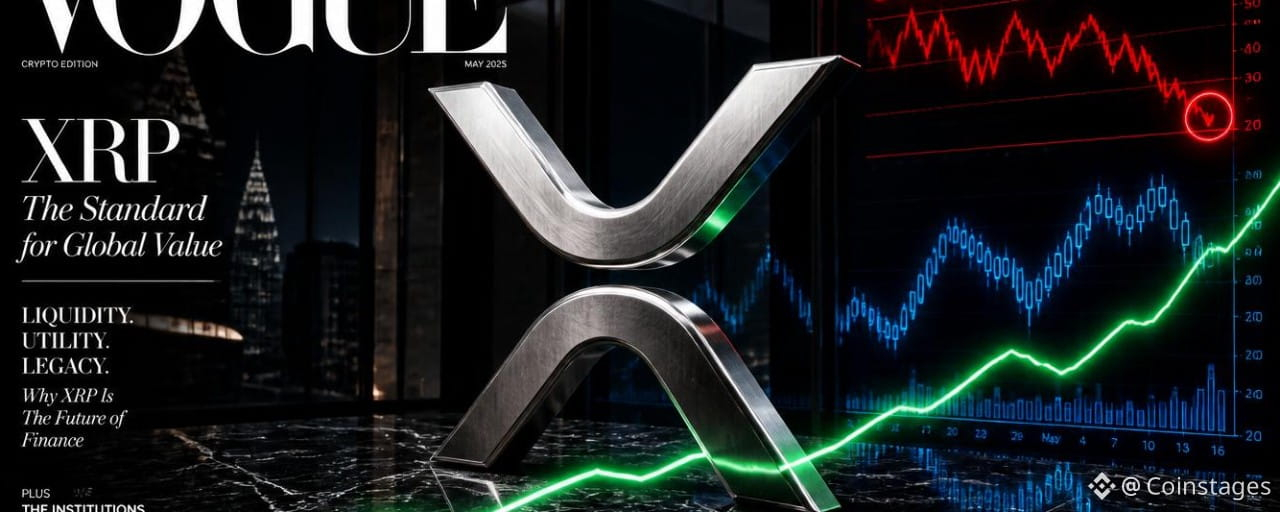
This XRP Chart Signal Hasn't Happened in 13 YearsXRP is testing trader resolve as technical indicators flash unprecedented oversold extremes. Following a sharp market-wide drawdown, XRP’s two-week Relative Strength Index (RSI) has collapsed to its lowest point in its 13-year trading history, dropping below the historical oversold extremes recorded during both the 2018 bear market and the 2020 SEC lawsuit panic.
While technical momentum appears severely battered, macro analysts highlight that XRP continues to hold above a decade-long rising trendline, setting up a decisive tug-of-war between seller exhaustion and technical breakdown risks.
📊 The 13-Year Oversold Signal: Deep Dive
Unprecedented RSI Depths: XRP's 14-period two-week RSI has breached historic lows. Historically, multi-year RSI bottoms have marked major macro accumulation zones ahead of parabolic multi-month expansions.The $1.29 - $1.30 Line in the Sand: Despite the severe RSI contraction, XRP price action is hovering around critical macro support between $1.29 and $1.30. This range acts as a structural floor for its multi-year macro channel.Moving Average Confluence: The 50-day EMA ($1.284) and 100-day EMA ($1.256) offer deeper technical cushions directly beneath current price levels, while the 200-day EMA ($1.352) acts as the immediate overhead barrier to invalidate bearish momentum.
⚔️ Bullish Reversal vs. Bearish Breakdown
Bullish Reversal Thesis (Seller Exhaustion): The primary price target is a breakout above the 200-day EMA at $1.352 towards $1.90. This setup is driven by a historic 13-year RSI oversold bounce, signaling deep accumulation and a potential short-seller squeeze.Bearish Breakdown Risk: The primary downside risk is a confirmed loss of the $1.29 - $1.25 support zone. Driven by fading MACD momentum and high spot sell volume, a breakdown could trigger a panic flush testing the macro $1.00 psychological level.
Essential Financial Disclaimer
This article is strictly for educational and informational purposes only and does not constitute financial, investment, legal, or trading advice. Digital assets, technical chart patterns, and oversold indicators carry inherent market risk and volatility. Always conduct independent research (DYOR) and consult a certified financial advisor before making any investment decisions.
Is XRP’s 13-year RSI low the ultimate bottom-buying opportunity, or are prices heading lower to retest $1.00? Share your technical analysis and target predictions in the comments below! 📊⚡
This XRP Chart Signal Hasn't Happened in 13 Years
XRP is testing trader resolve as technical indicators flash unprecedented oversold extremes. Following a sharp market-wide drawdown, XRP’s two-week Relative Strength Index (RSI) has collapsed to its lowest point in its 13-year trading history, dropping below the historical oversold extremes recorded during both the 2018 bear market and the 2020 SEC lawsuit panic.
While technical momentum appears severely battered, macro analysts highlight that XRP continues to hold above a decade-long rising trendline, setting up a decisive tug-of-war between seller exhaustion and technical breakdown risks.
📊 The 13-Year Oversold Signal: Deep Dive
Unprecedented RSI Depths: XRP's 14-period two-week RSI has breached historic lows. Historically, multi-year RSI bottoms have marked major macro accumulation zones ahead of parabolic multi-month expansions.The $1.29 - $1.30 Line in the Sand: Despite the severe RSI contraction, XRP price action is hovering around critical macro support between $1.29 and $1.30. This range acts as a structural floor for its multi-year macro channel.Moving Average Confluence: The 50-day EMA ($1.284) and 100-day EMA ($1.256) offer deeper technical cushions directly beneath current price levels, while the 200-day EMA ($1.352) acts as the immediate overhead barrier to invalidate bearish momentum.
⚔️ Bullish Reversal vs. Bearish Breakdown
Bullish Reversal Thesis (Seller Exhaustion): The primary price target is a breakout above the 200-day EMA at $1.352 towards $1.90. This setup is driven by a historic 13-year RSI oversold bounce, signaling deep accumulation and a potential short-seller squeeze.Bearish Breakdown Risk: The primary downside risk is a confirmed loss of the $1.29 - $1.25 support zone. Driven by fading MACD momentum and high spot sell volume, a breakdown could trigger a panic flush testing the macro $1.00 psychological level.
Essential Financial Disclaimer
This article is strictly for educational and informational purposes only and does not constitute financial, investment, legal, or trading advice. Digital assets, technical chart patterns, and oversold indicators carry inherent market risk and volatility. Always conduct independent research (DYOR) and consult a certified financial advisor before making any investment decisions.
Is XRP’s 13-year RSI low the ultimate bottom-buying opportunity, or are prices heading lower to retest $1.00? Share your technical analysis and target predictions in the comments below! 📊⚡
While technical momentum appears severely battered, macro analysts highlight that XRP continues to hold above a decade-long rising trendline, setting up a decisive tug-of-war between seller exhaustion and technical breakdown risks.
📊 The 13-Year Oversold Signal: Deep Dive
Unprecedented RSI Depths: XRP's 14-period two-week RSI has breached historic lows. Historically, multi-year RSI bottoms have marked major macro accumulation zones ahead of parabolic multi-month expansions.The $1.29 - $1.30 Line in the Sand: Despite the severe RSI contraction, XRP price action is hovering around critical macro support between $1.29 and $1.30. This range acts as a structural floor for its multi-year macro channel.Moving Average Confluence: The 50-day EMA ($1.284) and 100-day EMA ($1.256) offer deeper technical cushions directly beneath current price levels, while the 200-day EMA ($1.352) acts as the immediate overhead barrier to invalidate bearish momentum.
⚔️ Bullish Reversal vs. Bearish Breakdown
Bullish Reversal Thesis (Seller Exhaustion): The primary price target is a breakout above the 200-day EMA at $1.352 towards $1.90. This setup is driven by a historic 13-year RSI oversold bounce, signaling deep accumulation and a potential short-seller squeeze.Bearish Breakdown Risk: The primary downside risk is a confirmed loss of the $1.29 - $1.25 support zone. Driven by fading MACD momentum and high spot sell volume, a breakdown could trigger a panic flush testing the macro $1.00 psychological level.
Essential Financial Disclaimer
This article is strictly for educational and informational purposes only and does not constitute financial, investment, legal, or trading advice. Digital assets, technical chart patterns, and oversold indicators carry inherent market risk and volatility. Always conduct independent research (DYOR) and consult a certified financial advisor before making any investment decisions.
Is XRP’s 13-year RSI low the ultimate bottom-buying opportunity, or are prices heading lower to retest $1.00? Share your technical analysis and target predictions in the comments below! 📊⚡
2
6
9.3k
·
--

Article
ARC MAINNET LAUNCHES WITH INSTITUTIONAL BACKING, BUT MEME COIN TRADERS ARE STEALING THE SHOW!Circle has officially debuted its highly anticipated Arc mainnet, bringing a new Layer-1 blockchain built specifically around stablecoin rails, gas fees paid natively in USDC, and institutional-grade infrastructure. While the network launched with major traditional finance entities like BlackRock and Visa acting as founding validators, speculative liquidity is already rushing into the ecosystem, driven by a surge in automated launchpad deployments and meme coin trading.
🏛️ Institutional Foundation Meets Retail Frenzy
The debut of Arc highlights a fascinating dichotomy in Web3: institutional trust meeting degen-driven retail liquidity.
Heavyweight Validation: Arc opened its public mainnet with 11 founding validators from major financial and tech giants, including BlackRock, Visa, and Circle, offering unprecedented enterprise compliance and stability.USDC-Native Gas: Eliminating volatile gas token friction, Arc enforces native gas payments using USDC, streamlining transactions for both enterprise apps and on-chain micro-traders.Meme Coin Launchpads Erupt: Despite its institutional mandate, traders are positioning for an explosion in retail volume similar to previous L1 rollouts. Third-party token launchpads have immediately gone live, giving creators instant tools to spin up speculative meme tokens in seconds.
📈 The Degen Migration: Why Speculators Are Eyeball-Deep in Arc
As liquidity fragmented across older networks, meme coin communities are actively hunting for fresh, high-throughput environments with low transaction fees.
Early Mover Advantage: Retail participants are racing to capture early-stage liquidity pools on new Arc-native DEXs, hunting for the network's first flagship meme tokens.Robinhood Chain Playbook: Market watchers draw direct comparisons to the Robinhood Chain rollout, where speculative meme trading sparked a massive surge in initial network activity before enterprise protocols fully matured.Volume Spikes: Early metrics show rapid growth in micro-cap token creation and DEX trading volume, proving that meme speculation remains the primary initial onboarding funnel for new Layer-1 blockchains.
Essential Financial Disclaimer
This article is strictly for educational and informational purposes only and does not constitute financial, investment, legal, or trading advice. Digital assets, newly launched Layer-1 ecosystems, and micro-cap meme tokens carry extreme volatility and total loss capital risk. Always perform independent research (DYOR) and consult a certified financial advisor before making investment decisions.
Will Arc's institutional validation keep the network grounded, or will speculative meme coin volume become the primary engine of its early growth? Share your favorite Arc tokens and ecosystem predictions in the comments below! 🚀⚡
ARC MAINNET LAUNCHES WITH INSTITUTIONAL BACKING, BUT MEME COIN TRADERS ARE STEALING THE SHOW!
Circle has officially debuted its highly anticipated Arc mainnet, bringing a new Layer-1 blockchain built specifically around stablecoin rails, gas fees paid natively in USDC, and institutional-grade infrastructure. While the network launched with major traditional finance entities like BlackRock and Visa acting as founding validators, speculative liquidity is already rushing into the ecosystem, driven by a surge in automated launchpad deployments and meme coin trading.
🏛️ Institutional Foundation Meets Retail Frenzy
The debut of Arc highlights a fascinating dichotomy in Web3: institutional trust meeting degen-driven retail liquidity.
Heavyweight Validation: Arc opened its public mainnet with 11 founding validators from major financial and tech giants, including BlackRock, Visa, and Circle, offering unprecedented enterprise compliance and stability.USDC-Native Gas: Eliminating volatile gas token friction, Arc enforces native gas payments using USDC, streamlining transactions for both enterprise apps and on-chain micro-traders.Meme Coin Launchpads Erupt: Despite its institutional mandate, traders are positioning for an explosion in retail volume similar to previous L1 rollouts. Third-party token launchpads have immediately gone live, giving creators instant tools to spin up speculative meme tokens in seconds.
📈 The Degen Migration: Why Speculators Are Eyeball-Deep in Arc
As liquidity fragmented across older networks, meme coin communities are actively hunting for fresh, high-throughput environments with low transaction fees.
Early Mover Advantage: Retail participants are racing to capture early-stage liquidity pools on new Arc-native DEXs, hunting for the network's first flagship meme tokens.Robinhood Chain Playbook: Market watchers draw direct comparisons to the Robinhood Chain rollout, where speculative meme trading sparked a massive surge in initial network activity before enterprise protocols fully matured.Volume Spikes: Early metrics show rapid growth in micro-cap token creation and DEX trading volume, proving that meme speculation remains the primary initial onboarding funnel for new Layer-1 blockchains.
Essential Financial Disclaimer
This article is strictly for educational and informational purposes only and does not constitute financial, investment, legal, or trading advice. Digital assets, newly launched Layer-1 ecosystems, and micro-cap meme tokens carry extreme volatility and total loss capital risk. Always perform independent research (DYOR) and consult a certified financial advisor before making investment decisions.
Will Arc's institutional validation keep the network grounded, or will speculative meme coin volume become the primary engine of its early growth? Share your favorite Arc tokens and ecosystem predictions in the comments below! 🚀⚡
🏛️ Institutional Foundation Meets Retail Frenzy
The debut of Arc highlights a fascinating dichotomy in Web3: institutional trust meeting degen-driven retail liquidity.
Heavyweight Validation: Arc opened its public mainnet with 11 founding validators from major financial and tech giants, including BlackRock, Visa, and Circle, offering unprecedented enterprise compliance and stability.USDC-Native Gas: Eliminating volatile gas token friction, Arc enforces native gas payments using USDC, streamlining transactions for both enterprise apps and on-chain micro-traders.Meme Coin Launchpads Erupt: Despite its institutional mandate, traders are positioning for an explosion in retail volume similar to previous L1 rollouts. Third-party token launchpads have immediately gone live, giving creators instant tools to spin up speculative meme tokens in seconds.
📈 The Degen Migration: Why Speculators Are Eyeball-Deep in Arc
As liquidity fragmented across older networks, meme coin communities are actively hunting for fresh, high-throughput environments with low transaction fees.
Early Mover Advantage: Retail participants are racing to capture early-stage liquidity pools on new Arc-native DEXs, hunting for the network's first flagship meme tokens.Robinhood Chain Playbook: Market watchers draw direct comparisons to the Robinhood Chain rollout, where speculative meme trading sparked a massive surge in initial network activity before enterprise protocols fully matured.Volume Spikes: Early metrics show rapid growth in micro-cap token creation and DEX trading volume, proving that meme speculation remains the primary initial onboarding funnel for new Layer-1 blockchains.
Essential Financial Disclaimer
This article is strictly for educational and informational purposes only and does not constitute financial, investment, legal, or trading advice. Digital assets, newly launched Layer-1 ecosystems, and micro-cap meme tokens carry extreme volatility and total loss capital risk. Always perform independent research (DYOR) and consult a certified financial advisor before making investment decisions.
Will Arc's institutional validation keep the network grounded, or will speculative meme coin volume become the primary engine of its early growth? Share your favorite Arc tokens and ecosystem predictions in the comments below! 🚀⚡
2
696
·
--
Article
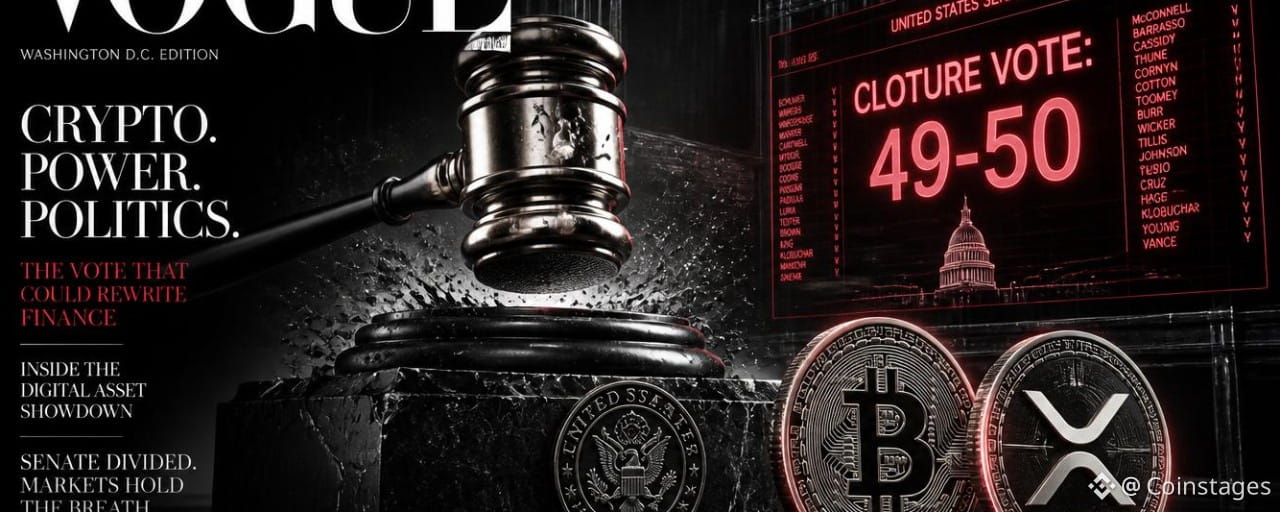
RIPPLE & MICROSTRATEGY RESPOND AS US SENATE BLOCKS LANDMARK CLARITY ACT!The digital asset industry suffered a major legislative setback on Tuesday as the United States Senate blocked the procedural motion to advance the long-awaited CLARITY Act (H.R. 3633). Falling short of the required 60-vote threshold with a final tally of 49-50, the bill's stall triggered a sharp knee-jerk sell-off across digital asset markets.
Despite the temporary market turbulence, industry heavyweights Ripple and MicroStrategy quickly moved to reassure investors that the core fundamentals and legal status of XRP and Bitcoin (BTC) remain entirely unchanged.
📉 The Legislative Gridlock & Market Knee-Jerk
The CLARITY Act was designed to establish a comprehensive market structure framework, dividing regulatory oversight between the CFTC and SEC while setting clear guidelines for stablecoins.
The Failed Vote: The Senate voted 49-50 against invoking cloture, missing the 60-vote procedural hurdle. The bill stalled largely along party lines over presidential ethics guardrails and bank lobby concerns regarding yield-bearing stablecoins.Market Sell-Off: Following the vote, Bitcoin slipped 4% below $76,000, Ethereum fell 5.2% to $2,404, and XRP plunged over 10% to $1.31 amid broader market liquidations.Not Permanently Dead: Legal analysts emphasize that the procedural defeat merely delays formal floor debate and amendment processes rather than permanently killing the bill.
🏛️ Ripple & MicroStrategy: Nothing Changes for XRP or Bitcoin
Executive leaders from major crypto firms were quick to contextualize the vote, reminding market participants that existing operations remain fully secured:
Ripple's Established Legal Clarity: Ripple highlighted that XRP operates on already established ground following its multi-year, $150M+ court battle that secured formal non-security classification. Ripple's underlying payments, stablecoin (RLUSD), and institutional infrastructure continue uninterrupted.MicroStrategy on Bitcoin: MicroStrategy executives noted that Bitcoin has never relied on Congressional legislation for its value proposition, as its decentralized monetary network functions independently of US statutory frameworks.
Essential Financial Disclaimer
This article is strictly for educational and informational purposes only and does not constitute financial, investment, legal, or trading advice. Digital assets and legislative developments carry inherent market volatility and regulatory risks. Always conduct independent research (DYOR) and consult a certified financial advisor before making investment decisions.
Do you think Congress will pass federal crypto market structure legislation before the end of the year, or will regulatory oversight remain driven by court rulings and agency enforcement? Share your thoughts and regulatory predictions in the comments below! 🏛️📉
RIPPLE & MICROSTRATEGY RESPOND AS US SENATE BLOCKS LANDMARK CLARITY ACT!
The digital asset industry suffered a major legislative setback on Tuesday as the United States Senate blocked the procedural motion to advance the long-awaited CLARITY Act (H.R. 3633). Falling short of the required 60-vote threshold with a final tally of 49-50, the bill's stall triggered a sharp knee-jerk sell-off across digital asset markets.
Despite the temporary market turbulence, industry heavyweights Ripple and MicroStrategy quickly moved to reassure investors that the core fundamentals and legal status of XRP and Bitcoin (BTC) remain entirely unchanged.
📉 The Legislative Gridlock & Market Knee-Jerk
The CLARITY Act was designed to establish a comprehensive market structure framework, dividing regulatory oversight between the CFTC and SEC while setting clear guidelines for stablecoins.
The Failed Vote: The Senate voted 49-50 against invoking cloture, missing the 60-vote procedural hurdle. The bill stalled largely along party lines over presidential ethics guardrails and bank lobby concerns regarding yield-bearing stablecoins.Market Sell-Off: Following the vote, Bitcoin slipped 4% below $76,000, Ethereum fell 5.2% to $2,404, and XRP plunged over 10% to $1.31 amid broader market liquidations.Not Permanently Dead: Legal analysts emphasize that the procedural defeat merely delays formal floor debate and amendment processes rather than permanently killing the bill.
🏛️ Ripple & MicroStrategy: Nothing Changes for XRP or Bitcoin
Executive leaders from major crypto firms were quick to contextualize the vote, reminding market participants that existing operations remain fully secured:
Ripple's Established Legal Clarity: Ripple highlighted that XRP operates on already established ground following its multi-year, $150M+ court battle that secured formal non-security classification. Ripple's underlying payments, stablecoin (RLUSD), and institutional infrastructure continue uninterrupted.MicroStrategy on Bitcoin: MicroStrategy executives noted that Bitcoin has never relied on Congressional legislation for its value proposition, as its decentralized monetary network functions independently of US statutory frameworks.
Essential Financial Disclaimer
This article is strictly for educational and informational purposes only and does not constitute financial, investment, legal, or trading advice. Digital assets and legislative developments carry inherent market volatility and regulatory risks. Always conduct independent research (DYOR) and consult a certified financial advisor before making investment decisions.
Do you think Congress will pass federal crypto market structure legislation before the end of the year, or will regulatory oversight remain driven by court rulings and agency enforcement? Share your thoughts and regulatory predictions in the comments below! 🏛️📉
Despite the temporary market turbulence, industry heavyweights Ripple and MicroStrategy quickly moved to reassure investors that the core fundamentals and legal status of XRP and Bitcoin (BTC) remain entirely unchanged.
📉 The Legislative Gridlock & Market Knee-Jerk
The CLARITY Act was designed to establish a comprehensive market structure framework, dividing regulatory oversight between the CFTC and SEC while setting clear guidelines for stablecoins.
The Failed Vote: The Senate voted 49-50 against invoking cloture, missing the 60-vote procedural hurdle. The bill stalled largely along party lines over presidential ethics guardrails and bank lobby concerns regarding yield-bearing stablecoins.Market Sell-Off: Following the vote, Bitcoin slipped 4% below $76,000, Ethereum fell 5.2% to $2,404, and XRP plunged over 10% to $1.31 amid broader market liquidations.Not Permanently Dead: Legal analysts emphasize that the procedural defeat merely delays formal floor debate and amendment processes rather than permanently killing the bill.
🏛️ Ripple & MicroStrategy: Nothing Changes for XRP or Bitcoin
Executive leaders from major crypto firms were quick to contextualize the vote, reminding market participants that existing operations remain fully secured:
Ripple's Established Legal Clarity: Ripple highlighted that XRP operates on already established ground following its multi-year, $150M+ court battle that secured formal non-security classification. Ripple's underlying payments, stablecoin (RLUSD), and institutional infrastructure continue uninterrupted.MicroStrategy on Bitcoin: MicroStrategy executives noted that Bitcoin has never relied on Congressional legislation for its value proposition, as its decentralized monetary network functions independently of US statutory frameworks.
Essential Financial Disclaimer
This article is strictly for educational and informational purposes only and does not constitute financial, investment, legal, or trading advice. Digital assets and legislative developments carry inherent market volatility and regulatory risks. Always conduct independent research (DYOR) and consult a certified financial advisor before making investment decisions.
Do you think Congress will pass federal crypto market structure legislation before the end of the year, or will regulatory oversight remain driven by court rulings and agency enforcement? Share your thoughts and regulatory predictions in the comments below! 🏛️📉
3
999
·
--
Verified
Article
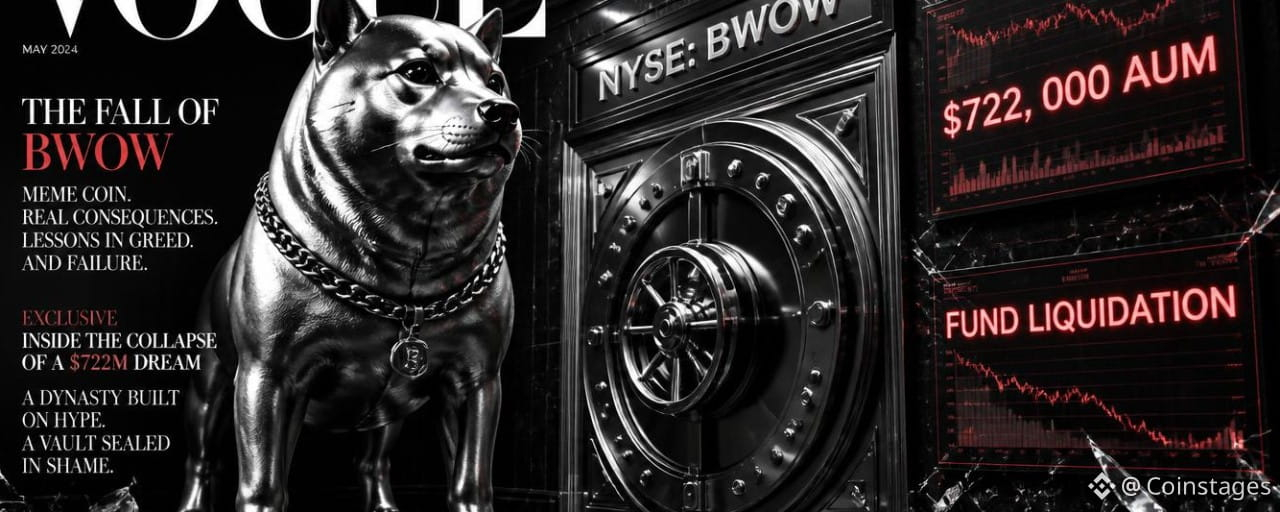
BITWISE SHUTS DOWN DOGECOIN ETF (BWOW) LESS THAN 10 MONTHS AFTER LAUNCHBitwise Asset Management has officially announced the voluntary liquidation and closure of its Bitwise Dogecoin ETF (NYSE Arca: BWOW). Launched to fanfare in late 2025, the fund struggled to gain institutional traction, drawing in just over $700,000 in total assets under management (AUM). The decision underscores the harsh economic reality facing single-asset meme coin products in the institutional exchange-traded fund marketplace.
📉 The $722,000 Failure: Low Demand Hits Single-Asset Meme ETFs
Despite Dogecoin remaining one of the highest-capitalized digital assets globally, institutional appetite for a dedicated Wall Street ETP vehicle failed to materialize.
Sub-Million AUM: As of September 9, 2026, the fund held just $688,000 to $722,000 in net assets, making it commercially unviable to maintain NYSE Arca listing fees and administrative costs.Rapid Sunset: The liquidation comes less than 10 months after BWOW’s initial debut in November 2025.Timeline to Liquidation: Trading and new share creation for BWOW will cease at the market close on October 7, 2026, with proceeds distributed to shareholders shortly thereafter.
🏛️ Why Institutional Investors Bypassed BWOW
While spot Bitcoin and Ethereum ETFs have gathered tens of billions in total inflows, single-asset meme coin ETFs face structural demand hurdles:
Retail Direct Access: Retail traders—the primary demand engine for Dogecoin—prefer trading physical DOGE directly on crypto exchanges or self-custody wallets without paying ETF management fees.Institutional Mandates: Institutional asset managers and pension funds generally prefer diversified baskets (such as index funds) or assets with staking yields (like Ethereum and Solana) over non-yielding speculative tokens.Competition from Multi-Asset Products: Capital has increasingly rotated into broad-market index products that bundle top layer-1s rather than concentrated single-token meme wrappers.
Essential Financial Disclaimer
This article is strictly for educational and informational purposes only and does not constitute financial, investment, legal, or trading advice. Digital assets, exchange-traded products, and fund liquidations carry inherent financial risks. Always perform independent research (DYOR) and consult a certified financial advisor before making any investment decisions.
Do you think single-asset meme coin ETFs have a future on Wall Street, or should financial institutions focus exclusively on major layer-1 networks? Share your thoughts and market outlook in the comments below! 🐕📊
BITWISE SHUTS DOWN DOGECOIN ETF (BWOW) LESS THAN 10 MONTHS AFTER LAUNCH
Bitwise Asset Management has officially announced the voluntary liquidation and closure of its Bitwise Dogecoin ETF (NYSE Arca: BWOW). Launched to fanfare in late 2025, the fund struggled to gain institutional traction, drawing in just over $700,000 in total assets under management (AUM). The decision underscores the harsh economic reality facing single-asset meme coin products in the institutional exchange-traded fund marketplace.
📉 The $722,000 Failure: Low Demand Hits Single-Asset Meme ETFs
Despite Dogecoin remaining one of the highest-capitalized digital assets globally, institutional appetite for a dedicated Wall Street ETP vehicle failed to materialize.
Sub-Million AUM: As of September 9, 2026, the fund held just $688,000 to $722,000 in net assets, making it commercially unviable to maintain NYSE Arca listing fees and administrative costs.Rapid Sunset: The liquidation comes less than 10 months after BWOW’s initial debut in November 2025.Timeline to Liquidation: Trading and new share creation for BWOW will cease at the market close on October 7, 2026, with proceeds distributed to shareholders shortly thereafter.
🏛️ Why Institutional Investors Bypassed BWOW
While spot Bitcoin and Ethereum ETFs have gathered tens of billions in total inflows, single-asset meme coin ETFs face structural demand hurdles:
Retail Direct Access: Retail traders—the primary demand engine for Dogecoin—prefer trading physical DOGE directly on crypto exchanges or self-custody wallets without paying ETF management fees.Institutional Mandates: Institutional asset managers and pension funds generally prefer diversified baskets (such as index funds) or assets with staking yields (like Ethereum and Solana) over non-yielding speculative tokens.Competition from Multi-Asset Products: Capital has increasingly rotated into broad-market index products that bundle top layer-1s rather than concentrated single-token meme wrappers.
Essential Financial Disclaimer
This article is strictly for educational and informational purposes only and does not constitute financial, investment, legal, or trading advice. Digital assets, exchange-traded products, and fund liquidations carry inherent financial risks. Always perform independent research (DYOR) and consult a certified financial advisor before making any investment decisions.
Do you think single-asset meme coin ETFs have a future on Wall Street, or should financial institutions focus exclusively on major layer-1 networks? Share your thoughts and market outlook in the comments below! 🐕📊
📉 The $722,000 Failure: Low Demand Hits Single-Asset Meme ETFs
Despite Dogecoin remaining one of the highest-capitalized digital assets globally, institutional appetite for a dedicated Wall Street ETP vehicle failed to materialize.
Sub-Million AUM: As of September 9, 2026, the fund held just $688,000 to $722,000 in net assets, making it commercially unviable to maintain NYSE Arca listing fees and administrative costs.Rapid Sunset: The liquidation comes less than 10 months after BWOW’s initial debut in November 2025.Timeline to Liquidation: Trading and new share creation for BWOW will cease at the market close on October 7, 2026, with proceeds distributed to shareholders shortly thereafter.
🏛️ Why Institutional Investors Bypassed BWOW
While spot Bitcoin and Ethereum ETFs have gathered tens of billions in total inflows, single-asset meme coin ETFs face structural demand hurdles:
Retail Direct Access: Retail traders—the primary demand engine for Dogecoin—prefer trading physical DOGE directly on crypto exchanges or self-custody wallets without paying ETF management fees.Institutional Mandates: Institutional asset managers and pension funds generally prefer diversified baskets (such as index funds) or assets with staking yields (like Ethereum and Solana) over non-yielding speculative tokens.Competition from Multi-Asset Products: Capital has increasingly rotated into broad-market index products that bundle top layer-1s rather than concentrated single-token meme wrappers.
Essential Financial Disclaimer
This article is strictly for educational and informational purposes only and does not constitute financial, investment, legal, or trading advice. Digital assets, exchange-traded products, and fund liquidations carry inherent financial risks. Always perform independent research (DYOR) and consult a certified financial advisor before making any investment decisions.
Do you think single-asset meme coin ETFs have a future on Wall Street, or should financial institutions focus exclusively on major layer-1 networks? Share your thoughts and market outlook in the comments below! 🐕📊
2
639
·
--
Article
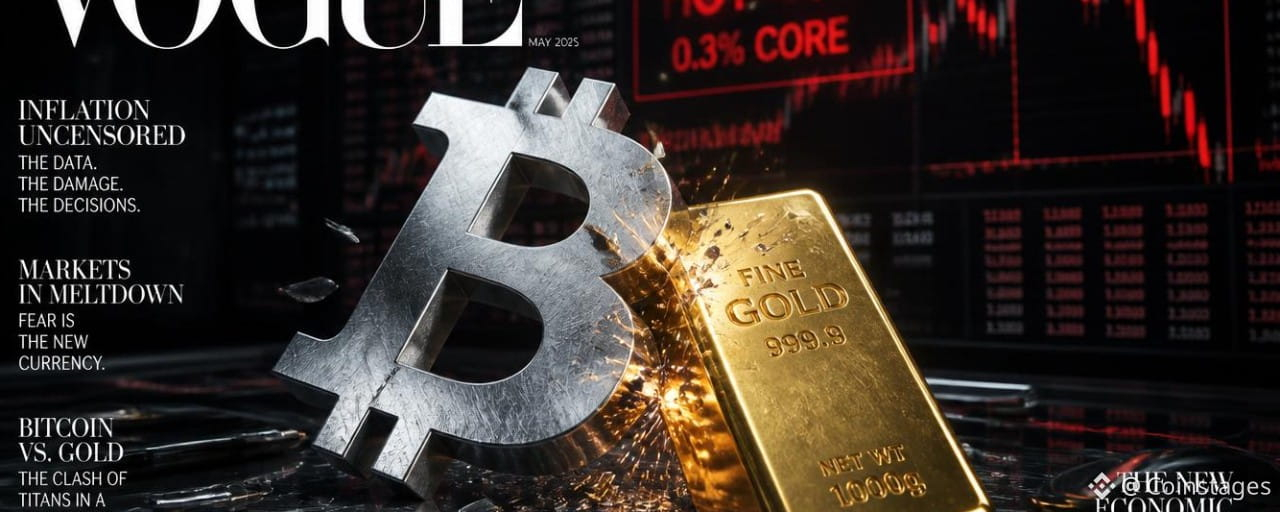
BITCOIN & GOLD FLASH CRASH: WHY A "ON-FORECAST" 2.4% CPI PRINT STILL RAN HOT!Financial markets suffered a violent knee-jerk reaction following the release of August's U.S. Consumer Price Index (CPI) report. While headline annual inflation landed precisely on market expectations at 3.4% and core annual CPI held steady at 2.4%, a hotter-than-expected monthly core inflation metric (0.3% MoM) triggered a sudden flash crash across both Bitcoin and Gold.
📉 The Anatomy of the Flash Crash
Within seconds of the Bureau of Labor Statistics data release, non-yielding safe-haven assets experienced simultaneous liquidation:
Bitcoin (BTC): Plunged from $77,100 down to $76,050 in a single one-minute candle before mounting a modest recovery.Gold (XAU): Spiked briefly toward $4,353 before collapsing to $4,292 per ounce within the same minute frame.The Monthly Catalyst: Wall Street consensus expected monthly core CPI to round down to 0.2% (median 0.22%). The actual figure came in at 0.29% MoM—beating all 17 published Wall Street forecasts and signaling persistent underlying price pressures.
🏛️ Why "Inflation Hedges" Are Struggling Against Bond Yields
The immediate knee-jerk drop highlighted a key macro regime shift: rising inflation is actively pressuring non-yielding assets due to surging Treasury yields.
10-Year Treasury Yields: Yields hovered near multi-year highs at 4.95%, significantly raising the opportunity cost of holding non-interest-bearing assets like Bitcoin and Gold.Energy & Shelter Sticky: Energy prices jumped 2.1% (gasoline up 3.9%), while shelter inflation rose 0.3% MoM, adding sticky momentum to inflation metrics.Rate Hike Bets Shift: The hotter core monthly reading pushed rate futures markets closer toward pricing in tighter Federal Reserve policy ahead of the upcoming FOMC rate decision.
Essential Financial Disclaimer
This article is strictly for educational and informational purposes only and does not constitute financial, investment, legal, or trading advice. Digital assets, precious metals, and financial markets carry inherent execution and macroeconomic volatility risks. Always perform independent research (DYOR) and consult a certified financial advisor before making any investment decisions.
Do you believe Bitcoin will regain its footing above $80,000, or will persistent Federal Reserve rate pressures push crypto lower before Q4? Drop your price predictions in the comments below! 📈📉
BITCOIN & GOLD FLASH CRASH: WHY A "ON-FORECAST" 2.4% CPI PRINT STILL RAN HOT!
Financial markets suffered a violent knee-jerk reaction following the release of August's U.S. Consumer Price Index (CPI) report. While headline annual inflation landed precisely on market expectations at 3.4% and core annual CPI held steady at 2.4%, a hotter-than-expected monthly core inflation metric (0.3% MoM) triggered a sudden flash crash across both Bitcoin and Gold.
📉 The Anatomy of the Flash Crash
Within seconds of the Bureau of Labor Statistics data release, non-yielding safe-haven assets experienced simultaneous liquidation:
Bitcoin (BTC): Plunged from $77,100 down to $76,050 in a single one-minute candle before mounting a modest recovery.Gold (XAU): Spiked briefly toward $4,353 before collapsing to $4,292 per ounce within the same minute frame.The Monthly Catalyst: Wall Street consensus expected monthly core CPI to round down to 0.2% (median 0.22%). The actual figure came in at 0.29% MoM—beating all 17 published Wall Street forecasts and signaling persistent underlying price pressures.
🏛️ Why "Inflation Hedges" Are Struggling Against Bond Yields
The immediate knee-jerk drop highlighted a key macro regime shift: rising inflation is actively pressuring non-yielding assets due to surging Treasury yields.
10-Year Treasury Yields: Yields hovered near multi-year highs at 4.95%, significantly raising the opportunity cost of holding non-interest-bearing assets like Bitcoin and Gold.Energy & Shelter Sticky: Energy prices jumped 2.1% (gasoline up 3.9%), while shelter inflation rose 0.3% MoM, adding sticky momentum to inflation metrics.Rate Hike Bets Shift: The hotter core monthly reading pushed rate futures markets closer toward pricing in tighter Federal Reserve policy ahead of the upcoming FOMC rate decision.
Essential Financial Disclaimer
This article is strictly for educational and informational purposes only and does not constitute financial, investment, legal, or trading advice. Digital assets, precious metals, and financial markets carry inherent execution and macroeconomic volatility risks. Always perform independent research (DYOR) and consult a certified financial advisor before making any investment decisions.
Do you believe Bitcoin will regain its footing above $80,000, or will persistent Federal Reserve rate pressures push crypto lower before Q4? Drop your price predictions in the comments below! 📈📉
📉 The Anatomy of the Flash Crash
Within seconds of the Bureau of Labor Statistics data release, non-yielding safe-haven assets experienced simultaneous liquidation:
Bitcoin (BTC): Plunged from $77,100 down to $76,050 in a single one-minute candle before mounting a modest recovery.Gold (XAU): Spiked briefly toward $4,353 before collapsing to $4,292 per ounce within the same minute frame.The Monthly Catalyst: Wall Street consensus expected monthly core CPI to round down to 0.2% (median 0.22%). The actual figure came in at 0.29% MoM—beating all 17 published Wall Street forecasts and signaling persistent underlying price pressures.
🏛️ Why "Inflation Hedges" Are Struggling Against Bond Yields
The immediate knee-jerk drop highlighted a key macro regime shift: rising inflation is actively pressuring non-yielding assets due to surging Treasury yields.
10-Year Treasury Yields: Yields hovered near multi-year highs at 4.95%, significantly raising the opportunity cost of holding non-interest-bearing assets like Bitcoin and Gold.Energy & Shelter Sticky: Energy prices jumped 2.1% (gasoline up 3.9%), while shelter inflation rose 0.3% MoM, adding sticky momentum to inflation metrics.Rate Hike Bets Shift: The hotter core monthly reading pushed rate futures markets closer toward pricing in tighter Federal Reserve policy ahead of the upcoming FOMC rate decision.
Essential Financial Disclaimer
This article is strictly for educational and informational purposes only and does not constitute financial, investment, legal, or trading advice. Digital assets, precious metals, and financial markets carry inherent execution and macroeconomic volatility risks. Always perform independent research (DYOR) and consult a certified financial advisor before making any investment decisions.
Do you believe Bitcoin will regain its footing above $80,000, or will persistent Federal Reserve rate pressures push crypto lower before Q4? Drop your price predictions in the comments below! 📈📉
1
390
·
--

Article
Grayscale Hands Financial Advisors a 26% XRP Allocation in New Bitcoin-Free Model PortfolioFinancial advisors looking to diversify clients beyond Bitcoin just got a direct blueprint from Grayscale Investments. The digital asset giant has launched a series of turnkey model portfolios designed specifically for wealth managers, giving Ripple’s native token, XRP, a prominent spotlight with a massive 26.11% allocation in its Digital Assets Next Gen strategy.
Here is what wealth managers and crypto investors need to know about Grayscale's strategic move to institutionalize altcoin allocations.
🌐 Beyond Bitcoin: Grayscale’s Next-Gen Strategy
Model portfolios act as pre-packaged investment recipes. Grayscale selects the underlying exchange-traded products (ETPs) and rebalancing schedules, allowing financial advisors to replicate the strategy directly within client accounts.
What makes the Digital Assets Next Gen portfolio stand out is its deliberate exclusion of Bitcoin (BTC). Instead, Grayscale targets major smart-contract networks and institutional payment tokens:
Ethereum (ETH): 42.34% (Largest Holding)XRP (XRP): 26.11% (Second-Largest Holding)Solana (SOL) & Selected Altcoins: Remaining Allocation
By structuring a Bitcoin-free basket, Grayscale offers traditional advisors a plug-and-play vehicle to capture growth across layer-1 smart-contract platforms and cross-border payment protocols.
📈 Wall Street Meets Modern Crypto Allocations
For years, registered investment advisors (RIAs) faced friction when adding altcoins to client portfolios due to custody requirements, compliance guardrails, and manual rebalancing overhead.
Grayscale resolves this friction by managing quarterly rebalancing across its underlying single-asset ETPs, such as the Grayscale XRP Trust ETF (GXRP), with 0% additional advisory fee beyond the underlying funds' average expense ratio of ~0.23%.
"Model portfolios remove execution barriers for wealth managers. Giving XRP a 26% weighting signals growing institutional confidence in cross-border payment liquidity layers alongside traditional smart contract platforms."
⚡ Why XRP Is Taking Center Stage
Grayscale’s heavy allocation toward XRP reflects key structural tailwinds for the asset:
Regulated ETP Wrappers: The launch of spot ETP vehicles (like GXRP) allows advisors to hold XRP exposure seamlessly in standard brokerage and IRA accounts.Institutional Utility: Continued enterprise integration of the XRP Ledger (XRPL) for cross-border settlement and stablecoin collateralization (including Ripple's RLUSD) highlights real-world payment liquidity.Outperformance Metrics: Early performance data shows the Next Gen allocation strategy delivering strong relative returns as capital rotates into major altcoins.
⚖️ Essential Financial Disclaimer
This article is for informational and educational purposes only and does not constitute financial, investment, legal, or tax advice. Cryptocurrency assets and exchange-traded products carry high volatility and risk of loss. Past performance of any model portfolio or underlying asset is not indicative of future returns. Readers should consult a licensed financial advisor before making investment decisions.
Are you allocating to crypto assets outside of Bitcoin in your long-term portfolio? Share your thoughts in the comments below, tag a financial advisor who needs to see this, and follow for daily institutional crypto analysis!
Grayscale Hands Financial Advisors a 26% XRP Allocation in New Bitcoin-Free Model Portfolio
Financial advisors looking to diversify clients beyond Bitcoin just got a direct blueprint from Grayscale Investments. The digital asset giant has launched a series of turnkey model portfolios designed specifically for wealth managers, giving Ripple’s native token, XRP, a prominent spotlight with a massive 26.11% allocation in its Digital Assets Next Gen strategy.
Here is what wealth managers and crypto investors need to know about Grayscale's strategic move to institutionalize altcoin allocations.
🌐 Beyond Bitcoin: Grayscale’s Next-Gen Strategy
Model portfolios act as pre-packaged investment recipes. Grayscale selects the underlying exchange-traded products (ETPs) and rebalancing schedules, allowing financial advisors to replicate the strategy directly within client accounts.
What makes the Digital Assets Next Gen portfolio stand out is its deliberate exclusion of Bitcoin (BTC). Instead, Grayscale targets major smart-contract networks and institutional payment tokens:
Ethereum (ETH): 42.34% (Largest Holding)XRP (XRP): 26.11% (Second-Largest Holding)Solana (SOL) & Selected Altcoins: Remaining Allocation
By structuring a Bitcoin-free basket, Grayscale offers traditional advisors a plug-and-play vehicle to capture growth across layer-1 smart-contract platforms and cross-border payment protocols.
📈 Wall Street Meets Modern Crypto Allocations
For years, registered investment advisors (RIAs) faced friction when adding altcoins to client portfolios due to custody requirements, compliance guardrails, and manual rebalancing overhead.
Grayscale resolves this friction by managing quarterly rebalancing across its underlying single-asset ETPs, such as the Grayscale XRP Trust ETF (GXRP), with 0% additional advisory fee beyond the underlying funds' average expense ratio of ~0.23%.
"Model portfolios remove execution barriers for wealth managers. Giving XRP a 26% weighting signals growing institutional confidence in cross-border payment liquidity layers alongside traditional smart contract platforms."
⚡ Why XRP Is Taking Center Stage
Grayscale’s heavy allocation toward XRP reflects key structural tailwinds for the asset:
Regulated ETP Wrappers: The launch of spot ETP vehicles (like GXRP) allows advisors to hold XRP exposure seamlessly in standard brokerage and IRA accounts.Institutional Utility: Continued enterprise integration of the XRP Ledger (XRPL) for cross-border settlement and stablecoin collateralization (including Ripple's RLUSD) highlights real-world payment liquidity.Outperformance Metrics: Early performance data shows the Next Gen allocation strategy delivering strong relative returns as capital rotates into major altcoins.
⚖️ Essential Financial Disclaimer
This article is for informational and educational purposes only and does not constitute financial, investment, legal, or tax advice. Cryptocurrency assets and exchange-traded products carry high volatility and risk of loss. Past performance of any model portfolio or underlying asset is not indicative of future returns. Readers should consult a licensed financial advisor before making investment decisions.
Are you allocating to crypto assets outside of Bitcoin in your long-term portfolio? Share your thoughts in the comments below, tag a financial advisor who needs to see this, and follow for daily institutional crypto analysis!
Here is what wealth managers and crypto investors need to know about Grayscale's strategic move to institutionalize altcoin allocations.
🌐 Beyond Bitcoin: Grayscale’s Next-Gen Strategy
Model portfolios act as pre-packaged investment recipes. Grayscale selects the underlying exchange-traded products (ETPs) and rebalancing schedules, allowing financial advisors to replicate the strategy directly within client accounts.
What makes the Digital Assets Next Gen portfolio stand out is its deliberate exclusion of Bitcoin (BTC). Instead, Grayscale targets major smart-contract networks and institutional payment tokens:
Ethereum (ETH): 42.34% (Largest Holding)XRP (XRP): 26.11% (Second-Largest Holding)Solana (SOL) & Selected Altcoins: Remaining Allocation
By structuring a Bitcoin-free basket, Grayscale offers traditional advisors a plug-and-play vehicle to capture growth across layer-1 smart-contract platforms and cross-border payment protocols.
📈 Wall Street Meets Modern Crypto Allocations
For years, registered investment advisors (RIAs) faced friction when adding altcoins to client portfolios due to custody requirements, compliance guardrails, and manual rebalancing overhead.
Grayscale resolves this friction by managing quarterly rebalancing across its underlying single-asset ETPs, such as the Grayscale XRP Trust ETF (GXRP), with 0% additional advisory fee beyond the underlying funds' average expense ratio of ~0.23%.
"Model portfolios remove execution barriers for wealth managers. Giving XRP a 26% weighting signals growing institutional confidence in cross-border payment liquidity layers alongside traditional smart contract platforms."
⚡ Why XRP Is Taking Center Stage
Grayscale’s heavy allocation toward XRP reflects key structural tailwinds for the asset:
Regulated ETP Wrappers: The launch of spot ETP vehicles (like GXRP) allows advisors to hold XRP exposure seamlessly in standard brokerage and IRA accounts.Institutional Utility: Continued enterprise integration of the XRP Ledger (XRPL) for cross-border settlement and stablecoin collateralization (including Ripple's RLUSD) highlights real-world payment liquidity.Outperformance Metrics: Early performance data shows the Next Gen allocation strategy delivering strong relative returns as capital rotates into major altcoins.
⚖️ Essential Financial Disclaimer
This article is for informational and educational purposes only and does not constitute financial, investment, legal, or tax advice. Cryptocurrency assets and exchange-traded products carry high volatility and risk of loss. Past performance of any model portfolio or underlying asset is not indicative of future returns. Readers should consult a licensed financial advisor before making investment decisions.
Are you allocating to crypto assets outside of Bitcoin in your long-term portfolio? Share your thoughts in the comments below, tag a financial advisor who needs to see this, and follow for daily institutional crypto analysis!
1
424
·
--
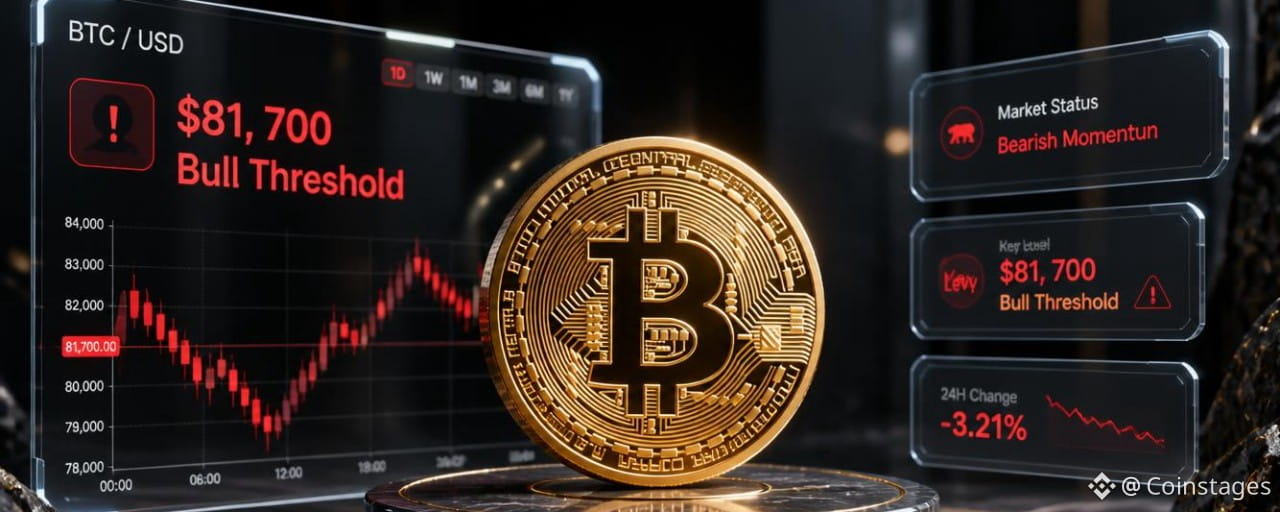
Article
BITCOIN LAGS $4,900 BELOW BULL MARKET LEVEL AS MEGA WHALES UNLOAD INTO RETAIL RALLYDespite a two-week relief rally pushing Bitcoin toward $76,800, on-chain metrics show the asset remains stuck below crucial bull market thresholds as large holders use retail leverage to exit positions.
CryptoQuant data indicates Bitcoin needs a decisive move above the $81,700 level to officially signal the start of a sustained structural bull market. However, persistent whale distribution and a lack of spot demand from U.S. institutional funds are capping upside momentum near major overhead resistance.
On-Chain Divergence: Whales Selling into Retail Leverage
The structural gap between whale behavior and retail traders highlights a growing risk of market exhaustion:
The $81,700 Threshold: Bitcoin is currently trading near $76,808—roughly $4,900 below the $81,700 valuation metric required to validate a new macro bull phase.Whale Distribution: Large wallet entities have actively trimmed allocations into the recent two-week price surge, taking liquidity rather than accumulating for a breakout.Retail Over-Leverage: Small-scale retail traders are driving much of the local price recovery through leveraged derivatives contracts, leaving the market vulnerable to sharp liquidation events.
U.S. Institutional Absence & Key Resistance Overhead
A lack of buying pressure from major American fund desks continues to stall Bitcoin's attempt to reclaim higher trading channels:
Negative Coinbase Premium: The Coinbase Premium Index remains in negative territory, signaling weaker spot demand from U.S. institutional buyers compared to offshore venues.The $77,100 – $80,200 Supply Shelf: Long-term holders have placed significant sell orders between $77,100 and $80,200, creating a dense resistance wall that caps immediate upside.Macro Confirmation Requirements: Without spot institutional absorption to swallow whale profit-taking, a clean daily breakout past $81,700 remains statistically unlikely in the short term.
Essential Financial Disclaimer
This article is strictly for educational, analytical, and news reporting purposes only and does not constitute financial, investment, legal, or trading advice. Digital assets carry severe price volatility and loss risks. Always conduct independent research (DYOR) and consult a certified financial advisor before executing trades.
Will Bitcoin buyers gather enough spot volume to break past $81,700, or are whales setting up another deep market correction? Share your technical analysis and market outlook in the comments below! 💬📊
BITCOIN LAGS $4,900 BELOW BULL MARKET LEVEL AS MEGA WHALES UNLOAD INTO RETAIL RALLY
Despite a two-week relief rally pushing Bitcoin toward $76,800, on-chain metrics show the asset remains stuck below crucial bull market thresholds as large holders use retail leverage to exit positions.
CryptoQuant data indicates Bitcoin needs a decisive move above the $81,700 level to officially signal the start of a sustained structural bull market. However, persistent whale distribution and a lack of spot demand from U.S. institutional funds are capping upside momentum near major overhead resistance.
On-Chain Divergence: Whales Selling into Retail Leverage
The structural gap between whale behavior and retail traders highlights a growing risk of market exhaustion:
The $81,700 Threshold: Bitcoin is currently trading near $76,808—roughly $4,900 below the $81,700 valuation metric required to validate a new macro bull phase.Whale Distribution: Large wallet entities have actively trimmed allocations into the recent two-week price surge, taking liquidity rather than accumulating for a breakout.Retail Over-Leverage: Small-scale retail traders are driving much of the local price recovery through leveraged derivatives contracts, leaving the market vulnerable to sharp liquidation events.
U.S. Institutional Absence & Key Resistance Overhead
A lack of buying pressure from major American fund desks continues to stall Bitcoin's attempt to reclaim higher trading channels:
Negative Coinbase Premium: The Coinbase Premium Index remains in negative territory, signaling weaker spot demand from U.S. institutional buyers compared to offshore venues.The $77,100 – $80,200 Supply Shelf: Long-term holders have placed significant sell orders between $77,100 and $80,200, creating a dense resistance wall that caps immediate upside.Macro Confirmation Requirements: Without spot institutional absorption to swallow whale profit-taking, a clean daily breakout past $81,700 remains statistically unlikely in the short term.
Essential Financial Disclaimer
This article is strictly for educational, analytical, and news reporting purposes only and does not constitute financial, investment, legal, or trading advice. Digital assets carry severe price volatility and loss risks. Always conduct independent research (DYOR) and consult a certified financial advisor before executing trades.
Will Bitcoin buyers gather enough spot volume to break past $81,700, or are whales setting up another deep market correction? Share your technical analysis and market outlook in the comments below! 💬📊
CryptoQuant data indicates Bitcoin needs a decisive move above the $81,700 level to officially signal the start of a sustained structural bull market. However, persistent whale distribution and a lack of spot demand from U.S. institutional funds are capping upside momentum near major overhead resistance.
On-Chain Divergence: Whales Selling into Retail Leverage
The structural gap between whale behavior and retail traders highlights a growing risk of market exhaustion:
The $81,700 Threshold: Bitcoin is currently trading near $76,808—roughly $4,900 below the $81,700 valuation metric required to validate a new macro bull phase.Whale Distribution: Large wallet entities have actively trimmed allocations into the recent two-week price surge, taking liquidity rather than accumulating for a breakout.Retail Over-Leverage: Small-scale retail traders are driving much of the local price recovery through leveraged derivatives contracts, leaving the market vulnerable to sharp liquidation events.
U.S. Institutional Absence & Key Resistance Overhead
A lack of buying pressure from major American fund desks continues to stall Bitcoin's attempt to reclaim higher trading channels:
Negative Coinbase Premium: The Coinbase Premium Index remains in negative territory, signaling weaker spot demand from U.S. institutional buyers compared to offshore venues.The $77,100 – $80,200 Supply Shelf: Long-term holders have placed significant sell orders between $77,100 and $80,200, creating a dense resistance wall that caps immediate upside.Macro Confirmation Requirements: Without spot institutional absorption to swallow whale profit-taking, a clean daily breakout past $81,700 remains statistically unlikely in the short term.
Essential Financial Disclaimer
This article is strictly for educational, analytical, and news reporting purposes only and does not constitute financial, investment, legal, or trading advice. Digital assets carry severe price volatility and loss risks. Always conduct independent research (DYOR) and consult a certified financial advisor before executing trades.
Will Bitcoin buyers gather enough spot volume to break past $81,700, or are whales setting up another deep market correction? Share your technical analysis and market outlook in the comments below! 💬📊
465
·
--
Article
TOM LEE PREDICTS 12 MONTHS OF UNSTOPPABLE CRYPTO BULL RUN AS WALL STREET TOKENIZATION BOOMSFundstrat co-founder and BitMine chairman Tom Lee is doubling down on a massive macro turnaround, forecasting a highly bullish 12-month cycle for digital assets.
Despite persistent market volatility and broad investor anxiety surrounding seasonal drawdowns, Lee contends that the worst of the leverage liquidations is behind the market. Driven by systemic four-year cycle bottoms and a multi-trillion-dollar Wall Street tokenization wave, his macro outlook projects substantial upside for Bitcoin, Ethereum, and blockchain infrastructure over the next year.
The Macro Rebound: Why the Worst Pain Is Already Over
Lee’s thesis hinges on structural market resets following historic leverage wipes:
The Leverage Reset: Massive liquidation events wiped out billions in speculative leverage, effectively cleansing systemic debt and resetting market mechanics for organic spot accumulation.Four-Year Cycle Rhythm: Market data signals that digital assets are approaching their structural four-year cycle bottom, laying the groundwork for a major momentum shift over the coming 12 months.Macro Catalyst Rebound: As central bank rate cuts approach and institutional liquidity expands, risk-on assets like Bitcoin ($150,000 target) and Ethereum ($12,000 target) are positioned for rapid growth trajectories.
The $20 Trillion Wall Street Tokenization Opportunity
The core long-term thesis powering Lee’s prediction centers on Real-World Asset (RWA) tokenization and institutional adoption on public blockchains:
On-Chain Financial Assets: Traditional heavyweights like BlackRock and JPMorgan are actively shifting mutual funds, credit, and money market instruments onto networks like Ethereum.The $1.1 Trillion Income Potential: Moving a fraction of the $100 trillion global financial market on-chain and capturing protocol transaction velocity creates an estimated $20 trillion business valuation for blockchain ecosystems.Institutional Flow Accumulation: Strategic corporate treasuries, custodial exchanges (Coinbase, Galaxy Digital), and high-throughput settlement protocols stand to capture immense transaction revenue as Wall Street migrates to Web3 architecture.
Essential Financial Disclaimer
This article is strictly for educational, analytical, and news reporting purposes only and does not constitute financial, investment, legal, or trading advice. Digital asset markets carry extreme price volatility and loss risks. Always conduct independent research (DYOR) and consult a certified financial advisor before executing trades.
Do you agree with Tom Lee that the next 12 months will trigger a massive bull market, or will macro headwinds delay the rally? Share your market outlook and price targets in the comments below! 💬📊
TOM LEE PREDICTS 12 MONTHS OF UNSTOPPABLE CRYPTO BULL RUN AS WALL STREET TOKENIZATION BOOMS
Fundstrat co-founder and BitMine chairman Tom Lee is doubling down on a massive macro turnaround, forecasting a highly bullish 12-month cycle for digital assets.
Despite persistent market volatility and broad investor anxiety surrounding seasonal drawdowns, Lee contends that the worst of the leverage liquidations is behind the market. Driven by systemic four-year cycle bottoms and a multi-trillion-dollar Wall Street tokenization wave, his macro outlook projects substantial upside for Bitcoin, Ethereum, and blockchain infrastructure over the next year.
The Macro Rebound: Why the Worst Pain Is Already Over
Lee’s thesis hinges on structural market resets following historic leverage wipes:
The Leverage Reset: Massive liquidation events wiped out billions in speculative leverage, effectively cleansing systemic debt and resetting market mechanics for organic spot accumulation.Four-Year Cycle Rhythm: Market data signals that digital assets are approaching their structural four-year cycle bottom, laying the groundwork for a major momentum shift over the coming 12 months.Macro Catalyst Rebound: As central bank rate cuts approach and institutional liquidity expands, risk-on assets like Bitcoin ($150,000 target) and Ethereum ($12,000 target) are positioned for rapid growth trajectories.
The $20 Trillion Wall Street Tokenization Opportunity
The core long-term thesis powering Lee’s prediction centers on Real-World Asset (RWA) tokenization and institutional adoption on public blockchains:
On-Chain Financial Assets: Traditional heavyweights like BlackRock and JPMorgan are actively shifting mutual funds, credit, and money market instruments onto networks like Ethereum.The $1.1 Trillion Income Potential: Moving a fraction of the $100 trillion global financial market on-chain and capturing protocol transaction velocity creates an estimated $20 trillion business valuation for blockchain ecosystems.Institutional Flow Accumulation: Strategic corporate treasuries, custodial exchanges (Coinbase, Galaxy Digital), and high-throughput settlement protocols stand to capture immense transaction revenue as Wall Street migrates to Web3 architecture.
Essential Financial Disclaimer
This article is strictly for educational, analytical, and news reporting purposes only and does not constitute financial, investment, legal, or trading advice. Digital asset markets carry extreme price volatility and loss risks. Always conduct independent research (DYOR) and consult a certified financial advisor before executing trades.
Do you agree with Tom Lee that the next 12 months will trigger a massive bull market, or will macro headwinds delay the rally? Share your market outlook and price targets in the comments below! 💬📊
Despite persistent market volatility and broad investor anxiety surrounding seasonal drawdowns, Lee contends that the worst of the leverage liquidations is behind the market. Driven by systemic four-year cycle bottoms and a multi-trillion-dollar Wall Street tokenization wave, his macro outlook projects substantial upside for Bitcoin, Ethereum, and blockchain infrastructure over the next year.
The Macro Rebound: Why the Worst Pain Is Already Over
Lee’s thesis hinges on structural market resets following historic leverage wipes:
The Leverage Reset: Massive liquidation events wiped out billions in speculative leverage, effectively cleansing systemic debt and resetting market mechanics for organic spot accumulation.Four-Year Cycle Rhythm: Market data signals that digital assets are approaching their structural four-year cycle bottom, laying the groundwork for a major momentum shift over the coming 12 months.Macro Catalyst Rebound: As central bank rate cuts approach and institutional liquidity expands, risk-on assets like Bitcoin ($150,000 target) and Ethereum ($12,000 target) are positioned for rapid growth trajectories.
The $20 Trillion Wall Street Tokenization Opportunity
The core long-term thesis powering Lee’s prediction centers on Real-World Asset (RWA) tokenization and institutional adoption on public blockchains:
On-Chain Financial Assets: Traditional heavyweights like BlackRock and JPMorgan are actively shifting mutual funds, credit, and money market instruments onto networks like Ethereum.The $1.1 Trillion Income Potential: Moving a fraction of the $100 trillion global financial market on-chain and capturing protocol transaction velocity creates an estimated $20 trillion business valuation for blockchain ecosystems.Institutional Flow Accumulation: Strategic corporate treasuries, custodial exchanges (Coinbase, Galaxy Digital), and high-throughput settlement protocols stand to capture immense transaction revenue as Wall Street migrates to Web3 architecture.
Essential Financial Disclaimer
This article is strictly for educational, analytical, and news reporting purposes only and does not constitute financial, investment, legal, or trading advice. Digital asset markets carry extreme price volatility and loss risks. Always conduct independent research (DYOR) and consult a certified financial advisor before executing trades.
Do you agree with Tom Lee that the next 12 months will trigger a massive bull market, or will macro headwinds delay the rally? Share your market outlook and price targets in the comments below! 💬📊
6
1.3k
·
--
Partly True
Article
XRP LEDGER SURGES PAST $5B IN STABLECOIN VOLUME AS RWA UTILITY ACCELERATESDespite short-term spot price volatility, on-chain utility across the XRP Ledger (XRPL) continues to reach new records, driven by surging stablecoin velocity and expanded adoption of Ripple's RLUSD.
Data provided by real-world asset (RWA) analytics platform RWA.xyz shows that 30-day stablecoin transfer volume on the XRP Ledger has crossed $5.25 billion, marking an 18.21% month-over-month surge. The expansion signals robust network engagement even as XRP trades near key support floors above $1.35.
Key Metric Highlights: On-Chain Volume vs. Market Cap
The underlying network metrics highlight steady user participation and expanding capital efficiency across the XRPL:
30-Day Transfer Volume: Surpassed $5.25 billion, up 18.21% over the past 30 days.Active Stablecoin Holders: Increased 10.13% month-over-month to reach 80,740 unique addresses.XRPL Stablecoin Market Cap: Rose 26.04% in the past month to hit $1.10 billion, crossing the $1B threshold for the first time.RWA Token Holder Growth: Total tokenized Real-World Asset (RWA) holders on XRPL climbed 19.63% to 256 addresses.
RLUSD Drives Dominance Across the XRP Ecosystem
Ripple’s institutional-grade stablecoin, Ripple USD (RLUSD), remains the primary engine powering this volume growth:
XRPL-Issued Valuation: RLUSD on the XRP Ledger now stands at $1.033 billion, representing a 26.86% valuation jump over the last 30 days.Distributed RWA Market Share: RLUSD’s share of the distributed RWA market on XRPL expanded by 10% month-over-month to reach 66.32% dominance.Holding vs. Velocity: While non-stablecoin RWA 30-day transfer volume slowed to $31.14 million, growing holder counts suggest institutional investors are opting to hold tokenized assets long-term rather than moving them across wallets.
Essential Financial Disclaimer
This article is strictly for educational, analytical, and news reporting purposes only and does not constitute financial, investment, legal, or trading advice. Digital asset markets and stablecoin products carry regulatory, liquidity, and smart-contract risks. Always conduct independent research (DYOR) and consult a certified financial advisor before committing capital.
Is the continuous growth of RLUSD and stablecoin transfer volume on XRPL early proof of long-term institutional adoption? Share your on-chain analysis and market outlook in the comments below! 💬📊
XRP LEDGER SURGES PAST $5B IN STABLECOIN VOLUME AS RWA UTILITY ACCELERATES
Despite short-term spot price volatility, on-chain utility across the XRP Ledger (XRPL) continues to reach new records, driven by surging stablecoin velocity and expanded adoption of Ripple's RLUSD.
Data provided by real-world asset (RWA) analytics platform RWA.xyz shows that 30-day stablecoin transfer volume on the XRP Ledger has crossed $5.25 billion, marking an 18.21% month-over-month surge. The expansion signals robust network engagement even as XRP trades near key support floors above $1.35.
Key Metric Highlights: On-Chain Volume vs. Market Cap
The underlying network metrics highlight steady user participation and expanding capital efficiency across the XRPL:
30-Day Transfer Volume: Surpassed $5.25 billion, up 18.21% over the past 30 days.Active Stablecoin Holders: Increased 10.13% month-over-month to reach 80,740 unique addresses.XRPL Stablecoin Market Cap: Rose 26.04% in the past month to hit $1.10 billion, crossing the $1B threshold for the first time.RWA Token Holder Growth: Total tokenized Real-World Asset (RWA) holders on XRPL climbed 19.63% to 256 addresses.
RLUSD Drives Dominance Across the XRP Ecosystem
Ripple’s institutional-grade stablecoin, Ripple USD (RLUSD), remains the primary engine powering this volume growth:
XRPL-Issued Valuation: RLUSD on the XRP Ledger now stands at $1.033 billion, representing a 26.86% valuation jump over the last 30 days.Distributed RWA Market Share: RLUSD’s share of the distributed RWA market on XRPL expanded by 10% month-over-month to reach 66.32% dominance.Holding vs. Velocity: While non-stablecoin RWA 30-day transfer volume slowed to $31.14 million, growing holder counts suggest institutional investors are opting to hold tokenized assets long-term rather than moving them across wallets.
Essential Financial Disclaimer
This article is strictly for educational, analytical, and news reporting purposes only and does not constitute financial, investment, legal, or trading advice. Digital asset markets and stablecoin products carry regulatory, liquidity, and smart-contract risks. Always conduct independent research (DYOR) and consult a certified financial advisor before committing capital.
Is the continuous growth of RLUSD and stablecoin transfer volume on XRPL early proof of long-term institutional adoption? Share your on-chain analysis and market outlook in the comments below! 💬📊
Data provided by real-world asset (RWA) analytics platform RWA.xyz shows that 30-day stablecoin transfer volume on the XRP Ledger has crossed $5.25 billion, marking an 18.21% month-over-month surge. The expansion signals robust network engagement even as XRP trades near key support floors above $1.35.
Key Metric Highlights: On-Chain Volume vs. Market Cap
The underlying network metrics highlight steady user participation and expanding capital efficiency across the XRPL:
30-Day Transfer Volume: Surpassed $5.25 billion, up 18.21% over the past 30 days.Active Stablecoin Holders: Increased 10.13% month-over-month to reach 80,740 unique addresses.XRPL Stablecoin Market Cap: Rose 26.04% in the past month to hit $1.10 billion, crossing the $1B threshold for the first time.RWA Token Holder Growth: Total tokenized Real-World Asset (RWA) holders on XRPL climbed 19.63% to 256 addresses.
RLUSD Drives Dominance Across the XRP Ecosystem
Ripple’s institutional-grade stablecoin, Ripple USD (RLUSD), remains the primary engine powering this volume growth:
XRPL-Issued Valuation: RLUSD on the XRP Ledger now stands at $1.033 billion, representing a 26.86% valuation jump over the last 30 days.Distributed RWA Market Share: RLUSD’s share of the distributed RWA market on XRPL expanded by 10% month-over-month to reach 66.32% dominance.Holding vs. Velocity: While non-stablecoin RWA 30-day transfer volume slowed to $31.14 million, growing holder counts suggest institutional investors are opting to hold tokenized assets long-term rather than moving them across wallets.
Essential Financial Disclaimer
This article is strictly for educational, analytical, and news reporting purposes only and does not constitute financial, investment, legal, or trading advice. Digital asset markets and stablecoin products carry regulatory, liquidity, and smart-contract risks. Always conduct independent research (DYOR) and consult a certified financial advisor before committing capital.
Is the continuous growth of RLUSD and stablecoin transfer volume on XRPL early proof of long-term institutional adoption? Share your on-chain analysis and market outlook in the comments below! 💬📊
2
4
2.1k
·
--

Article
XRP AT CRITICAL INFLECTION POINT: ANALYSTS WATCH $1.48 AND $1.55 RESISTANCE FOR REVERSALAfter cooling off toward $1.37 following short-term market pullbacks, XRP is testing essential structural defense levels as buyers attempt to reclaim moving average momentum.
Technical market structure shows XRP navigating a crucial short-term floor. Following recent daily drawdowns across broader digital asset markets, analysts indicate that reclaiming key moving averages could flip momentum back in favor of buyers, paving the path toward major resistance barriers.
Key Technical Levels: The Reclaim Roadmap
Market strategists are tracking several critical price targets to confirm whether XRP's pullback is concluding:
Immediate Demand Zone ($1.35 – $1.37): Price action continues to find structural support near $1.37. Holding firm above $1.35 is vital to prevent deeper retracements toward lower demand floors.The First Gate ($1.48): Reclaiming the $1.48 level serves as the primary confirmation threshold. A push above this mark puts price action back over key short-term exponential moving averages (EMAs).Macro Reversal Breakout ($1.55): A decisive daily close above $1.55 would signal the end of the short-term corrective structure, unlocking momentum for a retest of higher cycle targets.
Futures Sentiment & Market Conditions
Despite immediate spot price consolidation, derivative markets reveal underlying institutional interest:
Binance Futures Positioning: Binance XRP futures accounts continue to display "Extremely Bullish" long/short positioning ratios, suggesting institutional traders are building exposure during local dips.Moving Average Alignment: A sustained volume expansion above $1.48 is required to turn short-term moving average resistance back into dynamic support.
Essential Financial Disclaimer
This article is strictly for educational, analytical, and news reporting purposes only and does not constitute financial, investment, legal, or trading advice. Digital asset trading carries substantial volatility and loss risks. Always conduct independent research (DYOR) and consult a certified financial advisor before executing trades.
Do you expect XRP to bounce off $1.35 and reclaim $1.55 this week, or are we facing deeper consolidation? Drop your technical targets and chart updates in the comments below! 📊⚡
XRP AT CRITICAL INFLECTION POINT: ANALYSTS WATCH $1.48 AND $1.55 RESISTANCE FOR REVERSAL
After cooling off toward $1.37 following short-term market pullbacks, XRP is testing essential structural defense levels as buyers attempt to reclaim moving average momentum.
Technical market structure shows XRP navigating a crucial short-term floor. Following recent daily drawdowns across broader digital asset markets, analysts indicate that reclaiming key moving averages could flip momentum back in favor of buyers, paving the path toward major resistance barriers.
Key Technical Levels: The Reclaim Roadmap
Market strategists are tracking several critical price targets to confirm whether XRP's pullback is concluding:
Immediate Demand Zone ($1.35 – $1.37): Price action continues to find structural support near $1.37. Holding firm above $1.35 is vital to prevent deeper retracements toward lower demand floors.The First Gate ($1.48): Reclaiming the $1.48 level serves as the primary confirmation threshold. A push above this mark puts price action back over key short-term exponential moving averages (EMAs).Macro Reversal Breakout ($1.55): A decisive daily close above $1.55 would signal the end of the short-term corrective structure, unlocking momentum for a retest of higher cycle targets.
Futures Sentiment & Market Conditions
Despite immediate spot price consolidation, derivative markets reveal underlying institutional interest:
Binance Futures Positioning: Binance XRP futures accounts continue to display "Extremely Bullish" long/short positioning ratios, suggesting institutional traders are building exposure during local dips.Moving Average Alignment: A sustained volume expansion above $1.48 is required to turn short-term moving average resistance back into dynamic support.
Essential Financial Disclaimer
This article is strictly for educational, analytical, and news reporting purposes only and does not constitute financial, investment, legal, or trading advice. Digital asset trading carries substantial volatility and loss risks. Always conduct independent research (DYOR) and consult a certified financial advisor before executing trades.
Do you expect XRP to bounce off $1.35 and reclaim $1.55 this week, or are we facing deeper consolidation? Drop your technical targets and chart updates in the comments below! 📊⚡
Technical market structure shows XRP navigating a crucial short-term floor. Following recent daily drawdowns across broader digital asset markets, analysts indicate that reclaiming key moving averages could flip momentum back in favor of buyers, paving the path toward major resistance barriers.
Key Technical Levels: The Reclaim Roadmap
Market strategists are tracking several critical price targets to confirm whether XRP's pullback is concluding:
Immediate Demand Zone ($1.35 – $1.37): Price action continues to find structural support near $1.37. Holding firm above $1.35 is vital to prevent deeper retracements toward lower demand floors.The First Gate ($1.48): Reclaiming the $1.48 level serves as the primary confirmation threshold. A push above this mark puts price action back over key short-term exponential moving averages (EMAs).Macro Reversal Breakout ($1.55): A decisive daily close above $1.55 would signal the end of the short-term corrective structure, unlocking momentum for a retest of higher cycle targets.
Futures Sentiment & Market Conditions
Despite immediate spot price consolidation, derivative markets reveal underlying institutional interest:
Binance Futures Positioning: Binance XRP futures accounts continue to display "Extremely Bullish" long/short positioning ratios, suggesting institutional traders are building exposure during local dips.Moving Average Alignment: A sustained volume expansion above $1.48 is required to turn short-term moving average resistance back into dynamic support.
Essential Financial Disclaimer
This article is strictly for educational, analytical, and news reporting purposes only and does not constitute financial, investment, legal, or trading advice. Digital asset trading carries substantial volatility and loss risks. Always conduct independent research (DYOR) and consult a certified financial advisor before executing trades.
Do you expect XRP to bounce off $1.35 and reclaim $1.55 this week, or are we facing deeper consolidation? Drop your technical targets and chart updates in the comments below! 📊⚡
4
1.5k
·
--

Article
FORMER RIPPLE CTO DROPS BOLD XRP FLIP PREDICTION: COULD XRP OVERTAKE BITCOIN?In a statement that sent shockwaves across crypto markets, Ripple's former Chief Technology Officer David Schwartz outlined a structural scenario where XRP could surpass Bitcoin.
Addressing market valuation dynamics on social media, Schwartz presented a surprisingly bullish macro perspective. Rather than banking on a catastrophic collapse of Bitcoin, his thesis hinges on utility-driven, high-velocity growth that enables XRP to outpace the market leader over time.
The Flippening Mechanics: Growth Velocity Over Market Contraction
Schwartz clarified that a potential shift at the top of the crypto rankings wouldn't require Bitcoin to fail:
Outpacing, Not Shrinking: The hypothetical "flippening" relies on XRP expanding at a far steeper compound growth trajectory than Bitcoin, rather than waiting for BTC to suffer a structural decline.Utility vs. Store of Value: While Bitcoin maintains its position as digital gold, XRP’s long-term thesis focuses on capturing global institutional settlement velocity and cross-border payment liquidity.On-Chain Expansion: Exponential adoption across real-world asset (RWA) tokenization and institutional cross-border corridors could drive real protocol value faster than traditional store-of-value assets.
Valuing the Gap: David vs. Goliath
Despite the bold prediction, the current valuation gap between the two assets highlights the immense journey ahead:
Bitcoin Market Cap: Currently hovering near $1.54 trillion, representing the dominant macro share of the entire digital asset market.XRP Market Cap: Sitting near $86.8 billion, meaning Bitcoin’s total valuation remains approximately 18 times larger than XRP’s.Required Expansion: To bridge this multi-trillion-dollar gap, XRP would need unprecedented institutional capital inflows, widespread global banking integration, and massive expansion on the XRP Ledger.
Essential Financial Disclaimer
This article is strictly for educational, analytical, and news purposes only and does not constitute financial, investment, legal, or trading advice. Digital assets carry severe price volatility and market risks. Always conduct independent research (DYOR) and consult a certified financial advisor before making investment decisions.
Do you agree with David Schwartz that XRP can outpace Bitcoin through utility growth, or is BTC’s market dominance permanently untouchable? Drop your thoughts and long-term predictions in the comments below! 💬📈
FORMER RIPPLE CTO DROPS BOLD XRP FLIP PREDICTION: COULD XRP OVERTAKE BITCOIN?
In a statement that sent shockwaves across crypto markets, Ripple's former Chief Technology Officer David Schwartz outlined a structural scenario where XRP could surpass Bitcoin.
Addressing market valuation dynamics on social media, Schwartz presented a surprisingly bullish macro perspective. Rather than banking on a catastrophic collapse of Bitcoin, his thesis hinges on utility-driven, high-velocity growth that enables XRP to outpace the market leader over time.
The Flippening Mechanics: Growth Velocity Over Market Contraction
Schwartz clarified that a potential shift at the top of the crypto rankings wouldn't require Bitcoin to fail:
Outpacing, Not Shrinking: The hypothetical "flippening" relies on XRP expanding at a far steeper compound growth trajectory than Bitcoin, rather than waiting for BTC to suffer a structural decline.Utility vs. Store of Value: While Bitcoin maintains its position as digital gold, XRP’s long-term thesis focuses on capturing global institutional settlement velocity and cross-border payment liquidity.On-Chain Expansion: Exponential adoption across real-world asset (RWA) tokenization and institutional cross-border corridors could drive real protocol value faster than traditional store-of-value assets.
Valuing the Gap: David vs. Goliath
Despite the bold prediction, the current valuation gap between the two assets highlights the immense journey ahead:
Bitcoin Market Cap: Currently hovering near $1.54 trillion, representing the dominant macro share of the entire digital asset market.XRP Market Cap: Sitting near $86.8 billion, meaning Bitcoin’s total valuation remains approximately 18 times larger than XRP’s.Required Expansion: To bridge this multi-trillion-dollar gap, XRP would need unprecedented institutional capital inflows, widespread global banking integration, and massive expansion on the XRP Ledger.
Essential Financial Disclaimer
This article is strictly for educational, analytical, and news purposes only and does not constitute financial, investment, legal, or trading advice. Digital assets carry severe price volatility and market risks. Always conduct independent research (DYOR) and consult a certified financial advisor before making investment decisions.
Do you agree with David Schwartz that XRP can outpace Bitcoin through utility growth, or is BTC’s market dominance permanently untouchable? Drop your thoughts and long-term predictions in the comments below! 💬📈
Addressing market valuation dynamics on social media, Schwartz presented a surprisingly bullish macro perspective. Rather than banking on a catastrophic collapse of Bitcoin, his thesis hinges on utility-driven, high-velocity growth that enables XRP to outpace the market leader over time.
The Flippening Mechanics: Growth Velocity Over Market Contraction
Schwartz clarified that a potential shift at the top of the crypto rankings wouldn't require Bitcoin to fail:
Outpacing, Not Shrinking: The hypothetical "flippening" relies on XRP expanding at a far steeper compound growth trajectory than Bitcoin, rather than waiting for BTC to suffer a structural decline.Utility vs. Store of Value: While Bitcoin maintains its position as digital gold, XRP’s long-term thesis focuses on capturing global institutional settlement velocity and cross-border payment liquidity.On-Chain Expansion: Exponential adoption across real-world asset (RWA) tokenization and institutional cross-border corridors could drive real protocol value faster than traditional store-of-value assets.
Valuing the Gap: David vs. Goliath
Despite the bold prediction, the current valuation gap between the two assets highlights the immense journey ahead:
Bitcoin Market Cap: Currently hovering near $1.54 trillion, representing the dominant macro share of the entire digital asset market.XRP Market Cap: Sitting near $86.8 billion, meaning Bitcoin’s total valuation remains approximately 18 times larger than XRP’s.Required Expansion: To bridge this multi-trillion-dollar gap, XRP would need unprecedented institutional capital inflows, widespread global banking integration, and massive expansion on the XRP Ledger.
Essential Financial Disclaimer
This article is strictly for educational, analytical, and news purposes only and does not constitute financial, investment, legal, or trading advice. Digital assets carry severe price volatility and market risks. Always conduct independent research (DYOR) and consult a certified financial advisor before making investment decisions.
Do you agree with David Schwartz that XRP can outpace Bitcoin through utility growth, or is BTC’s market dominance permanently untouchable? Drop your thoughts and long-term predictions in the comments below! 💬📈
454
·
--

Article
INSTITUTIONAL ROTATION? XRP ETFS STAND ALONE WITH INFLOWS AS BITCOIN, ETHEREUM, AND SOLANA BLEEDA rare divergence played out across institutional crypto funds on September 8. While heavyweights Bitcoin (BTC), Ethereum (ETH), and Solana (SOL) suffered synchronized capital outflows, US-listed XRP spot ETFs bucked the broader market trend by attracting fresh institutional inflows.
The Breakdown: XRP Wins the Daily Flow Battle
According to recent spot ETF data, US-listed XRP exchange-traded funds recorded roughly $1.55 million in net daily inflows. While modest in absolute dollar terms, the figure becomes striking when contrasted against the red ink spilled across competing major assets:
Bitcoin (BTC): Led major asset pullbacks with $46.65 million in net daily outflows.Ethereum (ETH): Followed suit as spot products bled $24.29 million.Hyperliquid (HYPE): Shed $12.96 million in capital withdrawals.Solana (SOL): Experienced $667,720 in net outflows.
Out of twelve spot crypto fund groups tracked, XRP was the only major digital asset to close the session in positive territory—joined only by niche inflows into Hedera (HBAR) products. It marked the first time since July 9 that BTC, ETH, and SOL all recorded simultaneous outflows on the same trading day.
Institutional Accumulation & Regulatory Catalysts
The inflow divergence comes at a time when XRP’s broader institutional footprint continues to expand. Cumulative net inflows across the five US spot XRP ETFs have now climbed to roughly $1.69 billion, pushing total assets under management (AUM) near $1.51 billion. Over the past 30 days alone, XRP-focused funds have absorbed over $173 million in new capital.
Analysts point to key fundamental tailwinds driving the localized institutional bid:
Macro Regulatory Clarity: Anticipation surrounding upcoming legislative action, specifically the pending CLARITY Act vote, has bolstered institutional sentiment around XRP's regulatory status.Technical Consolidation: Holding above the key $1.35 support floor near $1.39-$1.44, XRP price action has outpaced majors on daily and weekly frames, giving momentum traders a reason to lean into ETF wrappers.
Essential Financial Disclaimer
This article is strictly for educational and informational purposes only and does not constitute financial, investment, legal, or trading advice. Digital asset markets and ETF products carry extreme volatility and price risks. Always conduct independent research (DYOR) and consult a certified financial advisor before making investment decisions.
Is this single-day ETF divergence early evidence of an institutional rotation into altcoins, or just temporary market noise? Share your thoughts and market outlook in the comments below! 💬👇
INSTITUTIONAL ROTATION? XRP ETFS STAND ALONE WITH INFLOWS AS BITCOIN, ETHEREUM, AND SOLANA BLEED
A rare divergence played out across institutional crypto funds on September 8. While heavyweights Bitcoin (BTC), Ethereum (ETH), and Solana (SOL) suffered synchronized capital outflows, US-listed XRP spot ETFs bucked the broader market trend by attracting fresh institutional inflows.
The Breakdown: XRP Wins the Daily Flow Battle
According to recent spot ETF data, US-listed XRP exchange-traded funds recorded roughly $1.55 million in net daily inflows. While modest in absolute dollar terms, the figure becomes striking when contrasted against the red ink spilled across competing major assets:
Bitcoin (BTC): Led major asset pullbacks with $46.65 million in net daily outflows.Ethereum (ETH): Followed suit as spot products bled $24.29 million.Hyperliquid (HYPE): Shed $12.96 million in capital withdrawals.Solana (SOL): Experienced $667,720 in net outflows.
Out of twelve spot crypto fund groups tracked, XRP was the only major digital asset to close the session in positive territory—joined only by niche inflows into Hedera (HBAR) products. It marked the first time since July 9 that BTC, ETH, and SOL all recorded simultaneous outflows on the same trading day.
Institutional Accumulation & Regulatory Catalysts
The inflow divergence comes at a time when XRP’s broader institutional footprint continues to expand. Cumulative net inflows across the five US spot XRP ETFs have now climbed to roughly $1.69 billion, pushing total assets under management (AUM) near $1.51 billion. Over the past 30 days alone, XRP-focused funds have absorbed over $173 million in new capital.
Analysts point to key fundamental tailwinds driving the localized institutional bid:
Macro Regulatory Clarity: Anticipation surrounding upcoming legislative action, specifically the pending CLARITY Act vote, has bolstered institutional sentiment around XRP's regulatory status.Technical Consolidation: Holding above the key $1.35 support floor near $1.39-$1.44, XRP price action has outpaced majors on daily and weekly frames, giving momentum traders a reason to lean into ETF wrappers.
Essential Financial Disclaimer
This article is strictly for educational and informational purposes only and does not constitute financial, investment, legal, or trading advice. Digital asset markets and ETF products carry extreme volatility and price risks. Always conduct independent research (DYOR) and consult a certified financial advisor before making investment decisions.
Is this single-day ETF divergence early evidence of an institutional rotation into altcoins, or just temporary market noise? Share your thoughts and market outlook in the comments below! 💬👇
The Breakdown: XRP Wins the Daily Flow Battle
According to recent spot ETF data, US-listed XRP exchange-traded funds recorded roughly $1.55 million in net daily inflows. While modest in absolute dollar terms, the figure becomes striking when contrasted against the red ink spilled across competing major assets:
Bitcoin (BTC): Led major asset pullbacks with $46.65 million in net daily outflows.Ethereum (ETH): Followed suit as spot products bled $24.29 million.Hyperliquid (HYPE): Shed $12.96 million in capital withdrawals.Solana (SOL): Experienced $667,720 in net outflows.
Out of twelve spot crypto fund groups tracked, XRP was the only major digital asset to close the session in positive territory—joined only by niche inflows into Hedera (HBAR) products. It marked the first time since July 9 that BTC, ETH, and SOL all recorded simultaneous outflows on the same trading day.
Institutional Accumulation & Regulatory Catalysts
The inflow divergence comes at a time when XRP’s broader institutional footprint continues to expand. Cumulative net inflows across the five US spot XRP ETFs have now climbed to roughly $1.69 billion, pushing total assets under management (AUM) near $1.51 billion. Over the past 30 days alone, XRP-focused funds have absorbed over $173 million in new capital.
Analysts point to key fundamental tailwinds driving the localized institutional bid:
Macro Regulatory Clarity: Anticipation surrounding upcoming legislative action, specifically the pending CLARITY Act vote, has bolstered institutional sentiment around XRP's regulatory status.Technical Consolidation: Holding above the key $1.35 support floor near $1.39-$1.44, XRP price action has outpaced majors on daily and weekly frames, giving momentum traders a reason to lean into ETF wrappers.
Essential Financial Disclaimer
This article is strictly for educational and informational purposes only and does not constitute financial, investment, legal, or trading advice. Digital asset markets and ETF products carry extreme volatility and price risks. Always conduct independent research (DYOR) and consult a certified financial advisor before making investment decisions.
Is this single-day ETF divergence early evidence of an institutional rotation into altcoins, or just temporary market noise? Share your thoughts and market outlook in the comments below! 💬👇
474
·
--

Article
ROBINHOOD CEO VLAD TENEV DEFENDS STOCK TOKENS AFTER HEATED AMC CRITICISMRobinhood CEO Vlad Tenev has pushed back against fierce pushback from AMC Entertainment regarding tokenized stock listings. The dispute highlights an escalating feud between traditional corporate executives and fintech platforms over investor ownership, blockchain innovation, and underlying share rights.
The Clash: Adam Aron Demands Halt to AMC Stock Tokens
The high-stakes dispute erupted after AMC CEO Adam Aron publicly demanded that Robinhood immediately halt and remove AMC-linked stock tokens. Aron argued that issuing tokenized equity instruments without explicit issuer authorization violates securities frameworks, dilutes corporate control, and threatens the direct bond between a publicly traded company and its shareholders.
In response, Tenev took to CNBC’s Squawk Box to defend Robinhood’s strategy, asserting that once a firm goes public, its shares become freely transferable property. Consequently, public companies do not possess absolute authority over third-party financial wrappers built on top of those listed equities.
The Neutral Wrapper Argument: Tenev described stock tokens as technology-neutral financial instruments issued as 1:1 debt securities backed fully by real underlying equity shares held in custody.No Issuer Consent Required: Because the tokenized asset is an independent security referencing a publicly traded stock, Tenev maintained that companies cannot block third-party institutions from issuing related synthetic exposure.
The Fine Print: Voting Rights & Regulatory Friction
While Tenev defended the legality and innovation behind stock tokenization, the structure introduces distinct operational trade-offs compared to direct stock ownership:
Voting Rights Omitted: Holders of Robinhood stock tokens receive economic exposure and dividend distribution pass-throughs, but they do not receive voting rights in the underlying company.Corporate Governance Ambiguity: Tenev declined to specify how Robinhood or its custodian plans to exercise the corporate voting power attached to the physical shares backing those tokens.Escalating Legal Threats: AMC management has threatened to involve external legal counsel and urge SEC intervention, setting up a legal battle over decentralized equity trading.
Essential Financial Disclaimer
This article is strictly for educational and informational purposes only and does not constitute financial, legal, tax, or investment advice. Tokenized stock products carry specific counterparty, regulatory, and market risks. Always conduct thorough independent research (DYOR) and consult a certified financial advisor before interacting with tokenized financial instruments.
Do you think public companies should have the right to block platforms from tokenizing their shares, or is Robinhood right to open 24/7 blockchain stock trading? Drop your thoughts and join the discussion in the comments below! 💬📉
ROBINHOOD CEO VLAD TENEV DEFENDS STOCK TOKENS AFTER HEATED AMC CRITICISM
Robinhood CEO Vlad Tenev has pushed back against fierce pushback from AMC Entertainment regarding tokenized stock listings. The dispute highlights an escalating feud between traditional corporate executives and fintech platforms over investor ownership, blockchain innovation, and underlying share rights.
The Clash: Adam Aron Demands Halt to AMC Stock Tokens
The high-stakes dispute erupted after AMC CEO Adam Aron publicly demanded that Robinhood immediately halt and remove AMC-linked stock tokens. Aron argued that issuing tokenized equity instruments without explicit issuer authorization violates securities frameworks, dilutes corporate control, and threatens the direct bond between a publicly traded company and its shareholders.
In response, Tenev took to CNBC’s Squawk Box to defend Robinhood’s strategy, asserting that once a firm goes public, its shares become freely transferable property. Consequently, public companies do not possess absolute authority over third-party financial wrappers built on top of those listed equities.
The Neutral Wrapper Argument: Tenev described stock tokens as technology-neutral financial instruments issued as 1:1 debt securities backed fully by real underlying equity shares held in custody.No Issuer Consent Required: Because the tokenized asset is an independent security referencing a publicly traded stock, Tenev maintained that companies cannot block third-party institutions from issuing related synthetic exposure.
The Fine Print: Voting Rights & Regulatory Friction
While Tenev defended the legality and innovation behind stock tokenization, the structure introduces distinct operational trade-offs compared to direct stock ownership:
Voting Rights Omitted: Holders of Robinhood stock tokens receive economic exposure and dividend distribution pass-throughs, but they do not receive voting rights in the underlying company.Corporate Governance Ambiguity: Tenev declined to specify how Robinhood or its custodian plans to exercise the corporate voting power attached to the physical shares backing those tokens.Escalating Legal Threats: AMC management has threatened to involve external legal counsel and urge SEC intervention, setting up a legal battle over decentralized equity trading.
Essential Financial Disclaimer
This article is strictly for educational and informational purposes only and does not constitute financial, legal, tax, or investment advice. Tokenized stock products carry specific counterparty, regulatory, and market risks. Always conduct thorough independent research (DYOR) and consult a certified financial advisor before interacting with tokenized financial instruments.
Do you think public companies should have the right to block platforms from tokenizing their shares, or is Robinhood right to open 24/7 blockchain stock trading? Drop your thoughts and join the discussion in the comments below! 💬📉
The Clash: Adam Aron Demands Halt to AMC Stock Tokens
The high-stakes dispute erupted after AMC CEO Adam Aron publicly demanded that Robinhood immediately halt and remove AMC-linked stock tokens. Aron argued that issuing tokenized equity instruments without explicit issuer authorization violates securities frameworks, dilutes corporate control, and threatens the direct bond between a publicly traded company and its shareholders.
In response, Tenev took to CNBC’s Squawk Box to defend Robinhood’s strategy, asserting that once a firm goes public, its shares become freely transferable property. Consequently, public companies do not possess absolute authority over third-party financial wrappers built on top of those listed equities.
The Neutral Wrapper Argument: Tenev described stock tokens as technology-neutral financial instruments issued as 1:1 debt securities backed fully by real underlying equity shares held in custody.No Issuer Consent Required: Because the tokenized asset is an independent security referencing a publicly traded stock, Tenev maintained that companies cannot block third-party institutions from issuing related synthetic exposure.
The Fine Print: Voting Rights & Regulatory Friction
While Tenev defended the legality and innovation behind stock tokenization, the structure introduces distinct operational trade-offs compared to direct stock ownership:
Voting Rights Omitted: Holders of Robinhood stock tokens receive economic exposure and dividend distribution pass-throughs, but they do not receive voting rights in the underlying company.Corporate Governance Ambiguity: Tenev declined to specify how Robinhood or its custodian plans to exercise the corporate voting power attached to the physical shares backing those tokens.Escalating Legal Threats: AMC management has threatened to involve external legal counsel and urge SEC intervention, setting up a legal battle over decentralized equity trading.
Essential Financial Disclaimer
This article is strictly for educational and informational purposes only and does not constitute financial, legal, tax, or investment advice. Tokenized stock products carry specific counterparty, regulatory, and market risks. Always conduct thorough independent research (DYOR) and consult a certified financial advisor before interacting with tokenized financial instruments.
Do you think public companies should have the right to block platforms from tokenizing their shares, or is Robinhood right to open 24/7 blockchain stock trading? Drop your thoughts and join the discussion in the comments below! 💬📉
281
·
--

Article
BABY BONK REVOLUTION: FROM VIRAL MEMECOIN TO BNB ECOSYSTEM UTILITY ENGINEWhen Baby Bonk ($BABYBONK) first hit the scene, many assumed it was simply another homage to its Solana predecessor, Bonk. However, driven by relentless marketing, high-tier exchange listings, and a passionate community, Baby Bonk has rapidly evolved from a viral cultural moment into a full-fledged Web3 utility ecosystem.
More Than Just a Meme: Utility Takes Center Stage
While early adoption was catalyzed by Bonk Royale, the ecosystem’s competitive NFT card game where users battle with squad-based digital collectibles, the team’s latest expansion sets its sights directly on decentralized finance (DeFi) infrastructure.
The introduction of the Bull 'N Bear hub and Trading Terminal transforms Baby Bonk from an asset into an active launchpad and pro-trading suite for the broader memecoin economy.
Bull 'N Bear: A Revolution in Fair Token Launches
At the core of the new product suite sits Bull 'N Bear, a platform built to empower both retail traders and token creators across EVM and non-EVM networks:
Cross-Chain Footprint: Fully operational across BNB Chain, Ethereum, and Base, with active expansion planned for Solana liquidity.Fair Launch Architecture: Operates with zero presales, zero insider allocations, and no hidden dev tricks, ensuring equal access for retail buyers.Pro Trading Terminal: Integrated tools allow users to trade emerging viral four.meme tokens and launchpad coins with maximum efficiency.Creator Monetization: Anyone can deploy their own token on BNB, ETH, or Solana and earn directly as their community grows.
Market Presence and Contract Transparency
$BABYBONK has already established deep liquidity across top-tier trading venues, maintaining active listings on MEXC, LBank, Bitrue, and PancakeSwap.
Token Ticker: $BABYBONK
Contract Address: 0x180b25beb6c84c2b3855E630d50C965425Fb5de2
Active DEX/CEX: PancakeSwap, MEXC, LBank, Bitrue
Current MC: ~$1M Market Cap
Essential Financial Disclaimer
This article is strictly for educational, analytical, and informational purposes only and does not constitute financial, investment, legal, or trading advice. Micro-cap digital assets and memecoins carry extreme price volatility and smart contract risks. Always conduct independent research (DYOR) and consult a certified financial advisor before interacting with Web3 platforms.
Are you ready to ride the bull and launch your own token on Bull 'N Bear? Share your thoughts on Baby Bonk's new trading terminal in the comments below! 🐂🔥
BABY BONK REVOLUTION: FROM VIRAL MEMECOIN TO BNB ECOSYSTEM UTILITY ENGINE
When Baby Bonk ($BABYBONK) first hit the scene, many assumed it was simply another homage to its Solana predecessor, Bonk. However, driven by relentless marketing, high-tier exchange listings, and a passionate community, Baby Bonk has rapidly evolved from a viral cultural moment into a full-fledged Web3 utility ecosystem.
More Than Just a Meme: Utility Takes Center Stage
While early adoption was catalyzed by Bonk Royale, the ecosystem’s competitive NFT card game where users battle with squad-based digital collectibles, the team’s latest expansion sets its sights directly on decentralized finance (DeFi) infrastructure.
The introduction of the Bull 'N Bear hub and Trading Terminal transforms Baby Bonk from an asset into an active launchpad and pro-trading suite for the broader memecoin economy.
Bull 'N Bear: A Revolution in Fair Token Launches
At the core of the new product suite sits Bull 'N Bear, a platform built to empower both retail traders and token creators across EVM and non-EVM networks:
Cross-Chain Footprint: Fully operational across BNB Chain, Ethereum, and Base, with active expansion planned for Solana liquidity.Fair Launch Architecture: Operates with zero presales, zero insider allocations, and no hidden dev tricks, ensuring equal access for retail buyers.Pro Trading Terminal: Integrated tools allow users to trade emerging viral four.meme tokens and launchpad coins with maximum efficiency.Creator Monetization: Anyone can deploy their own token on BNB, ETH, or Solana and earn directly as their community grows.
Market Presence and Contract Transparency
$BABYBONK has already established deep liquidity across top-tier trading venues, maintaining active listings on MEXC, LBank, Bitrue, and PancakeSwap.
Token Ticker: $BABYBONK
Contract Address: 0x180b25beb6c84c2b3855E630d50C965425Fb5de2
Active DEX/CEX: PancakeSwap, MEXC, LBank, Bitrue
Current MC: ~$1M Market Cap
Essential Financial Disclaimer
This article is strictly for educational, analytical, and informational purposes only and does not constitute financial, investment, legal, or trading advice. Micro-cap digital assets and memecoins carry extreme price volatility and smart contract risks. Always conduct independent research (DYOR) and consult a certified financial advisor before interacting with Web3 platforms.
Are you ready to ride the bull and launch your own token on Bull 'N Bear? Share your thoughts on Baby Bonk's new trading terminal in the comments below! 🐂🔥
More Than Just a Meme: Utility Takes Center Stage
While early adoption was catalyzed by Bonk Royale, the ecosystem’s competitive NFT card game where users battle with squad-based digital collectibles, the team’s latest expansion sets its sights directly on decentralized finance (DeFi) infrastructure.
The introduction of the Bull 'N Bear hub and Trading Terminal transforms Baby Bonk from an asset into an active launchpad and pro-trading suite for the broader memecoin economy.
Bull 'N Bear: A Revolution in Fair Token Launches
At the core of the new product suite sits Bull 'N Bear, a platform built to empower both retail traders and token creators across EVM and non-EVM networks:
Cross-Chain Footprint: Fully operational across BNB Chain, Ethereum, and Base, with active expansion planned for Solana liquidity.Fair Launch Architecture: Operates with zero presales, zero insider allocations, and no hidden dev tricks, ensuring equal access for retail buyers.Pro Trading Terminal: Integrated tools allow users to trade emerging viral four.meme tokens and launchpad coins with maximum efficiency.Creator Monetization: Anyone can deploy their own token on BNB, ETH, or Solana and earn directly as their community grows.
Market Presence and Contract Transparency
$BABYBONK has already established deep liquidity across top-tier trading venues, maintaining active listings on MEXC, LBank, Bitrue, and PancakeSwap.
Token Ticker: $BABYBONK
Contract Address: 0x180b25beb6c84c2b3855E630d50C965425Fb5de2
Active DEX/CEX: PancakeSwap, MEXC, LBank, Bitrue
Current MC: ~$1M Market Cap
Essential Financial Disclaimer
This article is strictly for educational, analytical, and informational purposes only and does not constitute financial, investment, legal, or trading advice. Micro-cap digital assets and memecoins carry extreme price volatility and smart contract risks. Always conduct independent research (DYOR) and consult a certified financial advisor before interacting with Web3 platforms.
Are you ready to ride the bull and launch your own token on Bull 'N Bear? Share your thoughts on Baby Bonk's new trading terminal in the comments below! 🐂🔥
607
·
--

Article
( ͡° ʖ ͡°) Is $LENNY the Next 100x Alpha on Robinhood Chain?Born on internet message boards, banned for spam, and mispronounced by voice synthesis - Lenny Face finally gets its own ticker.
The internet's most iconic unicode expression, the Lenny Face ( ͡° ʖ ͡°), has officially launched its native meme token, $LENNY, deployed directly on the newly launched Robinhood Chain Layer-2 network. Operating without a roadmap, utility promises, or complex venture capital vesting schedules, the project relies strictly on over a decade of viral meme culture and its unofficial "DEG DEG" battle cry.
Origin Story: From Finnish Imageboards to Global Spam Bans
Stitched together using obscure unicode characters, degree signs, and phonetic symbols, the Lenny Face carries no single defined meaning, channeling pure mischief, smugness, and "I know something you don't." Its viral trajectory spans over 13 million logged views on Know Your Meme:
November 18, 2012: The emoticon first appeared on the Finnish imageboard Ylilauta during a thread about spam filters.The 4chan Migrations: Within hours, the face migrated to 4chan’s gaming and sports boards before flooding /b/, where over-posting led to immediate user bans.The Reddit Raid & Mutation: Screenshots of those original 4chan bans blew up on Reddit, sparking a sub-forum raid that caused the face to mutate into hundreds of variant eye and mouth shapes daily.The "DEG DEG" Phenomenon: In 2013, a viral post revealed that text-to-speech engines, unable to parse the unicode combining marks, read the emoticon aloud as "deg deg deg" a phrase that now serves as the token's primary community rally cry.
Tokenomics & Network Mechanics
$LENNY chooses a minimal approach to token economics on Robinhood's Arbitrum-powered Layer-2 execution layer:
Fixed Supply Structure: 100% of supply deployed at launch.Ownership Status: Contract renounced and liquidity locked.Zero Tax Policy: No transfer taxes, no hidden developer wallets, and no multi-phase roadmaps.Market Capitalization: Sitting at a lean $100K market cap baseline following deployment.
Token Ticker: $LENNY
Contract Address: 0x9f05acc63880878a6cf8c805b5b2c94c2a74fe48
Network Layer: Robinhood Chain
Contract Status: Renounced / Liquidity Locked
Essential Financial Disclaimer
This article is strictly for educational, analytical, and news purposes only and does not constitute financial, investment, legal, or trading advice. Micro-cap meme tokens carry extreme volatility, illiquidity, and total capital risk. Always perform independent research (DYOR) and consult a certified financial advisor before interacting with smart contracts.
Are you holding $LENNY early on Robinhood Chain, or waiting for broader Layer-2 DEX volume to pick up? Share your thoughts and favorite unicode memes in the comments below! ( ͡° ʖ ͡°)
( ͡° ʖ ͡°) Is $LENNY the Next 100x Alpha on Robinhood Chain?
Born on internet message boards, banned for spam, and mispronounced by voice synthesis - Lenny Face finally gets its own ticker.
The internet's most iconic unicode expression, the Lenny Face ( ͡° ʖ ͡°), has officially launched its native meme token, $LENNY, deployed directly on the newly launched Robinhood Chain Layer-2 network. Operating without a roadmap, utility promises, or complex venture capital vesting schedules, the project relies strictly on over a decade of viral meme culture and its unofficial "DEG DEG" battle cry.
Origin Story: From Finnish Imageboards to Global Spam Bans
Stitched together using obscure unicode characters, degree signs, and phonetic symbols, the Lenny Face carries no single defined meaning, channeling pure mischief, smugness, and "I know something you don't." Its viral trajectory spans over 13 million logged views on Know Your Meme:
November 18, 2012: The emoticon first appeared on the Finnish imageboard Ylilauta during a thread about spam filters.The 4chan Migrations: Within hours, the face migrated to 4chan’s gaming and sports boards before flooding /b/, where over-posting led to immediate user bans.The Reddit Raid & Mutation: Screenshots of those original 4chan bans blew up on Reddit, sparking a sub-forum raid that caused the face to mutate into hundreds of variant eye and mouth shapes daily.The "DEG DEG" Phenomenon: In 2013, a viral post revealed that text-to-speech engines, unable to parse the unicode combining marks, read the emoticon aloud as "deg deg deg" a phrase that now serves as the token's primary community rally cry.
Tokenomics & Network Mechanics
$LENNY chooses a minimal approach to token economics on Robinhood's Arbitrum-powered Layer-2 execution layer:
Fixed Supply Structure: 100% of supply deployed at launch.Ownership Status: Contract renounced and liquidity locked.Zero Tax Policy: No transfer taxes, no hidden developer wallets, and no multi-phase roadmaps.Market Capitalization: Sitting at a lean $100K market cap baseline following deployment.
Token Ticker: $LENNY
Contract Address: 0x9f05acc63880878a6cf8c805b5b2c94c2a74fe48
Network Layer: Robinhood Chain
Contract Status: Renounced / Liquidity Locked
Essential Financial Disclaimer
This article is strictly for educational, analytical, and news purposes only and does not constitute financial, investment, legal, or trading advice. Micro-cap meme tokens carry extreme volatility, illiquidity, and total capital risk. Always perform independent research (DYOR) and consult a certified financial advisor before interacting with smart contracts.
Are you holding $LENNY early on Robinhood Chain, or waiting for broader Layer-2 DEX volume to pick up? Share your thoughts and favorite unicode memes in the comments below! ( ͡° ʖ ͡°)
The internet's most iconic unicode expression, the Lenny Face ( ͡° ʖ ͡°), has officially launched its native meme token, $LENNY, deployed directly on the newly launched Robinhood Chain Layer-2 network. Operating without a roadmap, utility promises, or complex venture capital vesting schedules, the project relies strictly on over a decade of viral meme culture and its unofficial "DEG DEG" battle cry.
Origin Story: From Finnish Imageboards to Global Spam Bans
Stitched together using obscure unicode characters, degree signs, and phonetic symbols, the Lenny Face carries no single defined meaning, channeling pure mischief, smugness, and "I know something you don't." Its viral trajectory spans over 13 million logged views on Know Your Meme:
November 18, 2012: The emoticon first appeared on the Finnish imageboard Ylilauta during a thread about spam filters.The 4chan Migrations: Within hours, the face migrated to 4chan’s gaming and sports boards before flooding /b/, where over-posting led to immediate user bans.The Reddit Raid & Mutation: Screenshots of those original 4chan bans blew up on Reddit, sparking a sub-forum raid that caused the face to mutate into hundreds of variant eye and mouth shapes daily.The "DEG DEG" Phenomenon: In 2013, a viral post revealed that text-to-speech engines, unable to parse the unicode combining marks, read the emoticon aloud as "deg deg deg" a phrase that now serves as the token's primary community rally cry.
Tokenomics & Network Mechanics
$LENNY chooses a minimal approach to token economics on Robinhood's Arbitrum-powered Layer-2 execution layer:
Fixed Supply Structure: 100% of supply deployed at launch.Ownership Status: Contract renounced and liquidity locked.Zero Tax Policy: No transfer taxes, no hidden developer wallets, and no multi-phase roadmaps.Market Capitalization: Sitting at a lean $100K market cap baseline following deployment.
Token Ticker: $LENNY
Contract Address: 0x9f05acc63880878a6cf8c805b5b2c94c2a74fe48
Network Layer: Robinhood Chain
Contract Status: Renounced / Liquidity Locked
Essential Financial Disclaimer
This article is strictly for educational, analytical, and news purposes only and does not constitute financial, investment, legal, or trading advice. Micro-cap meme tokens carry extreme volatility, illiquidity, and total capital risk. Always perform independent research (DYOR) and consult a certified financial advisor before interacting with smart contracts.
Are you holding $LENNY early on Robinhood Chain, or waiting for broader Layer-2 DEX volume to pick up? Share your thoughts and favorite unicode memes in the comments below! ( ͡° ʖ ͡°)
173
Log in to explore more content
Join global crypto users on Binance Square
⚡️ Get latest and useful information about crypto.
💬 Trusted by the world’s largest crypto exchange.
👍 Discover real insights from verified creators.
Email / Phone number
Trending Topics
AIStocksWhatNext
155,898 views
1,864 Discussing
Share & Win Traffic Reward in our Trending Hashtag Campaign
✨Topic: What Other Investment Opportunities Remain as AI Stocks Keep Rising?
👉How to Join:
Publish a short post or article with hashtag #AIStocksWhatNext
Share whether you’re bullish or bearish, and post your AI stock holdings or trade — using the trade widget may improve your eligibility.
You can also strengthen your post by sharing data or charts, and avoiding AI-generated images.
✍️Create content based on the below angles:
- Nvidia says chip sales will double next year, and top AI companies keep hitting record revenue, the compute spend behind it is just as staggering. Is AI demand really taking off? And how long can it last? AI stocks are up across the board. Is this a real breakout, or just a short-term bounce?
- Industry leaders are calling to slow down AI development, while Trump plans to build an “AI Force”, claiming AI could account for 25% of U.S. GDP in the future. Whose side are you on? Will state-level backing be a long-term win for AI stocks?
- Are you buying AI stocks? Share your AI-related trade/holdings with our trade sharing widget.
⏰Campaign Period:
- 2026-09-22 7:00 - 2026-09-24 4:00 UTC
🎁Reward:
- Qualified posts that comply with the above guidelines and contain more than 100 words will be reviewed and may receive a random traffic boost of 500 to 3,000 views. You will receive a notification from your feed secretary if your post is selected.
- Get a chance to have your article featured on Binance Square Official
Need ideas for your post? Visit the topic page #AIStocksWhatNext or the Square Guide on How to Post for Better Reach.
Binance Square Official
·258 Likes
·515.1k views
BitcoinBreaksAboveMayHighNears$86K
4,555 views
87 Discussing
DogecoinRises15%
11,378 views
492 Discussing