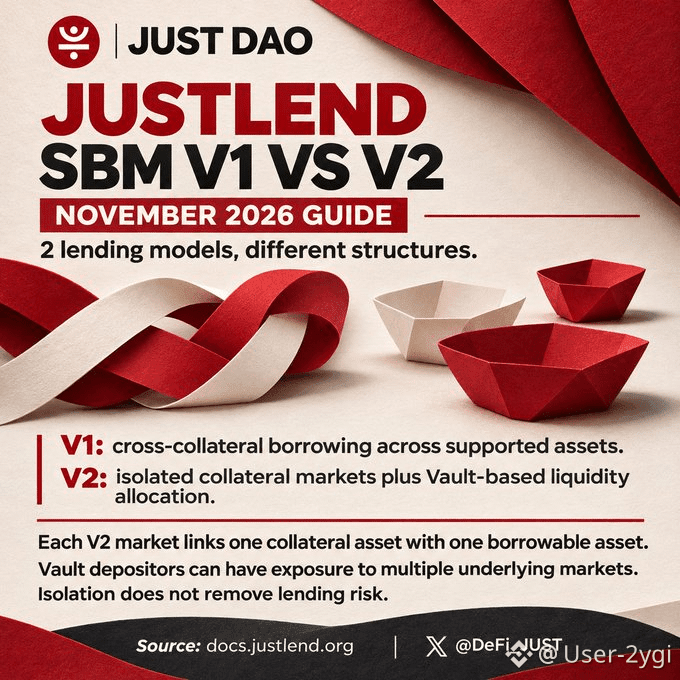
𝗦𝗕𝗠 𝗩𝟭 𝘃𝘀. 𝗦𝗕𝗠 𝗩𝟮 𝗼𝗻 𝗝𝘂𝘀𝘁𝗟𝗲𝗻𝗱: 𝗖𝗵𝗼𝗼𝘀𝗶𝗻𝗴 𝗕𝗲𝘁𝘄𝗲𝗲𝗻 𝗦𝗵𝗮𝗿𝗲𝗱 𝗖𝗮𝗽𝗶𝘁𝗮𝗹 𝗘𝗳𝗳𝗶𝗰𝗶𝗲𝗻𝗰𝘆 𝗮𝗻𝗱 𝗜𝘀𝗼𝗹𝗮𝘁𝗲𝗱 𝗥𝗶𝘀𝗸
𝗛𝗼𝘄 𝘁𝗵𝗲 𝗧𝘄𝗼 𝗠𝗼𝗱𝗲𝗹𝘀 𝗗𝗶𝗳𝗳𝗲𝗿 𝗶𝗻 𝗣𝗿𝗮𝗰𝘁𝗶𝗰𝗲
➠ 𝗦𝗕𝗠 𝗩𝟭 (𝗖𝗿𝗼𝘀𝘀-𝗖𝗼𝗹𝗹𝗮𝘁𝗲𝗿𝗮𝗹 𝗣𝗼𝗼𝗹𝘀): All eligible supplied assets back your overall borrowing limit under one shared Risk Value and Health Factor. This maximizes capital efficiency for diversified portfolios, though extreme volatility in one asset affects your entire account.
➠ 𝗦𝗕𝗠 𝗩𝟮 (𝗩𝗮𝘂𝗹𝘁𝘀 & 𝗜𝘀𝗼𝗹𝗮𝘁𝗲𝗱 𝗠𝗮𝗿𝗸𝗲𝘁𝘀): Suppliers deposit into curated Vaults while borrowers access isolated markets tied to a single collateral type. Exposure stays strictly contained inside each market, preventing contagion across positions.
➠ 𝗜𝗻𝘁𝗲𝗿𝗲𝘀𝘁 𝗥𝗮𝘁𝗲 𝗠𝗲𝗰𝗵𝗮𝗻𝗶𝗰𝘀: While SBM V1 relies on classic utilization curves, SBM V2 introduces an Adaptive Curve Interest Rate Model that dynamically adjusts borrowing costs to keep liquidity utilization balanced.
𝗠𝗮𝘁𝗰𝗵𝗶𝗻𝗴 𝘁𝗵𝗲 𝗧𝗼𝗼𝗹 𝘁𝗼 𝗬𝗼𝘂𝗿 𝗦𝘁𝗿𝗮𝘁𝗲𝗴𝘆
Active multi-asset borrowers often favor SBM V1 for convenience, whereas conservative liquidity providers and targeted borrowers prefer SBM V2’s strict risk boundaries.
𝗠𝘆 𝗧𝗮𝗸𝗲
Having both SBM V1 and SBM V2 under one interface gives TRON users genuine institutional-grade optionality. Knowing when to use shared collateral versus isolated markets is one of the smartest risk upgrades any DeFi user can make.
@JUST DAO @Justin Sun孙宇晨 #TRONEcoStar