

If you used decentralized apps a few years ago, you probably remember the quiet anxiety that came with every click. Before sending even a small amount of crypto, you had to check long wallet addresses three times, verify that both accounts were on the exact same network, and make sure you held enough of a separate native token just to cover gas fees. One wrong setting could turn a simple transfer into a stressful, expensive mistake.
For a long time, the industry treated that friction as normal, something users simply had to tolerate if they wanted financial control. Looking ahead to Binance Blockchain Week 2026 in Bangkok on November 28 and 29, it is clear how much that mindset has changed. Centered on the theme “Evolve,” this year’s gathering reflects an industry that is no longer satisfied with building clever tools only engineers can navigate.
Whether you are walking into the Queen Sirikit National Convention Center in person or following the sessions online, the real story of 2026 is not about louder hype. It is about how blockchain infrastructure is quietly reshaping itself around ordinary human habits.
From Technical Hurdles to Intuitive Design
True technological maturity rarely announces itself with fireworks. Usually, it shows up when something that once required a long tutorial becomes effortless.
Think about what it used to take to help a family member set up their first crypto wallet. You had to explain why twelve random words written on a piece of paper were the only thing standing between them and permanent loss, why they needed one token to send another, and how to read a block explorer just to confirm a payment went through. Most people politely nodded and went right back to their traditional banking apps.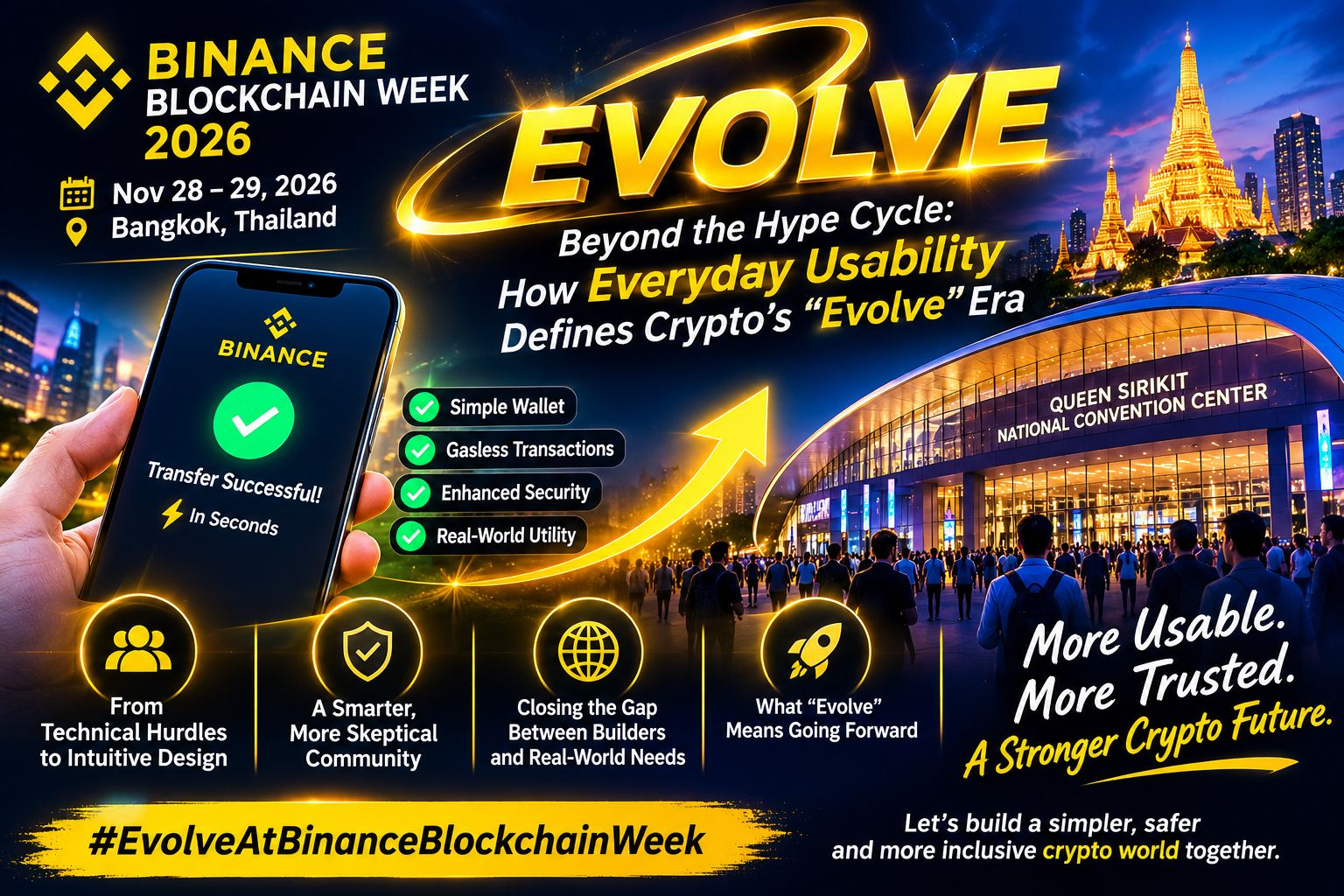
Today, that entire onboarding experience is being rebuilt from the ground up. Smart wallets secured by familiar smartphone biometrics, gasless transactions sponsored behind the scenes, and clean mobile interfaces are stripping away unnecessary complexity. When a remote worker or a student abroad sends stablecoins home today, the recipient does not need to understand consensus algorithms or liquidity pools. They simply see funds arrive in seconds at a fraction of traditional transfer costs.
That shift, from forcing people to learn blockchain mechanics to making the mechanics invisible, is one of the clearest signs that crypto is genuinely evolving.
A Smarter, More Skeptical Community
Evolution is not only happening inside codebases; it is also happening in how users, traders, and builders evaluate projects.
In earlier market cycles, attention often flowed toward whoever promised the highest yields or the boldest roadmap. Many projects relied heavily on short-term token incentives to attract activity, only to watch users disappear the moment rewards slowed down. Over time, both everyday participants and institutional observers learned to look deeper beneath the surface.
In 2026, tougher questions have become standard. People want to see verifiable proof of reserves, transparent smart contract audits, real protocol revenue, and practical utility that holds up even when market sentiment cools off. Builders are no longer rewarded just for launching a token; they are judged on whether their product solves an actual problem faster, cheaper, or more transparently than existing alternatives.
Bringing builders, liquidity providers, policymakers, and community voices together in Bangkok on November 28 and 29 puts those ideas to the test. When different corners of the ecosystem share the same stage, vague slogans quickly give way to practical discussions about compliance, cross-border interoperability, and sustainable growth.
Closing the Gap Between Builders and Real-World Needs
One of the most valuable parts of Binance Blockchain Week is that the conversation does not stay locked behind closed doors. Even if you are participating from thousands of miles away, following the discussions and sharing your own perspective helps highlight what still needs work on the ground.
And plenty of work remains. Smooth local cash conversion options are still uneven across regions. Phishing scams and malicious approvals continue to target newcomers, making clearer transaction previews and stronger wallet protections essential. Meanwhile, clearer regulatory standards are still needed so businesses and everyday merchants can accept digital payments without legal uncertainty.
Progress on these fronts does not happen overnight, nor does it come from a single company or protocol. It comes from steady iteration, listening to where everyday users get stuck, and refining the tools until those pain points disappear.
What “Evolve” Means Going Forward
As November 28 and 29 approach, I am paying close attention to how the industry balances innovation with simplicity. Crypto has already proven that open, borderless networks can operate around the clock without central intermediaries. The next chapter is about making those networks reliable, safe, and intuitive enough for millions of people to use in daily life without thinking twice about the technology underneath.
To me, that is the real meaning behind this year’s theme: moving past speculation and building tools that earn lasting trust through everyday usefulness.
What part of crypto’s evolution has stood out most in your own experience: simpler wallet interfaces, faster global stablecoin transfers, or stronger security standards? Share your perspective below and join the conversation.