

Celo Is Building the Financial Infrastructure for a World Where Money Moves Without Borders
What if the future of finance is not about creating another way to trade digital assets, but about making money move so naturally that people barely notice the technology behind it?
I think this is one of the most interesting questions in blockchain today.
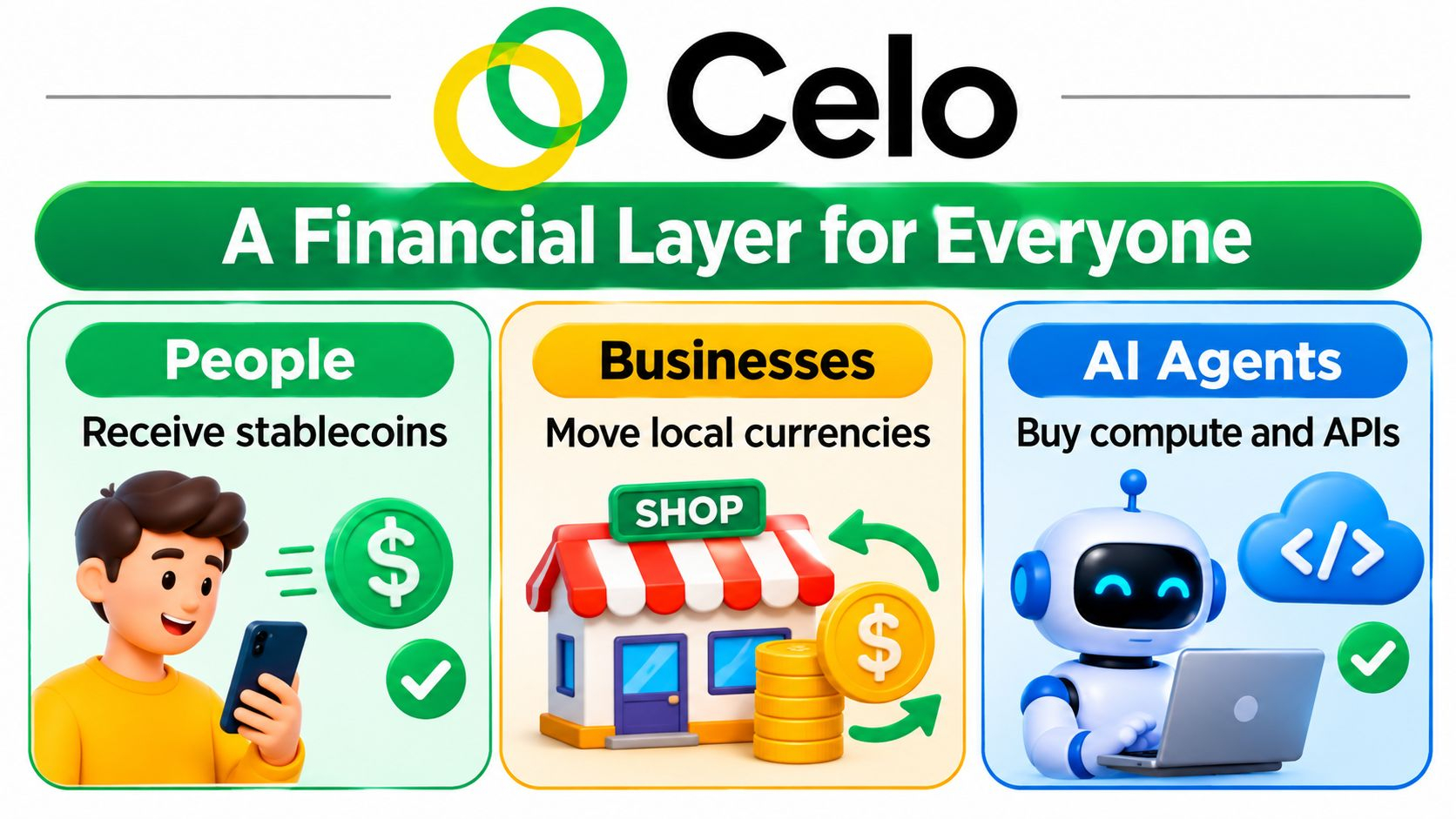
Consider a world where a freelancer receives international payments in seconds, a merchant accepts digital dollars without dealing with complicated crypto processes, and an AI agent independently pays for computing resources or online services.
Different users. Different needs. One common requirement: financial infrastructure that works without unnecessary friction.
This is the direction that makes Celo particularly interesting.
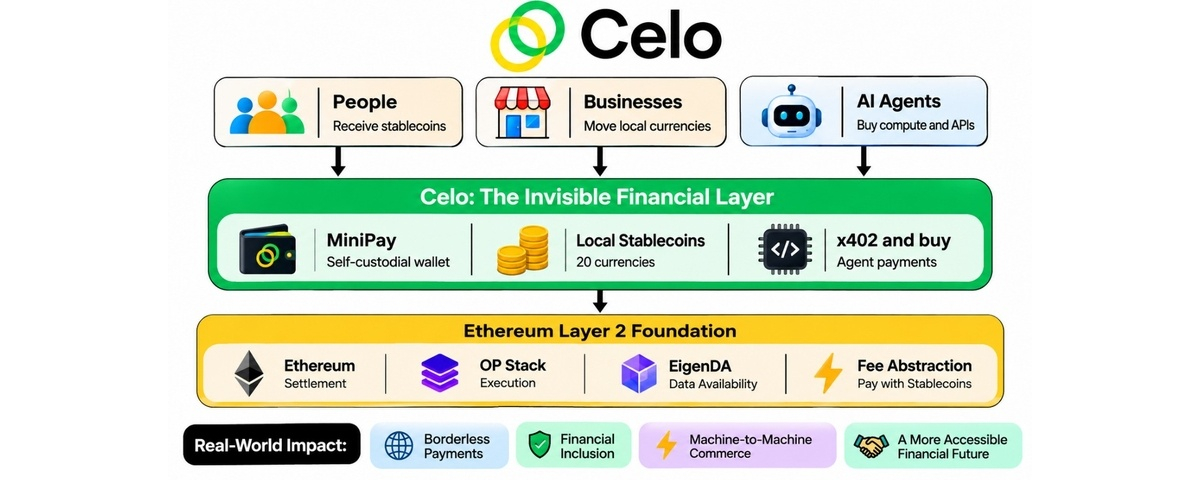
Rather than competing only on transaction speed or blockchain performance, Celo is building around a broader financial vision: connecting stablecoins, everyday payments, local currencies, and emerging AI-driven commerce through accessible infrastructure.
And what makes this strategy worth examining is how several pieces of its ecosystem are beginning to connect.
1. The Future of Payments Is About Accessibility, Not Complexity
Blockchain has already shown that money can move globally without relying entirely on traditional banking infrastructure.
But there is a difference between transferring a token and making digital money genuinely useful.
Most ordinary users do not want to understand gas markets, private keys, network configurations, or cross-chain infrastructure.
They simply want to receive money, send payments, and access financial services.
This is an important distinction.
Crypto adoption will not necessarily happen because millions of people suddenly become interested in blockchain technology. It could happen because applications make the underlying technology almost invisible.
That is where Celo's mobile-first approach becomes relevant.
Its strategy focuses on reducing the distance between blockchain infrastructure and real-world financial activity.
2. Ethereum Layer 2: A Strategic Foundation for Celo
Celo originally operated as an independent Layer 1 blockchain.
However, its long-term development required more than maintaining a separate network. It needed stronger alignment with Ethereum while preserving the characteristics that made its ecosystem attractive for payments.
The transition to an Ethereum Layer 2 was completed on March 26, 2025, using the OP Stack.
This changed Celo's architectural position.
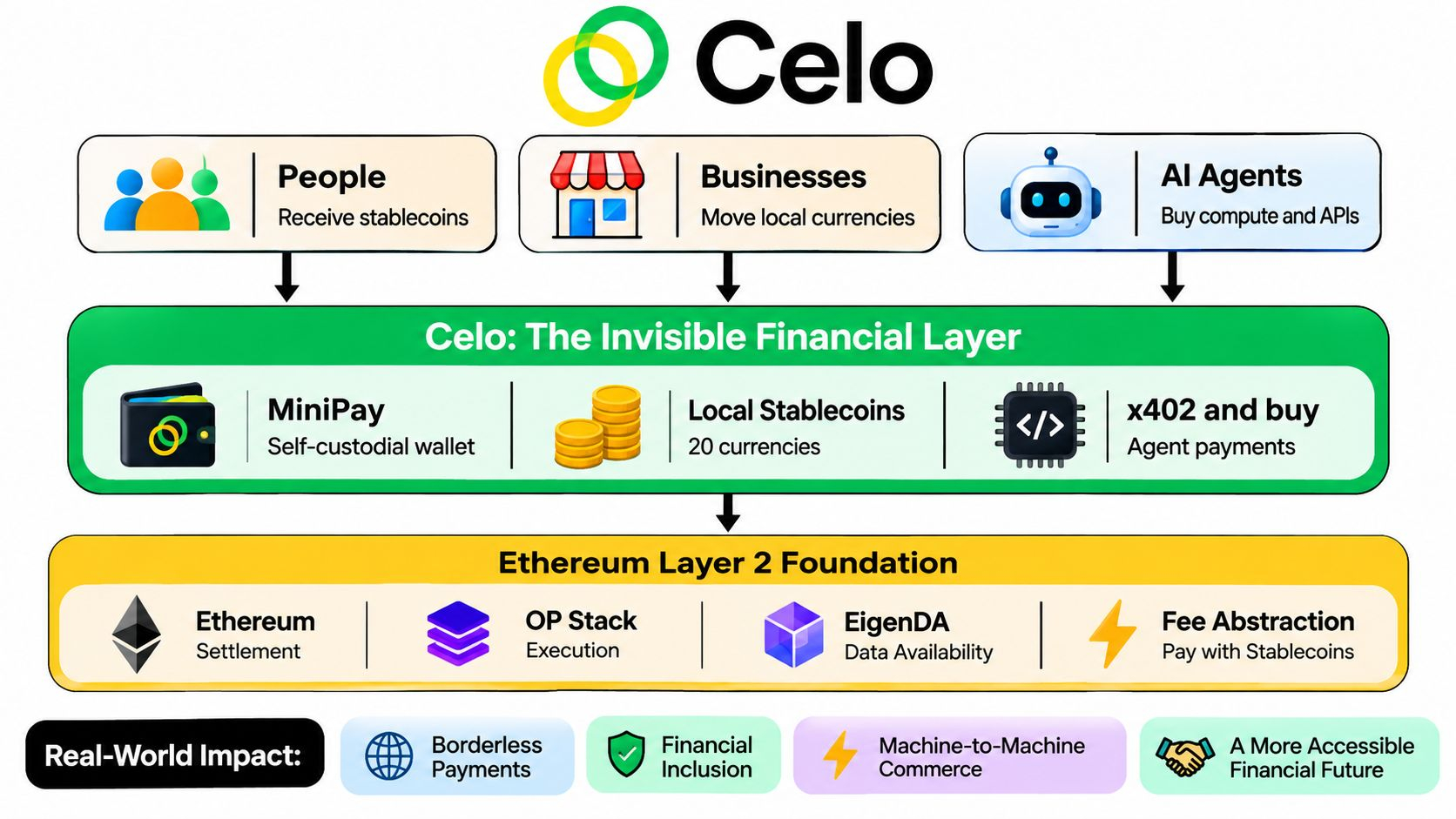
Its infrastructure now brings together several important components:
- OP Stack: Provides the Layer 2 execution framework.
- Ethereum: Provides the settlement foundation.
- EigenDA: Supports data availability.
- Fee Abstraction: Allows users to pay transaction fees using supported assets instead of necessarily holding CELO.
The Superchain connection also creates opportunities for collaboration and interoperability with other OP Stack networks.
But I think the bigger story is not simply that Celo became an Ethereum Layer 2.
It is that Celo can pursue a specialised financial use case while operating within a broader Ethereum-aligned ecosystem.
For a network focused on stablecoin payments, this architectural direction could become an important advantage.
Of course, Ethereum alignment does not eliminate every infrastructure risk. Sequencing, bridges, data availability, and operational assumptions still deserve attention.
3. MiniPay: Turning Blockchain Infrastructure Into Everyday Finance
Technology alone does not create adoption.
Distribution does.
A network can offer low-cost transactions and sophisticated infrastructure, but if people struggle to access it, its potential remains limited.
This is why MiniPay is such an important part of Celo's ecosystem.
Developed by Opera and built on Celo, MiniPay is designed to make stablecoin payments accessible through a familiar mobile experience.
Its approach is interesting because it reduces the need for users to interact directly with blockchain complexity.
The reported ecosystem milestones are particularly notable:
- More than 20 million activated wallets.
- Over 600 million transactions processed.
- Availability across more than 70 countries.
- 77 Mini Apps.
These numbers suggest meaningful distribution, although activated wallets should not automatically be interpreted as unique active users.
Another important development is the integration of Privy wallet infrastructure, introducing familiar onboarding options such as email, social sign-in, and passkeys while maintaining self-custodial functionality.
MiniPay has also introduced Stripe-related payment integrations, including Link deposits for supported users in the US and EU.
The bigger opportunity is clear.
If users can access stablecoins through familiar interfaces, blockchain payments become less of a technical activity and more of a financial utility.
But the real measure of success will be how many users continue returning to MiniPay for actual financial activity.
4. Stablecoins Could Become Celo's Strongest Adoption Engine
One of the biggest opportunities in blockchain is the expansion of stablecoin-based payments.
Stablecoins offer something traditional cryptocurrencies often struggle to provide for everyday transactions: relatively predictable unit value.
However, the global economy is not built around a single currency.
A Brazilian merchant may prefer reais. A Nigerian user may need naira. A European business may operate in euros.
This creates an opportunity for local-currency stablecoins.
Celo's ecosystem is developing around multiple stablecoin assets, including:
- USDC and USDT.
- USA₮.
- USDm and EURm.
- BRLm and XOFm.
- Other local-currency stablecoin assets.
According to Celo's October 2026 infrastructure update, its ecosystem included 33 stablecoins representing 20 currencies.
I find this direction particularly interesting because it moves the conversation beyond simply transferring US dollars.
Imagine financial applications that can support users in their preferred currencies without forcing every transaction through unnecessary conversion steps.
That could make stablecoin infrastructure more relevant to local businesses, international payments, and everyday financial services.
However, asset availability alone does not guarantee adoption.
Liquidity, redemption mechanisms, issuer credibility, reserves, and regulatory compliance will determine whether these stablecoins become useful financial instruments.
5. The AI Agent Economy Could Introduce an Entirely New Payment Market
This is perhaps the most forward-looking part of Celo's strategy.
Traditional payment infrastructure was designed around human decisions.
A person selects a service, approves a transaction, and makes a payment.
But AI agents are beginning to operate differently.
An AI agent may need to purchase computing resources, access a premium API, retrieve specialised information, or pay another digital service while completing a task.
This introduces a new question:
What happens when software needs its own payment infrastructure?
Celo is exploring this opportunity through x402.
The concept uses the HTTP 402 Payment Required response to enable payment-gated internet services.
A simplified process looks like this:
1. An AI agent requests access to a service.
2. The service responds with payment requirements.
3. The agent provides an authorised stablecoin payment.
4. A facilitator verifies the payment and handles settlement.
5. The service grants access after confirmation.
This creates a potential payment relationship between software applications without requiring a human to manually approve every individual purchase.
Celo has also developed its buy marketplace, allowing AI agents to discover and purchase hundreds of digital services across areas such as computing, data, and APIs.
The significance is not that AI agents will immediately replace traditional payment systems.
It is that autonomous software may create a new category of financial demand.
If agent-driven commerce expands, networks capable of supporting affordable, programmable payments could become increasingly relevant.
6. Why the Superchain Could Strengthen Celo's Position
The blockchain industry has spent years creating separate networks for different applications.
But the next stage may depend less on how many chains exist and more on how effectively they connect.
This is where the Superchain concept becomes important.
Celo brings a specialised focus on payments and financial accessibility into the wider OP Stack ecosystem.
The potential benefits include shared development tools, ecosystem collaboration, and improved connectivity between applications.
However, interoperability should not be confused with automatic liquidity or seamless security.
Bridges, cross-chain messaging, fragmented liquidity, and different network assumptions remain challenges.
Celo's long-term opportunity will depend on whether its Superchain relationship creates practical benefits for developers and users.

7. CELO Token Economics: Adoption Must Translate Into Value
There is one question I believe every serious ecosystem analysis should address:
If Celo adoption increases, what does that actually mean for CELO?
Network growth and token value are not automatically connected.
CELO has roles in governance, staking, and the network's economic framework. At the same time, fee abstraction allows supported stablecoins to be used for transaction fees.
This creates an important distinction between using the network and directly demanding its native token.
One development worth watching is CELOccelerate.
Its framework connects eligible net sequencer revenue with CELO acquisition through the Community Fund, subject to applicable costs and revenue-sharing arrangements.
However, acquired tokens are not automatically burned. Governance decisions determine their subsequent use.
This is an interesting attempt to establish a relationship between network economics and the native token.
But the mechanism needs to be evaluated through measurable results:
- Actual sequencer revenue.
- Operating expenses.
- Sustainable stablecoin activity.
- Transparent reporting.
- Governance decisions.
- Long-term token supply dynamics.
For me, this is where the difference between an attractive ecosystem narrative and sustainable token economics becomes important.
8. The Challenges Celo Still Needs to Overcome
I would not evaluate Celo's opportunity without considering the risks.
Competition: Other Ethereum Layer 2s, Solana, and specialised payment networks are competing for users and liquidity.
User retention: Activated wallets are encouraging, but recurring financial activity matters much more.
Stablecoin liquidity: Local-currency stablecoins need reliable issuers, redemption mechanisms, and sufficient liquidity.
Infrastructure security: Bridges, sequencing, data availability, and smart contracts introduce risks that require continuous monitoring.
AI payment adoption: Agentic commerce remains an emerging market, and its commercial scale is still uncertain.
Token economics: More network activity does not automatically create sustainable value for CELO holders.
These challenges do not invalidate Celo's vision. They define what the project must prove.
9. Five Signals I Would Watch Going Forward
Instead of judging Celo by announcements alone, I would focus on five measurable developments:
1. MiniPay retention: Are activated wallets becoming recurring users?
2. Stablecoin liquidity: Are local-currency assets generating meaningful payment activity?
3. x402 adoption: Are AI agents producing repeat commercial transactions?
4. Network revenue: Is sequencer revenue growing sustainably?
5. Superchain connectivity: Are integrations creating measurable advantages for applications and developers?
These indicators could provide a much clearer picture of Celo's progress than short-term market sentiment.
My Final Perspective: Celo Wants to Make Blockchain Disappear Into Finance
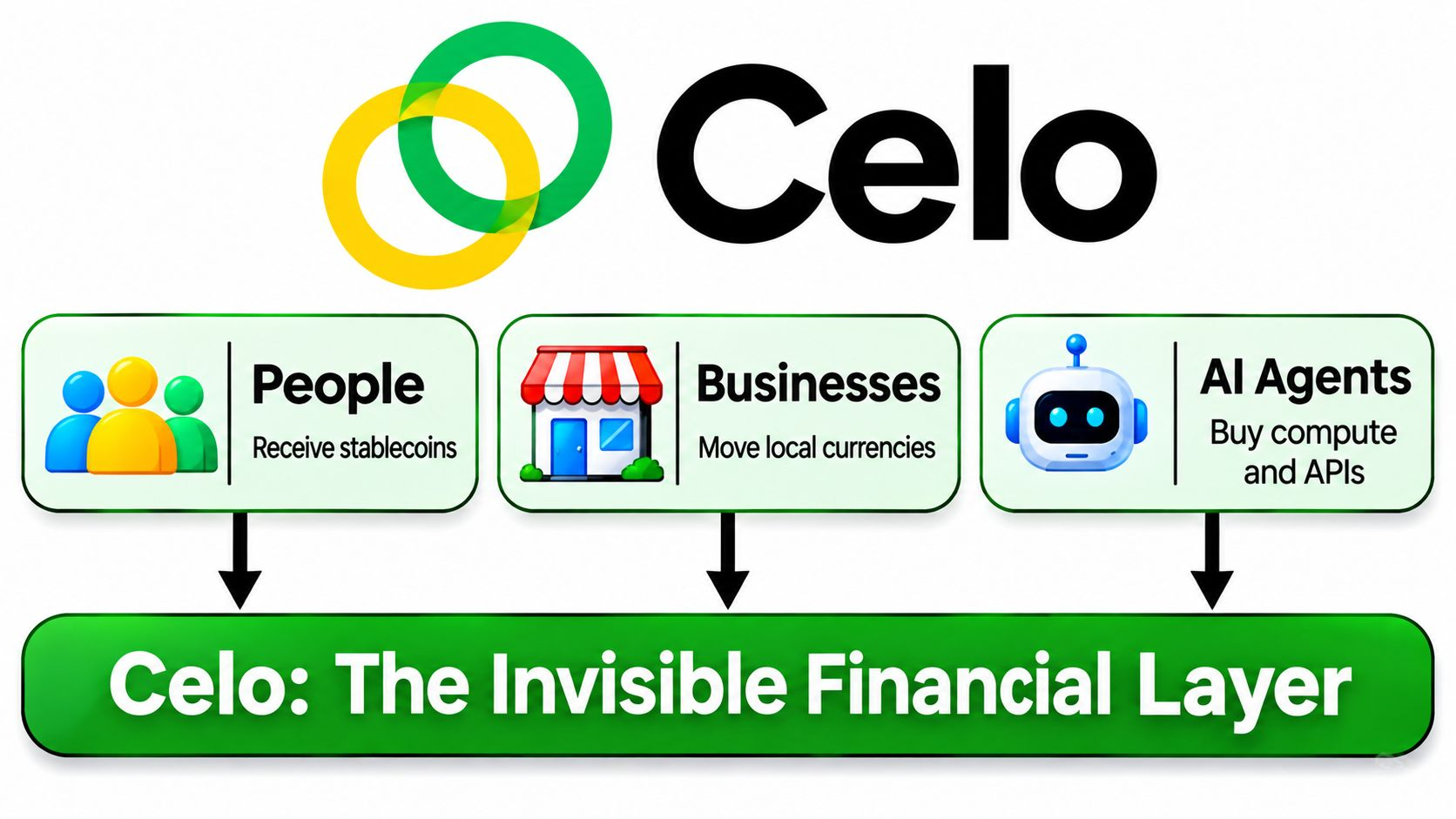
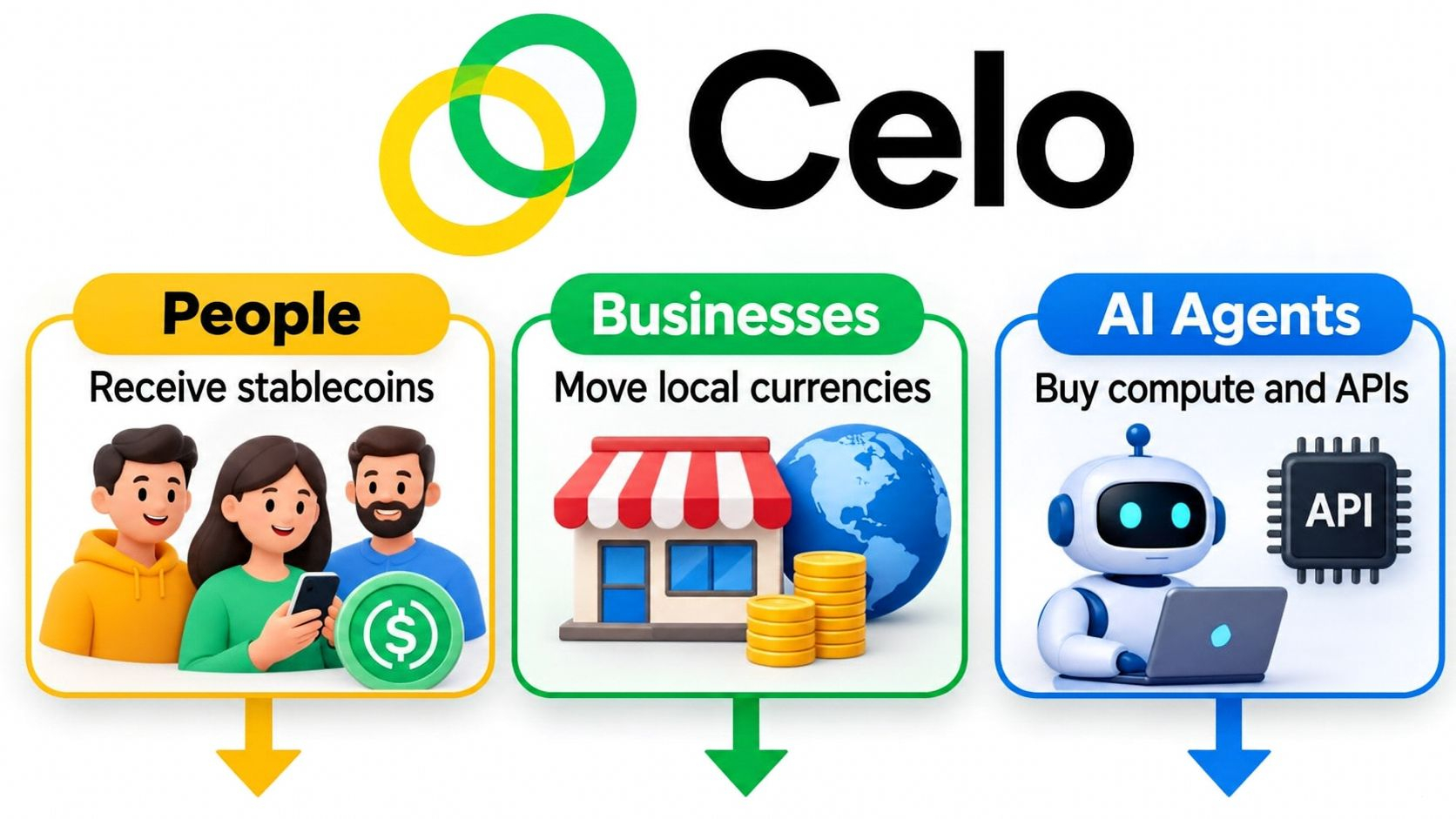
When I look at Celo, I see a project attempting to connect three different financial environments.
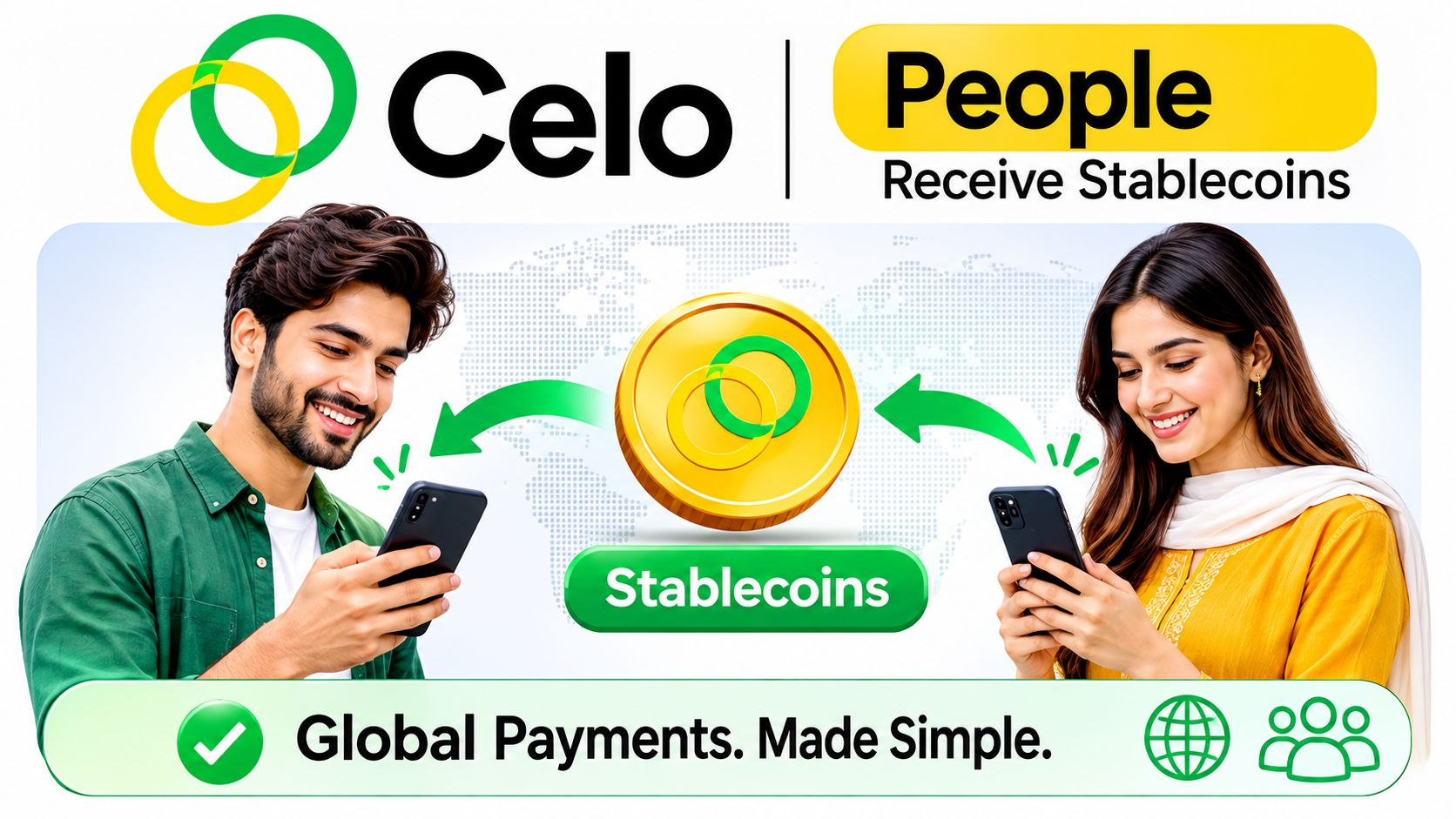
The first is human payments: people who need affordable and accessible ways to move money.
The second is digital finance: businesses and applications that need stablecoins, local currencies, and reliable settlement infrastructure.
The third is autonomous commerce: AI agents that may eventually need to purchase digital services independently.
Celo is attempting to build infrastructure that can serve all three.
Its Ethereum Layer 2 architecture provides the foundation. Its Superchain alignment creates opportunities for connectivity. MiniPay offers a distribution channel, while local-currency stablecoins and x402 expand the potential use cases.
But the real test is still ahead.
Can Celo turn wallet activations into consistent financial activity? Can local stablecoins develop meaningful liquidity? Can AI-powered payments move beyond experimentation? And can growing network usage create sustainable economic value?
These are the questions that will determine whether its vision becomes reality.
My central takeaway is simple:
The next major stage of blockchain adoption may not belong to the network with the most complicated technology or the loudest narrative.
It may belong to the infrastructure that makes financial technology feel effortless.
Celo is trying to build exactly that kind of infrastructure: a financial layer where people, businesses, stablecoins, and AI agents can interact without constantly thinking about the blockchain underneath.
The most successful blockchain might eventually be the one people use every day without even realising they are using it.
What do you think will become Celo's biggest adoption driver: MiniPay, local-currency stablecoins, or autonomous AI payments?
Disclosure: Original educational research prepared for the Celo ecosystem. This article reflects an independent interpretation of publicly available information.
Disclaimer: This content is for educational purposes only and is not financial advice. Cryptocurrency assets involve significant risks. Always conduct your own research.#Celo #BinanceSquare
