HOW RISING ENERGY RENTAL PRICING BUFFERS STRX YIELDS WHEN TRADITIONAL LENDING RATES SOFTEN
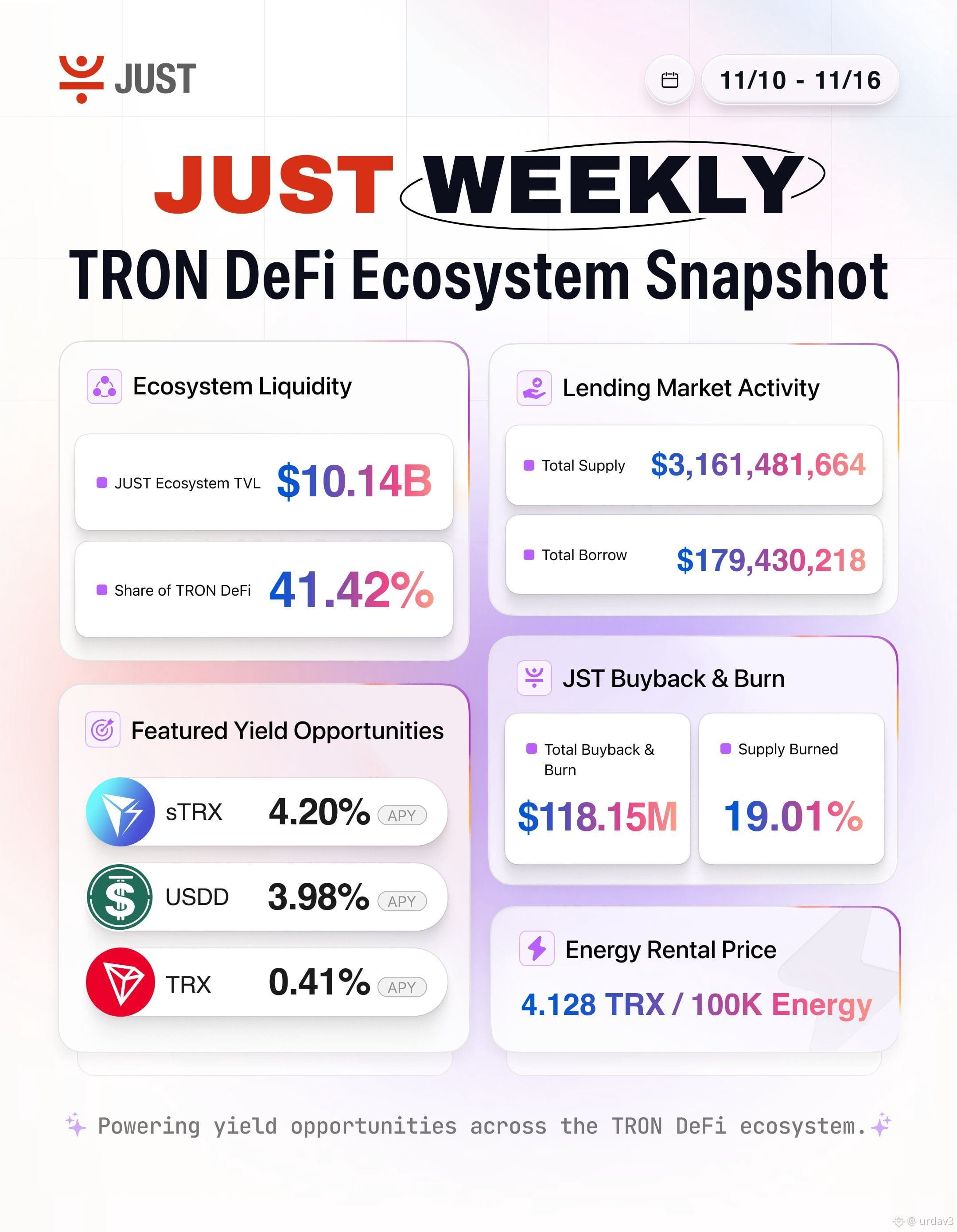
In most proof of stake networks, staking yields depend solely on fixed inflation schedules or volatile transaction fee tips. Looking closely at the November 10 to November 16 JUST Weekly data illustrates why JustLend dual engine yield architecture for sTRX provides structural resilience across shifting market cycles.
As explained in the protocol mechanics, sTRX staking returns draw from two independent revenue streams: Super Representative voting rewards and revenue generated from the JustLend Energy Rental market. When borrowing demand across broader money markets softens and featured APYs for sTRX, USDD, and TRX edge lower, active demand for network Energy provides a natural countercyclical stabilizer.
Because Energy Rental pricing rose from 4.006 to 4.128 TRX during the same seven day window, higher rental fee inflows flow directly back toward TRX stakers backing the resource pool. This dynamic links staking rewards directly to real blockchain execution demand rather than speculative leverage alone. Even when borrowers deleverage, everyday smart contract activity keeps generating tangible fee revenue for resource providers.
From my perspective, connecting liquid staking yields to real network resource consumption creates a far healthier economic foundation than relying purely on leveraged borrowing demand. How important is dual yield diversification when you decide where to stake or deploy your TRX holdings?
@Justin Sun孙宇晨 @JUST DAO
#TRONEcoStar