



Buying crypto when the market is falling—often called "buying the dip"—can offer strong long-term upside, provided you have a multi-year time horizon and avoid going all-in at once.
With Bitcoin trading nearly 50% below its late-2025 peak of ~$126,000, prices are heavily discounted compared to bull-market highs. However, trying to catch the exact bottom carries real risks.
Why Buying During a Fall Works (The Upside)
Lower Entry Prices: Purchasing quality assets when fear is high lowers your average cost basis and maximizes upside if the market recovers. Historically, major cryptocurrencies like Bitcoin have recovered from every major downturn, though recoveries have typically taken 1 to 3 years.
Reduced Hype & Leverage: Downturns flush out excessive speculation and over-leveraged traders, leaving valuations closer to fundamental support levels.
 The Risks to Watch Out For
"Catching a Falling Knife": A 45–50% drop can easily turn into a 65–75% drop before finding a true bottom. Putting all your money in on a single red day leaves you vulnerable if prices keep sliding.
Altcoin Survival Risk: While major assets like Bitcoin($BTC ) and Ethereum($ETH ) tend to bounce back over time, smaller speculative altcoins often lose 90%+ of their value in bear markets and never recover.
Liquidity Lock-Up: Because crypto bear markets can last over a year, investing money you might need in the short term can force you to sell at a loss.
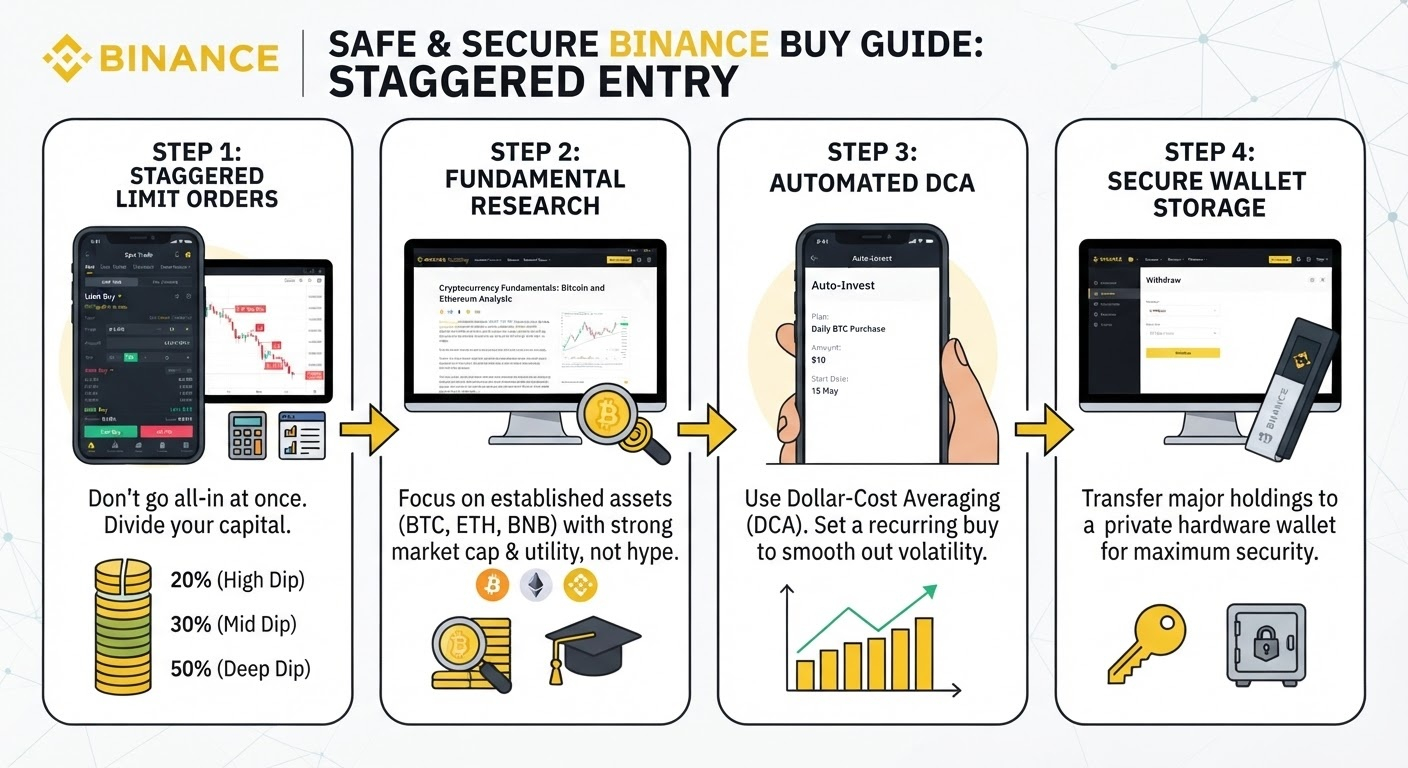 How to Buy Safely on Binance Right Now
Instead of guessing the bottom with a single lump-sum purchase, use structured entry strategies on Binance:
1. Use Dollar-Cost Averaging (Binance Auto-Invest): Split your intended capital into smaller weekly or monthly purchases (for example, investing $50 or $100 every week instead of $1,000 today). If prices fall further, your fixed amount automatically buys more coins; if prices rebound, you already have skin in the game.
2. Place Staggered Limit Orders: If you prefer manual trading on Binance Spot, divide your cash into 3 or 4 tiers and set limit buy orders at progressively lower support levels (e.g., 5%, 10%, and 15% below the current price).
3. Stick to High-Conviction Assets: During a market slide, prioritize high-liquidity, established cryptocurrencies (like BTC, ETH, or $BNB ) over low-cap meme coins or unproven tokens.
4. Keep Stablecoin Dry Powder: Hold a portion of your portfolio in stablecoins (such as USDT or USDC) so you have cash ready if a sudden liquidation cascade creates a steep flash discount.
5. Avoid High-Leverage Futures: Buying spot crypto during a dip means you own the asset and can wait out a downturn. Using leveraged futures during a falling market exposes you to sudden liquidation wipes even if the price eventually recovers.