

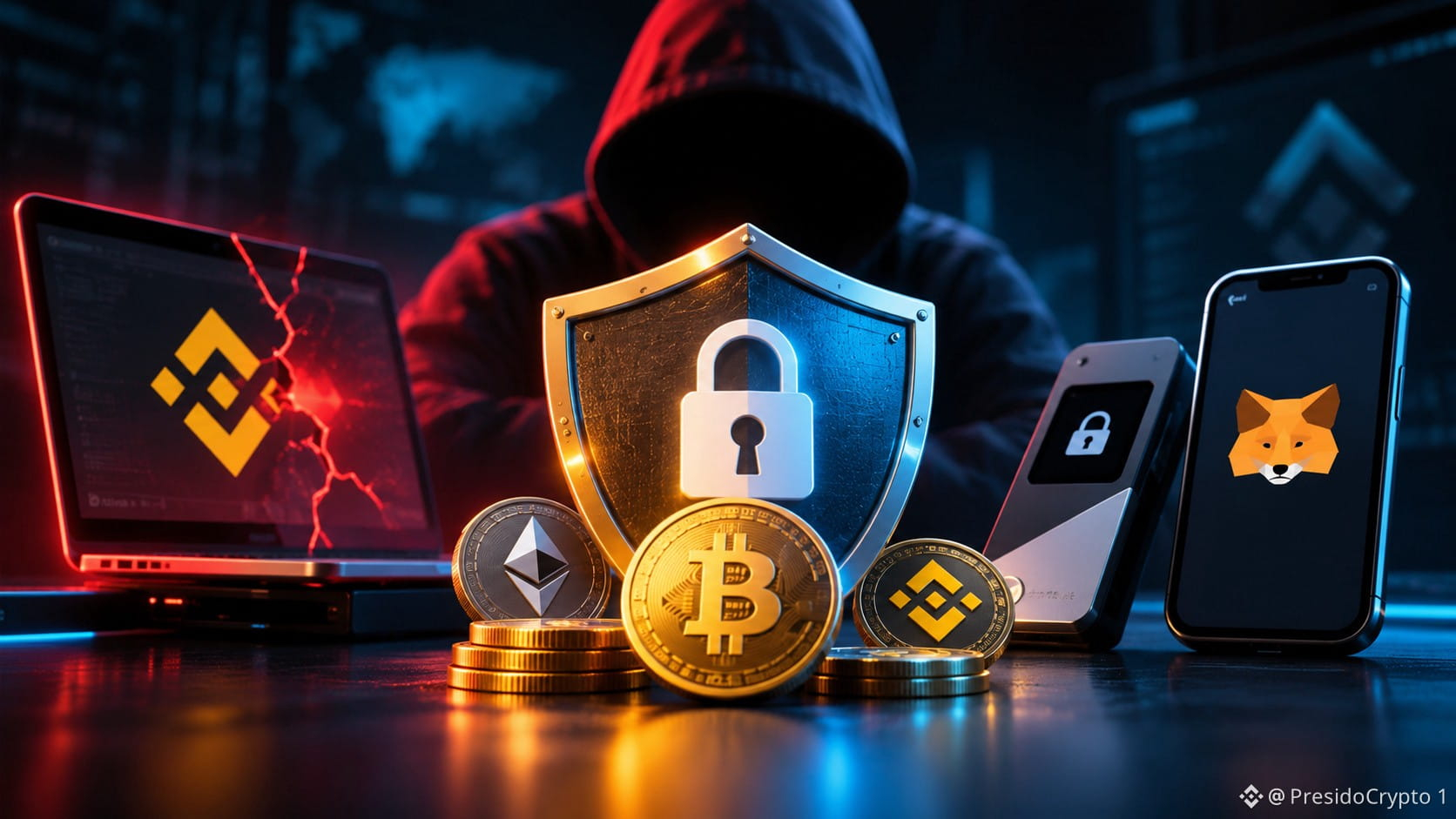
AFTER BINANCE, THE SECURITY ALARM IS RINGING ACROSS CRYPTO. WHERE IS YOUR MONEY ACTUALLY SAFE? The recent $6.3 billion Binance security breach has raised a question every crypto investor should take seriously: If one of the world's largest exchanges can suffer a security incident of this scale, how safe are our digital assets? And the response across the industry is already telling. Coinbase has adjusted its offline key-storage systems as a precaution, while Kraken says it is closely monitoring the situation and reviewing potential security lessons. But here's the bigger issue: crypto security is not just about choosing a popular exchange. 🔐 1. Centralized exchanges Convenient for trading, but you depend on the platform's security, internal controls, and ability to manage customer assets. 🔑 2. Self-custody wallets Hardware wallets give users greater control over their private keys, but they are not completely risk-free. A compromised recovery phrase, counterfeit device, malicious software, or careless signing decision can still lead to losses. 🌐 3. DeFi wallets You control your assets directly, but smart-contract vulnerabilities, phishing links, malicious approvals, and fake websites introduce different risks. 🧠 SO, WHERE IS YOUR CRYPTO SAFEST? There is no perfect answer. Security depends on how assets are stored, how access is protected, and how carefully transactions are verified. My personal security checklist: • Keep long-term holdings in properly secured self-custody. • Never share your seed phrase or store it online. • Use hardware wallets purchased from trusted sources. • Enable strong authentication on exchange accounts. • Revoke unnecessary token approvals. • Verify every website, address, and transaction before signing. The biggest lesson from this incident is that owning crypto is not enough; protecting access to it is equally important. #BTC Price Analysis# #Macro Insights#
Rejoignez la communauté mondiale des adeptes de cryptomonnaies sur Binance Square
⚡️ Suviez les dernières informations importantes sur les cryptomonnaies.
💬 Jugé digne de confiance par la plus grande plateforme d’échange de cryptomonnaies au monde.
👍 Découvrez les connaissances que partagent les créateurs vérifiés.
Adresse e-mail/Nº de téléphone