

The 2026 Midterm Elections: When Political Narratives Meet Reality
What happens when a powerful political voice meets the mathematics of democracy?
The answer came from the United States.
The 2026 US Midterm Elections have delivered a major political development: Democrats have gained control of both chambers of Congress — the House of Representatives and the Senate.
For Donald Trump and the Republican Party, this represents a significant change in Washington's political balance.
But perhaps the most interesting part of this election is not just who won. It is the difference between political confidence, public perception, and actual voting results.
Let's break it down with logic, facts, and a little humor.
😂 THE TRUMP MOMENT
As the election results turned against Republicans, Trump posted on Truth Social:
"I wasn't on the Ballot and if I was, we would have won IN A LANDSLIDE!"
That's an interesting statement.
During the campaign, Trump encouraged voters to treat the midterms as if he were personally on the ballot. After the results, he pointed out that he wasn't actually a candidate.
Politics is full of powerful statements, but election results are measured in votes, not confidence!
🧠 LOGIC VS. POLITICAL NARRATIVE
Let's look at three important lessons.
1. Popularity is not the same as political support.
A politician can dominate headlines, social media, television discussions, and public debates. But visibility does not automatically translate into votes.
2. Elections are about more than personalities.
Voters also consider inflation, living costs, employment, foreign policy, security, and their everyday economic situation.
Reports on this election identified economic concerns and dissatisfaction with government policy among important factors behind the results.
3. Political power requires institutional support.
Winning the presidency does not guarantee control of Congress. The American political system separates executive and legislative power.
That separation is one of the most important features of its system of checks and balances.
🔍 MYTHS VS. FACTS
MYTH 1: A powerful president automatically controls Congress.
FACT: Congressional elections are separate elections. Voters can choose different parties for the presidency and Congress.
MYTH 2: Social media popularity means electoral victory.
FACT: Online engagement is not a substitute for actual ballots.
MYTH 3: Losing congressional control means the president immediately loses office.
FACT: A midterm election does not remove a sitting president. It changes the balance of power in Congress.
📊 THE MATHEMATICS OF DEMOCRACY
The US House has 435 voting seats.
A majority requires 218 seats.
The Senate has 100 seats, with 51 generally needed for an outright majority.
These numbers matter because political control is not decided by who speaks the loudest. It depends on who wins enough seats.
And this time, Democrats secured control of both chambers.
⚖️ WHAT HAPPENS NEXT?
The next two years could bring:
More congressional investigations and oversight.
Tougher negotiations over legislation.
Greater scrutiny of presidential decisions.
Possible delays or disagreements over government appointments.
A new political environment ahead of the 2028 presidential election.
However, a divided political system can also create opportunities for negotiation and cooperation.
(
🚀 $FF

— THE NEXT MOVE COULD BE INTERESTING!
While politicians are busy counting votes, we're watching the charts! 😂
Falcon Finance ($FF) is showing bullish momentum:
📈 24H: +5.03%
🎯 Entry Zone: $0.0908–$0.0915
🛑 Stop Loss: $0.0898
Profit Targets:
🥇 TP1: $0.0938
🥈 TP2: $0.0955
🥉 TP3: $0.0970
⚡ Confirmation is key: Watch for a strong breakout above $0.0922 or a successful pullback.
No FOMO. No blind entries. Let the chart confirm!
Trade smart. Let the market do the talking.
#FF #FalconFinance #Binance #SpotTrading #CryptoTrading #Altcoins #TradingSetup
)
💡 THE BIGGER LESSON
This election reminds us of something important:
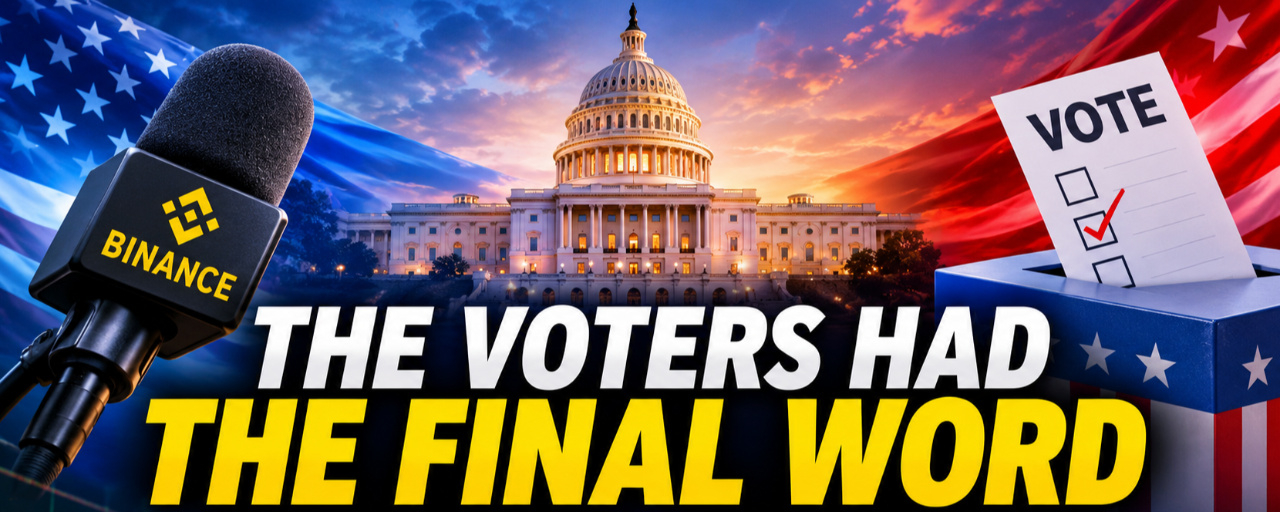
A microphone can influence a conversation, but a ballot determines an election.
Political leaders can make promises, create narratives, dominate headlines, and express confidence.
But voters have their own priorities, and those priorities eventually appear in the numbers.
Trump may believe he would have won in a landslide.
The actual election, however, tells us what voters decided this time.
And perhaps the funniest lesson of all?
You can win the argument on social media and still lose the mathematics of democracy! 🤣
What do you think? Is this election mainly a message to Trump, a reflection of economic frustration, or a reminder that voters want stronger checks and balances?
Let's discuss.
Disclaimer: This article is for educational and informational purposes. It is not political campaigning or financial advice.
#USMidterms2026 #Trump #Democrats #Republicans #USPolitics #ElectionResults #Democracy #Politics #BinanceSquare #GlobalNews