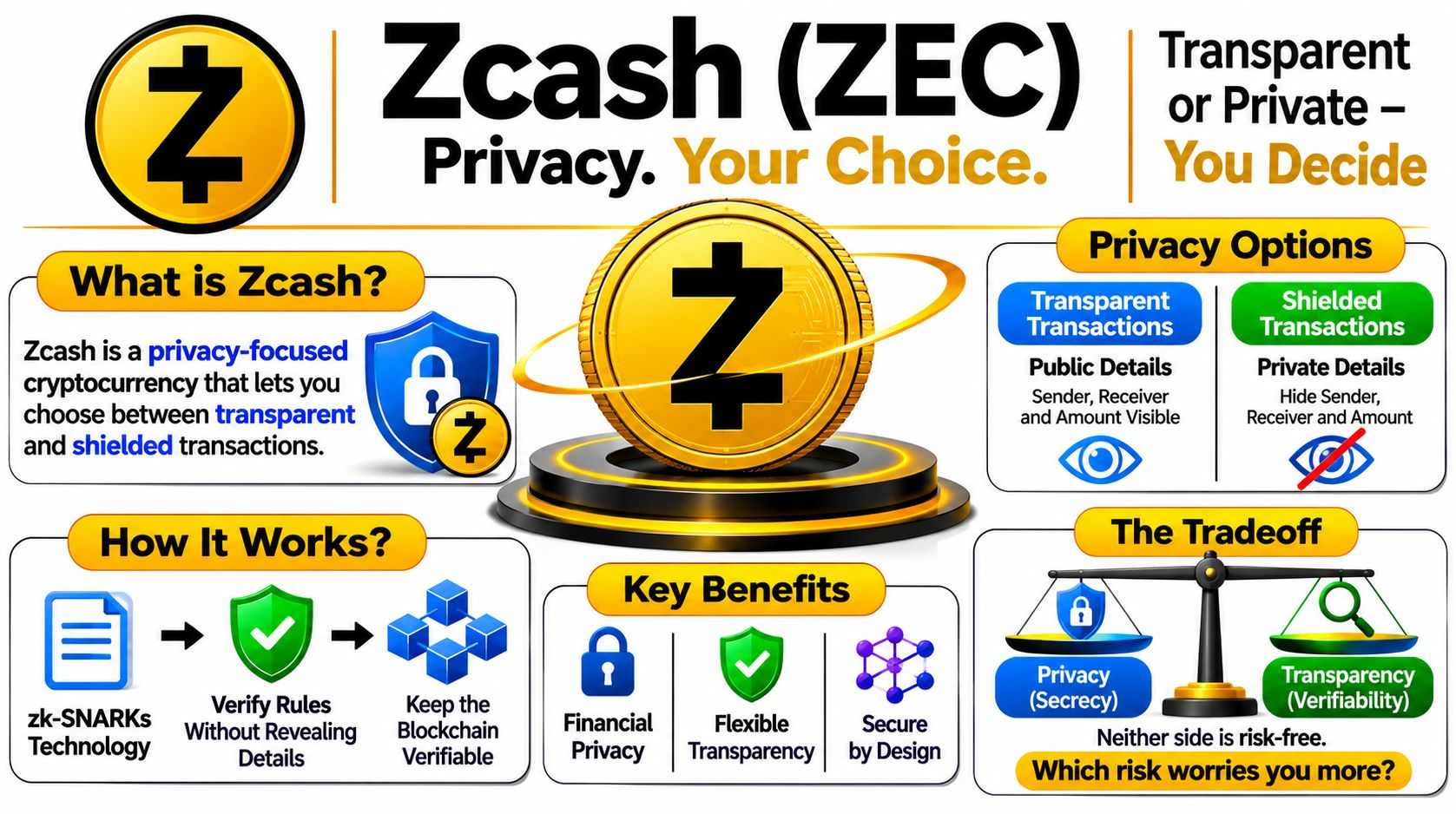
Zcash (ZEC) was designed to make cryptocurrency transactions private without sacrificing blockchain verification.
But its privacy is optional. Some transactions reveal their sender, receiver, and amount, while fully shielded transactions hide these details. That's not an oversight. It's a stated choice.
The reason is flexibility. Users can choose financial privacy when they need it, while businesses and exchanges can use transparent transactions when public visibility matters.
The tradeoff? Outsiders lose the ability to independently trace individual shielded payments, verify wallet balances, or follow transaction histories through a public explorer.
Zcash uses zero-knowledge proofs called zk-SNARKs to verify transactions without exposing sensitive information. Network participants can verify that transactions follow protocol rules without seeing private transaction details.
The blockchain's transparent transactions remain publicly inspectable. Shielded activity can be selectively disclosed through viewing keys, allowing designated parties to inspect financial information without receiving spending control.
However, this is not continuous public visibility. Privacy reduces what outsiders can independently verify about individual transactions.
Compare this with Monero (XMR), where privacy is mandatory. Ring signatures, stealth addresses, and RingCT conceal transaction details by default.
Monero offers less public transaction exposure, while Zcash offers more flexibility between privacy and transparency.
Neither approach removes counterparty risk. Zcash relies on optional privacy and user choice. Monero relies on mandatory privacy and cryptographic protections.
Which risk worries you more: public financial exposure, or limited independent visibility into p