$BNB: BNB: The Checklist Trap
The watchlist stays calm. Your mind rushes to check the tape every few minutes. A common habit is updating a rule only after seeing a fast candle. This feels logical but blurs the line between observation and reaction.
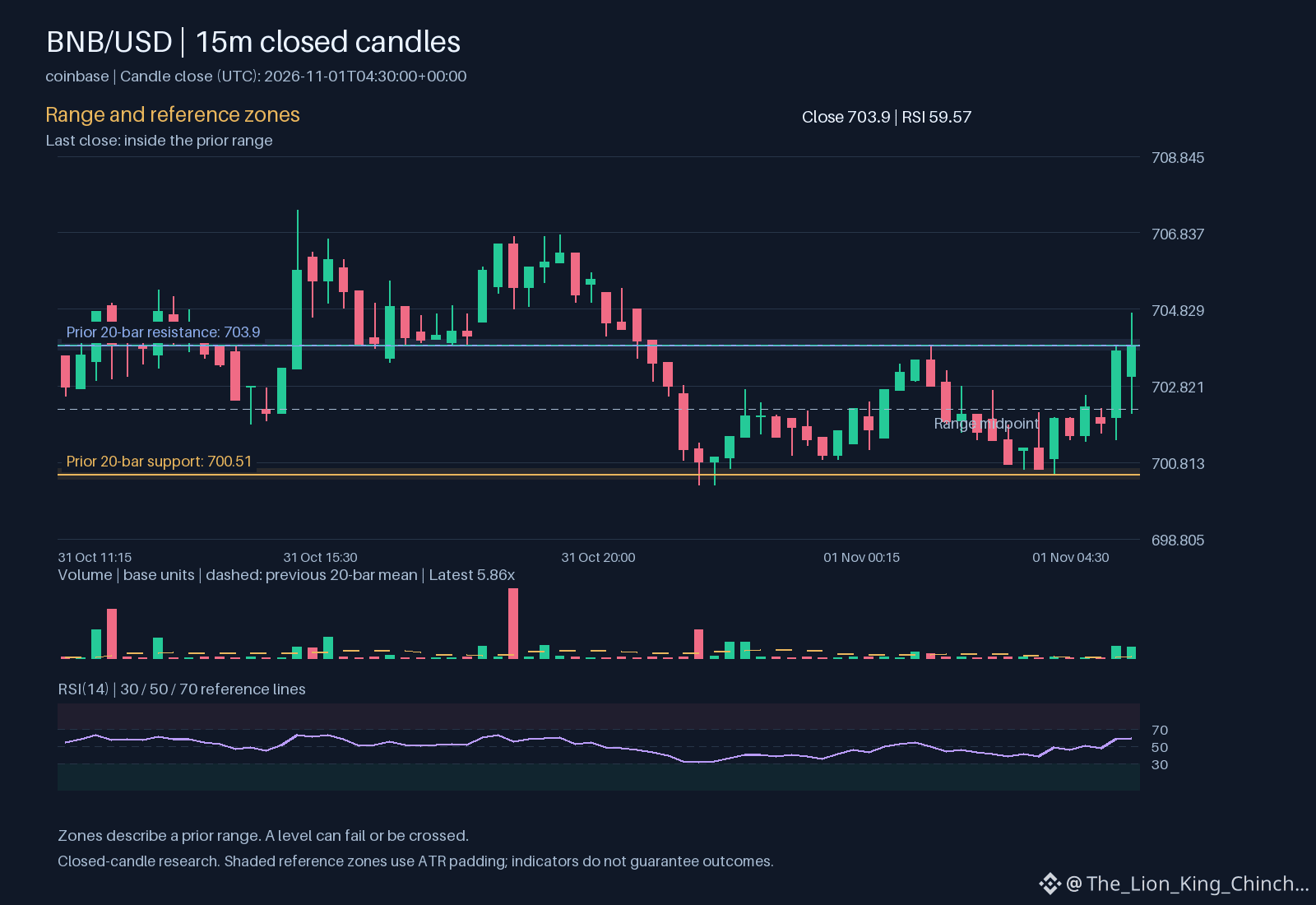
The trap is understandable. When $BNB moves up hourly with volume above baseline, the pressure to justify the move is high. You might look at 59.5658 or 703.727 to find confirmation. The problem is that these metrics describe the past. They do not predict the next tick. By changing your entry criteria after the move starts, you are no longer testing a hypothesis. You are chasing a story.
A useful habit is the pause. Before adding a new bias, ask if the current data changes your base case. If the price is inside the recorded range near 700.51 and 703.9, the context is neutral. The daily change of 0.224969 provides a broader view. Use 1.23495 to gauge typical volatility. If the current move fits within normal range, the alarm should off. Decision making works best when the rule is set before the noise. This separates evidence from emotion. The lesson is not to ignore data but to apply it consistently regardless of immediate direction. Keep the checklist static during the observation window. Only adjust the plan when a pre defined condition is met, not when a price level feels significant. This discipline protects the research habit from the urgency of the market.
Probabilistic market research, not a recommendation or guaranteed return.
Have you caught yourself changing a rule after seeing a fast move?
#BNB #LearnCrypto #CryptoLearning