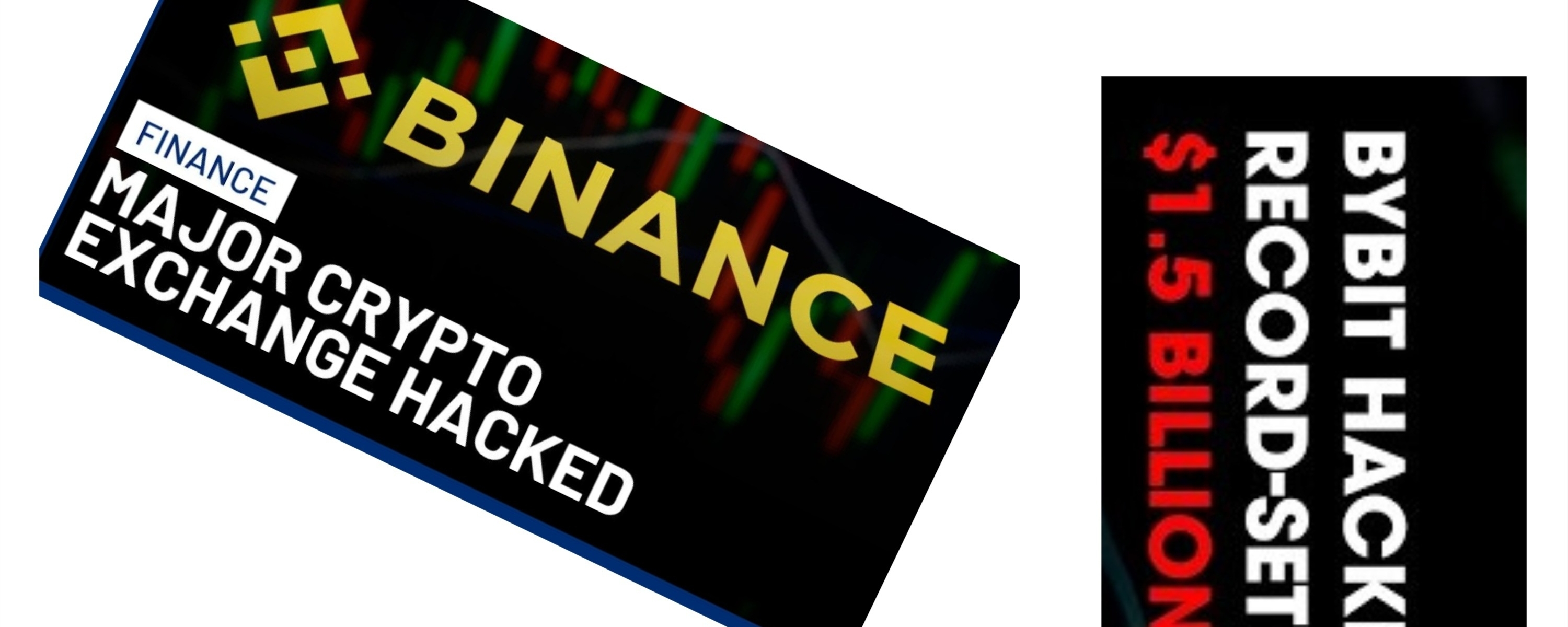

The Binance breach is not just an exchange problem. It is a test of the entire crypto industry's ability to protect trust.
On 29 October 2026, Binance suffered a security incident with an estimated impact of approximately $6.3 billion. The exchange says it will cover the losses, while blockchain security partners have helped freeze billions in affected assets.
[Source: Binance official update]
This is an enormous financial shock. But the bigger question is what happens if attacks of this scale become a recurring feature of crypto markets?
We risk losing more than money. We risk losing public confidence, institutional participation, regulatory trust and the credibility required for mainstream adoption. As AI capabilities advance, the threat landscape becomes more challenging. AI can help defenders detect anomalies, but malicious actors can also use it to scale deception, discover weaknesses and accelerate attacks. More capable future AI systems make it even more important to build security that does not depend on humans catching every mistake. There is no verified evidence that AI caused the Binance incident. That distinction matters. But waiting for an AI driven catastrophe before strengthening our defenses would be irresponsible.
7 (SEVEN) ACTIONS THE CRYPTO INDUSTRY MUST TAKE NOW:
Establish a cross industry Crypto Security Alliance: Binance, Coinbase, OKX, Bybit, major blockchain foundations, stablecoin issuers, custodians, cybersecurity firms and law enforcement agencies should establish a permanent incident response network. Share verified threat intelligence, attacker addresses, exploit indicators and emergency response procedures securely and within applicable legal requirements.
Make independent transaction approval mandatory for high value transfers: No single compromised endpoint, employee account or signing workflow should be able to authorize a catastrophic withdrawal. Require independent approval paths, transaction simulation, strict spending limits, destination allowlists, time delays for unusual transfers and automatic circuit breakers.
Harden employee devices and privileged access: The reporte attack path highlights why corporate cybersecurity cannot stop at protecting wallet keys. Enforce phishing resistant authentication, privileged access controls, isolated signing infrastructure, endpoint monitoring and continuous verification of sensitive operations. A trusted employee account must never become an unchecked gateway to billions of dollars.
Build AI powered defense with human accountability: Deploy AI assisted anomaly detection to identify abnormal withdrawal patterns, suspicious authorization requests, compromised credentials and coordinated attacks across chains. But AI must not become another unchecked authority. Critical interventions need defined permissions, independent validation, auditable decisions and safe fallback procedures.
Create a coordinated emergency freezing and recovery protocol: Stablecoin issuers, exchanges, blockchain analytics firms, validators where applicable, and law enforcement need tested procedures for rapidly identifying and containing stolen assets. The Binance incident demonstrates the potential value of coordination. It also demonstrates its limits, not every cryptoasset can be frozen, and the time is critical.
Require independent security audits and public incident post mortems: Exchanges and custodians should undergo recurring red team exercises, signing system reviews, supply chain assessments and penetration tests. After a major incident, publish a technically meaningful post mortem, the attack path, failed controls, funds affected, recovery progress and remediation milestones without exposing exploitable details.
Establish minimum global security standards: Regulators and industry bodies should work toward enforceable, risk based standards for custody, hot wallet exposure, withdrawal authorization, incident reporting, proof of reserves and operational resilience. Proof of reserves alone is not proof that an exchange's systems cannot be compromised. Financial transparency and cybersecurity must work together.
My Recommendation:
Security must not be treated as a cost center that competes with growth. For exchanges and custodians, security is core infrastructure. For blockchain foundations, it is essential to ecosystem credibility. For regulators, it is a matter of consumer protection and financial resilience. For investors, it is a fundamental risk that deserves as much attention as tokenomics and market liquidity. The industry should not wait for another record breaking theft. Cooperation must become faster than the attackers. Security controls must become stronger than any single point of failure. And transparency must become the standard not a promise made after a crisis. Crypto's long term future should not depend on hoping that the next attack never happens. It should depend on being prepared when one does.
YOUR TURN
Should major crypto exchanges and blockchain foundations establish a mandatory cross industry security and emergency response framework with shared threat intelligence and minimum custody standards? What should be the first priority, stronger transaction authorization, AI-powered threat detection, or a coordinated global response network?
Share your views. Let's make this conversation actionable.