


Four crypto sales in one year can leave you with a ₹21,800 tax base even though your money finished only ₹3,800 ahead. That gap comes from one rule in India's VDA regime, and you see it the moment you fill Schedule VDA line by line.
So here is the answer first. If you are an Indian resident, every sale or swap you made on Binance in FY 2025-26 goes into Schedule VDA of ITR-2 (or ITR-3 if you report it as business income) as its own row, with dates, cost and sale value in rupees. Gains are taxed at a flat 30% plus 4% cess, a loss row is entered as nil, and losses can't be set off or carried forward.
Below, one sample investor's year is turned into a ledger and then into the form, column by column. Every price and amount is a made-up illustration, not a quote or a forecast.
Which rules decide what goes in each row?
For sales made between 1 April 2025 and 31 March 2026, the Income-tax Act, 1961 still applies. Six rules do almost all the work.
Flat rate: Income from transferring a virtual digital asset is taxed at 30% under Section 115BBH, whatever your slab. Add 4% health and education cess, and surcharge if your total income is above ₹50 lakh.
One deduction only: From the sale value you subtract the cost of acquisition. Trading fees, internet bills and software subscriptions are not allowed as expenses.
No set-off: A loss on one coin can't reduce a gain on another coin, your salary or your share gains.
No carry forward: An unused VDA loss doesn't move to next year. For tax, it is gone.
Every transfer counts: Selling for rupees, swapping one coin for another and selling USDT on P2P are all transfers. Stablecoins are VDAs too.
1% TDS: Section 194S asks the buyer to deduct 1% of the sale value once yearly thresholds are crossed. It is a credit against your tax, not the tax itself.
Sales from 1 April 2026 fall under the new Income-tax Act, 2025. The 30% charge now sits in Section 194 and the TDS in Section 393, at the same rates. That year is filed in 2027, so this walkthrough sticks to FY 2025-26.
Should Binance trades go in ITR-2 or ITR-3?
ITR-1 and ITR-4 can't carry VDA income, so the choice is between two forms.
ITR-2: For salaried people and investors with no business or professional income. VDA rows go under the capital gains head.
ITR-3: For anyone who treats frequent trading as a business, or who already has business or professional income for another reason.
The head you choose does not change the rate. Business treatment still allows only the cost of acquisition, so moving to ITR-3 to claim expenses gets you nothing on VDA rows. Pick the head that matches how you trade and keep it from year to year.

What should the ledger look like before you open the form?
Don't type straight from the exchange into the tax portal. Build a small ledger first, one line per transfer, with every figure already in rupees.
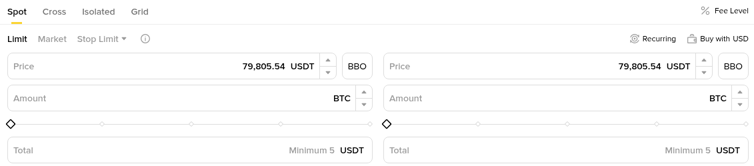
Export the full year from your transaction history and Spot trade history, 1 April 2025 to 31 March 2026. Then give each disposal four fields: date bought, date sold, cost in INR and sale value in INR.
Here is the sample year of a salaried investor we'll call Meera, who files ITR-2.
Row 1, BTC sold on Spot: Bought 0.01 BTC on 12 May 2025 for ₹72,000. Sold on 18 December 2025 for ₹84,500.
Row 2, ETH sold at a loss: Bought 0.5 ETH on 3 June 2025 for ₹1,10,000. Sold on 20 February 2026 for ₹92,000.
Row 3, SOL swapped into USDT: Bought 4 SOL on 10 July 2025 for ₹48,000. Converted into 600 USDT on 5 January 2026, when 600 USDT was worth ₹56,400 (₹94 per USDT).
Row 4, USDT sold on P2P: The same 600 USDT sold on P2P on 15 March 2026 at ₹95.50, so ₹57,300 reached her bank account.
Two lines in her history never reach the ledger. Moving BTC from her Spot wallet to her Funding wallet is an internal move, and buying crypto with rupees is a purchase, not a sale. Both still carry a cost forward to the day she sells.
How do you fill Schedule VDA column by column?
Schedule VDA asks for the same six things on every row. Using Meera's BTC sale as the model, this is what goes where.
Date of acquisition: 12/05/2025, the day the coins you sold were bought. If you bought in several lots, use one matching method, such as first in first out, for the whole year.
Date of transfer: 18/12/2025, the day of the sale or swap.
Head under which income is taxed: Capital Gain for Meera. Someone on ITR-3 picks Business Income.
Cost of acquisition: ₹72,000, the rupee value you gave up to get the coins. For a gift, the form asks for the amount already taxed when you received it, or else the previous owner's cost.
Consideration received: ₹84,500, the rupee value of what you got for the coins.
Income from transfer: ₹12,500, which is consideration minus cost. If the result is below zero, the form tells you to enter nil.
The portal totals the income column and carries it into Schedule SI, where special-rate income is taxed. You never type one net figure for the whole year.
Row 2 is where people slip. Meera's ETH cost ₹1,10,000 and fetched ₹92,000, so the arithmetic says minus ₹18,000. In the income column she enters 0, not -18,000.
The dates, cost and consideration still go in. The row records the transfer even when nothing on it is taxable.
How are swaps and stablecoin sales valued?
A coin-to-coin swap has no rupees in it, so you value what you received at the moment of the swap.
In row 3, Meera gave up 4 SOL and received 600 USDT. At ₹94 per USDT, the consideration is 600 × 94 = ₹56,400. Her SOL cost ₹48,000, so the row shows income of ₹8,400.
That ₹56,400 then becomes the cost of the 600 USDT. When she sells them on P2P at ₹95.50, the consideration is ₹57,300 and the income on row 4 is ₹900.
Consistent rates: Value every swap in the year with the same INR rate source and write down which one you used. Switching sources row by row is hard to defend if anyone asks.
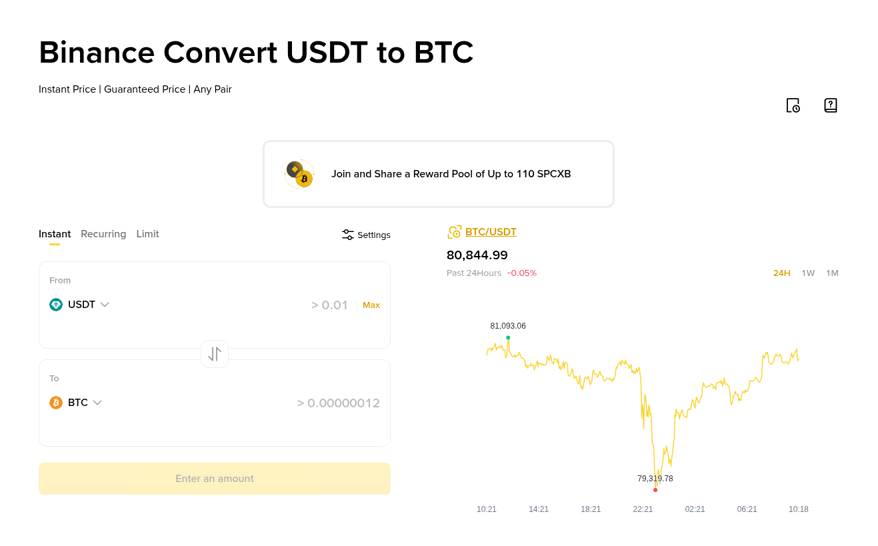
Exact time: Convert history and trade history both show the time of each fill. Value the coin at that time, not at the day's close.
What does the bill look like once all four rows are in?
Only the positive income rows are added up.
Row 1: ₹12,500.
Row 2: ₹0, because the ₹18,000 loss is ignored.
Row 3: ₹8,400.
Row 4: ₹900.
Taxable VDA income: ₹21,800.
Tax at 30% is ₹6,540. Cess at 4% of that adds ₹261.60, so the total is ₹6,801.60 before any TDS credit. Her total income is well under the ₹50 lakh surcharge line.
Now look at her money. She put ₹2,30,000 into BTC, ETH and SOL and ended the year with ₹2,33,800, so she is ₹3,800 ahead. Her VDA tax is bigger than that whole gain.
If netting were allowed, 30% plus cess on ₹3,800 would come to ₹1,185.60. In this example the no-set-off rule costs her ₹5,616.
Where does the 1% TDS fit in?
TDS under Section 194S is deducted by whoever buys the crypto, at 1% of the sale value.
Thresholds: No deduction is needed while the buyer's total VDA purchases in the year stay within ₹50,000 for a specified person, or ₹10,000 for other buyers.
Specified person: Broadly an individual or HUF with no business income, or with turnover up to ₹1 crore (business) or receipts up to ₹50 lakh (profession) in the previous year.
Credit, not tax: Any TDS deducted against your PAN shows in Form 26AS and your Annual Information Statement. You claim it in the return and settle the balance.
Take row 4. If Meera's P2P buyer had crossed the threshold and deducted 1% of ₹57,300, that is ₹573. It would show in her AIS and cut her balance from ₹6,801.60 to ₹6,228.60.
Many Binance spot trades leave no TDS entry in AIS at all. That doesn't change the 30% charge. It only means there is no credit to claim, and if your total tax after TDS for the year goes above ₹10,000, advance tax is due in the June, September, December and March instalments.
If you are the buyer on P2P and cross the threshold, the duty to deduct is yours. For purchases from 1 April 2026, a specified person deposits it with Form 141 (Schedule D) within 30 days from the end of the month of deduction, quoting their PAN.
Which edge cases change a row?
Gift from a relative: Not taxed when you receive it. When you sell, the cost column takes what the relative originally spent on the coins.
Gifts and airdrops from others: If the total value received in the year is above ₹50,000, it is taxed as income from other sources on receipt. That taxed value becomes your cost when you sell later.
Staking and similar rewards: The Act doesn't spell out the treatment, so agree a method with your CA and keep it every year.
Own-wallet moves: Sending coins from Binance to a wallet you control isn't a transfer to someone else, so it creates no row. Keep the withdrawal record and the address to show the wallet is yours.
Time zones: Binance exports use UTC. A trade at 03:00 IST on 1 April 2026 shows as 21:30 UTC on 31 March, which puts it in the wrong year unless you convert it.
Futures: USDⓈ-M futures profit and loss settles in USDT without a coin being sold. Its treatment is debated, so get advice before you place futures results in Schedule VDA or under business income.
For tax situations beyond these four rows, such as small-balance conversions, reward income and futures PnL, there are eight Binance tax scenarios with real numbers in an earlier guide.
What if you missed the July deadline?
For FY 2025-26, the original due date was 31 July 2026 for ITR-2 and 31 August 2026 for ITR-3 cases without an audit. Both have passed.
Not filed yet: A belated return is allowed until 31 December 2026. The late fee under Section 234F is ₹5,000, or ₹1,000 if total income is up to ₹5 lakh, plus interest of 1% a month on unpaid tax.
Filed without the crypto: A revised return can be filed until 31 March 2027. A revision filed after 31 December 2026 carries a new fee of ₹1,000 or ₹5,000 under Section 234-I.
Older years: Gains missed in earlier years go through an updated return (ITR-U), which comes with additional tax on top of the normal amount.
Does Binance share anything with Indian authorities?
Binance registered with India's Financial Intelligence Unit (FIU-IND) as a reporting entity in 2024, after FIU-IND fined it ₹18.82 crore for serving Indian users without following anti-money-laundering rules. That gives it reporting duties under the money-laundering law. It does not fill in your return for you.
Budget 2026 also added penalties for entities required to file crypto transaction statements with the tax department: ₹200 a day for not filing and ₹50,000 for inaccurate information, from 1 April 2026. Keep your own ledger consistent with what you report.
Which mistakes come up again and again?
One net line: Entering the year's net result instead of one row per transfer.
Skipped swaps: Treating coin-to-coin trades as "not sold yet".
Claimed fees: Subtracting trading fees or other costs as expenses.
Trusting a blank AIS: Reading no TDS entry as nothing to report.
Wrong year: Leaving UTC timestamps unconverted around 31 March.
Foreign asset question ignored: Holdings on an exchange based outside India may raise a Schedule FA question for residents. The rules don't name VDAs directly, so ask your CA how to treat it.
A one-screen recap to keep next to the form:
Before the form: Full-year export, UTC turned into IST, every disposal in rupees, one matching method.
Each row: Date bought, date sold, head, cost, consideration, income (nil if below zero).
After the rows: 30% of the positive rows, plus 4% cess, minus any TDS in AIS.
Keep for later: The CSV files, Convert history, P2P order records and the rate source you used.
If you still have to pull the files, this Binance statement checklist from download to final check covers the export and the checks before you rely on it.
Opening an account for the first time? The sign-up link at the top uses the code GETREWARD. Eligible new users can also look at the Binance welcome offer page, where task-based rewards add up to $19,800 in total. Any reward that arrives as crypto belongs in your ledger too.
This article is general information, not tax or financial advice. Tax rules, forms and deadlines can change, so check the current ITR utility and speak to a chartered accountant about your own case.
FAQ
Do I need Schedule VDA if I only bought crypto and never sold?
No row is needed for a purchase alone, because nothing was transferred. Keep the purchase records, since they become the cost when you do sell.
Can I enter a loss as a negative number?
No. The income column takes nil for a loss. The cost and consideration still go in, so the full transfer is on record.
Is selling USDT for rupees taxable when the price barely moved?
Yes. A sale at ₹95.50 of USDT that cost ₹94 is still a transfer with a small gain, and it needs its own row.
Which rupee rate should I use for coins bought with USDT?
Use the INR value at the time of the trade from one consistent source, and note it in your ledger.
Do I owe tax when I move coins from Binance to my own wallet?
No, moving coins between wallets you own is not a transfer to another person. Keep the withdrawal record.
Disclosure: the sign-up link in this article carries my code GETREWARD. All prices, amounts and tax figures above are illustrations, not quotes or forecasts.