


#IRSPlansLowerTaxDisclosurePenaltiesForCryptoCases
## 📌 The Big Picture
If you hold Bitcoin, Ethereum, stablecoins, or any other digital asset and have a US tax history, pay attention. 👀 The IRS is finalizing updates to its Voluntary Disclosure Program (VDP) with digital asset noncompliance specifically in mind. This is not a random announcement. It is part of a much larger enforcement trend. 📈
Think of it as a simple equation 🧮:
**Voluntary Self-Reporting + Faster Case Closure = Lower Penalties** 💸
Let's break it down piece by piece. 👇
---
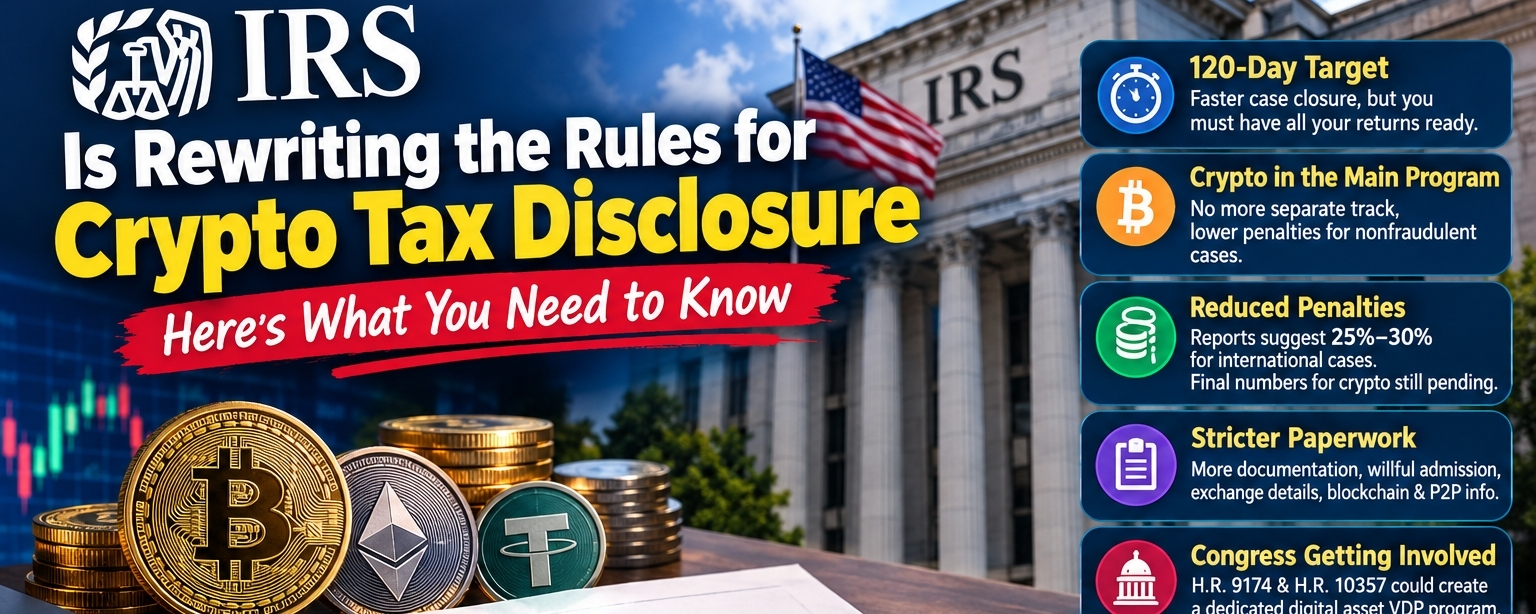
## ⏱️ 1. The 120-Day Target
The most talked-about change is speed. The IRS has heard the complaints that the current process is slow and cumbersome, and its Criminal Investigation chief said the new program will set a 120-day target for resolving cases. For anyone who has waited years for a tax matter to close, that is a big deal. 🙌
But there is a catch. ⚠️ Taxpayers need to show up with all their returns ready to file. Speed works both ways. If your records are a mess, the clock will not help you. 🗂️
---
## 🪙 2. Crypto Moves Into the Main Program
Until now, digital assets often felt like an awkward add-on. That is changing. Digital assets are being folded directly into the general program rather than handled separately, with a lower penalty rate for nonfraudulent crypto reporting failures. 🔄
Why does this matter? Because tax professionals have long said the program has low uptake, especially among taxpayers with digital asset transactions. The IRS clearly wants to change that. 🎯
---
## 💰 3. What About the Penalties?
Reports say the revamp will include reduced penalties. One Bloomberg Tax report described reduced penalties of 25% to 30% for international cases. 📉 Final numbers for crypto-specific cases should be confirmed once the IRS publishes the official guidance. 📄
For context, commentators had earlier suggested the revisions could ease access, possibly lowering the 75% penalty or creating scaled options. That would be a major shift. 🔥
---
## 📝 4. Stricter Paperwork, Too
Do not mistake this for a free pass. 🚫 The paperwork is getting tougher. Revised instructions include more stringent documentation requirements, a mandatory admission that the taxpayer acted willfully, and required disclosure of digital assets. ⚖️
The updated Form 14457 also asks for detail such as the centralized exchange name, transactions recorded on a public blockchain, and information on buyers in peer-to-peer deals. 🔍 Self-custody wallets, DeFi activity, and P2P trades all need clean records. 🧾
Other proposed changes include:
- 💻 Electronic submission of Form 14457
- ⏳ A three-month deadline after conditional acceptance to submit required returns and pay tax, penalties, and interest
---
## 🏛️ 5. Congress Is Getting Involved
The IRS is not the only player. 🇺🇸 Aaron Bean introduced the Digital Assets Voluntary Disclosure Program Act (H.R. 9174), which would direct the Treasury to create a voluntary disclosure program specifically for digital assets. The bill is currently referred to the House Committee on Ways and Means. It has not become law. 📜
A separate bill, H.R. 10357, also proposes a path. Section 502 would require the Treasury secretary to establish a Digital Asset Voluntary Disclosure Program within 12 months of the bill becoming law. ⏰
---
## 🔭 6. Why Now? Follow the Data Trail
The timing is no accident. 🧠 Broker reporting on Form 1099-DA represents another significant step toward greater transparency. More reporting means fewer places to hide, and the IRS knows it. 📊
Globally, the same pattern is visible. Enforcement infrastructure is tightening, and one analysis noted that Form 1099-DA reporting is live for tax year 2025 and HMRC's Cryptoasset Reporting Framework has been active since January 2026. 🌍
---
## ⚠️ 7. Who Should NOT Rush In
A common misconception is that anyone with a crypto mistake should use this program. ❌ That is not how the program works. Honest errors, like miscalculated gains or reliance on faulty software, may require correction but do not automatically mean a taxpayer belongs in the program. 🙅
The VDP is built around willful noncompliance, and the disclosure must actually be voluntary, meaning before the IRS finds the issue. ⏰ The IRS expressly states that voluntary disclosure does not provide automatic immunity from prosecution. 🛑
---
## ✅ 8. Practical Steps for Crypto Holders
1. 🗃️ **Gather your records**: exchange statements, wallet addresses, and transaction histories
2. 🧮 **Reconstruct your cost basis** across all wallets and platforms
3. 👨⚖️ **Talk to a qualified tax attorney or CPA** before taking any step
4. 📆 **Watch for official IRS guidance**, since details may still change
5. 🔐 **Stay current going forward** with accurate reporting, especially with 1099-DA now in play
---
## 🧾 Final Thoughts
The direction is clear. 🧭 The IRS wants more people to come forward, and it is offering faster timelines and lower penalties to get them there. 🤝 But the rules are getting stricter on documentation and honesty at the same time.
The takeaway? **Transparency is becoming the smartest strategy in crypto.** 🪙✨ Whether you are a trader, long-term holder, or DeFi user, getting your records in order now is far better than getting a letter later. 📬
*⚠️ Disclaimer: This article is for educational purposes only and is not legal, tax, or financial advice. The program details are still being finalized and may change. Consult a licensed professional.*
---
**🏷️:** #CryptoTax #IRS #Bitcoin #TaxCompliance #DigitalAssets
---
Sources: [IFC Review](https://www.ifcreview.com/?p=18180), [Bloomberg Tax (BGOV)](https://news.bloombergtax.com/daily-tax-report/irs-is-revamping-criminal-voluntary-disclosure-program-bgov-tax), [Bloomberg Law](https://news.bloomberglaw.com/daily-tax-report/irs-voluntary-disclosure-refit-aims-to-answer-crypto-confusion), [NATP](https://www.natptax.com/news-insights/blog/changes-to-voluntary-disclosure-form-show-the-irs-is-imposing-stricter-requirements/), [Counting Works Pro](https://app.countingworkspro.com/preview/site/tax-relief-r-us-644817ee9dc4d/blog/the-irs-is-updating-its-voluntary-disclosure-program-for-cryptocurrency-what-crypto-investors-need-to-know), [H.R. 9174 overview](https://policysoup.com/bills/hr9174-119), [Withum](https://www.withum.com/?p=143955), [Cointelegraph](https://cointelegraph.com/magazine/made-an-honest-mistake-with-crypto-taxes-new-bill-offers-way-out?rand=50490), [KoinX](https://www.koinx.com/stats/crypto-tax-voluntary-disclosure-statistics), [Mondaq](https://webiis10.mondaq.com/unitedstates/tax-authorities/1733768/irs-criminal-voluntary-disclosure-program-vdp-changes-take-effect-in-early-2026-how-crypto-tax-disclosures-and-fatca-reporting-obligations-affect-us-tax-compliance), [Private Law Wiki](https://wiki.private.law/en/voluntary-disclosure)#BitcoinHashrateHitsSevenMonthHigh #BinancePick #SwedishCentralBankUrgesEKronaReview #PepeJumps14%ToLeadAltcoinRebound