


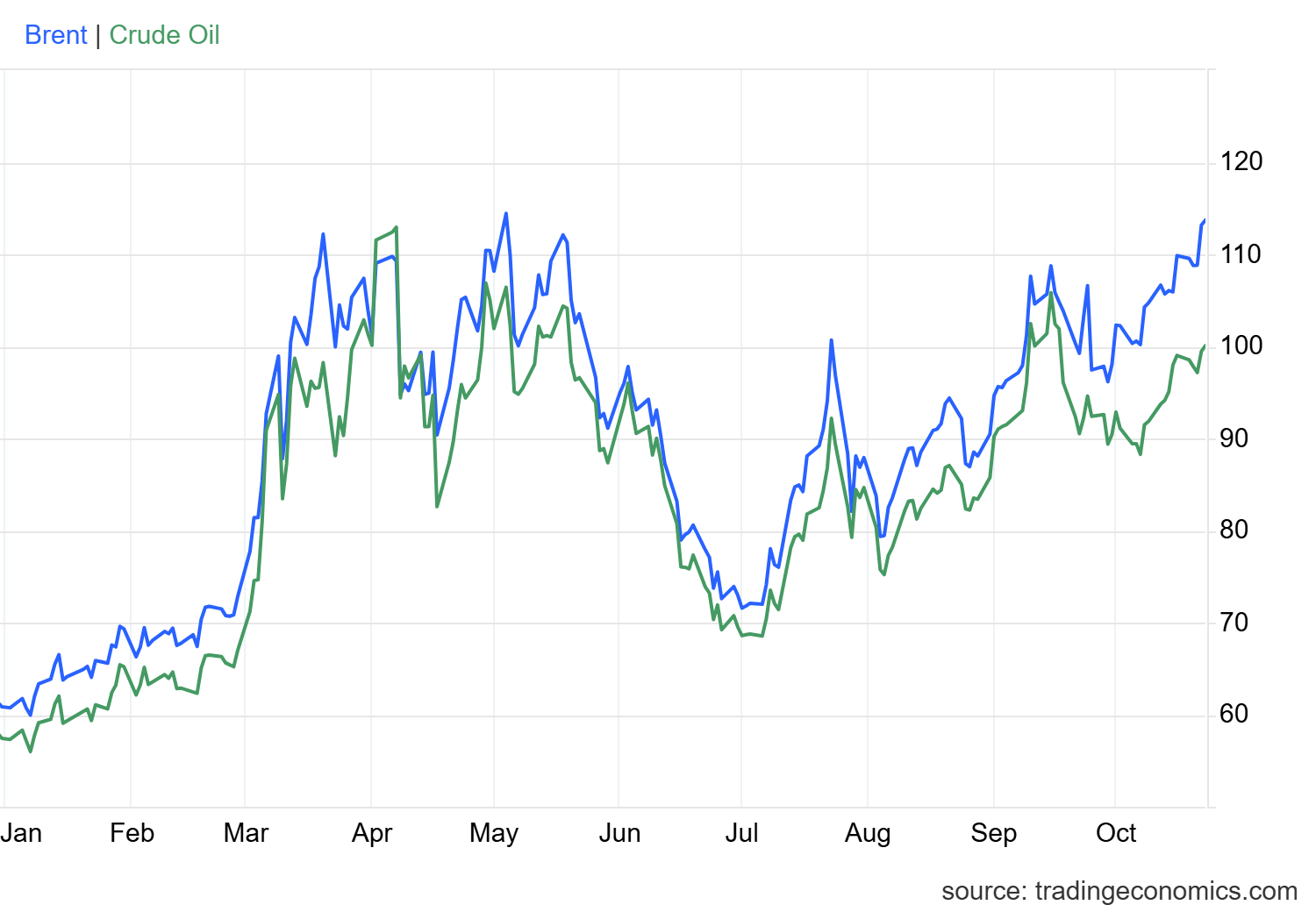
Brent crude jumped 4% on Thursday to settle at $113.17 a barrel, the highest close since early May, as traders weighed the prospect of fresh US and Israeli strikes on Iran. West Texas Intermediate rose 2.4% to $99.47. The global benchmark has now climbed by more than 80% this year, ever since the US-Iran war, which began on February 28, disrupted flows out of the Persian Gulf.
The trigger came on Wednesday. The New York Times, citing unnamed US officials, reported that American and Israeli military planners have drawn up specific options for renewed strikes once the November 3 midterm elections are out of the way. Likely targets, the paper said, include energy infrastructure, nuclear sites and Iran's missile and drone stocks. Officials described the operation under discussion as "short but intensive." Nothing has been approved.
Trump did little to calm nerves. Speaking to reporters after a rally in South Carolina, he said Washington was not negotiating with Tehran and that something would happen fairly soon, one way or another. Then he turned to timing. "Most people seem to think it's after the election," he said. That squares with his October 8 post on Truth Social, which pledged no attack on Iran before voters go to the polls.
He also pointed a finger at Tehran over the price of crude. In a separate Truth Social post, Trump accused Iran of doing everything it can to push oil higher ahead of the midterms, even inventing hits and mines, while insisting more oil now moves through Hormuz than before the conflict began.
Iran's Revolutionary Guards Navy offered a very different account, relayed by Fars and Iranian state media. It said it had struck four vessels carrying out ship-to-ship oil transfers in the northern Gulf and that three more had hit mines west of the strait. It also warned that US insistence on steering ships along routes Tehran calls illegal would drag American bases in the region into the confrontation. Those claims came through state outlets and remain unverified.
Saudi Arabia delivered the second jolt. A drone attack on Aramco's Shaybah field on Wednesday killed two people, a Filipino and a Nepali national, according to the energy ministry. Saudi officials said air defences had intercepted the drone and that the field, which can pump about a million barrels a day, kept producing.
Thursday brought more. Reuters reported, citing six people with knowledge of the matter, that Aramco had told staff to evacuate its Dhahran headquarters and work remotely, the first order of its kind since the war began. Yemen's Houthis struck the complex earlier this month, and fire spread across several floors. Washington ordered non-emergency diplomats and their families out of the kingdom, and military personnel could follow from bases around the region.
So what is really driving the rally? Not missing barrels. Crude exports from the Gulf have recovered to roughly prewar levels, according to estimates from traders and banks, helped by tankers that switch off their transponders to avoid detection. Kuwait's state producer says it is shipping as much as it did before the war.
Kpler's Matt Smith told CNBC that risk attached to Middle East crude is what is pushing prices higher. Refined products tell a tighter story. Diesel and jet fuel shipments remain constrained, and Morgan Stanley analysts have counted as many as 12 attacks a week on vessels near Hormuz, up from two to four over the summer.
The squeeze is sharpest in diesel, and Ukrainian strikes on Russian refineries have tightened it further. Governments are drawing on stockpiles. In Washington, the White House has been working to bring pump prices down before the vote, through tariff waivers tied to Russian energy exports, a diesel export deal with Moscow and the authorised sale of sanctioned tankers.
On Thursday Trump added a memo invoking the Defense Production Act for domestic oil production and refining. US diesel averaged about $6.30 a gallon in September, according to the EIA.
Weekly US data leaned the same way on crude, with a small reprieve for diesel. The EIA said commercial crude stocks fell 3.06 million barrels to 412.5 million in the week to October 16, a bigger draw than analysts expected, while the Strategic Petroleum Reserve gave up roughly another 300,000 barrels. Distillate inventories rose 1.7 million barrels. They still sit about 9% below the five-year average, so the relief is thin.
Two dates now frame the trade. Israel votes on October 27 and Americans on November 3, and the timetable Trump has hinted at remains vague. Futures were firmer again in early Asian trade on Friday. What traders cannot yet gauge is whether those dark crossings keep moving crude once planning turns into orders.