
There is something interesting about earnings season in the stock market. For a few days, everyone seems to become an analyst. People watch price charts, debate expectations, and try to guess whether a company's results will push the market higher or trigger another round of selling. I have noticed something similar in crypto, where one major announcement can change the mood across the entire market in a matter of hours. But earnings season is a different kind of test. Eventually, the numbers have to speak.
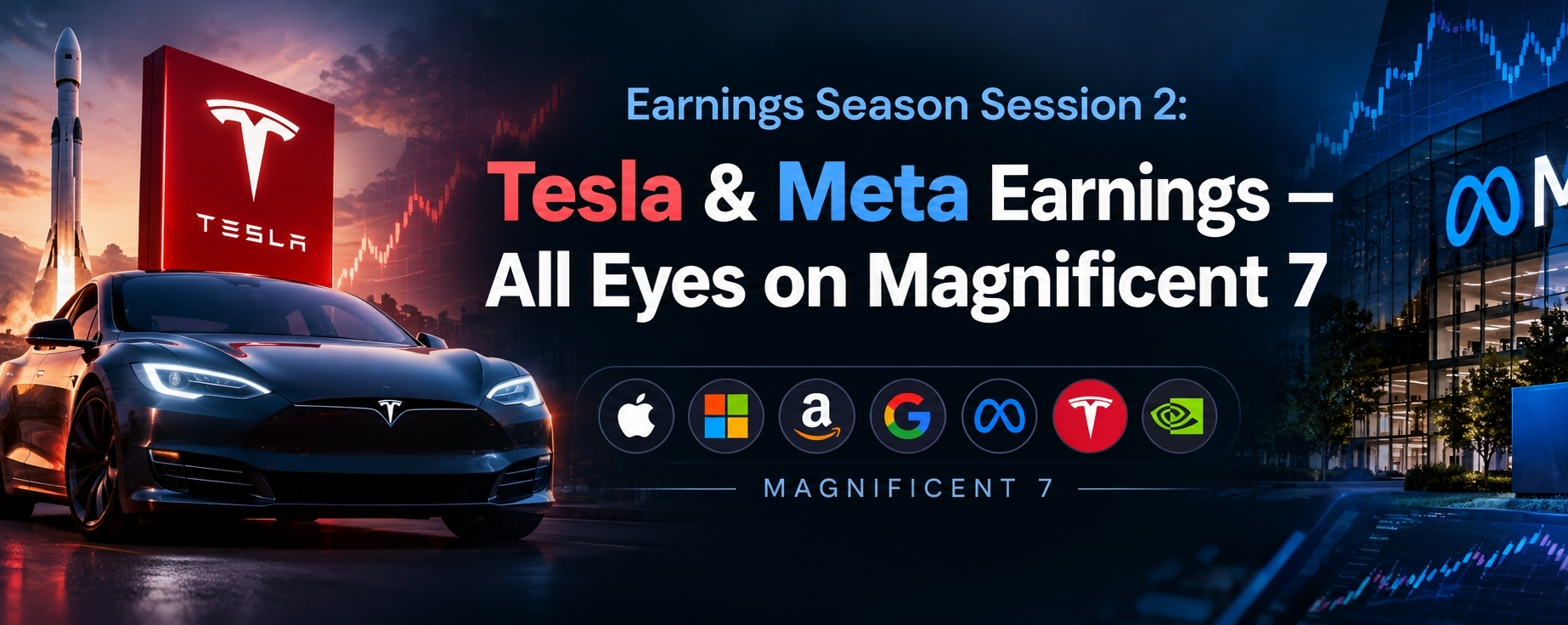
This time, my attention is on Tesla and Meta, two companies that represent very different parts of the technology trade. Both attract enormous attention, but for different reasons. Tesla sits at the intersection of electric vehicles, automation, and artificial intelligence. Meta is building its business around digital advertising while investing heavily in AI infrastructure and new technologies. Their earnings could offer useful clues about where the market's expectations stand.
What makes this session more interesting is the broader Magnificent 7 group. These seven major technology companies have become central to the performance and sentiment of the US stock market. When investors discuss AI, productivity, growth, and future technology spending, these names inevitably enter the conversation. Their influence means that earnings are no longer just about individual companies. They can also shape the market's wider direction.
Tesla is particularly interesting because its story is bigger than the number of vehicles it sells. Deliveries, pricing, and automotive margins still matter enormously. Competition in the electric vehicle market is real, and investors cannot ignore the pressure that lower prices can put on profitability. At the same time, Tesla's long-term valuation is closely connected to what it might achieve through autonomous driving, robotics, and AI. The difficult part is separating what the company earns today from what investors hope it will become tomorrow.
That distinction matters more than many people realize. A company can report improving results and still see its stock fall if investors expected something better. The reverse can happen too. Results that look ordinary at first glance may support a rising share price if the market was prepared for something worse. Maybe I am overthinking it, but this is one of the most useful lessons from following markets: good results and a good investment outcome are not always the same thing.
Meta presents a different picture. Its advertising business gives investors a way to evaluate the relationship between AI investment and measurable commercial returns. Better ad targeting, improved recommendation systems, and greater engagement can help support revenue. The question is how effectively Meta can turn its AI spending into stronger business performance over time. Spending billions on infrastructure is one thing; demonstrating that the investment creates lasting value is another.
I also think Meta's spending plans deserve attention. Heavy investment can be reasonable when a company sees a valuable opportunity, but the market eventually wants evidence that the money is being used well. If operating expenses rise faster than revenue, investors may become less patient. If AI investments improve advertising efficiency and support future growth, the same spending could look much more attractive. The earnings details and management's outlook matter here, not just the headline revenue figure.
Tesla and Meta therefore offer two different ways to examine the AI narrative. With Tesla, investors are weighing its existing automotive business against expectations for autonomous systems and robotics. With Meta, the connection between AI and its established advertising business is more direct, although the long-term returns on its broader investments remain uncertain. Both companies have opportunities, but neither can escape the need to deliver results.
There is another factor worth watching: expectations. Markets often move before earnings because traders position themselves ahead of the announcement. By the time results arrive, a great deal of optimism or fear may already be reflected in the price. That can make the immediate reaction confusing. A company can beat analysts' estimates and still decline if its guidance disappoints or management fails to provide the growth investors were hoping for.
For anyone following crypto alongside US equities, this relationship is worth keeping in mind. Bitcoin and other digital assets do not simply follow technology stocks, and their prices depend on many additional factors. Still, sentiment around major technology companies can influence the broader appetite for risk. Interest rates, bond yields, liquidity, and expectations for monetary policy also matter. When markets become cautious about expensive growth stocks, crypto traders may want to pay closer attention to the wider financial environment rather than focusing only on token-specific news.
The Magnificent 7 also raises a question about market concentration. A relatively small group of companies can have an outsized influence on major indices because of their large market capitalizations. When these businesses perform well, the broader market can look healthier. But strong index performance does not necessarily mean every sector or company is participating equally. I think that distinction is easy to overlook when headlines make it seem as though the entire market is moving in one direction.
For this earnings session, I would pay attention to more than revenue and earnings per share. Margins, cash flow, forward guidance, capital expenditure, and management commentary can reveal whether a company's strategy is working. For Tesla, I would want to understand the balance between its current vehicle business and its future ambitions. For Meta, I would focus on advertising performance and whether rising AI investment appears sustainable. The details may tell a more useful story than the headline numbers.
Of course, one earnings report cannot settle every debate. Long-term technology investments take time, and quarterly results can be affected by temporary conditions. At the same time, patience should not mean ignoring financial reality. Investors need to keep asking whether the business is progressing, whether expectations are reasonable, and whether the current valuation leaves room for disappointment. That balance is difficult, especially when a company's future possibilities attract as much attention as its present results.
What interests me most about this earnings season is how it tests the difference between a convincing story and a business that can consistently execute. AI has created enormous expectations, but expectations alone do not produce profits. Tesla and Meta are approaching that challenge from different directions, and their results may offer clues about how investors are valuing growth, innovation, and the cost of building for the future.
I am not expecting one session to provide all the answers. Markets can react unpredictably, and even strong businesses can face difficult periods. But I will be watching how the numbers compare with expectations, how management explains the road ahead, and whether investors reward actual progress over ambitious promises. Perhaps the most revealing signal will not be which stock rises immediately after earnings, but which company gives investors a clearer reason to believe its next chapter is worth paying for.