

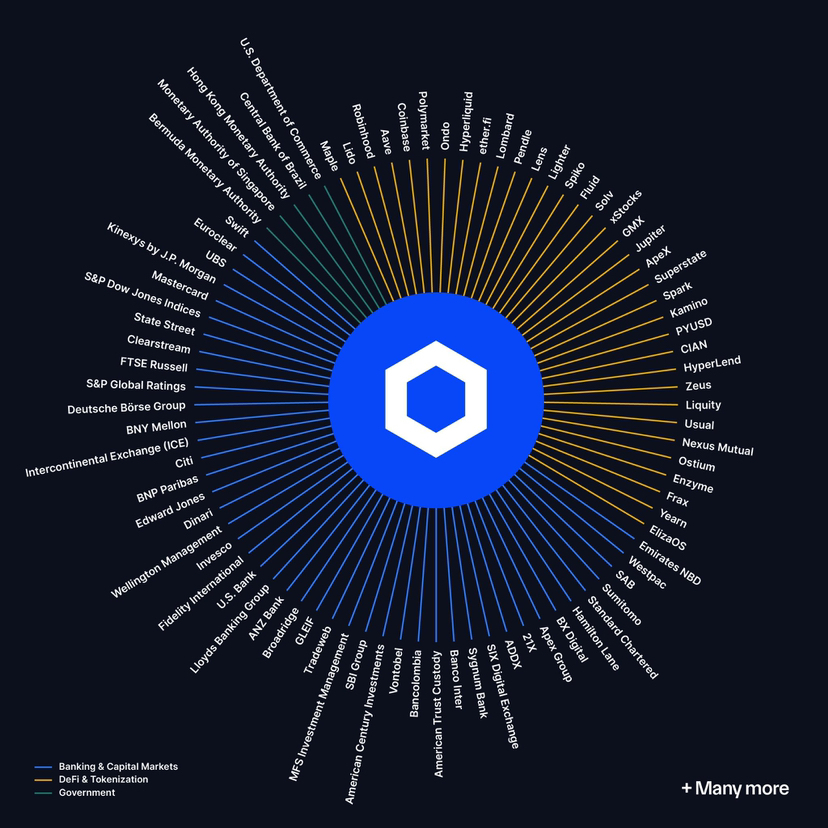
A lot of @chainlink's value comes from the answers to "what can the customer do today that it couldn't do before?"
For a tokenized fund, that might be expanding distribution to another blockchain.
For a lending protocol, it might be recapturing liquidation revenue.
For an asset manager, it might be automating subscriptions and redemptions.
For a market operator, it might be making trading data available to applications outside its venue in a tamper-resistant way.
The more measurable the customer outcome, the stronger the evidence that the infrastructure is solving a problem worth paying for.
Most of these use cases are institutional or tokenization-oriented, two sectors with significant room to scale. As more customers build successful businesses using Chainlink infrastructure, those success stories can attract additional adoption, expand Chainlink's revenue opportunities and ultimately strengthen $LINK value accrual through its economic mechanisms.
For a tokenized fund, that might be expanding distribution to another blockchain.
For a lending protocol, it might be recapturing liquidation revenue.
For an asset manager, it might be automating subscriptions and redemptions.
For a market operator, it might be making trading data available to applications outside its venue in a tamper-resistant way.
The more measurable the customer outcome, the stronger the evidence that the infrastructure is solving a problem worth paying for.
Most of these use cases are institutional or tokenization-oriented, two sectors with significant room to scale. As more customers build successful businesses using Chainlink infrastructure, those success stories can attract additional adoption, expand Chainlink's revenue opportunities and ultimately strengthen $LINK value accrual through its economic mechanisms.