


Singapore’s crypto economy grew 55.4% to $284 billion in the year ended June 2026 making it the largest measured crypto market in Central and Southeast Asia and Oceania despite a broader regional contraction, blockchain analytics firm, Chainalysis, has said.
The growth was led by institutional platforms where activity rose 94% to $60 billion. The activity was concentrated among market makers, over-the-counter trading firms, and institutional brokerages, Chainalysis said.
The broader Central and Southeast Asia and Oceania region contracted 6.8% during the period. Singapore, however, recorded growth across major areas of crypto activity, including
a 30% increase in flows through centralized exchanges, and
a 69% rise in decentralized exchange activity.
REPORT | The 2026 Global Crypto Adoption Index by Chainalysis
Chainalysis said the increase in institutional activity was largely driven by high-volume trading on existing platforms rather than a rapid expansion in the number of new services.
Institutional platforms across the wider region processed $152.3 billion during the period, up 40% from a year earlier. Singapore accounted for the largest share of that activity with institutional growth significantly outpacing the 19% increase recorded across the rest of the region.
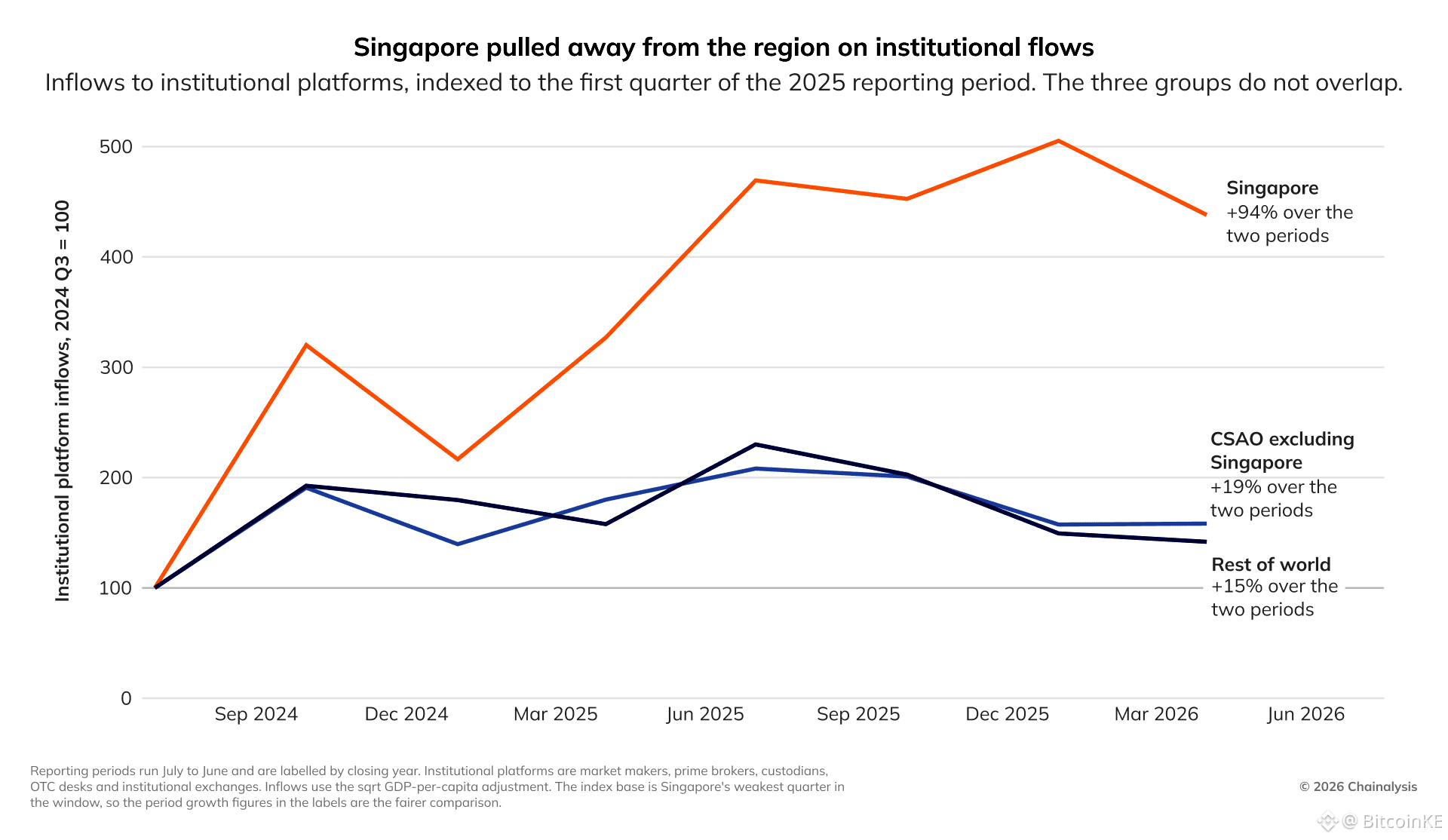
The shift comes as Singapore combines tighter digital-asset regulation with efforts to develop tokenisation, stablecoins, and on-chain settlement infrastructure. The Monetary Authority of Singapore (MAS) has also supported trials involving regulated stablecoins and tokenised bank money.
Chainalysis said stablecoins are increasingly being used for cross-border transactions across the region. Cross-border stablecoin activity was 3.2 times larger than domestic activity across the markets studied reflecting demand for faster and potentially lower-cost international settlement.
The data points to a market increasingly divided between institutional financial activity in Singapore and more payment-oriented crypto use elsewhere in Southeast Asia.
The Philippines, Thailand, and Vietnam recorded 5.4 million small-value peer-to-peer transfers of less than $10,000 during the period representing 14.4% of the global total despite the three countries accounting for only 2.5% of global crypto activity.
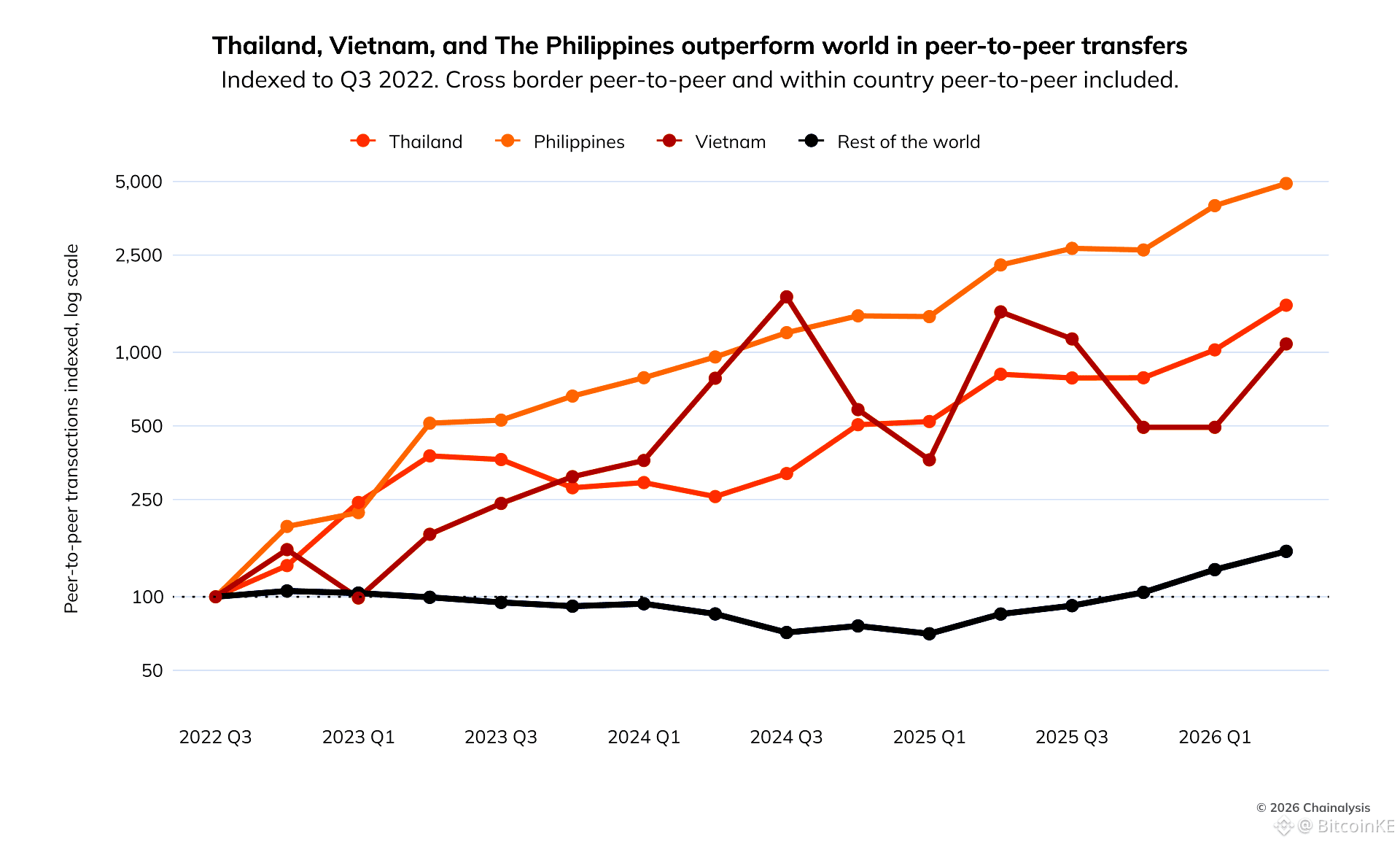
More than 4 in 5 domestic transfers were below $1,000.
Singapore’s figures therefore show a different pattern of crypto adoption with institutional trading, market infrastructure, and cross-border financial applications playing a growing role alongside retail activity.
REPORT | P2P Activity in Africa Led Crypto Adoption in H1 2026, Says Chainalysis
Stay tuned to BitKE for crypto adoption updates globally.
Join our WhatsApp channel here.
Follow us on X for the latest posts and updates
Join and interact with our Telegram community
________