#openaiunveilsalwaysonagentdots
What OpenAI announced
At its DevDay event on Tuesday, OpenAI launched Dots, a personal agentic assistant powered by GPT-6 Astra.
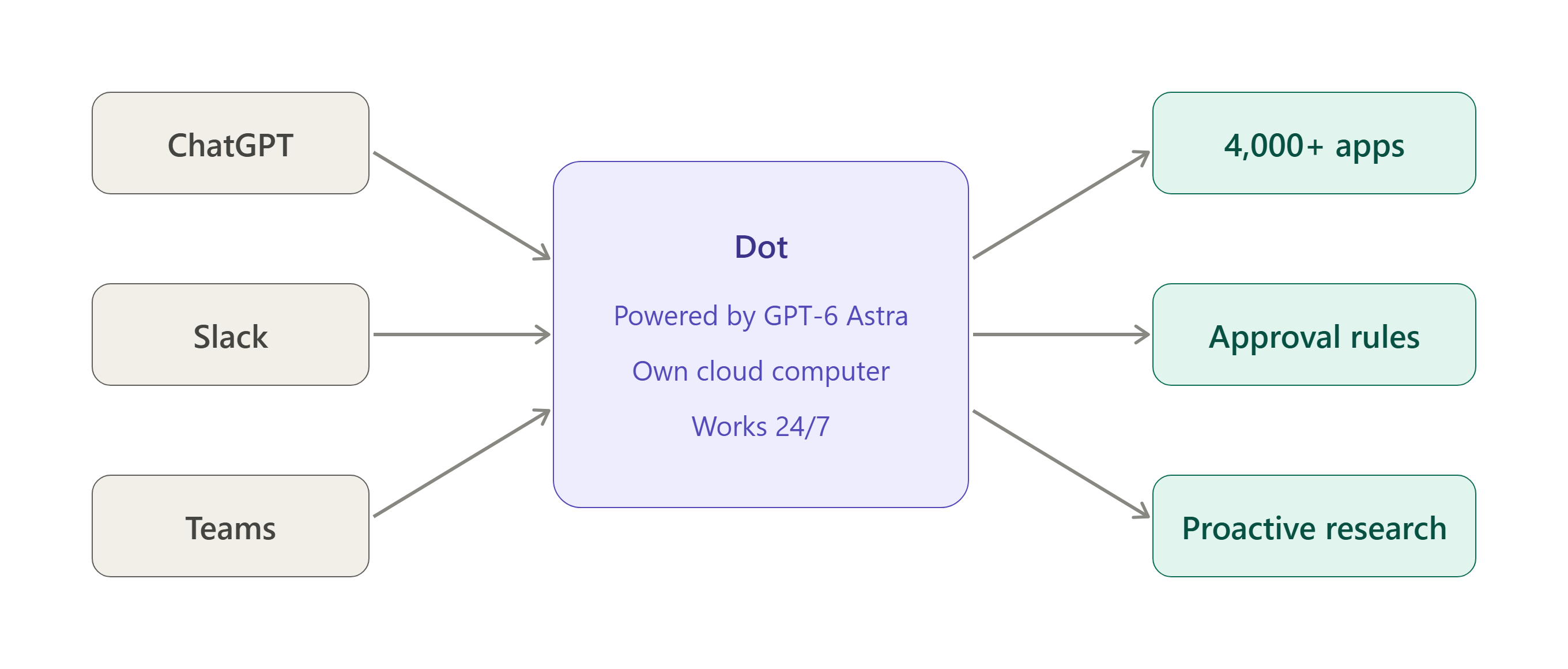
Each Dot has its own cloud computer, learns from feedback, works toward goals 24/7, and connects to over 4,000 apps through OpenAI's plugin ecosystem.
It can use a computer and pull information from connected apps to research, draft documents and develop software.
Users can reach a Dot through ChatGPT, Slack or Teams, and texting is planned. Dots carry context across channels and do "proactive research" in the background.
OpenAI also envisions "specialist Dots" with specific identities, credentials and tools, and is working with Microsoft on Agent 365 security controls.
Access and pricing
Dots are limited to Pro subscribers ($100 to $500 a month), Business Premium, and some Enterprise users.
Pro users in the European Economic Area, Switzerland and the UK won't get Dots for now. Business Premium users get them in all supported regions.
One Dot is included with each plan, and more will come later. Dots must be created in the ChatGPT desktop app but can be used from mobile afterward.
Conversations don't count toward ChatGPT usage limits, but tasks use plan allowances.
Controls
Dots follow ChatGPT's permissions and support custom rules for when they act alone or need approval.
An auto-review system checks actions that could affect accounts or share information, and some tasks, like changing a password, always stay with the user.
OpenAI's own caution: Dots can still make mistakes, so users should review consequential work.
Context and controversy
Altman unveiled Dots weeks after Meta released its Muse agents, which topped the Apple and Android app stores.
The day before, OpenAI said its agents had posted users' images online, affecting 53 ChatGPT users.
OpenAI also said it held back its latest system over safety concerns