


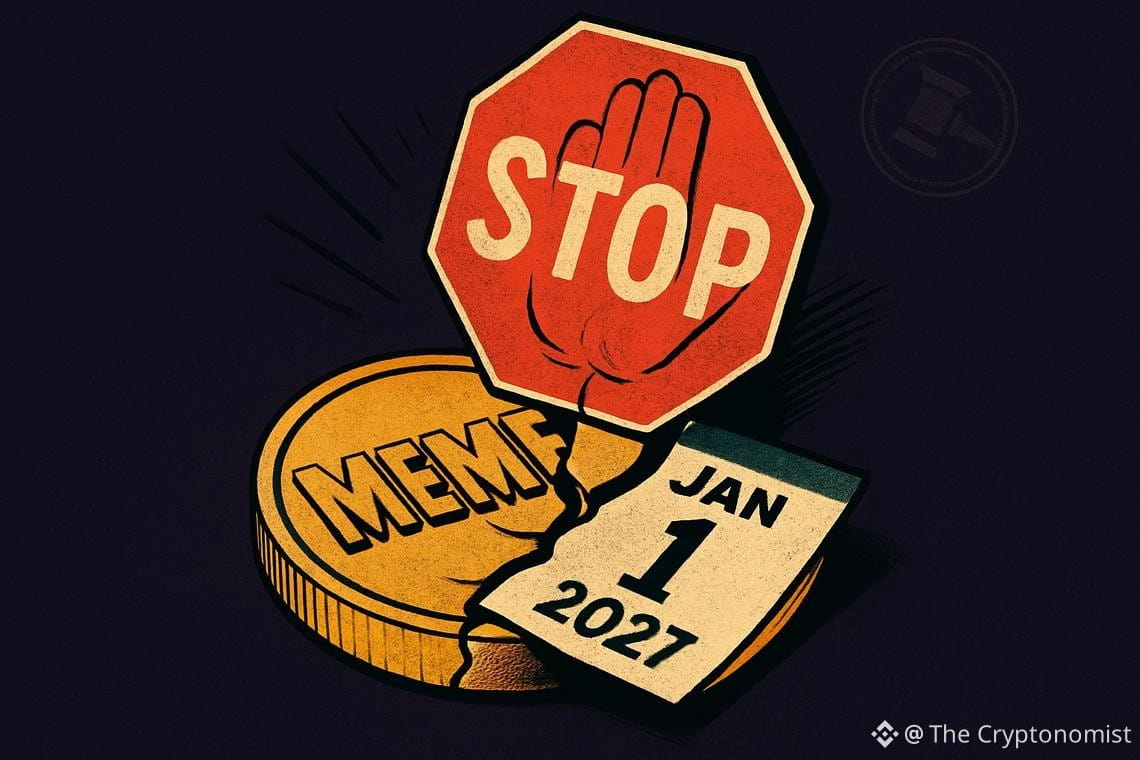
California is closing the door on a very specific kind of crypto side hustle for its politicians. Governor Gavin Newsom has signed a new law that makes the California memecoin ban official, prohibiting state and local public officials from launching their own memecoins while the country watches President Donald Trump profit handsomely from his own token. The signing, announced Sunday, arrives as part of a broader package aimed at cracking down on corruption and shady digital asset activity.
Key takeaways
Newsom signed Assembly Bill 2409, banning California public officials from issuing memecoins, effective for tokens issued on or after January 1, 2027.
The law also blocks digital asset service providers from offering to California residents any memecoin tied to a federal, state, or local official.
California’s attorney general, district attorneys, city attorneys, and county counsel can enforce the ban through civil lawsuits.
Newsom simultaneously signed Senate Bill 1208, expanding money laundering statutes to cover illicit digital asset transactions and giving law enforcement power to freeze, seize, and forfeit crypto tied to crimes.
Newsom’s office framed the bills as “the opposite of Trump,” pointing directly at the president’s $TRUMP token launch.
California enacts memecoin ban for public officials
The headline measure answers a question that’s been circling state capitals for a while: can a sitting official cash in on a coin bearing their own name or likeness? In California, starting soon, the answer will be no. Assembly Bill 2409, introduced by Assembly Member Avelino Valencia back on February 20, 2026, was signed by Newsom on Sunday, capping a months-long path through the legislature.
Scope and effective date of the ban
The bill does two things at once. First, it bars state and local public officials from issuing memecoins outright. Second, it stops digital asset service providers from offering California residents any memecoin issued by, or created in partnership with, federal, state, or local officials. Both provisions apply to tokens issued on or after January 1, 2027, giving the market a runway before the rule takes hold. Notably, it remains unclear whether the restriction reaches back to cover memecoins that already exist, such as Trump‘s own token.
Governor Newsom’s criticism and rationale
Newsom didn’t bury the political subtext. His office titled the announcement “The Opposite of Trump,” tying the legislative package directly to the president’s crypto ventures. “While the scam that is Donald Trump continues to hurt American families, California is fighting to make our economy work for people, not the powerful. No official should profit off their office — and we’re putting stronger protections in place to ensure it doesn’t happen in our state,” Newsom said in the press release, according to CoinDesk. Trump’s office did not immediately respond to a request for comment from CoinDesk.
The reference lands squarely on Trump’s $TRUMP memecoin, launched days before his 2025 inauguration. According to the official announcement, nearly 1 million people who bought Trump’s meme coin lost more than $3 billion, while Trump’s own financial disclosure listed $636 million in royalties from the coin.
Legal framework and enforcement mechanisms
California didn’t need to start from scratch to pull this off; it simply extended a rule that already existed. This legal architecture matters because it shows the ban isn’t a standalone gimmick — it’s built into a broader ethics framework already governing state employees.
Existing prohibitions on official conduct extended
State law already bars officers and employees from taking on any employment, activity, or enterprise that conflicts with their official duties. AB 2409 simply folds memecoin issuance into that existing prohibition inside the Government Code, treating a token launch the same way the law would treat any other conflict-of-interest side business.
Authority granted to enforce the ban
Enforcement doesn’t rest with one office alone. The law lets California’s attorney general, a district attorney, a city attorney, or county counsel each file a civil action to enforce the prohibitions. Spreading that authority across multiple levels of government suggests lawmakers wanted enforcement to be workable at the local level too, not just something Sacramento handles from the top down.
Expanded digital asset enforcement with Senate Bill 1208
The memecoin ban wasn’t signed in isolation. Newsom paired it with Senate Bill 1208, a companion measure that pushes California’s approach to digital asset regulation well beyond memecoins and into the territory of organized financial crime.
Extension of money laundering statutes to digital assets
Senate Bill 1208 digital assets provisions widen California’s existing money laundering statutes so they explicitly cover illicit transactions conducted through digital assets. Previously, prosecutors leaned on laundering laws written with traditional cash and bank transfers in mind; this update brings crypto squarely into that same legal net.
Law enforcement powers to freeze and seize assets
The bill also hands law enforcement broad authority to freeze, seize, and forfeit digital assets connected to criminal activity. Combined with AB 2409, the pairing signals a state trying to close two separate gaps at once: one around public officials memecoin prohibition, the other around using crypto to launder proceeds of crime.
Both bills were part of a larger 11-bill package Newsom’s office rolled out addressing corruption, consumer protection, and cryptocurrency crime, according to CoinDesk. Other measures in that package reportedly set up ways to repay crypto scam victims and create a legal process for seizing crypto tied to transnational criminal networks.
Why this matters for crypto policy and 2028 politics
This isn’t just a technical fix to the Government Code. It’s California drawing a bright line between public service and personal crypto profit, at a moment when the sitting president has turned a memecoin launch into hundreds of millions of dollars in royalties. For officials in California, the message is blunt: launching a token tied to your office is now legally off-limits, and residents can’t even be offered one from officials elsewhere.
FAQ
What does California’s memecoin ban prohibit?
The law prohibits state and local public officials from issuing memecoins and bans these tokens from being offered to California residents.
When does the memecoin ban take effect?
The ban applies to memecoins issued on or after January 1, 2027.
Who enforces the memecoin ban in California?
California’s attorney general, district attorneys, city attorneys, and county counsels are authorized to enforce the ban through civil actions.
What are the enhanced law enforcement powers under Senate Bill 1208?
SB 1208 expands money laundering laws to digital assets and authorizes law enforcement to freeze, seize, and forfeit digital assets connected to criminal activity.
Article produced with the assistance of artificial intelligence and reviewed by the editorial team.