I Minted An NFT That Is Really An Agent's Passport 🪪
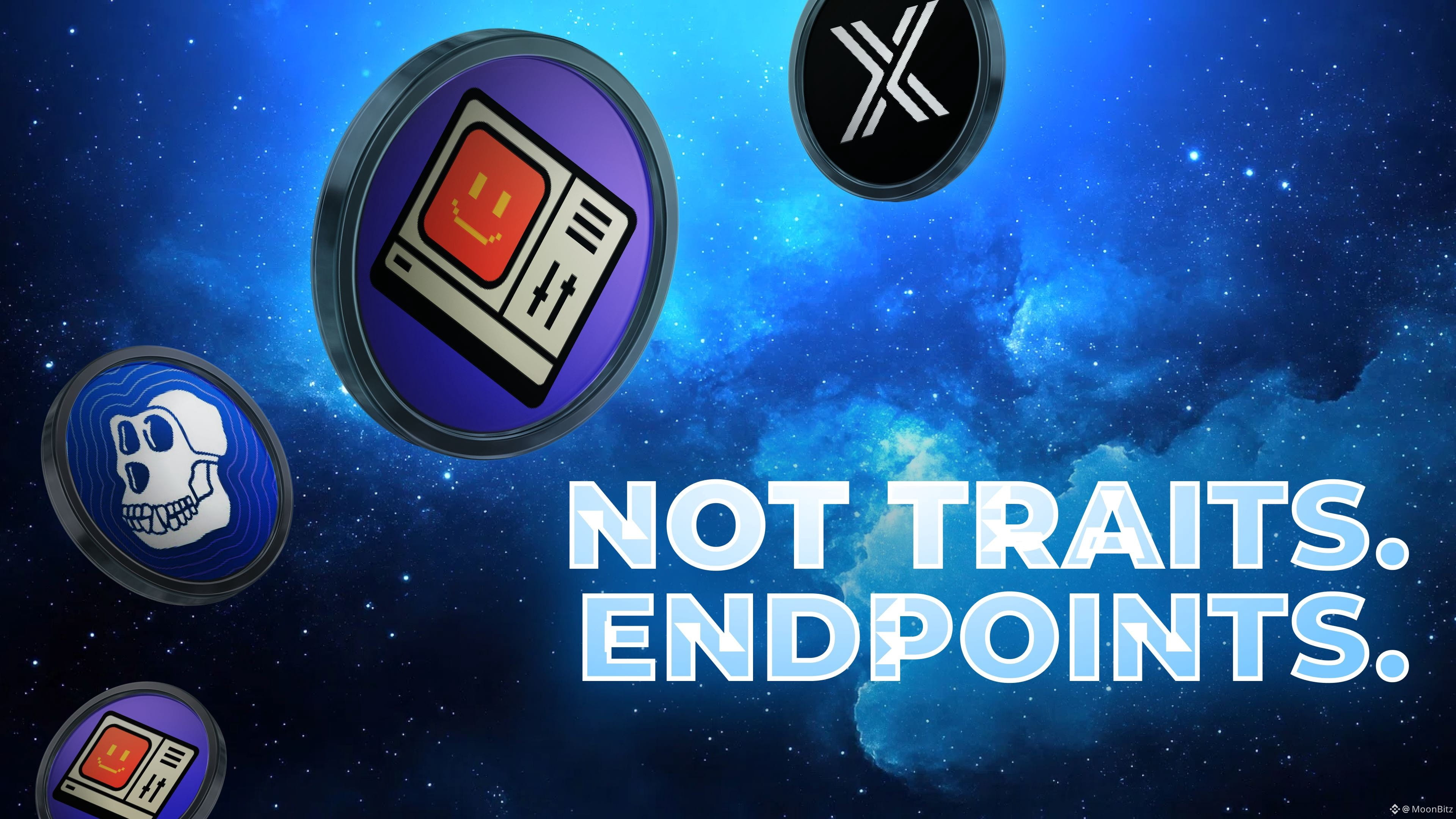
$APE funded community NFTs and $IMX built rails for collectibles. Loopers uses the same token standard for something else entirely.
It is an agent NFT project on Base, built on 721T (ERC-8048) and 8004a (ERC-8217). Each NFT is not a picture with traits. It is a profile for an agent.
The metadata answers the questions a client would need to ask. Does this agent have an MCP endpoint. Does it have a wallet. Does it have a token-bound account holding its assets. What does it actually do. Can it be found on the ERC-8004 registry.
That list is the entire agent-identity conversation from the past year, shipped as a collection. One agent, one ID, metadata, endpoints, payment, custody, discoverability.
The two standards split the work. 721T adds agentic metadata to any ERC-721 contract, before or after deployment, so a project keeps its identity data inside its own collection. 8004a binds NFTs from separate collections to ERC-8004 identities, which is where discoverability comes from.
One practical note from minting mine. I ran it through Bankr rather than connecting my main wallet. A mint is a signature to a contract you have not read, and keeping that away from the address holding everything else is hygiene rather than paranoia.
The open question is consolidation. Several projects, several approaches, and agent NFTs only become useful when clients can read all of them the same way.
A collectible's job is to be owned. This one's job is to be queried.
#NFT #Base
$APE funded community NFTs and $IMX built rails for collectibles. Loopers uses the same token standard for something else entirely.
It is an agent NFT project on Base, built on 721T (ERC-8048) and 8004a (ERC-8217). Each NFT is not a picture with traits. It is a profile for an agent.
The metadata answers the questions a client would need to ask. Does this agent have an MCP endpoint. Does it have a wallet. Does it have a token-bound account holding its assets. What does it actually do. Can it be found on the ERC-8004 registry.
That list is the entire agent-identity conversation from the past year, shipped as a collection. One agent, one ID, metadata, endpoints, payment, custody, discoverability.
The two standards split the work. 721T adds agentic metadata to any ERC-721 contract, before or after deployment, so a project keeps its identity data inside its own collection. 8004a binds NFTs from separate collections to ERC-8004 identities, which is where discoverability comes from.
One practical note from minting mine. I ran it through Bankr rather than connecting my main wallet. A mint is a signature to a contract you have not read, and keeping that away from the address holding everything else is hygiene rather than paranoia.
The open question is consolidation. Several projects, several approaches, and agent NFTs only become useful when clients can read all of them the same way.
A collectible's job is to be owned. This one's job is to be queried.
#NFT #Base