


Les agents IA entrent dans une phase différente.
Ils ne se limitent plus à générer du texte ou à répondre à des questions. Ils peuvent effectuer des recherches, gérer des fichiers, interagir avec des sites web, communiquer entre différentes plateformes et exécuter des workflows multi-étapes. Mais à mesure que les agents deviennent capables d’agir en notre nom, je pense qu’une question devient de plus en plus importante :
Comment pouvons-nous donner à une IA assez d’autonomie pour être utile sans lui conférer une autorité illimitée ?
C’est ce qui rend IronClaw 1.0 #NEARAI particulièrement intéressant à mes yeux.
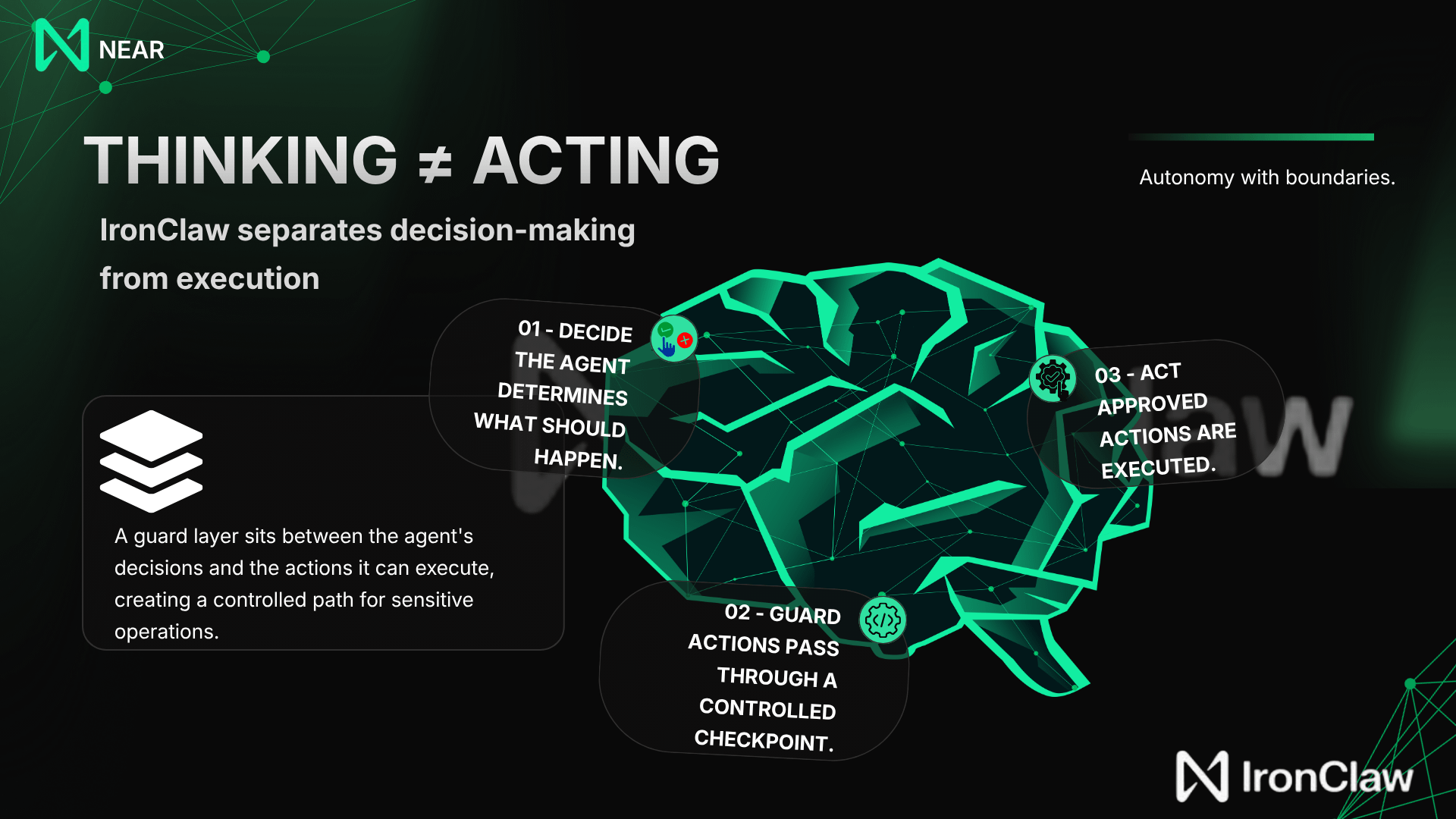
Dissocier la réflexion de l’action
IronClaw aborde la sécurité des agents au niveau architectural.
Au lieu de permettre au modèle qui prend une décision d’exécuter directement l’action qui en résulte, #ironclaw place une couche de protection entre la prise de décision et l’exécution. Les actions passent par ce chemin contrôlé, et les opérations sensibles peuvent nécessiter une approbation explicite avant d’être réalisées.
Cela crée une séparation utile :
L’agent peut décider ce qu’il veut faire, mais il n’a pas automatiquement une autorisation illimitée pour le faire.
Pour moi, c’est plus intéressant que simplement ajouter une autre fonctionnalité de sécurité à un agent d’IA. Le mécanisme de contrôle devient une partie de la façon dont l’agent fonctionne.
#ironclaw s’attaque aussi à un autre problème pratique : que se passe-t-il lorsqu’un workflow autonome est interrompu ?
Son checkpointing continu permet de reprendre le travail au lieu de forcer l’agent à recommencer. L’état persistant et la mémoire peuvent aussi être transportés entre CLI, Web, Slack et Telegram, permettant au même assistant de conserver le contexte entre différentes interfaces.
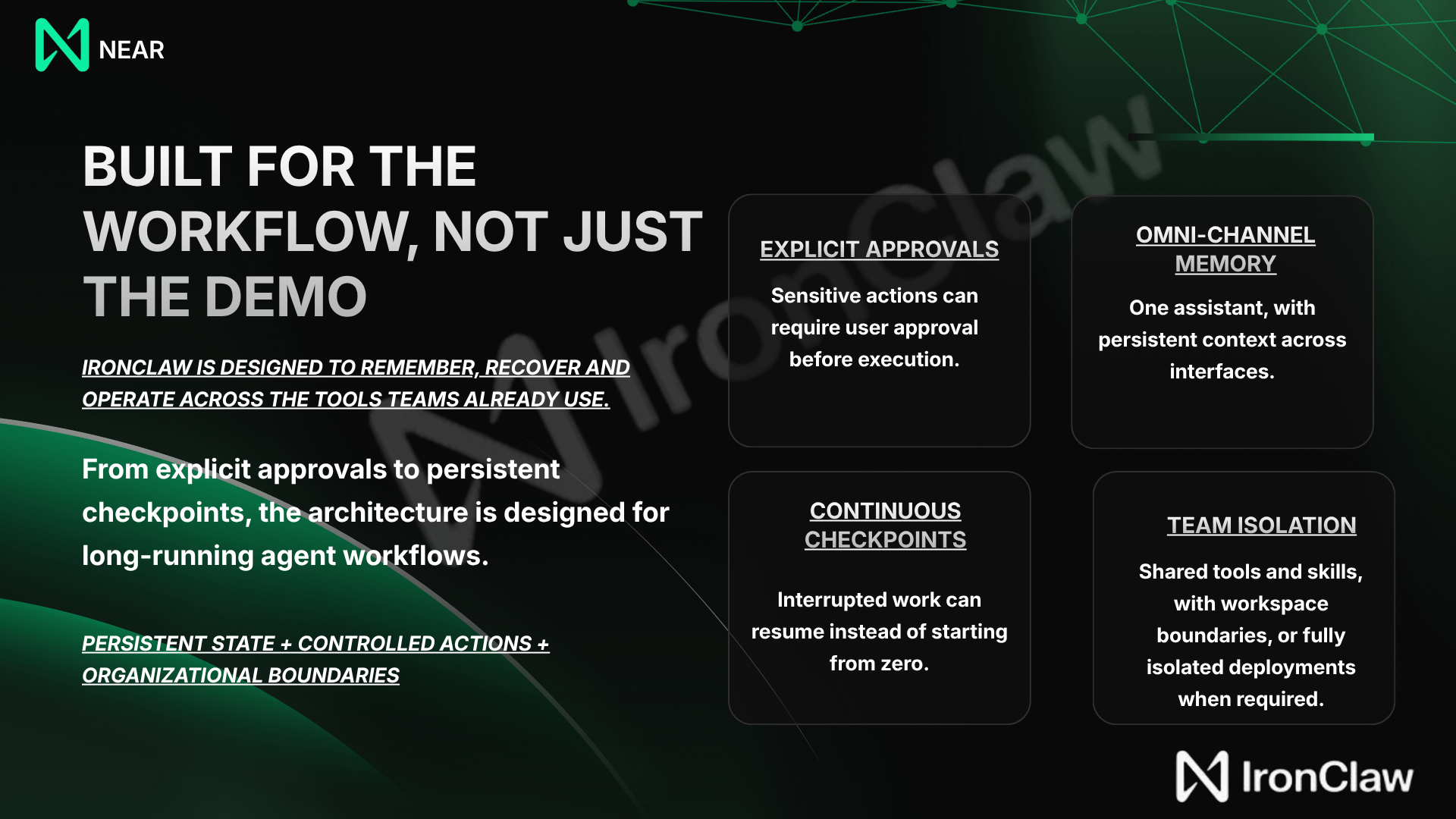
Pour les organisations, #ironclaw prend en charge le partage d’outils et de compétences grâce à des déploiements multi-tenant tout en maintenant des limites d’espace de travail, avec des déploiements single-tenant disponibles lorsque une isolation complète est requise.
La performance derrière l’architecture
Le modèle de sécurité serait moins convaincant s’il se faisait au détriment des capacités.
Lors de l’évaluation du 27 juillet par NEAR AI d’Ironclaw 1.0, le système a obtenu la première position rapportée sur trois benchmarks d’agents différents en utilisant le même modèle de base DeepSeek-V4-Flash pour les comparaisons du banc de test.
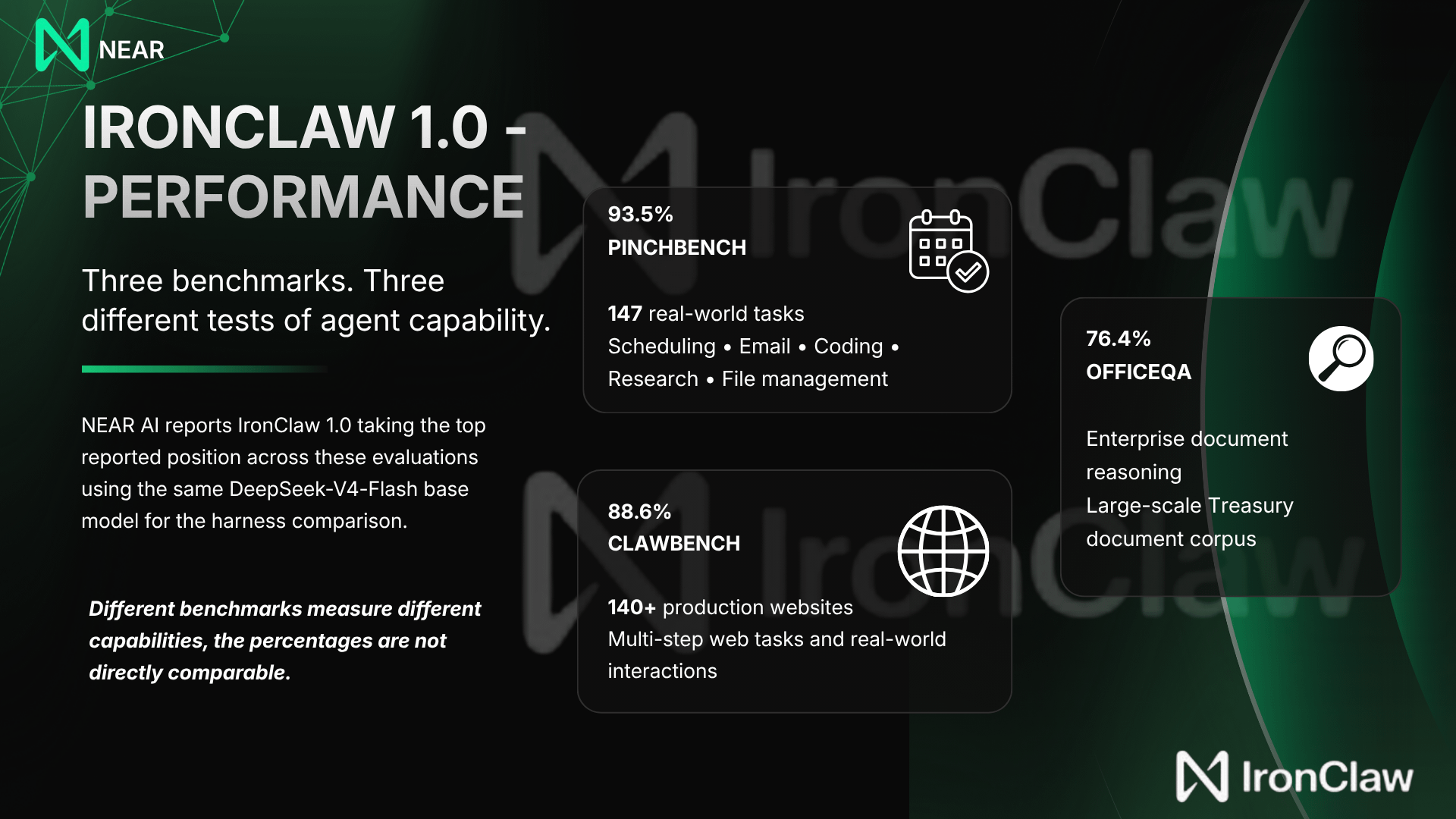
IronClaw a enregistré 93,5 % sur PinchBench, qui évalue 147 tâches réelles incluant la planification, le tri d’e-mails, la programmation, la recherche et la gestion de fichiers.
Sur ClawBench, qui teste des tâches multi-étapes sur plus de 140 sites web de production réels, IronClaw a enregistré 88,6 %.
Et sur OfficeQA, qui évalue le raisonnement fondé sur une large collection de documents du Trésor américain, il a atteint 76,4 %.
Ces chiffres ne doivent pas être considérés comme directement comparables, car chaque benchmark mesure une capacité différente. Ce qui ressort pour moi, c’est que la même architecture a fait preuve d’une forte performance dans l’exécution de tâches pratiques, l’interaction web et le raisonnement documentaire.
La grande image NEAR AI
IronClaw s’inscrit dans la vision plus large de #NEARAI , qui met l’accent sur une infrastructure d’IA privée, confidentielle et vérifiable.
Cela ramène dans la conversation le rôle de @NEAR Protocol et du staking.
Le staking est souvent perçu principalement à travers le prisme des récompenses. Au niveau du protocole, toutefois, le NEAR misé soutient l’infrastructure de validation chargée de maintenir la sécurité et le consensus du réseau.
Il existe désormais une connexion encore plus directe à l’infrastructure d’IA. #NEARAI a introduit un accès basé sur le staking qui permet aux utilisateurs de miser du NEAR pour obtenir des crédits prenant en charge l’inférence confidentielle et l’hébergement permanent des agents IronClaw.
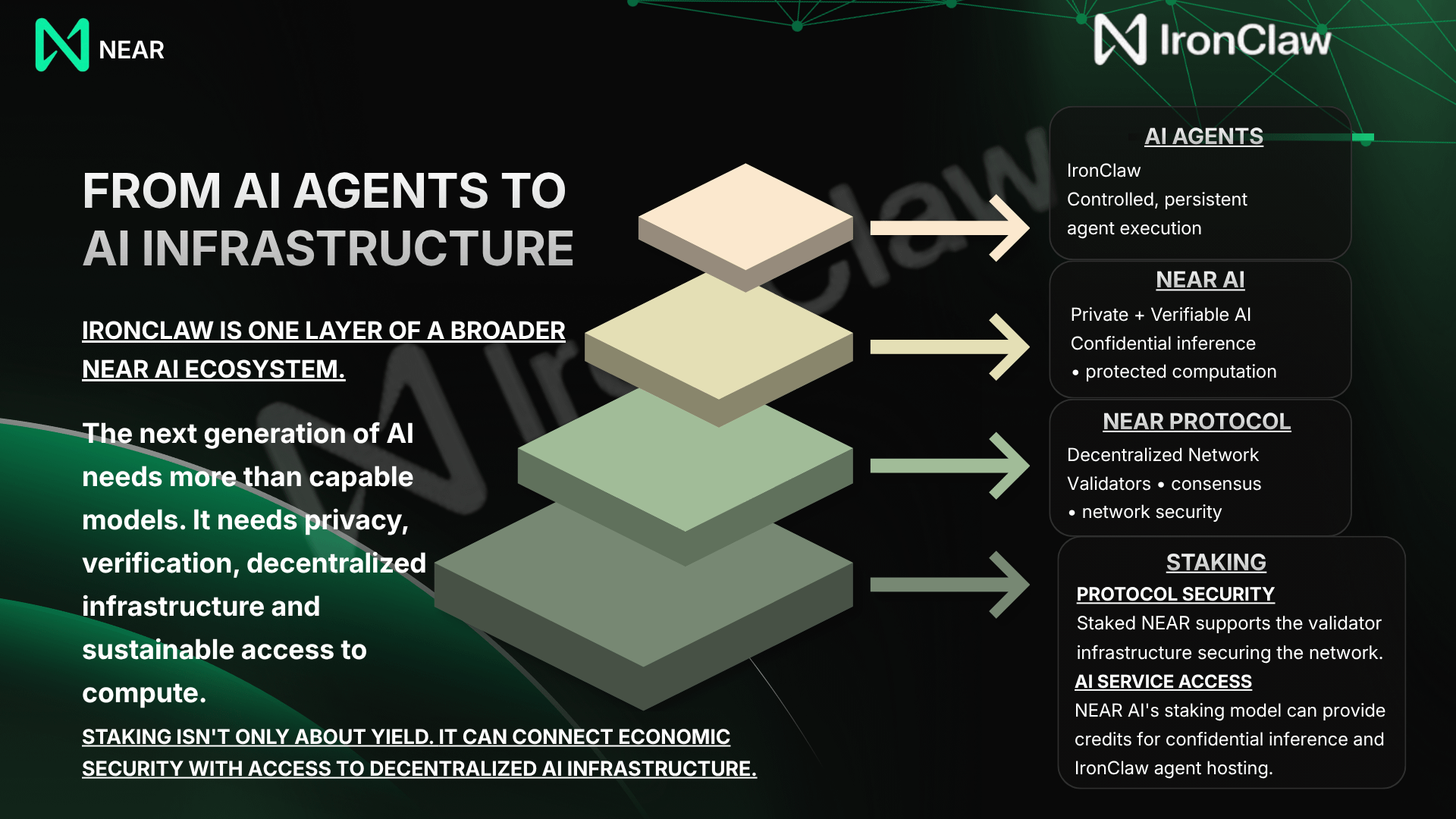
Cela change la façon dont je vois la relation entre le staking et l’IA décentralisée.
L’avenir ne consiste pas seulement à construire des agents qui pensent mieux. Il s’agit de créer une infrastructure permettant aux agents d’agir dans des limites, de préserver leur travail, de protéger le calcul sensible et de fonctionner sur des systèmes décentralisés avec des garanties de sécurité significatives.
IronClaw 1.0 représente donc quelque chose que je trouve plus précieux qu’une autre démo de capacité d’IA : une avancée vers l’intégration de l’autonomie contrôlée en tant qu’élément fondamental dans la conception des agents d’IA.
La question pour la prochaine génération d’IA ne sera peut-être pas de savoir à quel point les agents peuvent devenir autonomes.
Cela peut être :
Comment rendre l’autonomie suffisamment digne de confiance pour être utilisée ?