L’ombre du crépuscule m’a traversé l’esprit récemment, surtout parce que la crypto traite souvent une déclaration officielle comme la dernière parole lorsqu’il se passe quelque chose de mal. Je pense que l’approche la plus utile consiste parfois à passer au-delà du titre et à voir ce que la blockchain elle-même montre.
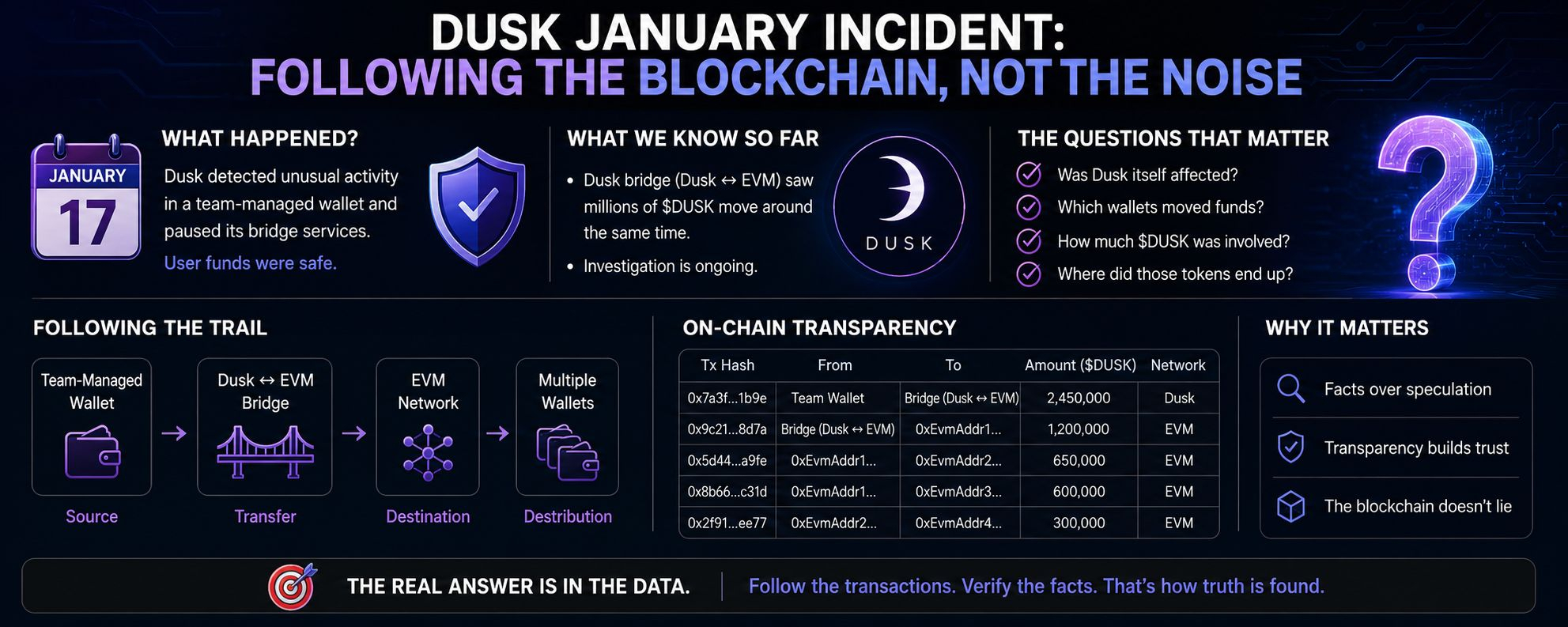
L’incident de janvier a particulièrement retenu mon attention pour cette raison. Dusk a déclaré, le 17 janvier, qu’elle avait détecté une activité inhabituelle impliquant un portefeuille géré par une équipe et qu’elle avait suspendu ses services de pont, tout en affirmant que les fonds des utilisateurs étaient en sécurité. À peu près au même moment, des millions de DUSK étaient suivis en train de transiter via le pont reliant Dusk à l’EVM.
Je ne cherche pas à transformer cela en spéculation. Ce qui m’intéresse, c’est la trace.
Quels portefeuilles ont réellement déplacé les fonds ? Quelle quantité de DUSK était impliquée ? Où les jetons sont-ils allés ensuite ? Sont-ils restés au sein de l’écosystème du pont, ou ont-ils finalement été distribués vers d’autres adresses ?
Pour moi, cela compte au-delà d’un seul incident. Dusk met en place son infrastructure autour de la confidentialité, de la conformité et d’éventuels cas d’usage financiers. Ce sont des forces importantes, mais elles rendent aussi la transparence, la gouvernance et la sécurité opérationnelle particulièrement cruciales.
Un pont peut améliorer l’interopérabilité et l’utilité, mais il peut aussi introduire un point de risque concentré.
Je surveille l’activité on-chain parce que je soupçonne que l’historique des transactions peut nous en dire plus qu’une autre vague de titres.
La question que je continue d’observer est simple : quelle est réellement la révélation de l’intégralité de la trace ?
@Dusk #dusk $DUSK
L’incident de janvier a particulièrement retenu mon attention pour cette raison. Dusk a déclaré, le 17 janvier, qu’elle avait détecté une activité inhabituelle impliquant un portefeuille géré par une équipe et qu’elle avait suspendu ses services de pont, tout en affirmant que les fonds des utilisateurs étaient en sécurité. À peu près au même moment, des millions de DUSK étaient suivis en train de transiter via le pont reliant Dusk à l’EVM.
Je ne cherche pas à transformer cela en spéculation. Ce qui m’intéresse, c’est la trace.
Quels portefeuilles ont réellement déplacé les fonds ? Quelle quantité de DUSK était impliquée ? Où les jetons sont-ils allés ensuite ? Sont-ils restés au sein de l’écosystème du pont, ou ont-ils finalement été distribués vers d’autres adresses ?
Pour moi, cela compte au-delà d’un seul incident. Dusk met en place son infrastructure autour de la confidentialité, de la conformité et d’éventuels cas d’usage financiers. Ce sont des forces importantes, mais elles rendent aussi la transparence, la gouvernance et la sécurité opérationnelle particulièrement cruciales.
Un pont peut améliorer l’interopérabilité et l’utilité, mais il peut aussi introduire un point de risque concentré.
Je surveille l’activité on-chain parce que je soupçonne que l’historique des transactions peut nous en dire plus qu’une autre vague de titres.
La question que je continue d’observer est simple : quelle est réellement la révélation de l’intégralité de la trace ?
@Dusk #dusk $DUSK