Je regarde Dusk de plus près ces derniers temps, et un point ne cesse de ressortir : le défi pour les institutions financières ne consiste pas seulement à mettre des actifs réglementés sur une blockchain.
Le récit crypto habituel veut qu’une fois la conformité résolue, l’adoption institutionnelle devienne beaucoup plus facile. Je pensais aussi cela. Mais plus j’examine Dusk, plus je me dis que la confidentialité et la vérifiabilité sont tout aussi importantes.
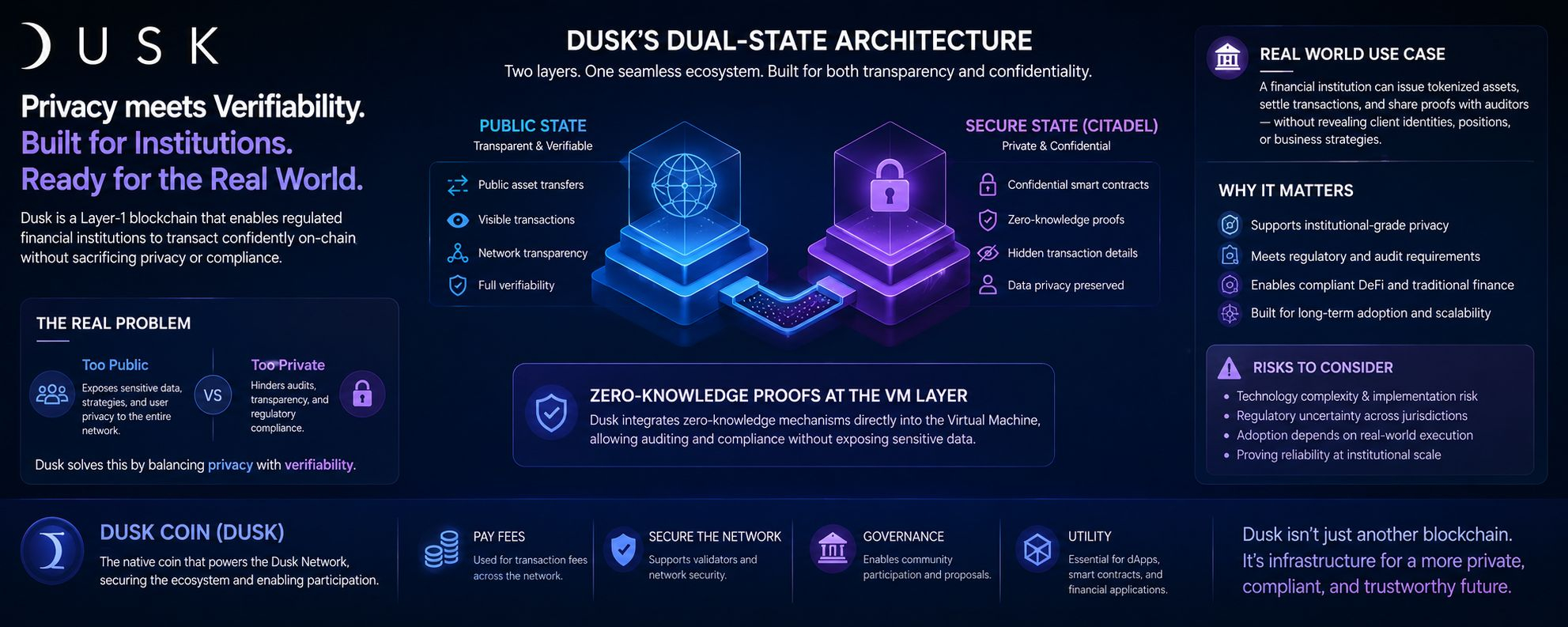
Une banque ou une institution financière ne peut pas, de façon réaliste, publier chaque détail client, chaque stratégie de transaction ou chaque position interne sur un réseau entièrement transparent. Dans le même temps, rendre tout confidentiel crée un autre problème : comment les régulateurs, les auditeurs ou les contreparties peuvent-ils vérifier que tout a été fait correctement ?
C’est là que l’architecture de Dusk devient, selon moi, particulièrement intéressante. Son approche en double état sépare les transferts d’actifs publics de l’exécution des contrats intelligents confidentiels, tandis que Citadel utilise la technologie de preuve à divulgation nulle (zero-knowledge) pour protéger les informations sensibles sans supprimer la capacité à prouver que les règles requises ont bien été respectées.
C’est un problème assez concret à résoudre.
La pièce DUSK fait partie de l’infrastructure, mais ce qui m’intéresse davantage, c’est de savoir si le réseau sous-jacent peut réellement soutenir une activité financière réelle dans le temps. Il existe encore des risques évidents liés à la complexité, aux exigences réglementaires, à l’adoption, et à la question de savoir si la technologie peut fonctionner de manière fiable à l’échelle institutionnelle.
Pour moi, la question intéressante n’est pas de savoir si Dusk peut raconter une belle histoire.
La question, c’est de savoir si cette approche peut rendre la blockchain utile pour des institutions qui ont besoin à la fois de confidentialité et de responsabilité.
@Dusk #dusk $DUSK
Le récit crypto habituel veut qu’une fois la conformité résolue, l’adoption institutionnelle devienne beaucoup plus facile. Je pensais aussi cela. Mais plus j’examine Dusk, plus je me dis que la confidentialité et la vérifiabilité sont tout aussi importantes.
Une banque ou une institution financière ne peut pas, de façon réaliste, publier chaque détail client, chaque stratégie de transaction ou chaque position interne sur un réseau entièrement transparent. Dans le même temps, rendre tout confidentiel crée un autre problème : comment les régulateurs, les auditeurs ou les contreparties peuvent-ils vérifier que tout a été fait correctement ?
C’est là que l’architecture de Dusk devient, selon moi, particulièrement intéressante. Son approche en double état sépare les transferts d’actifs publics de l’exécution des contrats intelligents confidentiels, tandis que Citadel utilise la technologie de preuve à divulgation nulle (zero-knowledge) pour protéger les informations sensibles sans supprimer la capacité à prouver que les règles requises ont bien été respectées.
C’est un problème assez concret à résoudre.
La pièce DUSK fait partie de l’infrastructure, mais ce qui m’intéresse davantage, c’est de savoir si le réseau sous-jacent peut réellement soutenir une activité financière réelle dans le temps. Il existe encore des risques évidents liés à la complexité, aux exigences réglementaires, à l’adoption, et à la question de savoir si la technologie peut fonctionner de manière fiable à l’échelle institutionnelle.
Pour moi, la question intéressante n’est pas de savoir si Dusk peut raconter une belle histoire.
La question, c’est de savoir si cette approche peut rendre la blockchain utile pour des institutions qui ont besoin à la fois de confidentialité et de responsabilité.
@Dusk #dusk $DUSK