Comment les réseaux décentralisés parviennent-ils à s’accorder sur la validité des transactions sans autorité centrale ? Grâce aux « mécanismes de consensus » 🌐⛓️
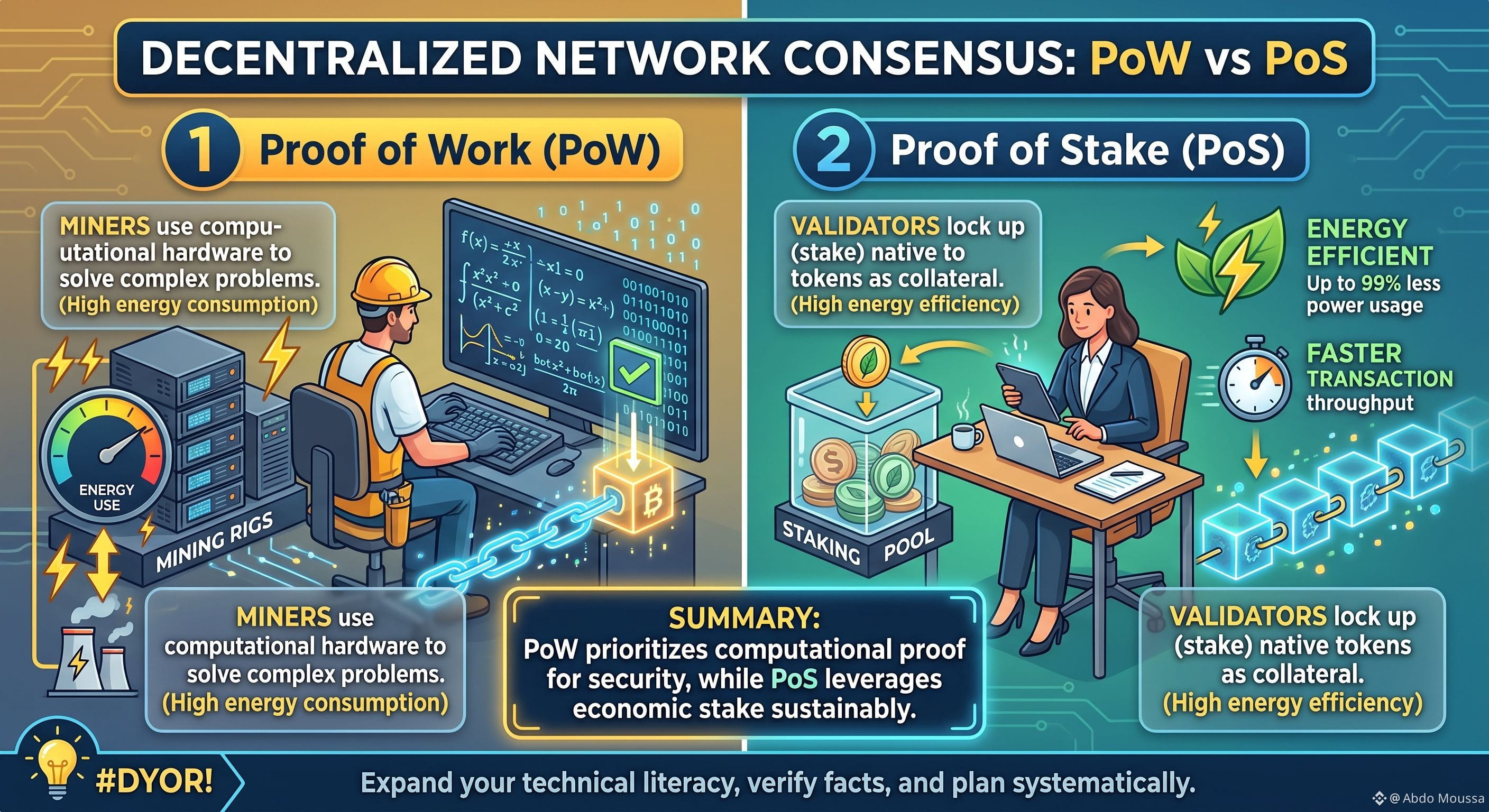
Les deux modèles les plus largement utilisés sont la preuve de travail (Proof of Work, PoW) et la preuve d’enjeu (Proof of Stake, PoS). Voici une comparaison simple de leur fonctionnement :
1️⃣ Preuve de travail (PoW) :
• Mécanisme : Les participants au réseau (mineurs) utilisent du matériel informatique pour résoudre des problèmes mathématiques complexes afin de valider les transactions et d’ajouter de nouveaux blocs.
• Atouts : Modèle de sécurité éprouvé (utilisé par Bitcoin).
• Points à considérer : Nécessite une consommation d’énergie importante et du matériel dédié.
2️⃣ Preuve d’enjeu (PoS) :
• Mécanisme : Les participants au réseau (validateurs) immobilisent (stake) des jetons natifs comme garantie pour obtenir le droit de valider les transactions.
• Atouts : Très économe en énergie (jusqu’à 99 % de consommation électrique en moins) et permet un débit de transactions plus rapide.
• Points à considérer : La sécurité dépend des incitations économiques et de la participation active des validateurs.
💡 Résumé :
Alors que la PoW privilégie une preuve computationnelle pour la sécurité, la PoS s’appuie sur l’enjeu économique pour atteindre un consensus de manière durable. Les deux représentent des étapes technologiques majeures dans l’architecture décentralisée.
⚠️ Avertissement éducatif :
Les implémentations du réseau et les fonctionnalités régionales des produits varient. Ce contenu est fourni à des fins éducatives uniquement et ne constitue ni un conseil technique ni un conseil financier.
Explorez l’architecture blockchain en profondeur via #BinanceAcademy .
Développez votre culture technique et toujours #dyor 💡
#Binance #LearnWithBinance #PoS
Les deux modèles les plus largement utilisés sont la preuve de travail (Proof of Work, PoW) et la preuve d’enjeu (Proof of Stake, PoS). Voici une comparaison simple de leur fonctionnement :
1️⃣ Preuve de travail (PoW) :
• Mécanisme : Les participants au réseau (mineurs) utilisent du matériel informatique pour résoudre des problèmes mathématiques complexes afin de valider les transactions et d’ajouter de nouveaux blocs.
• Atouts : Modèle de sécurité éprouvé (utilisé par Bitcoin).
• Points à considérer : Nécessite une consommation d’énergie importante et du matériel dédié.
2️⃣ Preuve d’enjeu (PoS) :
• Mécanisme : Les participants au réseau (validateurs) immobilisent (stake) des jetons natifs comme garantie pour obtenir le droit de valider les transactions.
• Atouts : Très économe en énergie (jusqu’à 99 % de consommation électrique en moins) et permet un débit de transactions plus rapide.
• Points à considérer : La sécurité dépend des incitations économiques et de la participation active des validateurs.
💡 Résumé :
Alors que la PoW privilégie une preuve computationnelle pour la sécurité, la PoS s’appuie sur l’enjeu économique pour atteindre un consensus de manière durable. Les deux représentent des étapes technologiques majeures dans l’architecture décentralisée.
⚠️ Avertissement éducatif :
Les implémentations du réseau et les fonctionnalités régionales des produits varient. Ce contenu est fourni à des fins éducatives uniquement et ne constitue ni un conseil technique ni un conseil financier.
Explorez l’architecture blockchain en profondeur via #BinanceAcademy .
Développez votre culture technique et toujours #dyor 💡
#Binance #LearnWithBinance #PoS