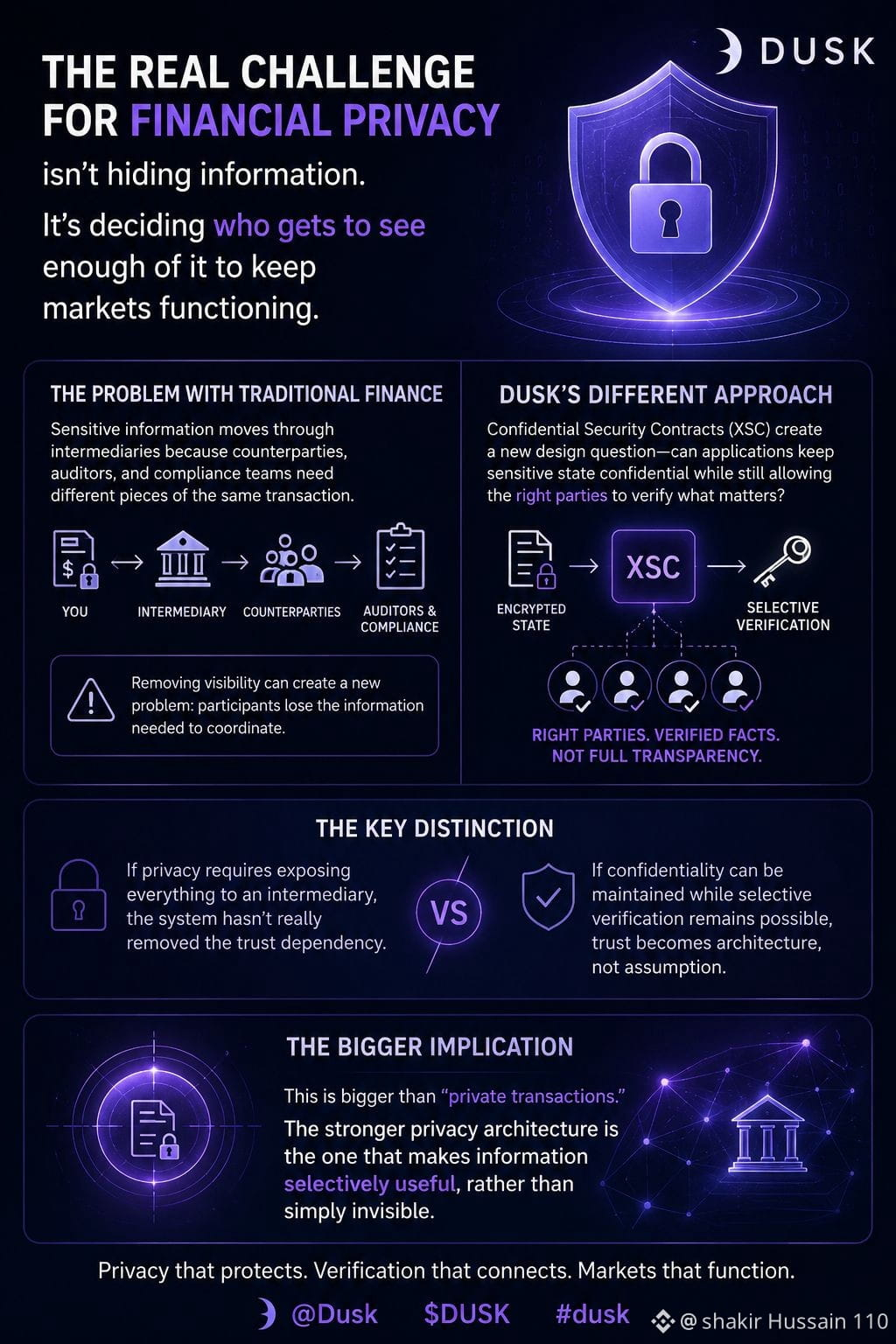
Le vrai défi de la confidentialité financière ne consiste pas à cacher l’information. Il s’agit de décider qui doit pouvoir voir suffisamment d’informations pour que les marchés fonctionnent.
C’est là, je pense, que l’architecture de Dusk devient intéressante.
Dans la finance traditionnelle, des informations sensibles circulent souvent par l’intermédiaire de tiers, car les contreparties, les auditeurs et les équipes de conformité ont besoin de différents éléments du même transaction. Supprimer simplement la visibilité peut donc créer un nouveau problème : les participants peuvent protéger leur confidentialité, mais perdre l’information nécessaire pour se coordonner.
L’approche du Dusk Confidential Security Contract (XSC) pose une question de conception différente : les applications financières peuvent-elles conserver l’état sensible confidentiel tout en permettant aux bonnes parties de vérifier ce qui compte réellement ?
Cette distinction est importante.
Si la confidentialité exige de tout exposer à un intermédiaire, le système n’a en réalité pas supprimé la dépendance à la confiance. Mais si la confidentialité peut être préservée tout en rendant possible une vérification sélective, les applications financières peuvent réduire l’exposition inutile des informations sans sacrifier la coordination.
Les implications sont plus vastes que « transactions privées ».
La meilleure architecture de confidentialité est celle qui rend l’information utile de manière sélective, plutôt que simplement invisible.
@Dusk #dusk $DUSK
C’est là, je pense, que l’architecture de Dusk devient intéressante.
Dans la finance traditionnelle, des informations sensibles circulent souvent par l’intermédiaire de tiers, car les contreparties, les auditeurs et les équipes de conformité ont besoin de différents éléments du même transaction. Supprimer simplement la visibilité peut donc créer un nouveau problème : les participants peuvent protéger leur confidentialité, mais perdre l’information nécessaire pour se coordonner.
L’approche du Dusk Confidential Security Contract (XSC) pose une question de conception différente : les applications financières peuvent-elles conserver l’état sensible confidentiel tout en permettant aux bonnes parties de vérifier ce qui compte réellement ?
Cette distinction est importante.
Si la confidentialité exige de tout exposer à un intermédiaire, le système n’a en réalité pas supprimé la dépendance à la confiance. Mais si la confidentialité peut être préservée tout en rendant possible une vérification sélective, les applications financières peuvent réduire l’exposition inutile des informations sans sacrifier la coordination.
Les implications sont plus vastes que « transactions privées ».
La meilleure architecture de confidentialité est celle qui rend l’information utile de manière sélective, plutôt que simplement invisible.
@Dusk #dusk $DUSK