#dusk $DUSK @Dusk
Plus je me suis mis à rechercher Dusk, plus je me dis que la partie intéressante ne consiste pas seulement à mettre des actifs du monde réel en chaîne.
En parcourant le matériel sur la tokenisation des PME, un point a particulièrement attiré mon attention. Il semble que Dusk ne parte pas du principe que la tokenisation supprime automatiquement toutes les étapes traditionnelles.
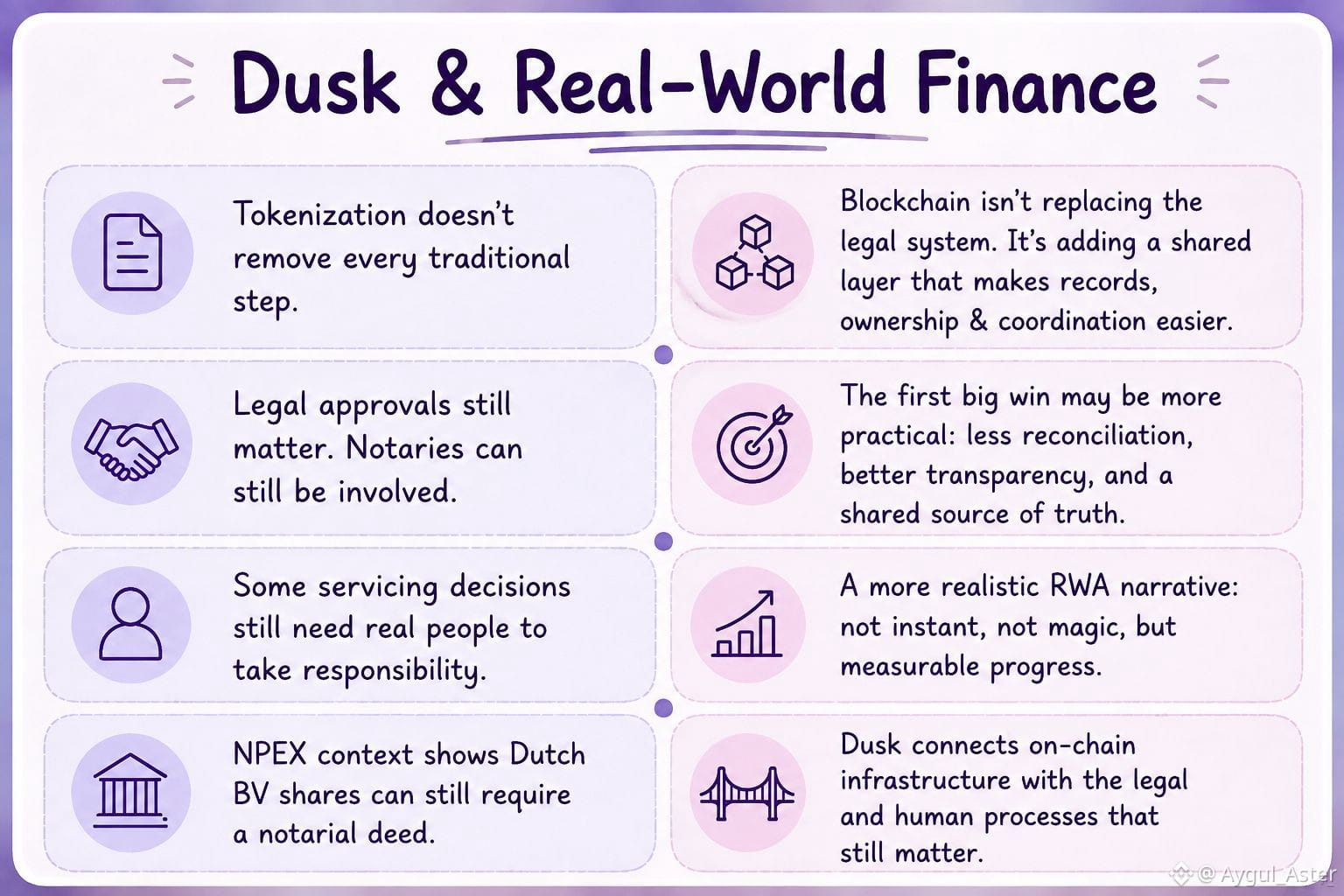
Les approbations juridiques restent importantes. Les notaires peuvent encore être impliqués. Et certaines décisions de service nécessitent toujours de vraies personnes qui prennent la responsabilité.
Honnêtement, je trouve cette approche plus intéressante, pas moins.
Le contexte NPEX le rend encore plus clair. Les actions de BV néerlandaise peuvent toujours exiger un acte notarié même lorsque la propriété est représentée numériquement. Donc la blockchain ne remplace pas simplement le système juridique. Elle ajoute une couche partagée qui peut rendre la gestion des dossiers, de la propriété et de la coordination beaucoup plus facile.
Et ça m’a en fait amené à repenser la façon dont je vois tout le récit autour des RWA.
On entend souvent dire que la tokenisation supprimera tous les intermédiaires et rendra tout instantané. Mais la finance du monde réel est probablement bien plus complexe que ça.
Peut-être que le premier grand gain est quelque chose de plus pragmatique : moins de rapprochement, une meilleure transparence, et la capacité des institutions à travailler à partir de la même source de vérité.
C’est vraiment là que Dusk devient intéressant pour moi.
Pas parce que c’est censé effacer la finance traditionnelle, mais parce que cela semble se concentrer sur la connexion de l’infrastructure on-chain avec les processus juridiques et humains qui comptent encore.
Je suis curieux de savoir ce que vous en pensez — est-ce que c’est réellement une façon plus réaliste pour que l’adoption des RWA se développe ?
Plus je me suis mis à rechercher Dusk, plus je me dis que la partie intéressante ne consiste pas seulement à mettre des actifs du monde réel en chaîne.
En parcourant le matériel sur la tokenisation des PME, un point a particulièrement attiré mon attention. Il semble que Dusk ne parte pas du principe que la tokenisation supprime automatiquement toutes les étapes traditionnelles.
Les approbations juridiques restent importantes. Les notaires peuvent encore être impliqués. Et certaines décisions de service nécessitent toujours de vraies personnes qui prennent la responsabilité.
Honnêtement, je trouve cette approche plus intéressante, pas moins.
Le contexte NPEX le rend encore plus clair. Les actions de BV néerlandaise peuvent toujours exiger un acte notarié même lorsque la propriété est représentée numériquement. Donc la blockchain ne remplace pas simplement le système juridique. Elle ajoute une couche partagée qui peut rendre la gestion des dossiers, de la propriété et de la coordination beaucoup plus facile.
Et ça m’a en fait amené à repenser la façon dont je vois tout le récit autour des RWA.
On entend souvent dire que la tokenisation supprimera tous les intermédiaires et rendra tout instantané. Mais la finance du monde réel est probablement bien plus complexe que ça.
Peut-être que le premier grand gain est quelque chose de plus pragmatique : moins de rapprochement, une meilleure transparence, et la capacité des institutions à travailler à partir de la même source de vérité.
C’est vraiment là que Dusk devient intéressant pour moi.
Pas parce que c’est censé effacer la finance traditionnelle, mais parce que cela semble se concentrer sur la connexion de l’infrastructure on-chain avec les processus juridiques et humains qui comptent encore.
Je suis curieux de savoir ce que vous en pensez — est-ce que c’est réellement une façon plus réaliste pour que l’adoption des RWA se développe ?