Les développeurs connaissent déjà Solidity, donc un environnement compatible EVM facilite énormément la première étape sur Dusk.
Mais, honnêtement, ce n’est pas ça, à lui seul, qui rend l’ensemble vraiment intéressant : presque chaque chaîne peut offrir des outils EVM familiers.
Ce qui a attiré mon attention en parcourant les @Dusk documents officiels, c’est ce qui vient après ce point de départ familier.
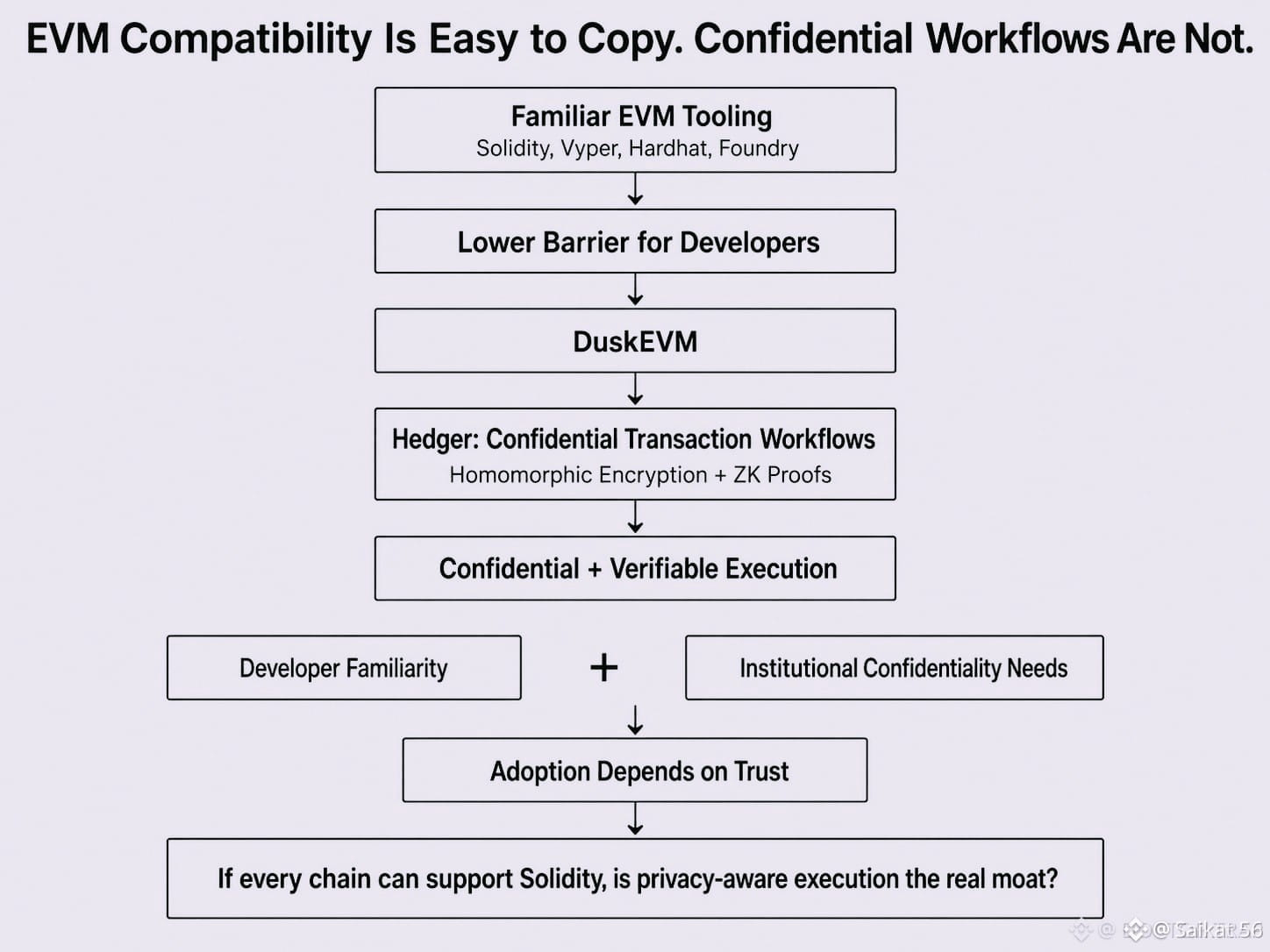
DuskEVM prend en charge Solidity, Vyper, Hardhat et Foundry, offrant aux développeurs un environnement qu’ils comprennent déjà.
Mais Hedger sur testnet ajoute une couche supplémentaire en combinant le chiffrement homomorphe et des preuves à divulgation nulle de connaissance pour des flux de transactions confidentiels.
Cela change la conversation : on ne parle plus seulement de « EVM, mais privé ».
Le chiffrement homomorphe permet d’effectuer des calculs sur des données chiffrées sans exposer les valeurs sous-jacentes, tandis que les preuves ZK peuvent vérifier la conformité sans divulguer d’informations sensibles.
Pour les applications financières, cette combinaison pourrait avoir bien plus de sens. Les institutions n’ont pas seulement besoin de confidentialité : elles doivent savoir ce qui reste confidentiel, ce qui peut encore être vérifié,
et ce qui pourra éventuellement être audité lorsque nécessaire.
Et c’est là que réside le vrai défi.
Les développeurs veulent une infrastructure familière.
Les institutions veulent la certitude que la confidentialité ne transformera pas le système en boîte noire opérationnelle.
Si Dusk parvient à maintenir cet équilibre, les développeurs obtiennent une expérience EVM familière tandis que les institutions gagnent quelque chose qu’elles ne peuvent pas obtenir facilement avec des chaînes transparentes.
Alors peut-être que la vraie question n’est pas de savoir si Solidity devient une norme.
C’est de savoir si l’exécution attentive à la confidentialité devient la barrière la plus difficile à reproduire.
#dusk $DUSK $AKE $KII
Mais, honnêtement, ce n’est pas ça, à lui seul, qui rend l’ensemble vraiment intéressant : presque chaque chaîne peut offrir des outils EVM familiers.
Ce qui a attiré mon attention en parcourant les @Dusk documents officiels, c’est ce qui vient après ce point de départ familier.
DuskEVM prend en charge Solidity, Vyper, Hardhat et Foundry, offrant aux développeurs un environnement qu’ils comprennent déjà.
Mais Hedger sur testnet ajoute une couche supplémentaire en combinant le chiffrement homomorphe et des preuves à divulgation nulle de connaissance pour des flux de transactions confidentiels.
Cela change la conversation : on ne parle plus seulement de « EVM, mais privé ».
Le chiffrement homomorphe permet d’effectuer des calculs sur des données chiffrées sans exposer les valeurs sous-jacentes, tandis que les preuves ZK peuvent vérifier la conformité sans divulguer d’informations sensibles.
Pour les applications financières, cette combinaison pourrait avoir bien plus de sens. Les institutions n’ont pas seulement besoin de confidentialité : elles doivent savoir ce qui reste confidentiel, ce qui peut encore être vérifié,
et ce qui pourra éventuellement être audité lorsque nécessaire.
Et c’est là que réside le vrai défi.
Les développeurs veulent une infrastructure familière.
Les institutions veulent la certitude que la confidentialité ne transformera pas le système en boîte noire opérationnelle.
Si Dusk parvient à maintenir cet équilibre, les développeurs obtiennent une expérience EVM familière tandis que les institutions gagnent quelque chose qu’elles ne peuvent pas obtenir facilement avec des chaînes transparentes.
Alors peut-être que la vraie question n’est pas de savoir si Solidity devient une norme.
C’est de savoir si l’exécution attentive à la confidentialité devient la barrière la plus difficile à reproduire.
#dusk $DUSK $AKE $KII