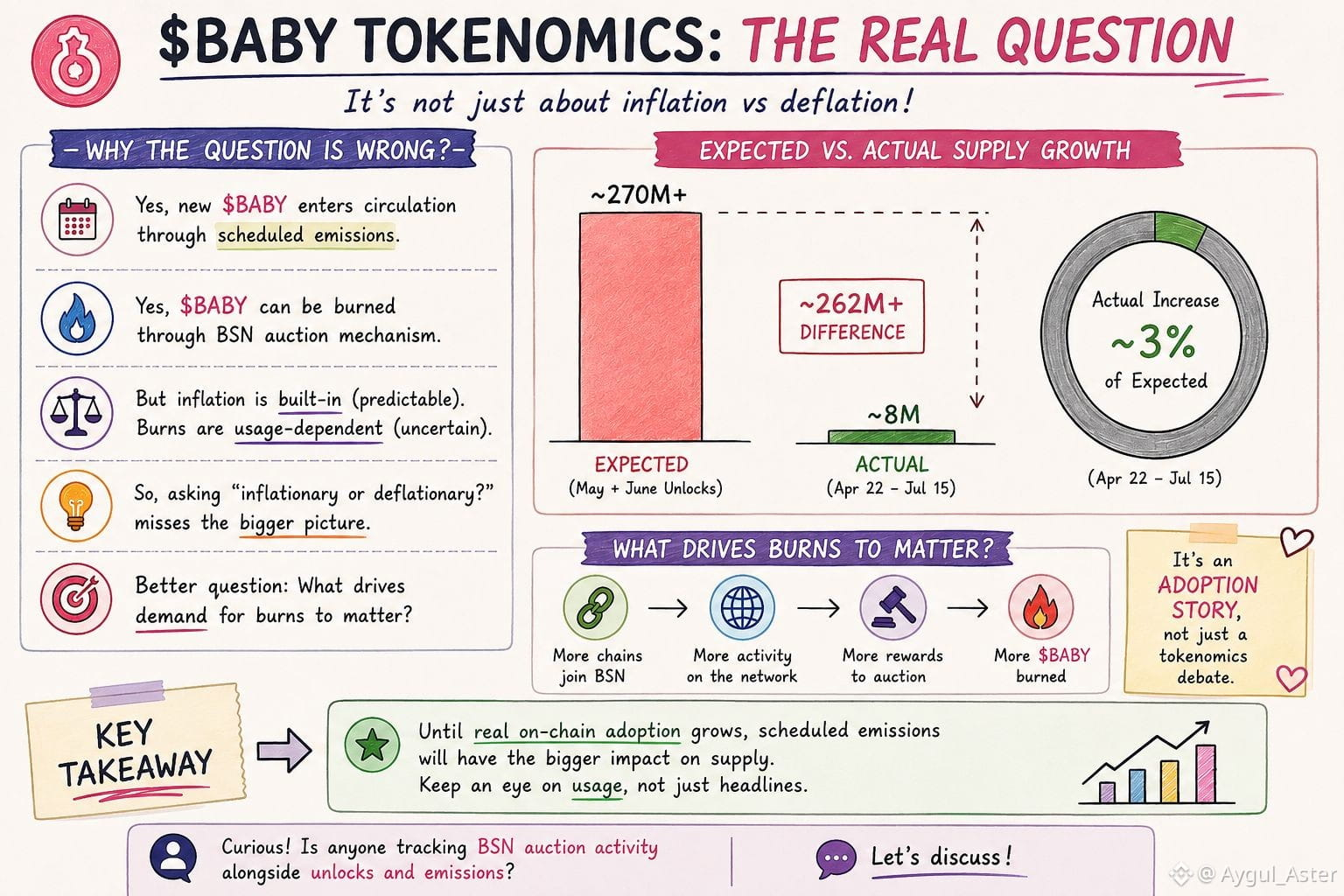
Ces derniers temps, j’ai vu tellement de personnes parler du $BABY comme s’il était inflationniste ou déflationniste, et franchement, j’ai eu l’impression que la conversation passait à côté d’une vue d’ensemble. Alors j’ai pris un peu de temps pour lire moi-même les tokenomics plutôt que de me fier à des opinions au hasard. Plus je lisais, plus je me disais qu’on posait peut-être la mauvaise question. Oui, le nouvel $BABY entre en circulation via des émissions programmées, et oui, il existe aussi un mécanisme de burn via les enchères BSN. Mais ces deux éléments ne fonctionnent pas vraiment de la même façon. L’inflation est déjà intégrée au protocole, tandis que les burns ne deviennent significatifs que si le réseau est réellement utilisé. Ce petit détail a complètement changé ma façon d’envisager la situation. Désormais, je m’intéresse moins au fait que l’offre monte ou baisse, et davantage à ce qui va réellement créer une demande suffisante pour que ces burns aient un impact.
À titre personnel, je pense que le $BABY est davantage une histoire d’adoption qu’une histoire de tokenomics. Si Babylon continue d’attirer davantage de chaînes et d’activité réelle, alors le mécanisme de burn pourrait naturellement devenir beaucoup plus fort au fil du temps. Mais si l’adoption reste lente, les émissions programmées auront probablement un impact bien plus important sur l’offre. Je ne cherche pas à dire que c’est haussier ou baissier — je pense simplement qu’il est encore trop tôt pour juger sans observer ce qui se passe réellement on-chain. C’est ce que je prévois de surveiller à partir de maintenant. J’aimerais vraiment savoir ce que les autres en pensent. Quelqu’un ici suit-il l’activité des enchères BSN en parallèle avec les déblocages et les émissions, ou est-ce qu’on se concentre encore tous sur un seul côté de l’équation ?
@BabylonLabs_io #baby
À titre personnel, je pense que le $BABY est davantage une histoire d’adoption qu’une histoire de tokenomics. Si Babylon continue d’attirer davantage de chaînes et d’activité réelle, alors le mécanisme de burn pourrait naturellement devenir beaucoup plus fort au fil du temps. Mais si l’adoption reste lente, les émissions programmées auront probablement un impact bien plus important sur l’offre. Je ne cherche pas à dire que c’est haussier ou baissier — je pense simplement qu’il est encore trop tôt pour juger sans observer ce qui se passe réellement on-chain. C’est ce que je prévois de surveiller à partir de maintenant. J’aimerais vraiment savoir ce que les autres en pensent. Quelqu’un ici suit-il l’activité des enchères BSN en parallèle avec les déblocages et les émissions, ou est-ce qu’on se concentre encore tous sur un seul côté de l’équation ?
@BabylonLabs_io #baby