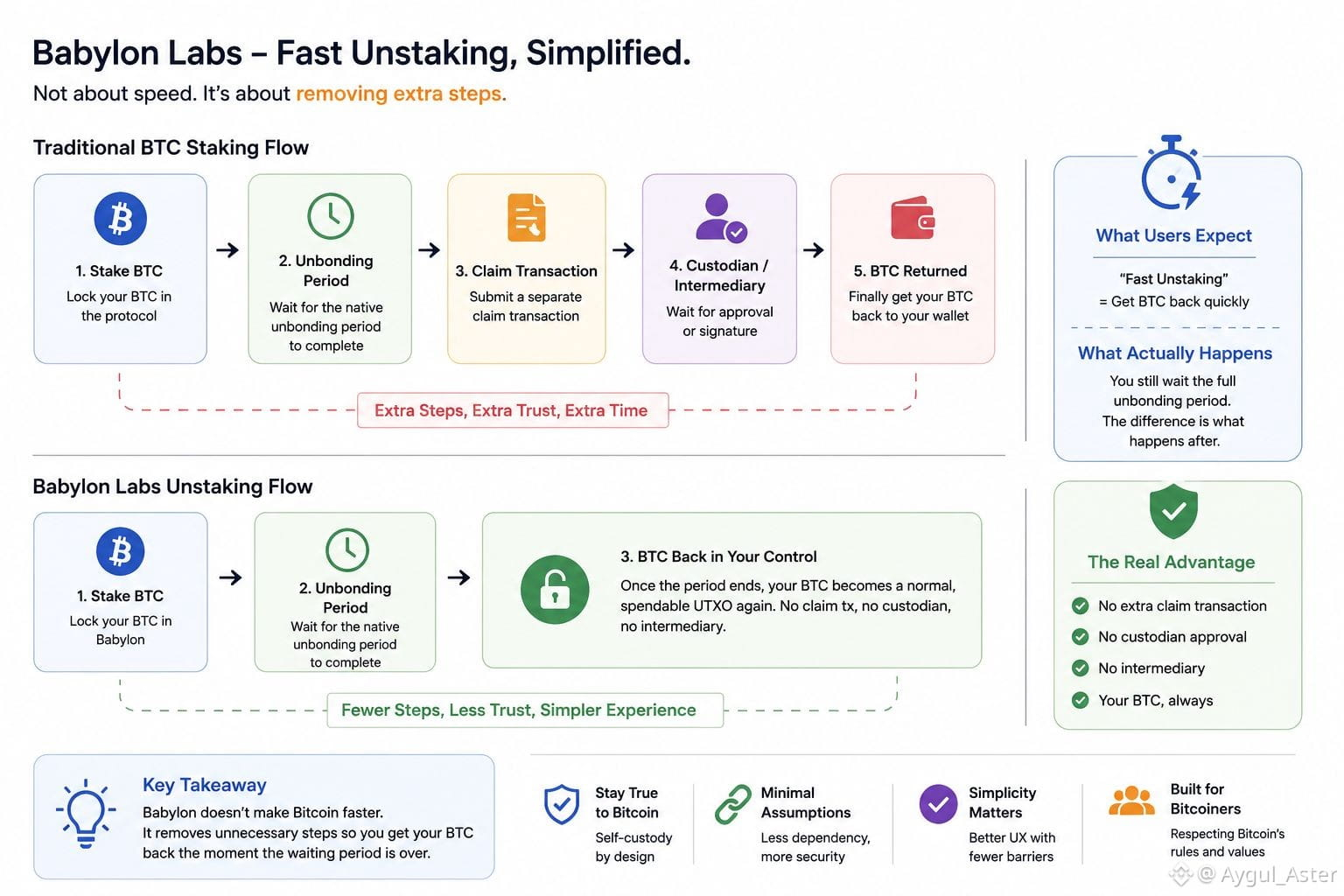
Au cours des derniers jours, j’ai essayé de comprendre ce qui rend réellement Babylon différent, plutôt que de répéter simplement le récit habituel du « fast unstaking ». Plus je lisais, plus je me rendais compte que l’histoire véritable ne consiste pas à faire avancer Bitcoin plus vite. Bitcoin suit toujours sa propre période de déblocage native, et Babylon ne change rien à cela. Ce que Babylon change, c’est tout ce qui entoure ce processus. Dans beaucoup de modèles de staking sur BTC, une fois la période d’attente terminée, il reste encore une étape avant de retrouver vraiment le contrôle de vos pièces. Parfois, c’est une transaction de revendication ; parfois, c’est un dépositaire ; et parfois, il faut simplement faire confiance à une autre couche. Babylon supprime cette friction supplémentaire. Lorsque la période de déblocage se termine, votre BTC vous appartient simplement de nouveau, et vous pouvez le dépenser. Ce petit choix de design m’a fait m’arrêter et réfléchir, parce qu’il résout un problème différent de celui que je pensais au départ. Il ne cherche pas à battre le modèle de sécurité de Bitcoin. Il cherche plutôt à s’effacer.
Cela m’a aussi amené à réfléchir à la manière dont on juge, en général, les produits crypto. On les compare souvent en se demandant : « Est-ce plus rapide ? » ou « L’APY est-il plus élevé ? ». Mais peut-être qu’on devrait aussi se demander : « Combien d’hypothèses de confiance supplémentaires ce système exige-t-il ? ». Plus il y a peu d’acteurs placés entre vous et vos actifs, plus l’expérience reste proche de la philosophie d’origine de Bitcoin. Personnellement, je trouve cela bien plus intéressant qu’un slogan marketing. Dans le même temps, je comprends pourquoi certains utilisateurs pourraient mal interpréter le mot « fast » et s’attendre à une liquidité immédiate. C’est pourquoi je pense que la conversation autour de Babylon devrait davantage porter sur la simplicité et la minimisation de la confiance que sur la vitesse seule. Je continue d’apprendre, et j’aimerais vraiment entendre des points de vue différents. Si vous vous êtes aussi penché sur Babylon, qu’est-ce qui vous a le plus marqué ? Était-ce le rendement du staking, le modèle de sécurité, ou cette approche visant à garder la garde aussi proche que possible du Bitcoin natif ?
@BabylonLabs_io #baby $BABY
Cela m’a aussi amené à réfléchir à la manière dont on juge, en général, les produits crypto. On les compare souvent en se demandant : « Est-ce plus rapide ? » ou « L’APY est-il plus élevé ? ». Mais peut-être qu’on devrait aussi se demander : « Combien d’hypothèses de confiance supplémentaires ce système exige-t-il ? ». Plus il y a peu d’acteurs placés entre vous et vos actifs, plus l’expérience reste proche de la philosophie d’origine de Bitcoin. Personnellement, je trouve cela bien plus intéressant qu’un slogan marketing. Dans le même temps, je comprends pourquoi certains utilisateurs pourraient mal interpréter le mot « fast » et s’attendre à une liquidité immédiate. C’est pourquoi je pense que la conversation autour de Babylon devrait davantage porter sur la simplicité et la minimisation de la confiance que sur la vitesse seule. Je continue d’apprendre, et j’aimerais vraiment entendre des points de vue différents. Si vous vous êtes aussi penché sur Babylon, qu’est-ce qui vous a le plus marqué ? Était-ce le rendement du staking, le modèle de sécurité, ou cette approche visant à garder la garde aussi proche que possible du Bitcoin natif ?
@BabylonLabs_io #baby $BABY