🚨 Let me break down what the UAE is really doing here…
Everyone’s focused on the headline:
“UAE exits OPEC and OPEC+.”
But the real story is deeper than that.
For years, Abu Dhabi has been quietly building serious oil capacity.
According to the EIA, ADNOC has been targeting around 5 million barrels per day by 2027 — that’s not a small move, that’s a long-term national strategy.
Here’s the catch:
OPEC’s whole system depends on producers not using full capacity.
The deal is simple:
Leave oil in the ground → keep supply tight → support prices.
It only works if everyone plays along.
The UAE just decided… they don’t want to anymore.
Official statements sound clean:
“Long-term strategy”
“Measured production”
“Aligned with demand”
But in plain terms:
We’re done holding back an asset we invested billions to expand.
Now look at the timing.
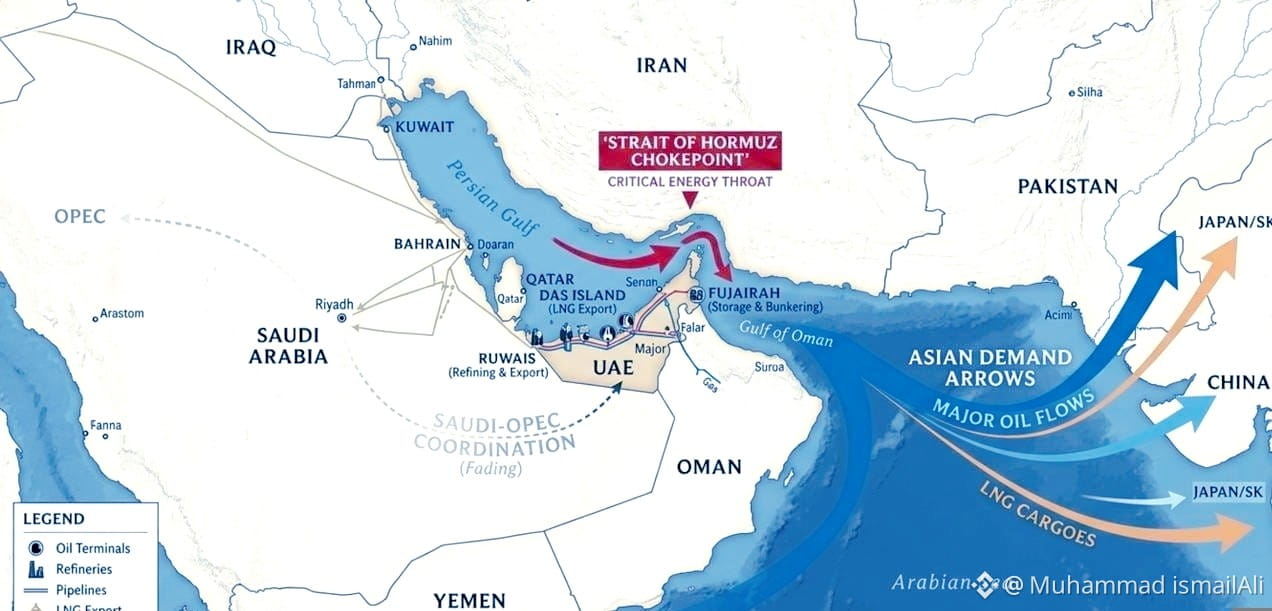
The Strait of Hormuz situation is unstable.
Roughly 20 million barrels/day passed through it in 2024 — nearly 20% of global supply.
So the UAE frames this as:
“We’re helping the market.”
Not rebellion.
Not conflict.
Just supply support.
That’s the smart angle.
They gain flexibility.
Buyers get hope for more oil.
And OPEC? It keeps the name… but loses a bit of control.
The cartel isn’t dead — but the rules just became optional.
If you’re not following this early… you’ll hear it later from someone who did. 👀
$BROCCOLI714
$BULLA
$AIOT
#BROCCELI #BULLA #AIOT #BTC #bnb
Everyone’s focused on the headline:
“UAE exits OPEC and OPEC+.”
But the real story is deeper than that.
For years, Abu Dhabi has been quietly building serious oil capacity.
According to the EIA, ADNOC has been targeting around 5 million barrels per day by 2027 — that’s not a small move, that’s a long-term national strategy.
Here’s the catch:
OPEC’s whole system depends on producers not using full capacity.
The deal is simple:
Leave oil in the ground → keep supply tight → support prices.
It only works if everyone plays along.
The UAE just decided… they don’t want to anymore.
Official statements sound clean:
“Long-term strategy”
“Measured production”
“Aligned with demand”
But in plain terms:
We’re done holding back an asset we invested billions to expand.
Now look at the timing.
The Strait of Hormuz situation is unstable.
Roughly 20 million barrels/day passed through it in 2024 — nearly 20% of global supply.
So the UAE frames this as:
“We’re helping the market.”
Not rebellion.
Not conflict.
Just supply support.
That’s the smart angle.
They gain flexibility.
Buyers get hope for more oil.
And OPEC? It keeps the name… but loses a bit of control.
The cartel isn’t dead — but the rules just became optional.
If you’re not following this early… you’ll hear it later from someone who did. 👀
$BROCCOLI714
$BULLA
$AIOT
#BROCCELI #BULLA #AIOT #BTC #bnb