Cet article n’est pas disponible dans votre langue.
How to Use the Token Audit Feature and Check Audit Results in Binance Wallet
Publié le 2025-08-14 21:17
Mis à jour le 2025-12-02 03:09
The 'Token Audit' feature in your Binance Wallet helps provide an overview of potential risks and security issues that a token may have, including whether or not the token owner has renounced control or ownership over the token.
While the audit page can provide the above mentioned information, it only serves as an auxiliary assessment of the token's safety.
Please note that On-chain transactions involve risks and the audit page isn't foolproof. Smart contract risks can take time to be discovered, and no tool is 100% accurate. As such the results may have limitations or inaccuracies and do not constitute investment advice or recommendations.
Always cross-check with other trusted analysis tools and pair the findings with your own research to keep your funds safe. Always remember that you own the responsibility of keeping your funds safe!
How to access the Token Audit feature
The token audit page can easily be accessed via the Binance App or the web interface.
Via Binance app
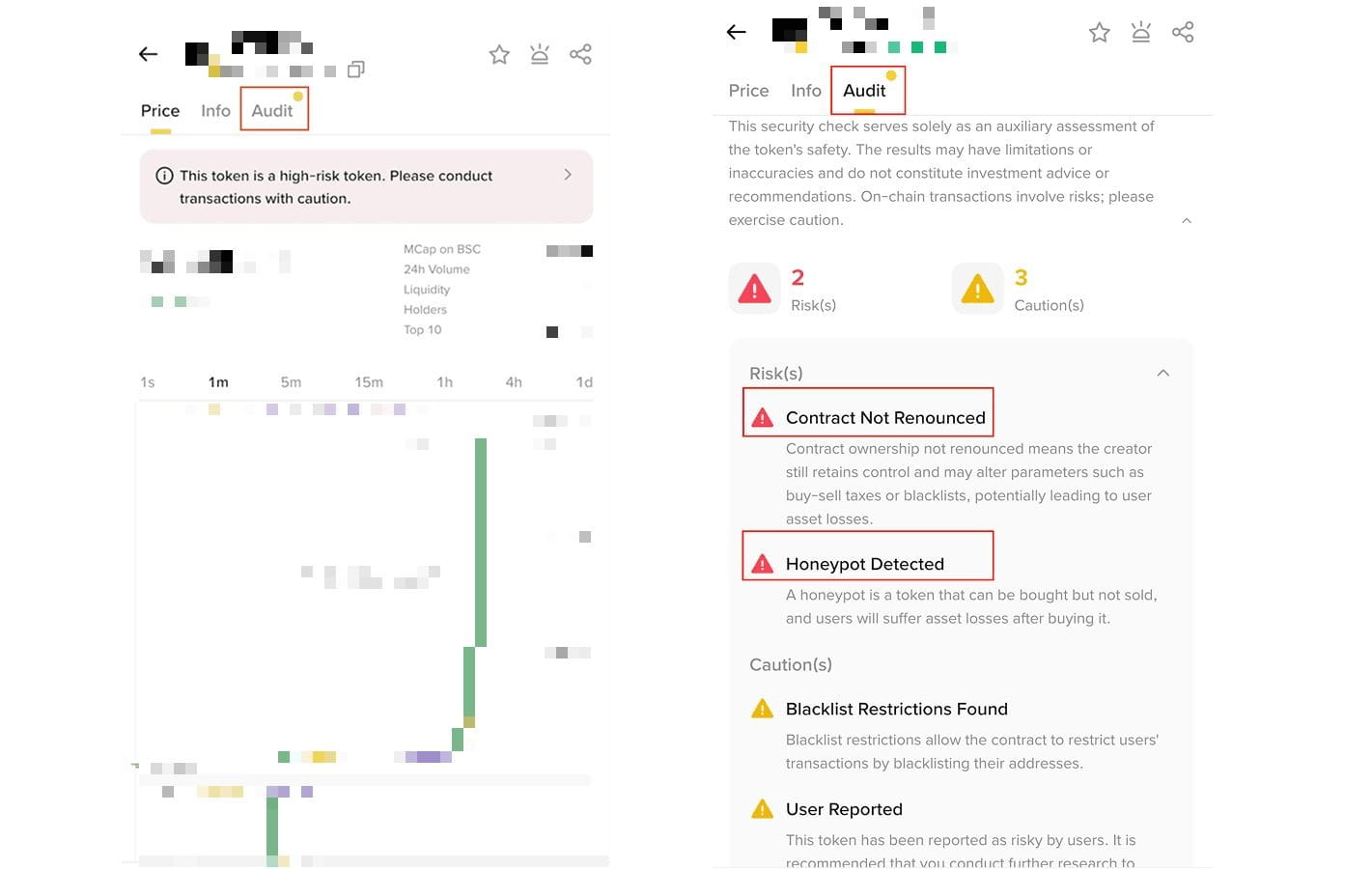
1. Log in to your Binance Wallet and tap on the token you're interested in, then navigate to the [Audit] tab.
Pay close attention to any risk or caution flags – if issues are detected, it's best not to proceed, or you may risk losing your funds.
Via website
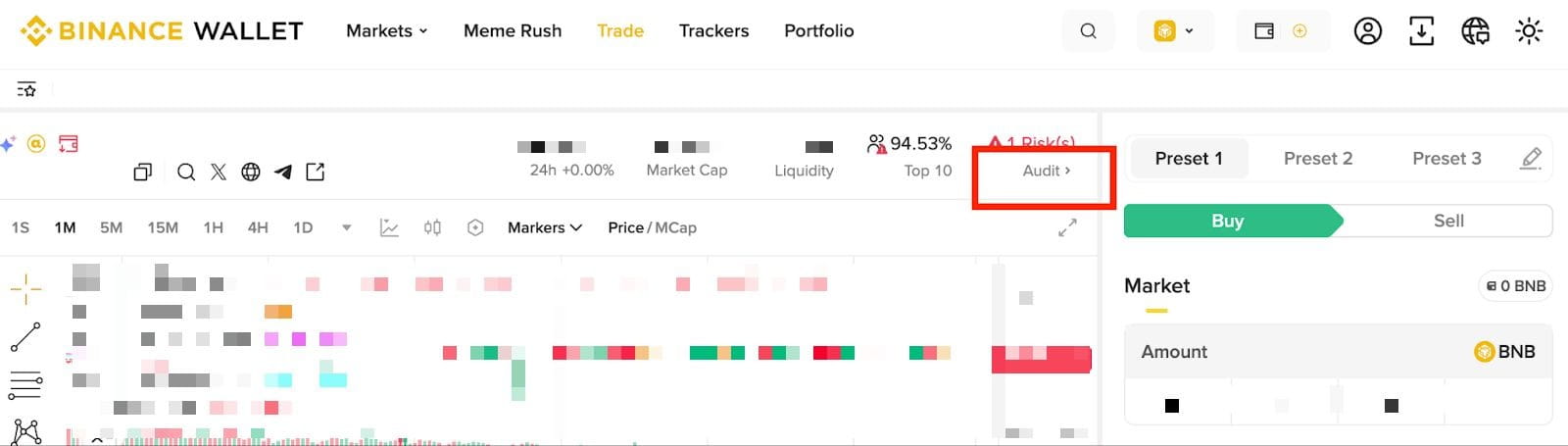
1. Log into your Binance Wallet and click on the token you're interested in, then click [Audit].
Pay close attention to any risk or caution flags – if issues are detected, it's best not to proceed, or you may risk losing your funds.
Understanding the risks
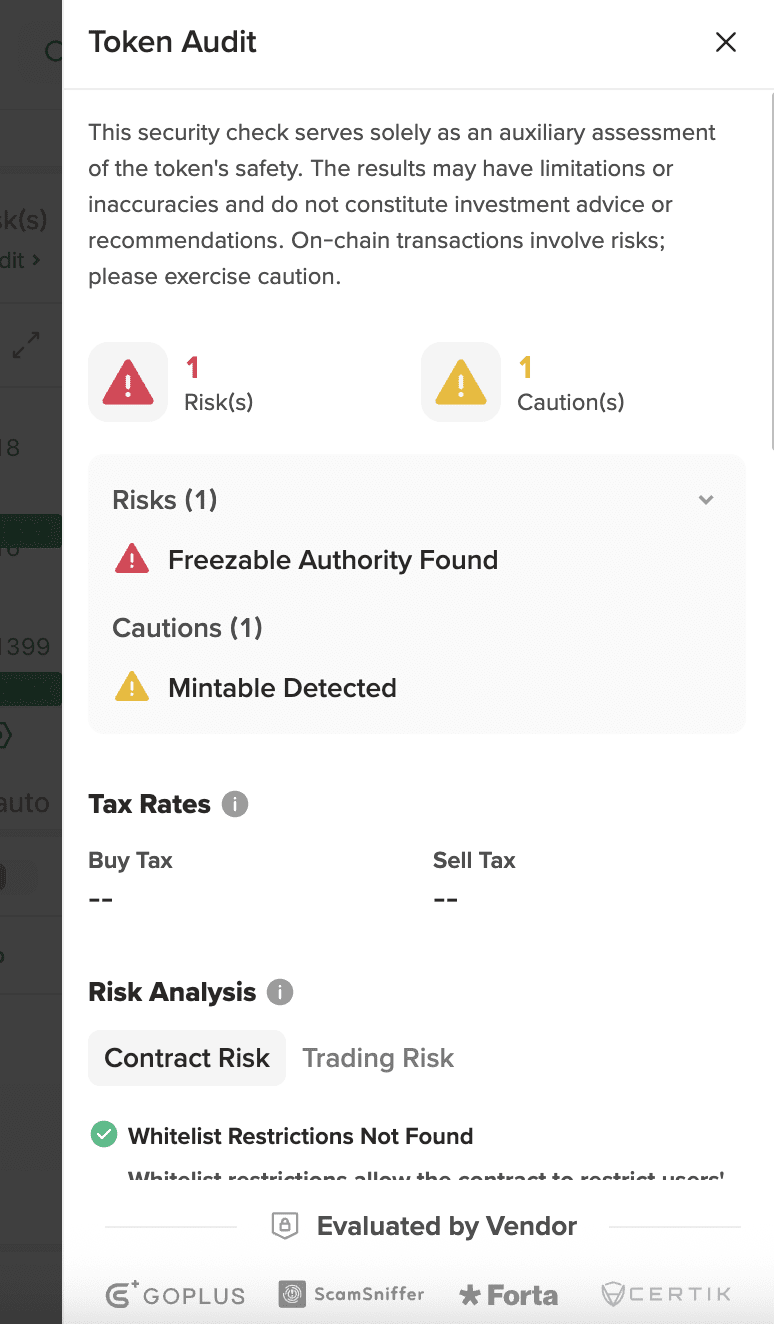
The Binance wallet also integrates trusted vendor detection, to enable Risk Analysis for a token. This is broken down into three sections for ease of understanding:
Contract Risk - Malicious mechanism found in the contract code.
Trading Risk - Trading risks arising from issues like slippage, transactional taxes or liquidity issues to name a few and that could cause a significant loss of funds.
Scam Risk - Fraudulent actions that could directly cause asset losses.
The Risk analysis section will display details about the various checks and their associated results as listed below:
Contract Risk
Whitelist Restrictions: Whitelist restrictions allow the contract to restrict users' transactions by excluding their address from the whitelist.
Cooling-Off Restrictions: Cooling-off period means that users may not be able to buy or sell the token in a certain period of time.
Blacklist Restrictions: Blacklist restrictions allow the contract to restrict users' transactions by blacklisting their addresses.
Trading Suspension Function: Trading suspension means that token trading can be suspended, preventing users from buying or selling.
Sale Restriction: Selling restrictions mean that users may be restricted from selling all their tokens at once.
Anti-Whale Mechanism: Anti-whale mechanism restricts the amount or frequency of transactions to prevent large sells and may affect large traders.
Contract Renounced / Not Renounced: Contract ownership not renounced means the creator still retains control and may alter parameters such as buy-sell taxes or blacklists, potentially leading to user asset losses.
Self-Destruct: Self-destruct function means the token contract can be destroyed, which will result in your token holdings being erased.
Balance Manipulation: Balance manipulation means users' token balances can be adjusted, resulting in the loss of your token holdings.
Malicious Creator: The token was deployed by a high-risk address, which may be associated with fraud, exploits, or other malicious activities.
Hacking Risk: This token is associated with hacking incident, hackers may gain control over this contract.
Upgrade Risk: Upgradeable contract means the token contract can potentially change rules and may introduce malicious functions.
Modifiable Tax: Modified tax means tax rate can be changed and may affect the cost to the user when buying and selling.
Contract Code: Contract code verification checks if the contract has been reviewed and matches the deployed version on the blockchain, reflecting the project's transparency.
Trading Risk
Honeypot Risk: A honeypot is a token that can be bought but not sold, and users will suffer asset losses after buying it.
Gas Abuse: Gas abuse refers to abnormal gas fee mechanisms that result in users paying excessive fee.
Unusual Buy Tax: Unusual buy tax means users will pay a high tax and receive fewer tokens when buying.
Unusual Sell Tax: Unusual sell tax means users will pay a high tax and receive fewer tokens when selling.
Liquidity Risk: Low liquidity means that there is no or a small liquidity pool, resulting in failure to swap or large slippage.
Rug Pull Risk: Rug pull means that relevant funds may be withdrawn suddenly, leaving users with worthless tokens.
Scam Risk
Fake Token Risk: A fake token has no real value and may deceive users into believing it is a valuable asset.
Scam Risk: A scam address may be associated with fraud, Ponzi schemes, or other malicious activities. Users should conduct extra verification before transactions.
Spam Risk: A spam token has no real value and may be airdropped to deceive users into believing it is a valuable asset.
Inscrivez-vous pour obtenir des récompenses
Inscrivez-vous maintenant et obtenez une réduction de 100 USDT sur les frais de trading [pour les utilisateurs vérifiés]