

BullifyX
10.1k Publications

BullifyX
 Compte Square Vérifié+
Signaler
Bloquer l’utilisateur
Your Crypto Bestie | Educational Content | Be Creative, Experience and Discipline.

Détenteur pour BTC
Trade régulièrement
4 an(s)
803 Suivis
39.1K+ Abonnés
55.9K+ J’aime
Publications
Tous
Citations
Vidéos
Direct
PINNED
·
--
No one is ready for $XRP ’s next move.
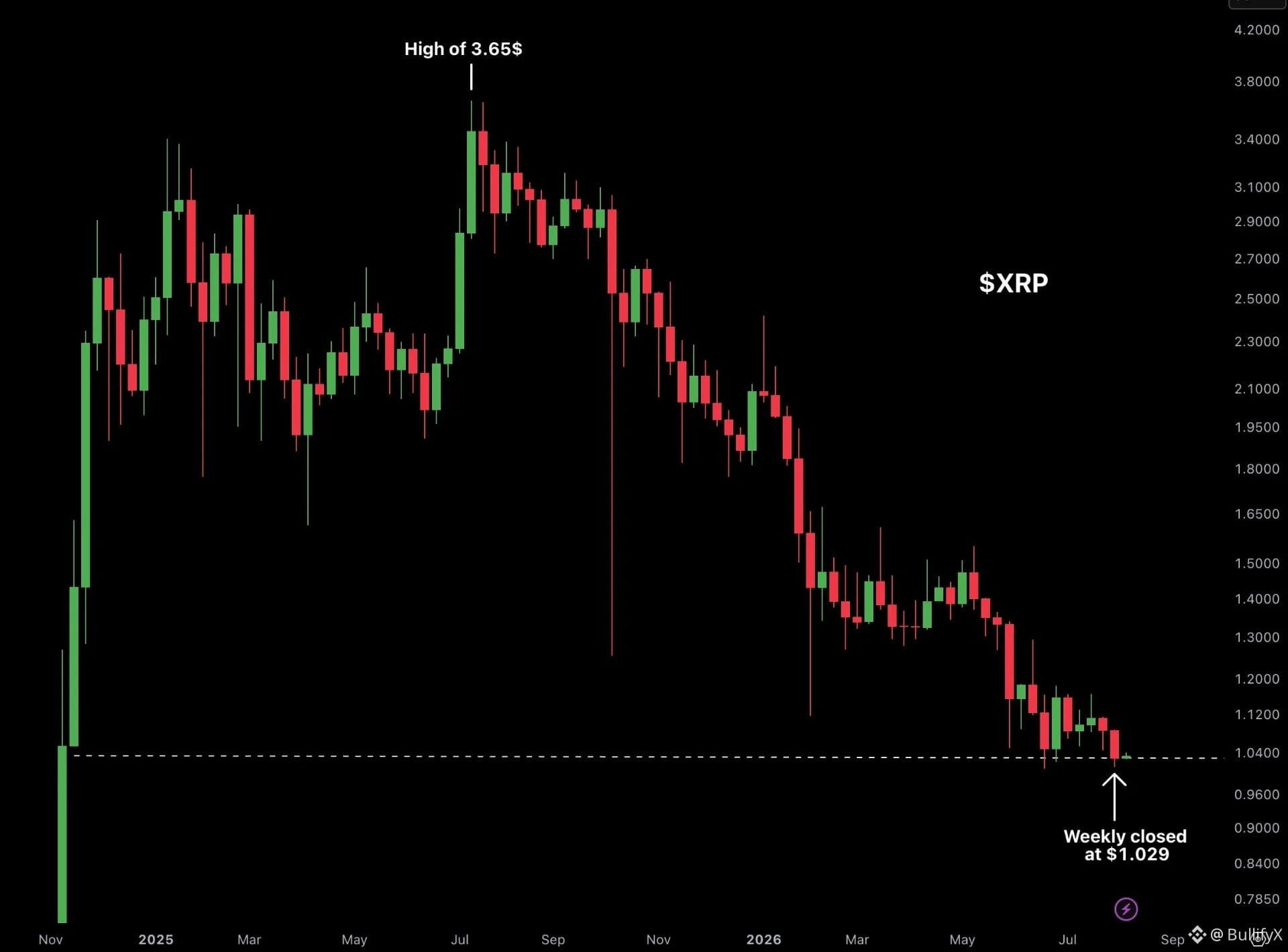
$XRP appears to be replicating the structure of its 2017 trend. The last time this support level held, price went on to surge by more than 60,000%.
My roadmap:
$1.10 → $0.97 → $1.80
$1.80 → $2.70 → $3.20
$3.20 → $6.50 → $13.00
If this support is confirmed for the third time, the next expansion could accelerate significantly.
Watch the levels. Watch the structure. 🚀
#XRP #Ripple #Crypto #Binance #Write2Earn
No one is ready for $XRP ’s next move.
$XRP appears to be replicating the structure of its 2017 trend. The last time this support level held, price went on to surge by more than 60,000%.
My roadmap:
$1.10 → $0.97 → $1.80
$1.80 → $2.70 → $3.20
$3.20 → $6.50 → $13.00
If this support is confirmed for the third time, the next expansion could accelerate significantly.
Watch the levels. Watch the structure. 🚀
#XRP #Ripple #Crypto #Binance #Write2Earn
$XRP appears to be replicating the structure of its 2017 trend. The last time this support level held, price went on to surge by more than 60,000%.
My roadmap:
$1.10 → $0.97 → $1.80
$1.80 → $2.70 → $3.20
$3.20 → $6.50 → $13.00
If this support is confirmed for the third time, the next expansion could accelerate significantly.
Watch the levels. Watch the structure. 🚀
#XRP #Ripple #Crypto #Binance #Write2Earn
40
4
139
185.3k
PINNED
·
--
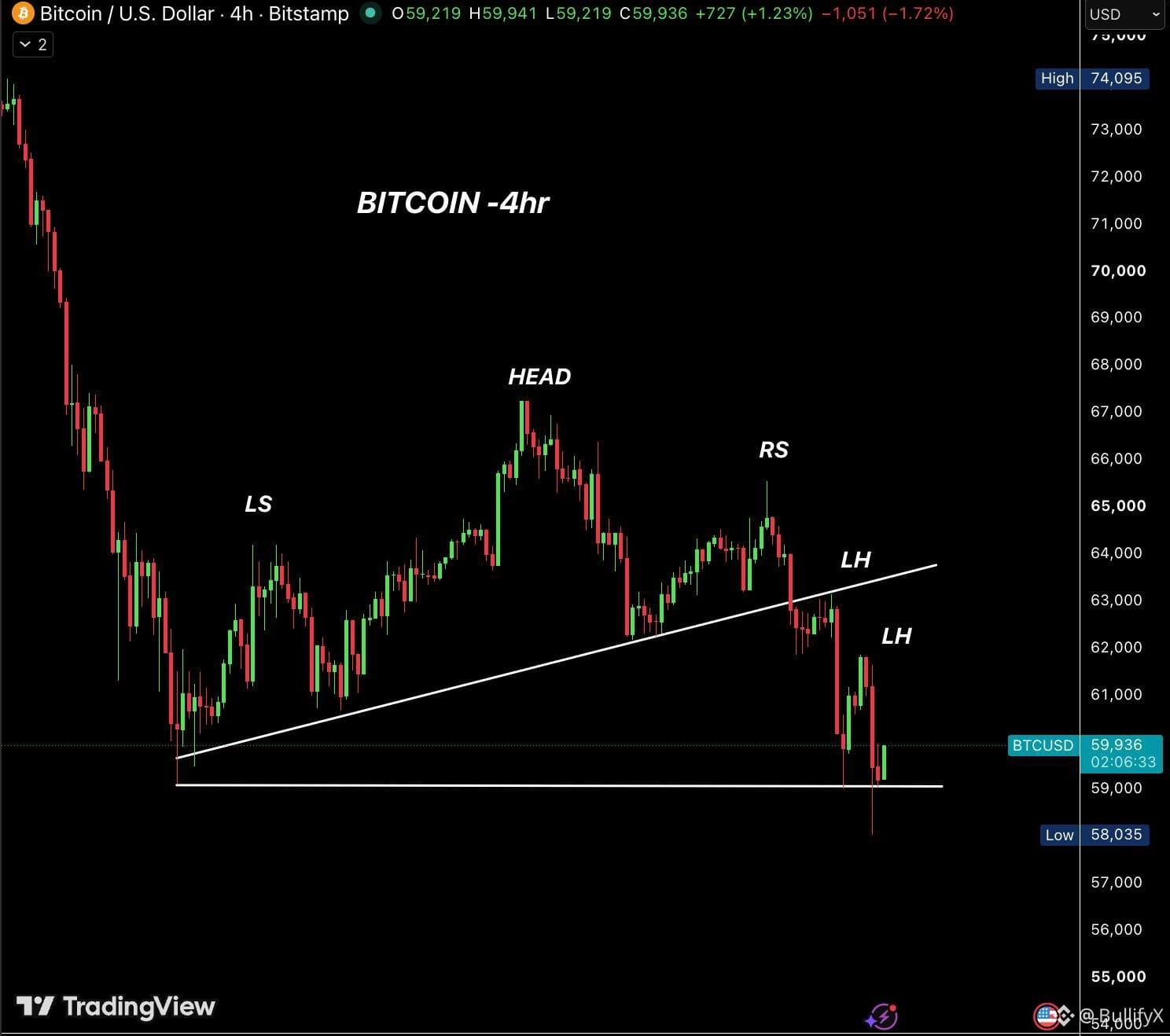
$BTC touched $60k and panic spread fast.
But here's what matters:
#BTC still closed above $61k support.
Bears have the edge for now, but a reclaim of $65.2k could turn this breakdown into a fakeout.
The next few daily closes will be key.
#BTC #Write2Earn #Binance
$BTC touched $60k and panic spread fast.
But here's what matters:
#BTC still closed above $61k support.
Bears have the edge for now, but a reclaim of $65.2k could turn this breakdown into a fakeout.
The next few daily closes will be key.
#BTC #Write2Earn #Binance
But here's what matters:
#BTC still closed above $61k support.
Bears have the edge for now, but a reclaim of $65.2k could turn this breakdown into a fakeout.
The next few daily closes will be key.
#BTC #Write2Earn #Binance
16
87
215.1k
·
--
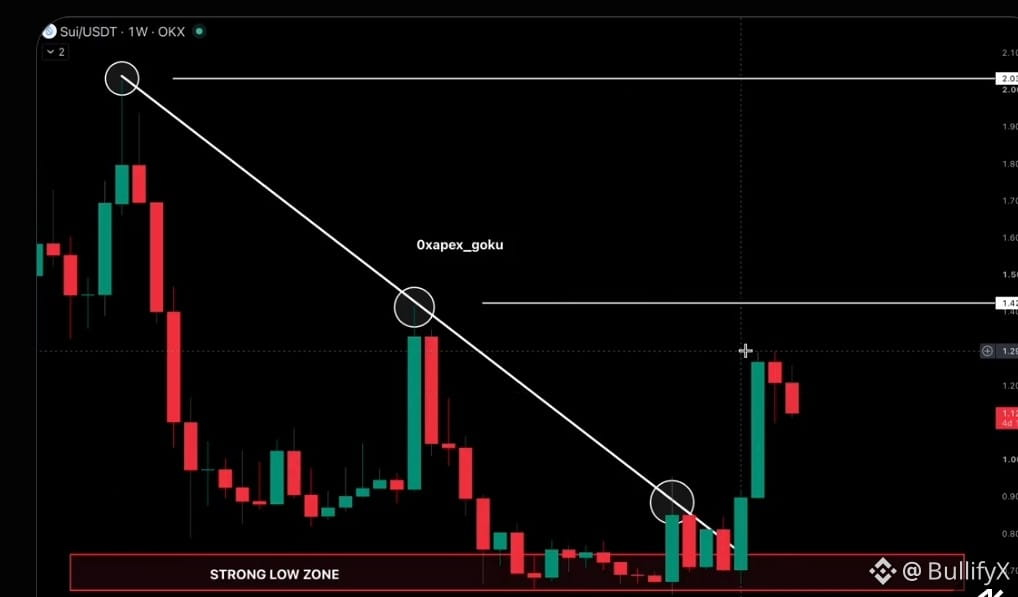
$SUI looks like the bears are losing control.
$0.70 did its job as a strong floor, and now momentum is starting to build from the lows.
$1.42 is the key level I’m watching next.
Clean breakout above it → much more room for the bulls.
#SUI #binance #crypto #Write2Earn
$SUI looks like the bears are losing control.
$0.70 did its job as a strong floor, and now momentum is starting to build from the lows.
$1.42 is the key level I’m watching next.
Clean breakout above it → much more room for the bulls.
#SUI #binance #crypto #Write2Earn
$0.70 did its job as a strong floor, and now momentum is starting to build from the lows.
$1.42 is the key level I’m watching next.
Clean breakout above it → much more room for the bulls.
#SUI #binance #crypto #Write2Earn
2
457
·
--
Vérifié
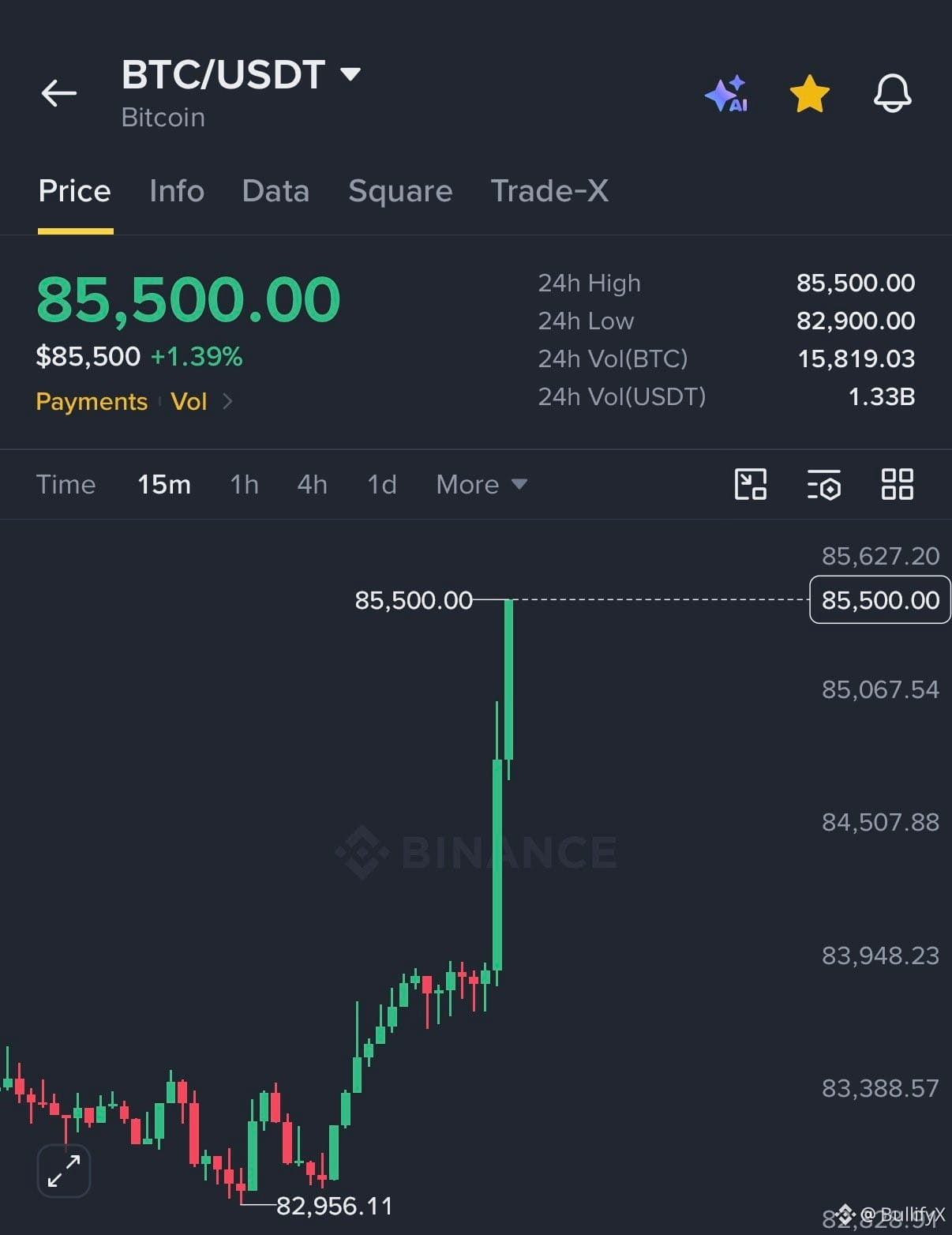
$BTC just moved nearly $1,600 in the last 30 minutes after the latest PCE data.
The reaction is clearly bullish so far.
With the monthly close only a few hours away and October starting tomorrow, this is an interesting setup to watch.
Let’s see if $BTC can hold these gains into the close.
#BTC #Crypto #binance #Write2Earn
$BTC just moved nearly $1,600 in the last 30 minutes after the latest PCE data.
The reaction is clearly bullish so far.
With the monthly close only a few hours away and October starting tomorrow, this is an interesting setup to watch.
Let’s see if $BTC can hold these gains into the close.
#BTC #Crypto #binance #Write2Earn
The reaction is clearly bullish so far.
With the monthly close only a few hours away and October starting tomorrow, this is an interesting setup to watch.
Let’s see if $BTC can hold these gains into the close.
#BTC #Crypto #binance #Write2Earn
1
9
4.5k
·
--
$XRP is at a decision point.
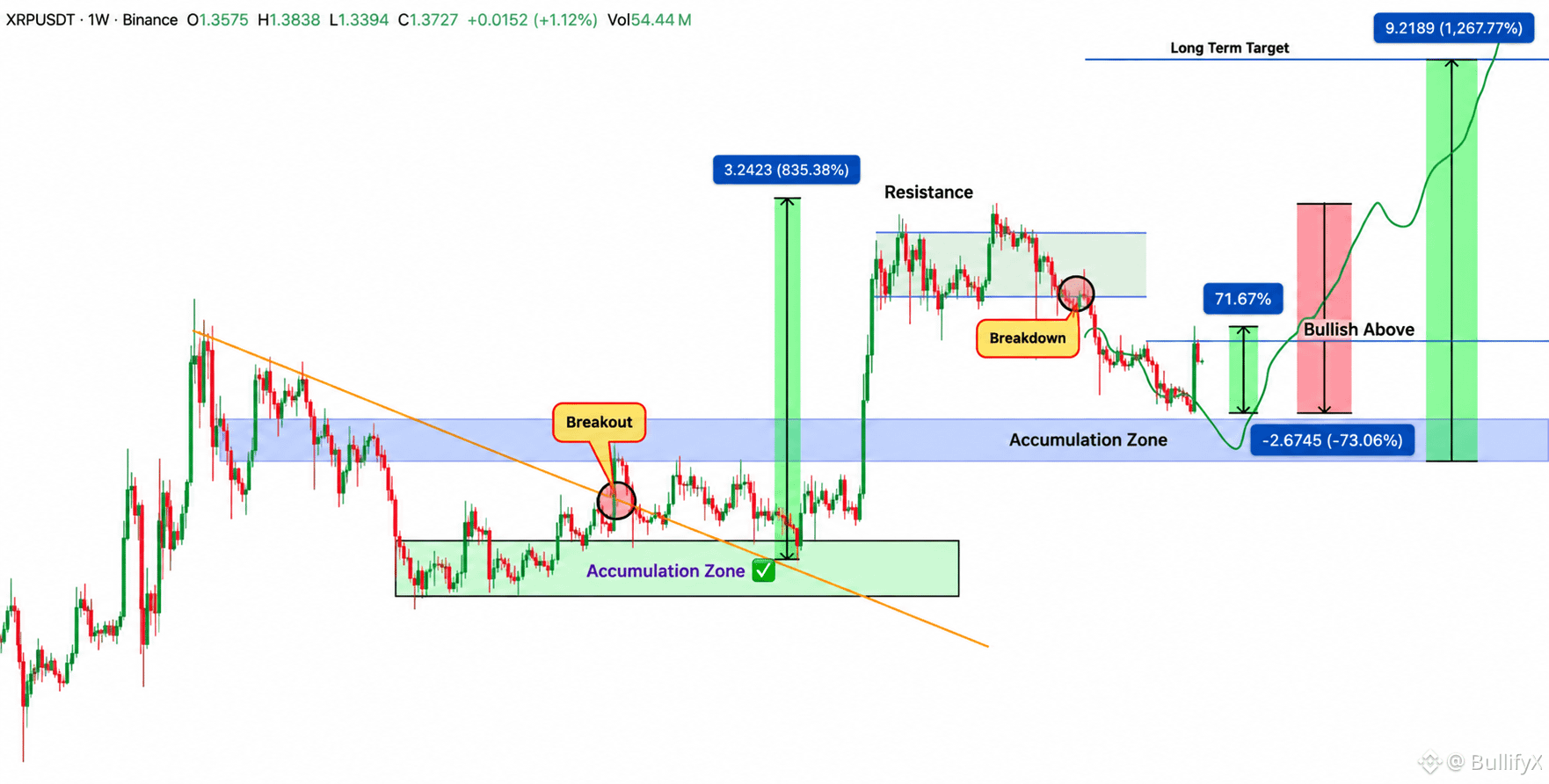
The $1.55 area already showed us there’s real supply above. Price got rejected hard, liquidity was swept, and sellers pushed the move much lower.
For me, the chart isn’t bullish yet.
I want to see $XRP reclaim the key resistance and hold it on the weekly before calling this a real trend shift.
Until then, I’m watching the downside too:
$0.90 → $0.70 is the zone I’d keep on my radar if the current high remains intact.
Long term, $10 isn’t impossible.
But traders don’t get paid for the long term story they get paid for reading the setup in front of them.
Right now, the question is simple:
Breakout and reclaim… or another lower low?
#XRP #Crypto #binance #Write2Earn
$XRP is at a decision point.
The $1.55 area already showed us there’s real supply above. Price got rejected hard, liquidity was swept, and sellers pushed the move much lower.
For me, the chart isn’t bullish yet.
I want to see $XRP reclaim the key resistance and hold it on the weekly before calling this a real trend shift.
Until then, I’m watching the downside too:
$0.90 → $0.70 is the zone I’d keep on my radar if the current high remains intact.
Long term, $10 isn’t impossible.
But traders don’t get paid for the long term story they get paid for reading the setup in front of them.
Right now, the question is simple:
Breakout and reclaim… or another lower low?
#XRP #Crypto #binance #Write2Earn
The $1.55 area already showed us there’s real supply above. Price got rejected hard, liquidity was swept, and sellers pushed the move much lower.
For me, the chart isn’t bullish yet.
I want to see $XRP reclaim the key resistance and hold it on the weekly before calling this a real trend shift.
Until then, I’m watching the downside too:
$0.90 → $0.70 is the zone I’d keep on my radar if the current high remains intact.
Long term, $10 isn’t impossible.
But traders don’t get paid for the long term story they get paid for reading the setup in front of them.
Right now, the question is simple:
Breakout and reclaim… or another lower low?
#XRP #Crypto #binance #Write2Earn
1
8
2.2k
·
--
$ZEC JUST GOT WRECKED
One short setup.
One clean rejection.
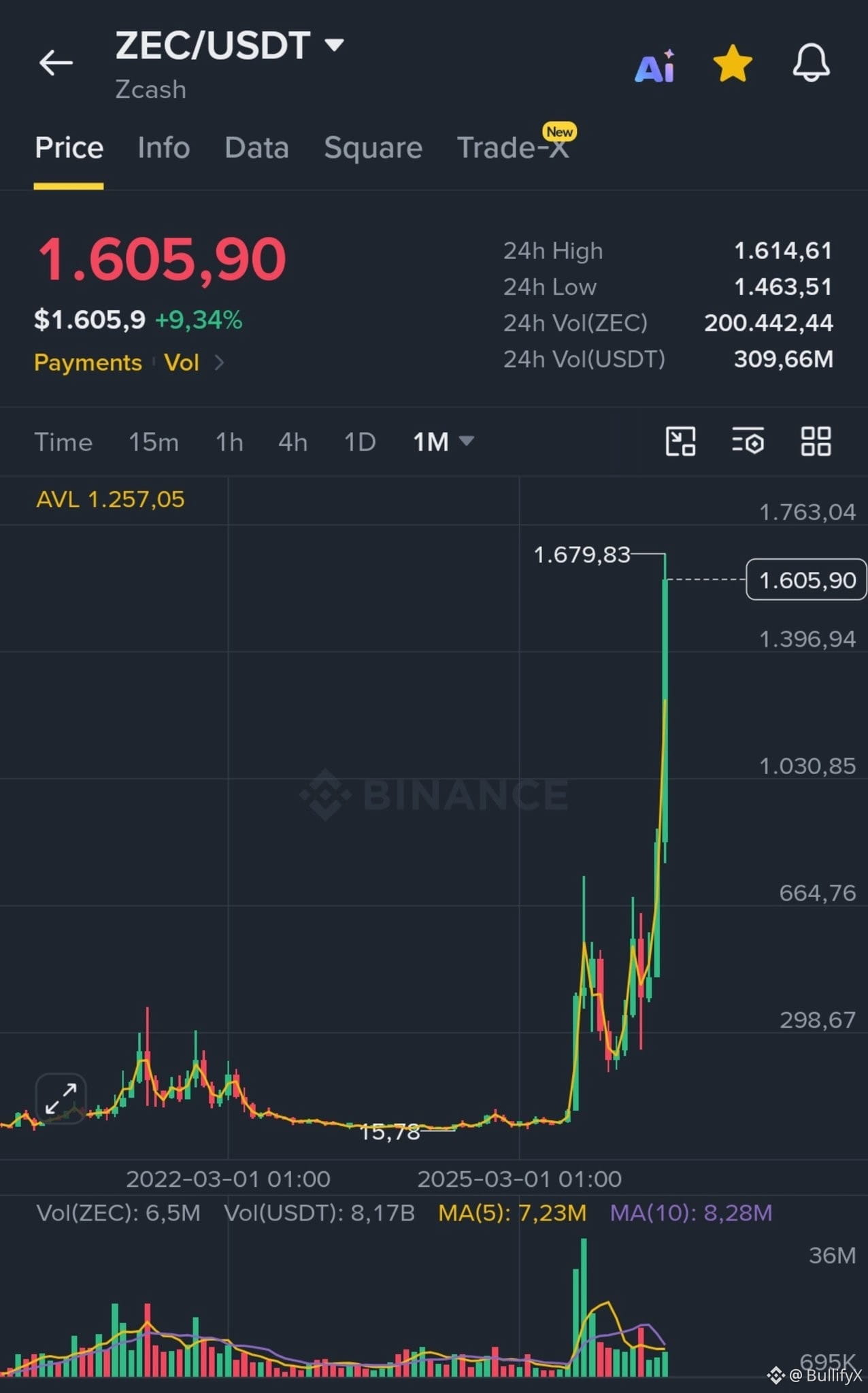
$50 DOWN in just ONE HOUR.
From $1,595 → $1,545.
The $1,592–$1,610 zone did exactly what we were watching for. 👀
$ZEC #crypto #binance #Write2Earrn
$ZEC JUST GOT WRECKED
One short setup.
One clean rejection.
$50 DOWN in just ONE HOUR.
From $1,595 → $1,545.
The $1,592–$1,610 zone did exactly what we were watching for. 👀
$ZEC #crypto #binance #Write2Earrn
One short setup.
One clean rejection.
$50 DOWN in just ONE HOUR.
From $1,595 → $1,545.
The $1,592–$1,610 zone did exactly what we were watching for. 👀
$ZEC #crypto #binance #Write2Earrn
2
8
1.6k
·
--
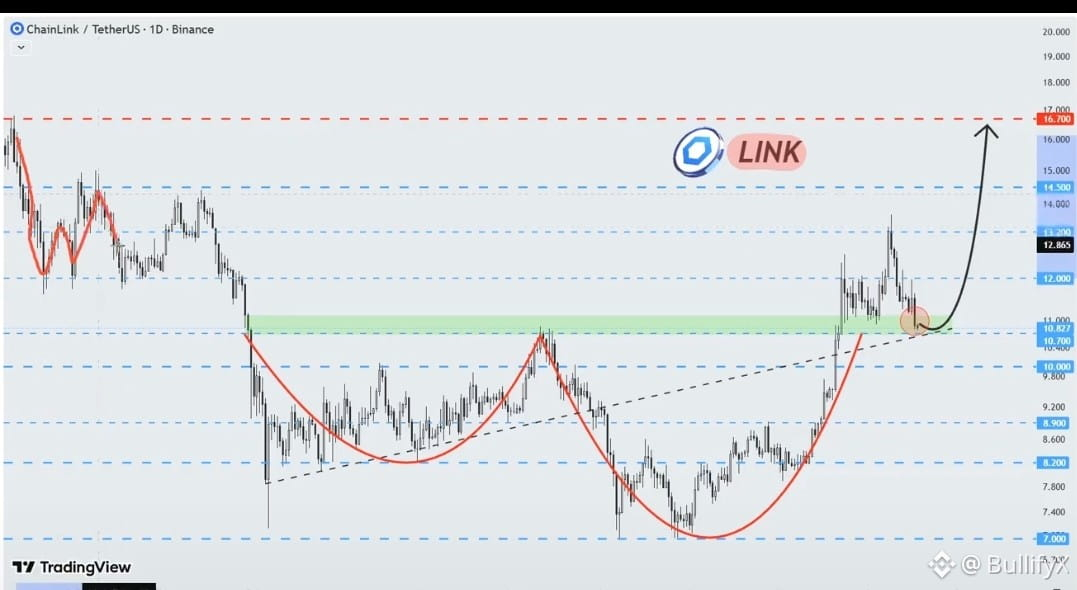
$LINK is starting to wake up. 👀
Trading around $13.79, up 4.34% today, with price pushing into the $13.80 area.
The 2 week setup is still developing, and the confirmed buy signal is still a few days away.
No green trending dot yet but momentum is clearly picking up.
Still early. Still watching.
#LINK #crypto #binance #Write2Earrn
$LINK is starting to wake up. 👀
Trading around $13.79, up 4.34% today, with price pushing into the $13.80 area.
The 2 week setup is still developing, and the confirmed buy signal is still a few days away.
No green trending dot yet but momentum is clearly picking up.
Still early. Still watching.
#LINK #crypto #binance #Write2Earrn
Trading around $13.79, up 4.34% today, with price pushing into the $13.80 area.
The 2 week setup is still developing, and the confirmed buy signal is still a few days away.
No green trending dot yet but momentum is clearly picking up.
Still early. Still watching.
#LINK #crypto #binance #Write2Earrn
17
24
3.6k
·
--
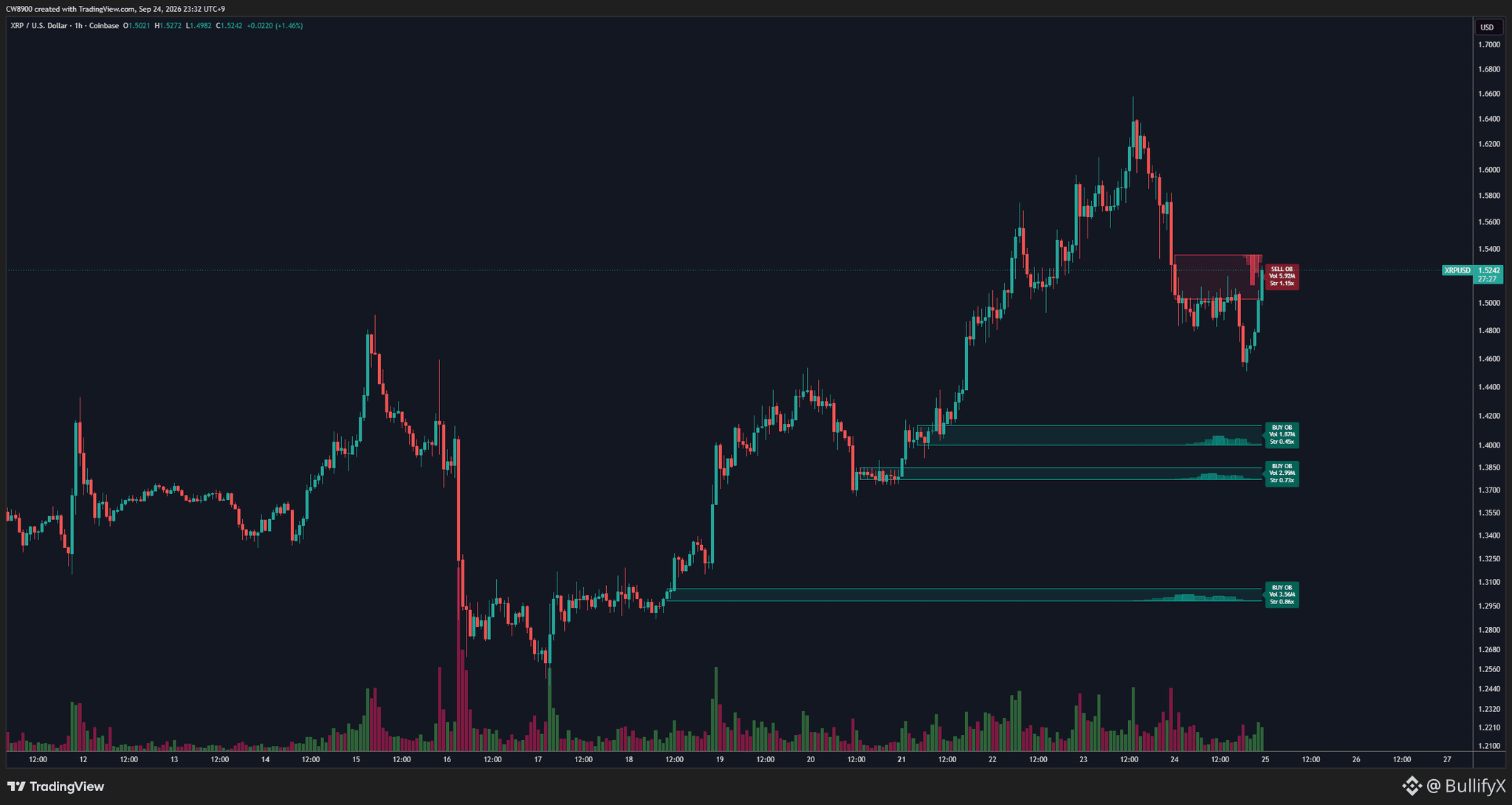
$XRP is at that point where the next move could get interesting. 👀
After the rejection from the $1.60+ area, price has cooled back toward $1.50.
I’m watching $1.40–$1.42 for support and $1.60–$1.66 for the real breakout signal.
If buyers take that resistance back with strength, the bigger targets start coming into play.
For now, I’m not chasing the move I’m watching the levels.
#XRP #Crypto #binance #Write2Earrn
$XRP is at that point where the next move could get interesting. 👀
After the rejection from the $1.60+ area, price has cooled back toward $1.50.
I’m watching $1.40–$1.42 for support and $1.60–$1.66 for the real breakout signal.
If buyers take that resistance back with strength, the bigger targets start coming into play.
For now, I’m not chasing the move I’m watching the levels.
#XRP #Crypto #binance #Write2Earrn
After the rejection from the $1.60+ area, price has cooled back toward $1.50.
I’m watching $1.40–$1.42 for support and $1.60–$1.66 for the real breakout signal.
If buyers take that resistance back with strength, the bigger targets start coming into play.
For now, I’m not chasing the move I’m watching the levels.
#XRP #Crypto #binance #Write2Earrn
16
1
45
27.1k
·
--
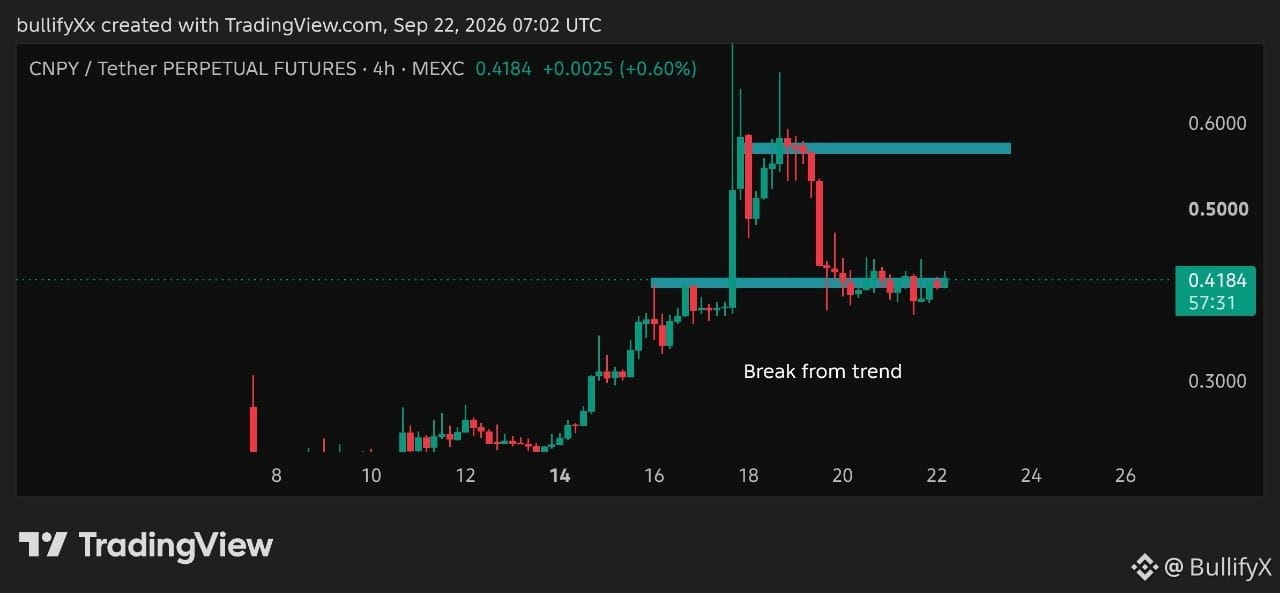
$CNPY is looking pretty interesting here.
After that strong move out of the compression, price has pulled back and is now retesting an important area.
So far, buyers are showing up and the reaction has been solid.
I also like the bigger Canopy story here appchain infrastructure, restaking, and an ecosystem focused on making blockchain development easier.
The open source AI narrative adds another interesting angle.
For me, the key is simple: if this support continues to hold, I’ll be watching for another move higher.
$CNPY #crypto
$CNPY is looking pretty interesting here.
After that strong move out of the compression, price has pulled back and is now retesting an important area.
So far, buyers are showing up and the reaction has been solid.
I also like the bigger Canopy story here appchain infrastructure, restaking, and an ecosystem focused on making blockchain development easier.
The open source AI narrative adds another interesting angle.
For me, the key is simple: if this support continues to hold, I’ll be watching for another move higher.
$CNPY #crypto
After that strong move out of the compression, price has pulled back and is now retesting an important area.
So far, buyers are showing up and the reaction has been solid.
I also like the bigger Canopy story here appchain infrastructure, restaking, and an ecosystem focused on making blockchain development easier.
The open source AI narrative adds another interesting angle.
For me, the key is simple: if this support continues to hold, I’ll be watching for another move higher.
$CNPY #crypto
23
28
4.1k
·
--
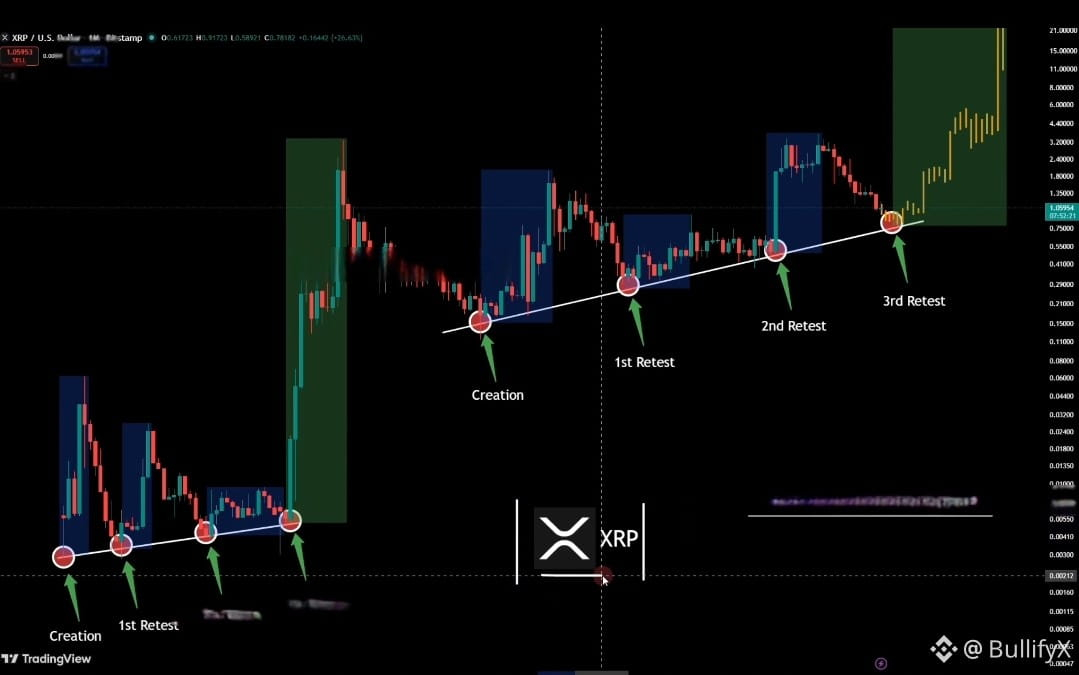
$XRP is sitting at a point where patience could matter more than prediction.
Instead of chasing the breakout, I’m watching how price reacts at each major level.
The structure I’m tracking:
• First move: ~$1 → ~$1.80
• Next leg: ~$1.80 → ~$3.20
• If momentum survives the pullbacks: ~$3.20 → $6.50+
• Full upside scenario: ~$13
The key isn't the target.
It’s whether XRP can repeatedly turn previous resistance into support.
Three successful confirmations could completely change the market structure.
Keep this one on your radar.
#XRP #crypto #binance #Write2Earn
$XRP is sitting at a point where patience could matter more than prediction.
Instead of chasing the breakout, I’m watching how price reacts at each major level.
The structure I’m tracking:
• First move: ~$1 → ~$1.80
• Next leg: ~$1.80 → ~$3.20
• If momentum survives the pullbacks: ~$3.20 → $6.50+
• Full upside scenario: ~$13
The key isn't the target.
It’s whether XRP can repeatedly turn previous resistance into support.
Three successful confirmations could completely change the market structure.
Keep this one on your radar.
#XRP #crypto #binance #Write2Earn
Instead of chasing the breakout, I’m watching how price reacts at each major level.
The structure I’m tracking:
• First move: ~$1 → ~$1.80
• Next leg: ~$1.80 → ~$3.20
• If momentum survives the pullbacks: ~$3.20 → $6.50+
• Full upside scenario: ~$13
The key isn't the target.
It’s whether XRP can repeatedly turn previous resistance into support.
Three successful confirmations could completely change the market structure.
Keep this one on your radar.
#XRP #crypto #binance #Write2Earn
13
33
10.9k
·
--
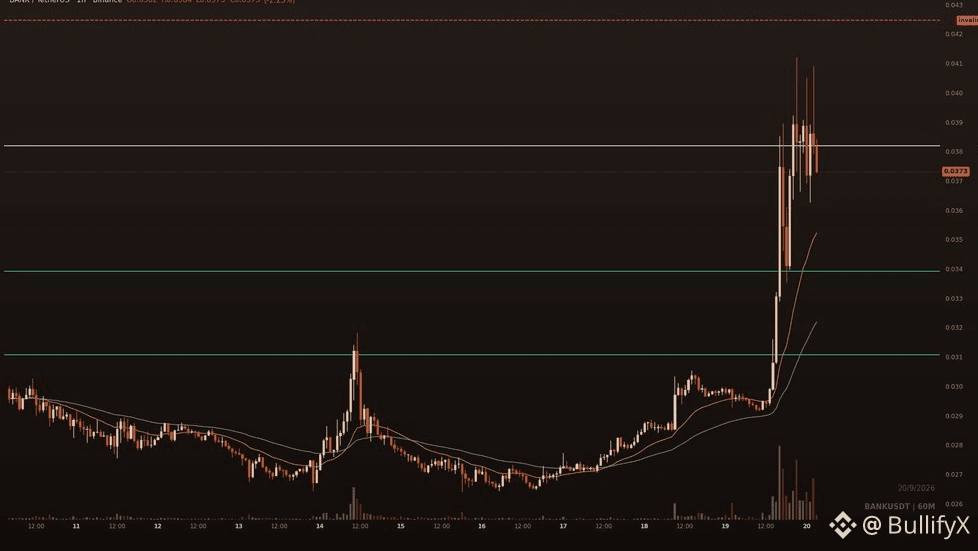
$BANK +26% with 2.27x volume, but the buyers who pushed this move higher aren’t adding anymore.
If momentum flips, that late crowd could become the supply.
0.03392 = trim most of the position.
0.03107 = reassess whether the remainder still makes sense.
If $BANK clears 0.04246, I’m out completely.
#BANK #crypto #binance #Write2Earn!
$BANK +26% with 2.27x volume, but the buyers who pushed this move higher aren’t adding anymore.
If momentum flips, that late crowd could become the supply.
0.03392 = trim most of the position.
0.03107 = reassess whether the remainder still makes sense.
If $BANK clears 0.04246, I’m out completely.
#BANK #crypto #binance #Write2Earn!
If momentum flips, that late crowd could become the supply.
0.03392 = trim most of the position.
0.03107 = reassess whether the remainder still makes sense.
If $BANK clears 0.04246, I’m out completely.
#BANK #crypto #binance #Write2Earn!
14
21
2.6k
·
--
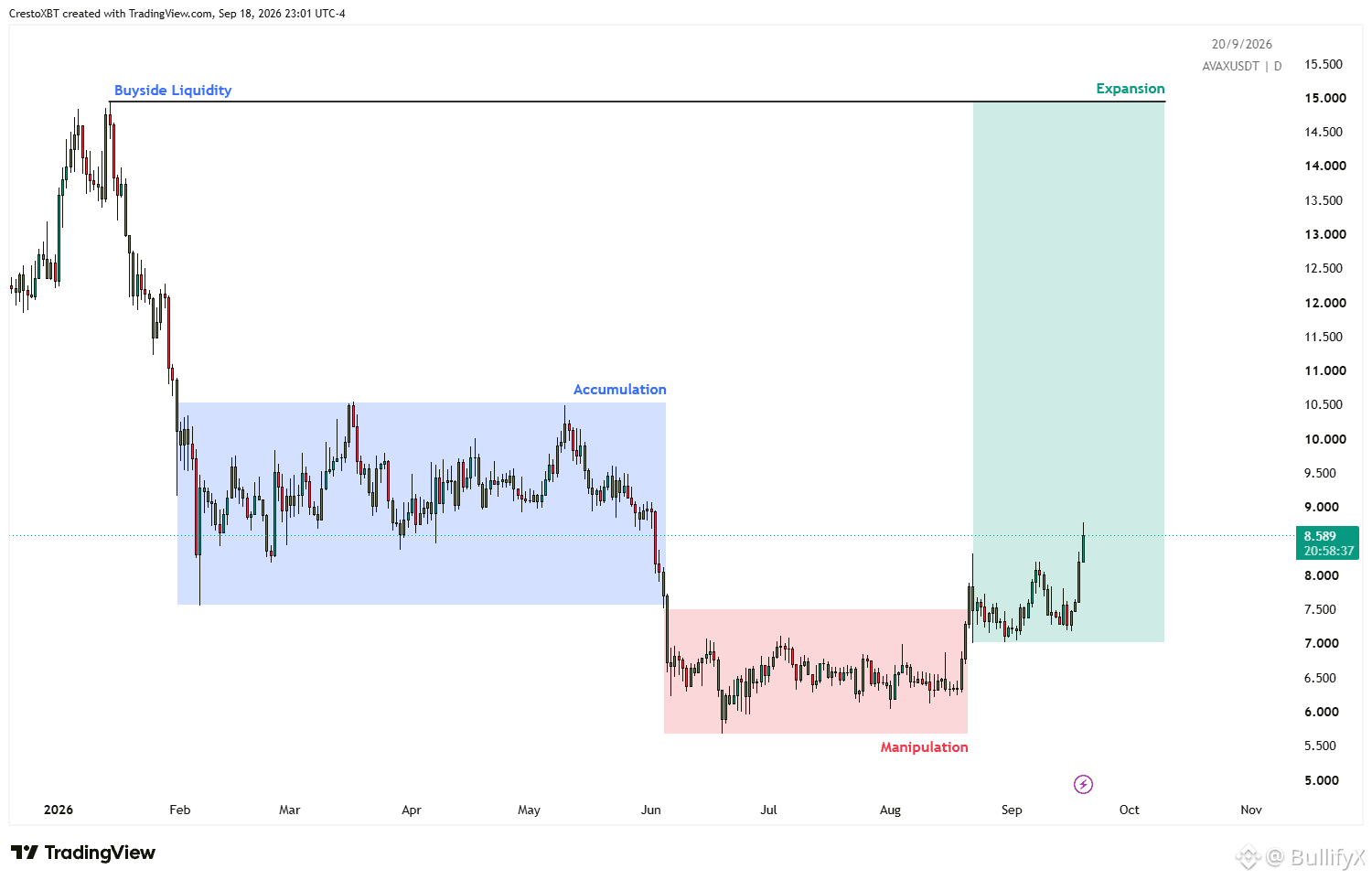
$AVAX is starting to show some serious momentum.
The move from the recent lows has been impressive, but the key now is whether buyers can keep control after this push higher.
I’m keeping a close eye on the $8.7–$8.8 area as the first zone that needs to stay intact.
If momentum continues, the next major hurdle sits around $10.50.
A rejection there could bring some cooling-off action first, which wouldn’t necessarily change the broader setup.
For now, I’d rather watch the key levels than chase candles.
#AVAX #Crypto #Binance #Write2Earn
$AVAX is starting to show some serious momentum.
The move from the recent lows has been impressive, but the key now is whether buyers can keep control after this push higher.
I’m keeping a close eye on the $8.7–$8.8 area as the first zone that needs to stay intact.
If momentum continues, the next major hurdle sits around $10.50.
A rejection there could bring some cooling-off action first, which wouldn’t necessarily change the broader setup.
For now, I’d rather watch the key levels than chase candles.
#AVAX #Crypto #Binance #Write2Earn
The move from the recent lows has been impressive, but the key now is whether buyers can keep control after this push higher.
I’m keeping a close eye on the $8.7–$8.8 area as the first zone that needs to stay intact.
If momentum continues, the next major hurdle sits around $10.50.
A rejection there could bring some cooling-off action first, which wouldn’t necessarily change the broader setup.
For now, I’d rather watch the key levels than chase candles.
#AVAX #Crypto #Binance #Write2Earn
16
44
24.8k
·
--
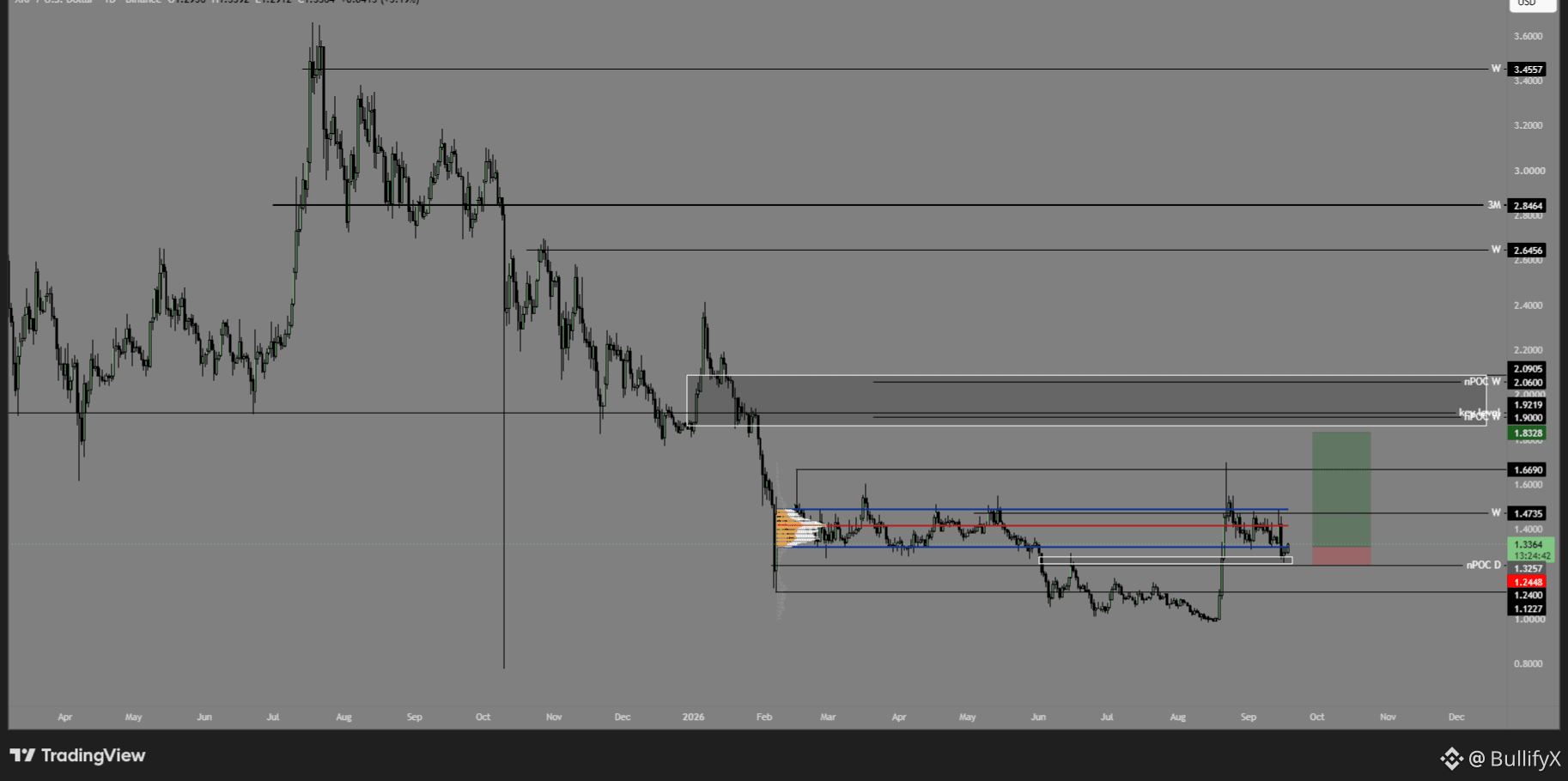
Most major alts $SOL , $BNB and $ETH are pushing back toward their late August local highs.
$XRP is still lagging, but it just reclaimed the range VAL.
That reclaim changes the structure for me.
If the market continues to push higher, I’m looking for a long on $XRP.
Watching the range reclaim + continuation.
#crypto #binance #XRP #Write2Earn
Most major alts $SOL , $BNB and $ETH are pushing back toward their late August local highs.
$XRP is still lagging, but it just reclaimed the range VAL.
That reclaim changes the structure for me.
If the market continues to push higher, I’m looking for a long on $XRP.
Watching the range reclaim + continuation.
#crypto #binance #XRP #Write2Earn
$XRP is still lagging, but it just reclaimed the range VAL.
That reclaim changes the structure for me.
If the market continues to push higher, I’m looking for a long on $XRP.
Watching the range reclaim + continuation.
#crypto #binance #XRP #Write2Earn
8
19
2.7k
·
--
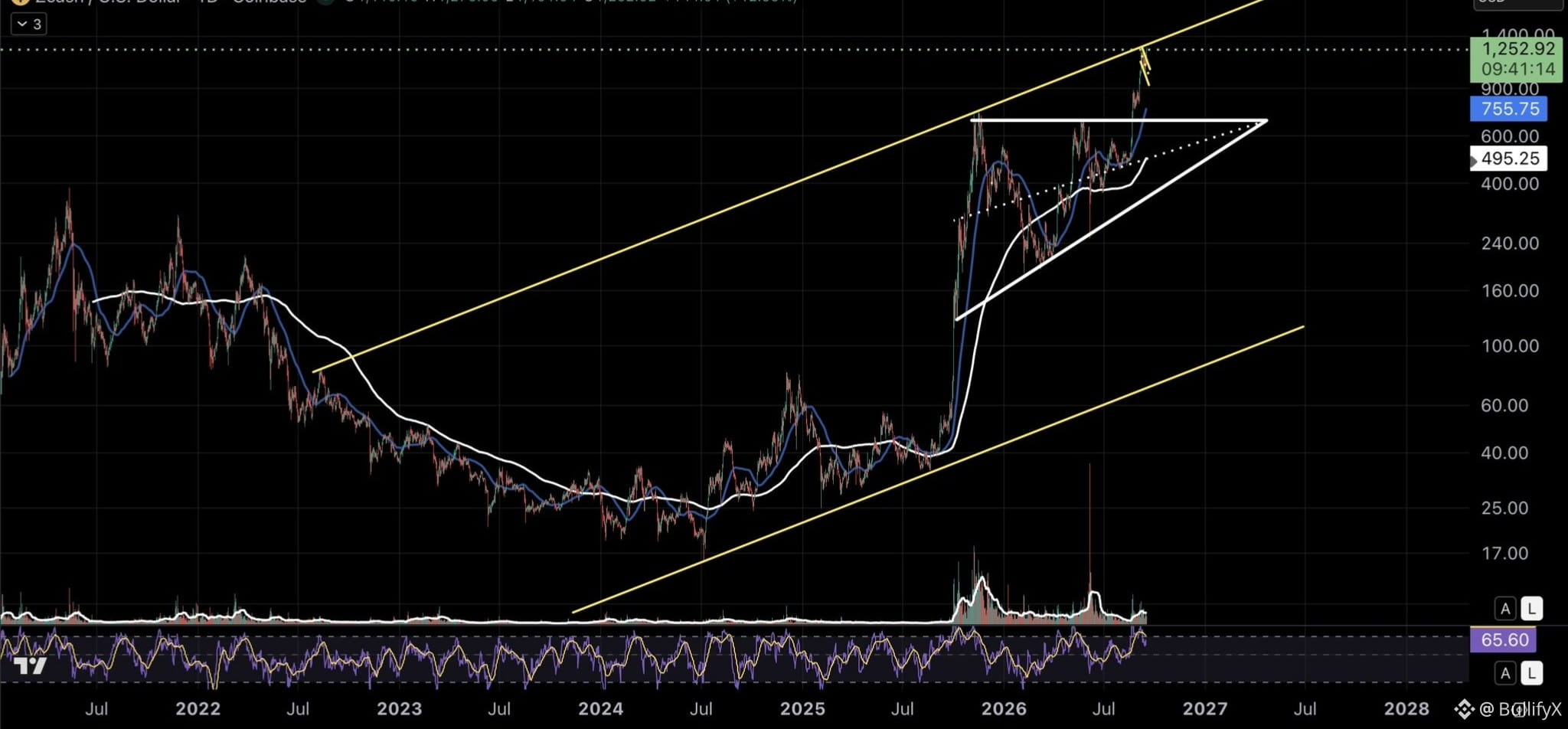
$ZEC is looking strong, but I’m watching one level very closely 👀
Price is pushing near the $1,300 ATH area while momentum is showing signs of weakness.
If $1,300 keeps rejecting, I’d watch:
→ $800 as the first key support
→ $500 as the deeper demand zone
But if $ZEC breaks above $1,300 and holds it, this bearish setup could be off the table.
For me, the levels matter more than the hype.
NFA. DYOR. Manage your risk.
#ZEC #Binance #crypto #Write2Earn
$ZEC is looking strong, but I’m watching one level very closely 👀
Price is pushing near the $1,300 ATH area while momentum is showing signs of weakness.
If $1,300 keeps rejecting, I’d watch:
→ $800 as the first key support
→ $500 as the deeper demand zone
But if $ZEC breaks above $1,300 and holds it, this bearish setup could be off the table.
For me, the levels matter more than the hype.
NFA. DYOR. Manage your risk.
#ZEC #Binance #crypto #Write2Earn
Price is pushing near the $1,300 ATH area while momentum is showing signs of weakness.
If $1,300 keeps rejecting, I’d watch:
→ $800 as the first key support
→ $500 as the deeper demand zone
But if $ZEC breaks above $1,300 and holds it, this bearish setup could be off the table.
For me, the levels matter more than the hype.
NFA. DYOR. Manage your risk.
#ZEC #Binance #crypto #Write2Earn
11
19
2.1k
·
--
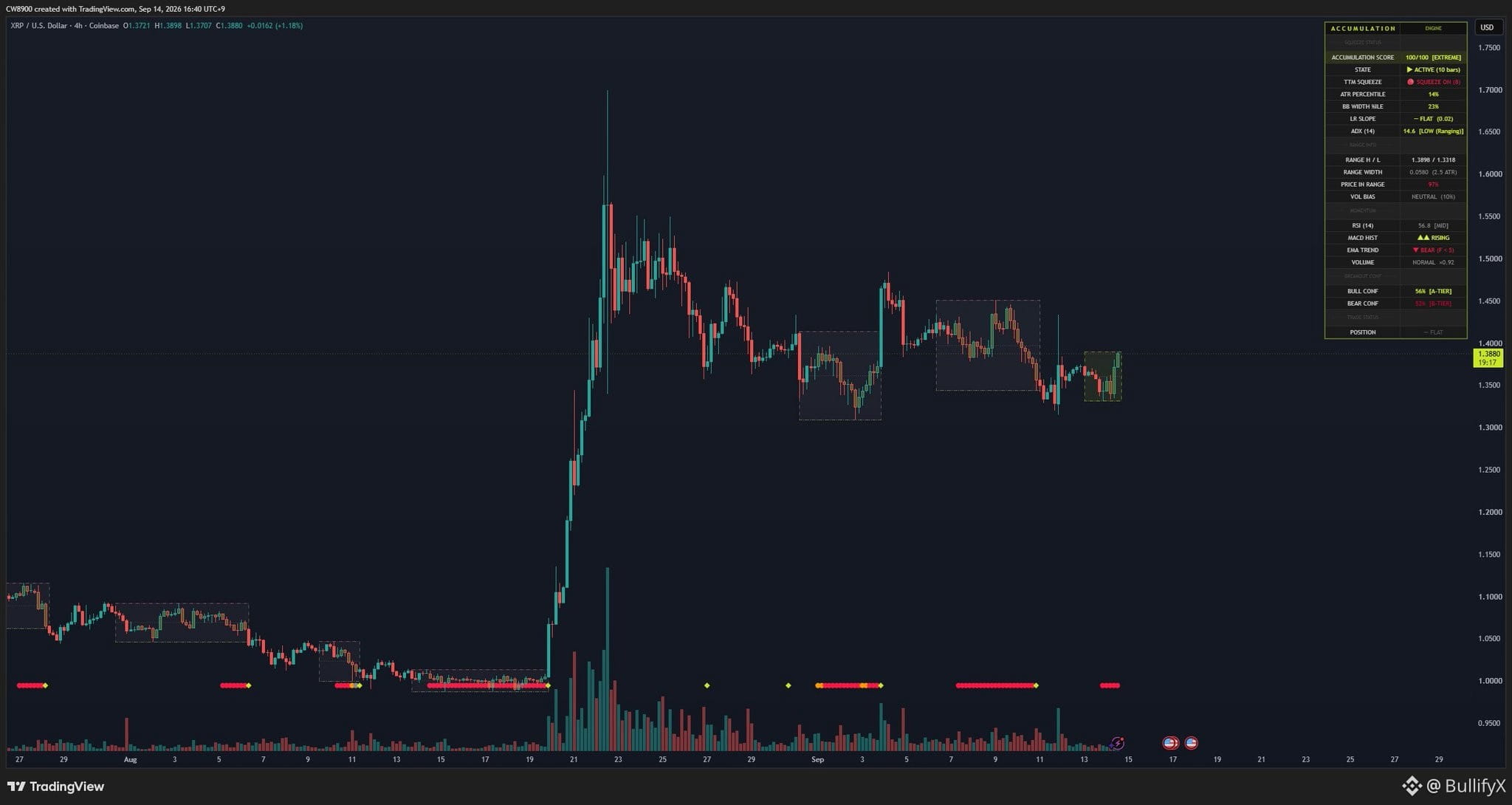
$XRP is getting ready.
One final dip could still be on the table before the next bullish expansion.
Accumulation is building, sellers are weakening, and the range is getting tighter.
Final shakeout?
Then comes the breakout.
XRP may be charging for its next major move.
#XRP #Crypto #binance #Write2Earn
$XRP is getting ready.
One final dip could still be on the table before the next bullish expansion.
Accumulation is building, sellers are weakening, and the range is getting tighter.
Final shakeout?
Then comes the breakout.
XRP may be charging for its next major move.
#XRP #Crypto #binance #Write2Earn
One final dip could still be on the table before the next bullish expansion.
Accumulation is building, sellers are weakening, and the range is getting tighter.
Final shakeout?
Then comes the breakout.
XRP may be charging for its next major move.
#XRP #Crypto #binance #Write2Earn
5
1
18
3.1k
·
--
$BTC is getting interesting again.
The move above $75K looked bullish at first, but I’m watching what happens next more closely than the breakout itself.
A few things are lining up:
→ Price is pushing into a potential trap zone
→ The Sept 15 Clarity Act vote could bring serious volatility
→ Market sentiment is getting increasingly confident
→ Bitcoin may be entering a phase where the real bottom-building process begins
The biggest mistake right now is assuming every breakout means the next leg up.
Sometimes the market gives you strength right before it takes liquidity.
I called the $126K ATH early.
I also flagged the $98K → $60K and $83K → $57K moves before they happened.
This time, I’m watching the setup before the crowd catches on.
Stay alert.
#BTC #crypto #Binance #Write2Earn
$BTC is getting interesting again.
The move above $75K looked bullish at first, but I’m watching what happens next more closely than the breakout itself.
A few things are lining up:
→ Price is pushing into a potential trap zone
→ The Sept 15 Clarity Act vote could bring serious volatility
→ Market sentiment is getting increasingly confident
→ Bitcoin may be entering a phase where the real bottom-building process begins
The biggest mistake right now is assuming every breakout means the next leg up.
Sometimes the market gives you strength right before it takes liquidity.
I called the $126K ATH early.
I also flagged the $98K → $60K and $83K → $57K moves before they happened.
This time, I’m watching the setup before the crowd catches on.
Stay alert.
#BTC #crypto #Binance #Write2Earn
The move above $75K looked bullish at first, but I’m watching what happens next more closely than the breakout itself.
A few things are lining up:
→ Price is pushing into a potential trap zone
→ The Sept 15 Clarity Act vote could bring serious volatility
→ Market sentiment is getting increasingly confident
→ Bitcoin may be entering a phase where the real bottom-building process begins
The biggest mistake right now is assuming every breakout means the next leg up.
Sometimes the market gives you strength right before it takes liquidity.
I called the $126K ATH early.
I also flagged the $98K → $60K and $83K → $57K moves before they happened.
This time, I’m watching the setup before the crowd catches on.
Stay alert.
#BTC #crypto #Binance #Write2Earn

5
1
12
1.4k
·
--
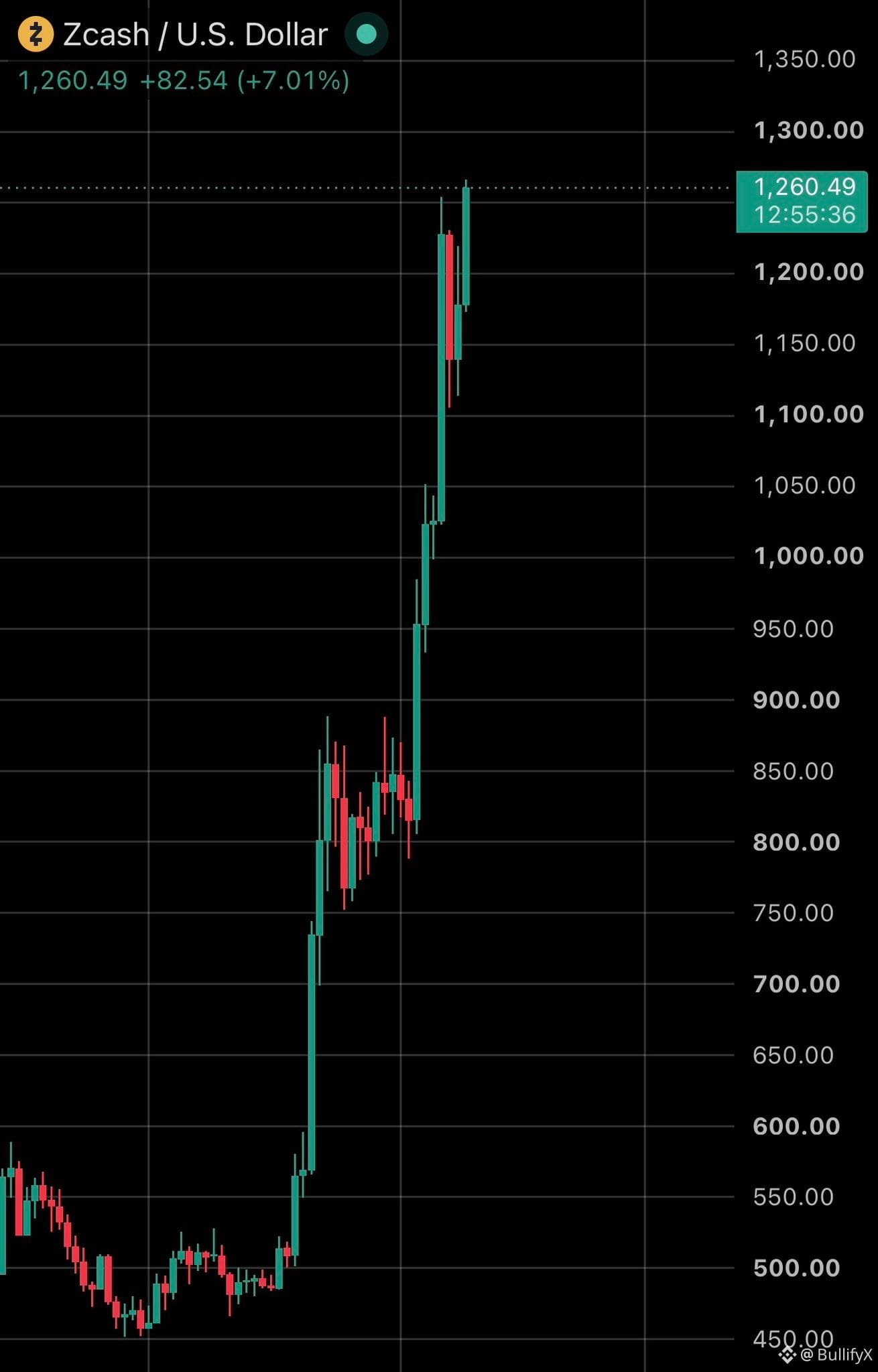
$ZEC is entering a part of the chart where I’d start thinking less about chasing the move and more about managing the position.
My key area sits near $1.7K.
Why? Multiple independent technical projections point toward the same region, while the broader channel also puts its upper boundary in that neighborhood. When several different measurements arrive at roughly the same price, that’s an area worth respecting.
It doesn’t mean $1,700 has to be the top.
It simply means that if $ZEC reaches that zone, I’d seriously consider taking some money off the table rather than letting a strong unrealized gain turn into nothing.
Let the remaining position ride if momentum stays strong.
#ZEC #binance #crypto #Wtite2Earn
$ZEC is entering a part of the chart where I’d start thinking less about chasing the move and more about managing the position.
My key area sits near $1.7K.
Why? Multiple independent technical projections point toward the same region, while the broader channel also puts its upper boundary in that neighborhood. When several different measurements arrive at roughly the same price, that’s an area worth respecting.
It doesn’t mean $1,700 has to be the top.
It simply means that if $ZEC reaches that zone, I’d seriously consider taking some money off the table rather than letting a strong unrealized gain turn into nothing.
Let the remaining position ride if momentum stays strong.
#ZEC #binance #crypto #Wtite2Earn
My key area sits near $1.7K.
Why? Multiple independent technical projections point toward the same region, while the broader channel also puts its upper boundary in that neighborhood. When several different measurements arrive at roughly the same price, that’s an area worth respecting.
It doesn’t mean $1,700 has to be the top.
It simply means that if $ZEC reaches that zone, I’d seriously consider taking some money off the table rather than letting a strong unrealized gain turn into nothing.
Let the remaining position ride if momentum stays strong.
#ZEC #binance #crypto #Wtite2Earn
1
45
35.6k
·
--
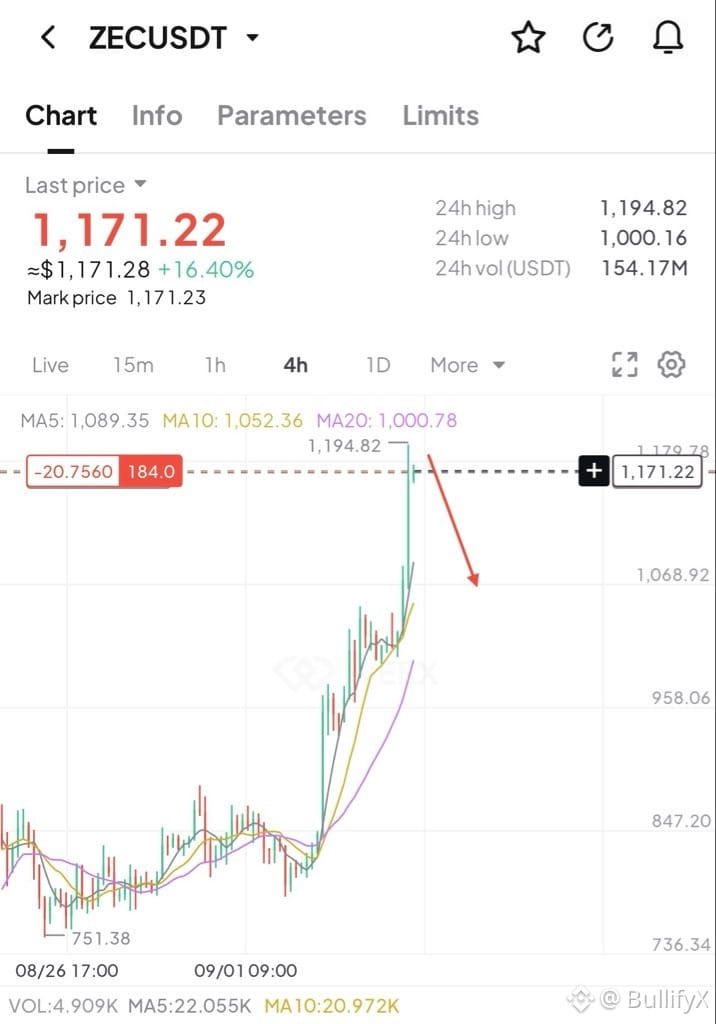
$ZEC is showing serious strength.
The momentum above $1,100 has traders paying attention, and I’m watching this zone for a potential continuation rather than fading the move.
Key level: $1,100
Bullish above support
Watching for a push toward fresh highs
Momentum is the game let the trend work
If buyers keep defending the key levels, $ZEC could have plenty more fuel left.
#ZEC #binance #Write2Earn
$ZEC is showing serious strength.
The momentum above $1,100 has traders paying attention, and I’m watching this zone for a potential continuation rather than fading the move.
Key level: $1,100
Bullish above support
Watching for a push toward fresh highs
Momentum is the game let the trend work
If buyers keep defending the key levels, $ZEC could have plenty more fuel left.
#ZEC #binance #Write2Earn
The momentum above $1,100 has traders paying attention, and I’m watching this zone for a potential continuation rather than fading the move.
Key level: $1,100
Bullish above support
Watching for a push toward fresh highs
Momentum is the game let the trend work
If buyers keep defending the key levels, $ZEC could have plenty more fuel left.
#ZEC #binance #Write2Earn
2
7
2.7k
·
--
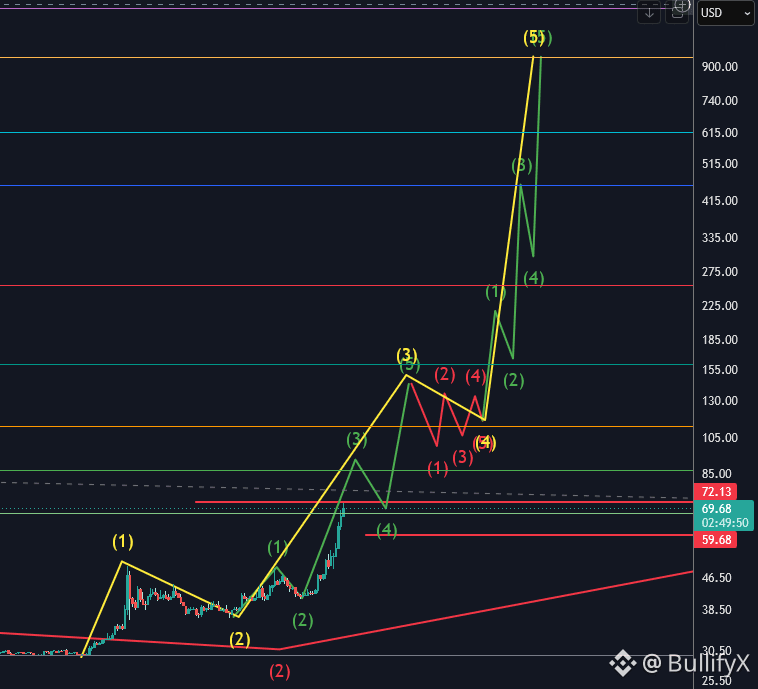
$DASH is quietly becoming an interesting privacy beta.
$ZEC > $1K, while DASH remains sub-$1B.
Shielded transactions are live on Evolution, powered by Orchard tech with ~1s settlement.
Add Dash to Anything, and the thesis gets even more interesting.
If privacy catches another bid, $DASH could have serious room to run.
#DASH #crypto #binance #Write2Earn
$DASH is quietly becoming an interesting privacy beta.
$ZEC > $1K, while DASH remains sub-$1B.
Shielded transactions are live on Evolution, powered by Orchard tech with ~1s settlement.
Add Dash to Anything, and the thesis gets even more interesting.
If privacy catches another bid, $DASH could have serious room to run.
#DASH #crypto #binance #Write2Earn
$ZEC > $1K, while DASH remains sub-$1B.
Shielded transactions are live on Evolution, powered by Orchard tech with ~1s settlement.
Add Dash to Anything, and the thesis gets even more interesting.
If privacy catches another bid, $DASH could have serious room to run.
#DASH #crypto #binance #Write2Earn
4
10
4.5k
Connectez-vous pour découvrir plus de contenu
Rejoignez la communauté mondiale des adeptes de cryptomonnaies sur Binance Square
⚡️ Suviez les dernières informations importantes sur les cryptomonnaies.
💬 Jugé digne de confiance par la plus grande plateforme d’échange de cryptomonnaies au monde.
👍 Découvrez les connaissances que partagent les créateurs vérifiés.
Adresse e-mail/Nº de téléphone
Sujets d’actualité
FedMinutesFocusOnOctoberPause
58,789 vues
800 mentions
The latest Federal Reserve meeting minutes are under intense scrutiny, with the market desperately searching for any indication of a potential pause in interest rate hikes for October. This focus highlights the significant impact Fed policy has on cryptocurrency markets, as higher rates often lead to reduced liquidity and investor appetite for riskier assets like digital currencies. Traders and analysts are dissecting every word for signals that could influence market sentiment and potential price movements across major cryptocurrencies. The anticipation itself is creating volatility as participants position themselves ahead of any definitive announcement.
Disclaimer: This is not investment advice. Always do your own research.
#FedMinutesFocusOnOctoberPause $BTC $ETH
Luong Nguyen Ba
·1 mentions J’aime
·3.9k vues
BinanceLaunchesBinanceIntelligence
1M vues
6,051 mentions
EvernorthDelaysNasdaqDebutToOct12
2,509 vues
122 mentions