


If you find yourself pondering the question, "What is Uniswap?" then this article aims to provide you with an all-encompassing overview of its nature and functionality. Additionally, we will explore various ways users can kick off their Uniswap DEX journey.
Uniswap, the decentralized exchange (DEX) built on the Ethereum blockchain, reigns as the most renowned DEX. With Uniswap, users have the ability to swap crypto tokens without the need for intermediaries. By eliminating reliance on third parties, the collection of economic rents is significantly reduced. Instead, Uniswap relies on smart contracts to execute trades. Smart contracts are algorithms that independently execute once specific predetermined conditions are met.
But how does Uniswap operate? While many DEXs with the suffix "swap" have been introduced to the market due to Uniswap's open-source protocol, their differences lie primarily in graphical user interfaces (GUIs), as well as differences in offers and positioning.
A noteworthy example among these imitations is Sushiswap, which not only copied Uniswap's source code but also coordinated a "vampire attack." A vampire attack occurs when a DeFi protocol lures liquidity providers through various perks with the aim of diverting liquidity from the targeted protocol.

So, how did Sushiswap manage to successfully execute this vampire attack? The platform launched an aggressive marketing campaign and enabled a seamless transition for Uniswap liquidity providers. Furthermore, they offered astonishingly lucrative rewards to make the transition tempting.
Another example, which stirred up less controversy, is PancakeSwap. This DEX operates on the Binance Smart Chain and distinguishes itself by offering nonfungible tokens (NFTs) and yield farming opportunities, which are not available on Uniswap.
Read more about PancakeSwap here: https://www.binance.com/en/feed/post/631724?ref=124819491&utm_medium=web_share_copy
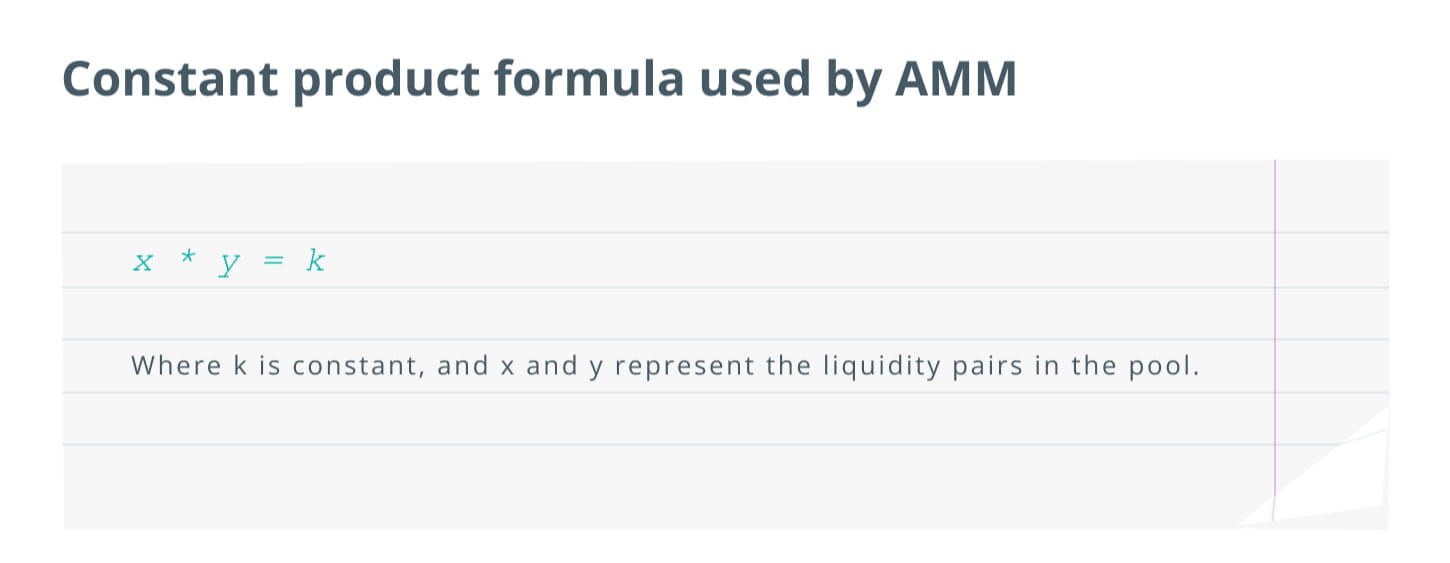
Nevertheless, Uniswap introduced the usage of an automated market maker (AMM) model, diverging from the traditional open book model. The open book model faces challenges in terms of liquidity, among other factors, making it less compatible with DEXs. In contrast, the AMM model utilizes a liquidity pool with a constant product market maker model, depending on the Constant Product Formula.
It is important to note that in Uniswap's initial version, v1, liquidity pool providers were prone to the risk of impermanent loss. In essence, v1 should be viewed as a minimum viable product released for beta or even alpha testing.
With each subsequent iteration, Uniswap has introduced significant improvements for its users. For instance, v2 introduced oracles and distributed UNI tokens through airdrops. UNI tokens function as the official token of the Uniswap DEX, and users received these airdropped tokens if they utilized the platform before September 2020.
In v3, the most notable enhancement was in the form of concentrated liquidity. This novel liquidity approach empowered liquidity providers to define the conditions under which they receive their fees.
Moreover, v3 of Uniswap was launched on the Optimistic Ethereum network. Optimism represents a layer two scaling solution that surpasses Ethereum's layer one in terms of performance. It offers reduced slippage, lower gas fees, and near-instant transaction speeds.
Now, let us explore the process of purchasing coins on Uniswap. Before delving into the specifics of using Uniswap, it is crucial to address the question of safety. Are smart contracts, blockchain technology, and Decentralized Finance (DeFi) secure? These are the foundational technologies upon which Uniswap is built.
The security of the Ethereum blockchain is known for its exceptional strength, except for the potential vulnerabilities that may be exploited. In the past, Uniswap encountered a bug exploit caused by a reentrancy attack; however, this problem has now been successfully resolved, ultimately fortifying Uniswap's security for the long run. As a result, there has been a substantial surge in both liquidity and trading volume.
Now, let us explore how individuals can utilize the Uniswap platform.
How To Use Uniswap?
First, let us outline the steps involved in using the Uniswap protocol with Metamask. Next, we will provide the steps for utilizing it with mobile-friendly approaches.
It is important to note that while Metamask is user-friendly on mobile devices, its usability experience is unparalleled on desktop platforms due to its functionality as a web wallet browser extension. Hence, this article primarily focuses on the desktop experience when using Metamask.
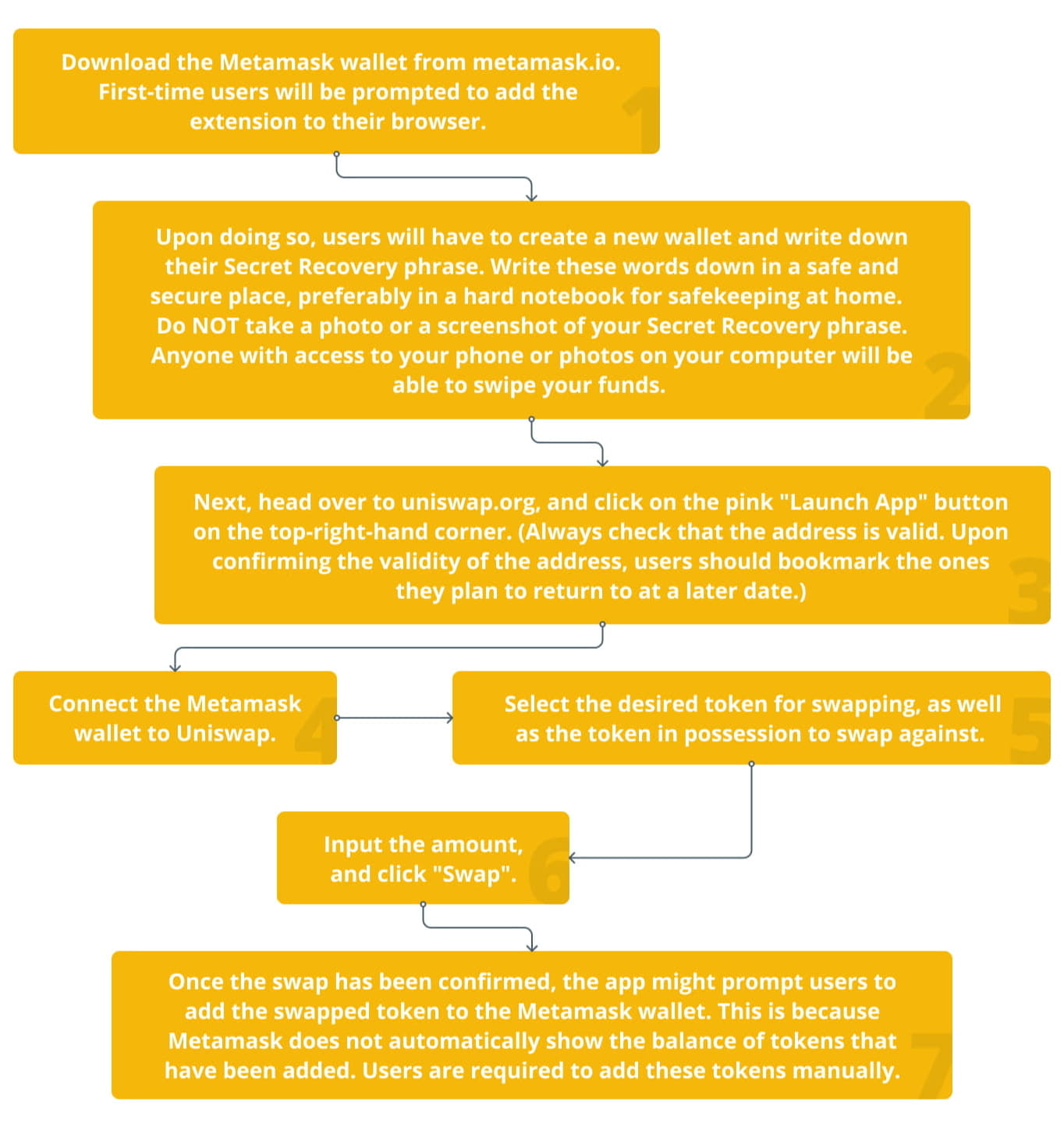
How to utilize Uniswap with Metamask:
The process of utilizing Uniswap with Metamask involves the following steps:
How to utilize Uniswap with Coinbase?
For U.S. citizens who are already familiar with the platform, the Coinbase approach may be less daunting. First-time users should commence the steps described below after creating a Coinbase account.
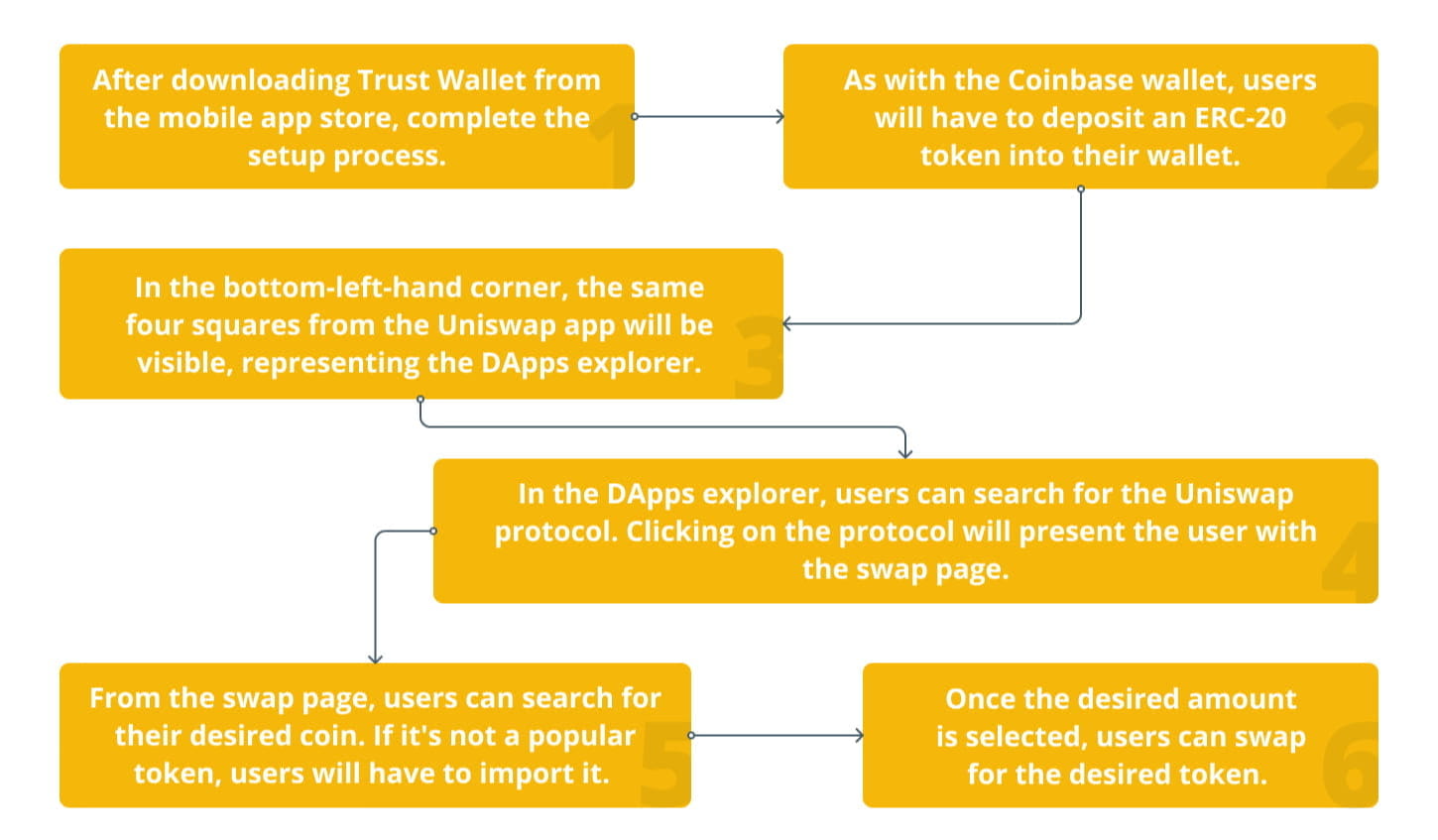
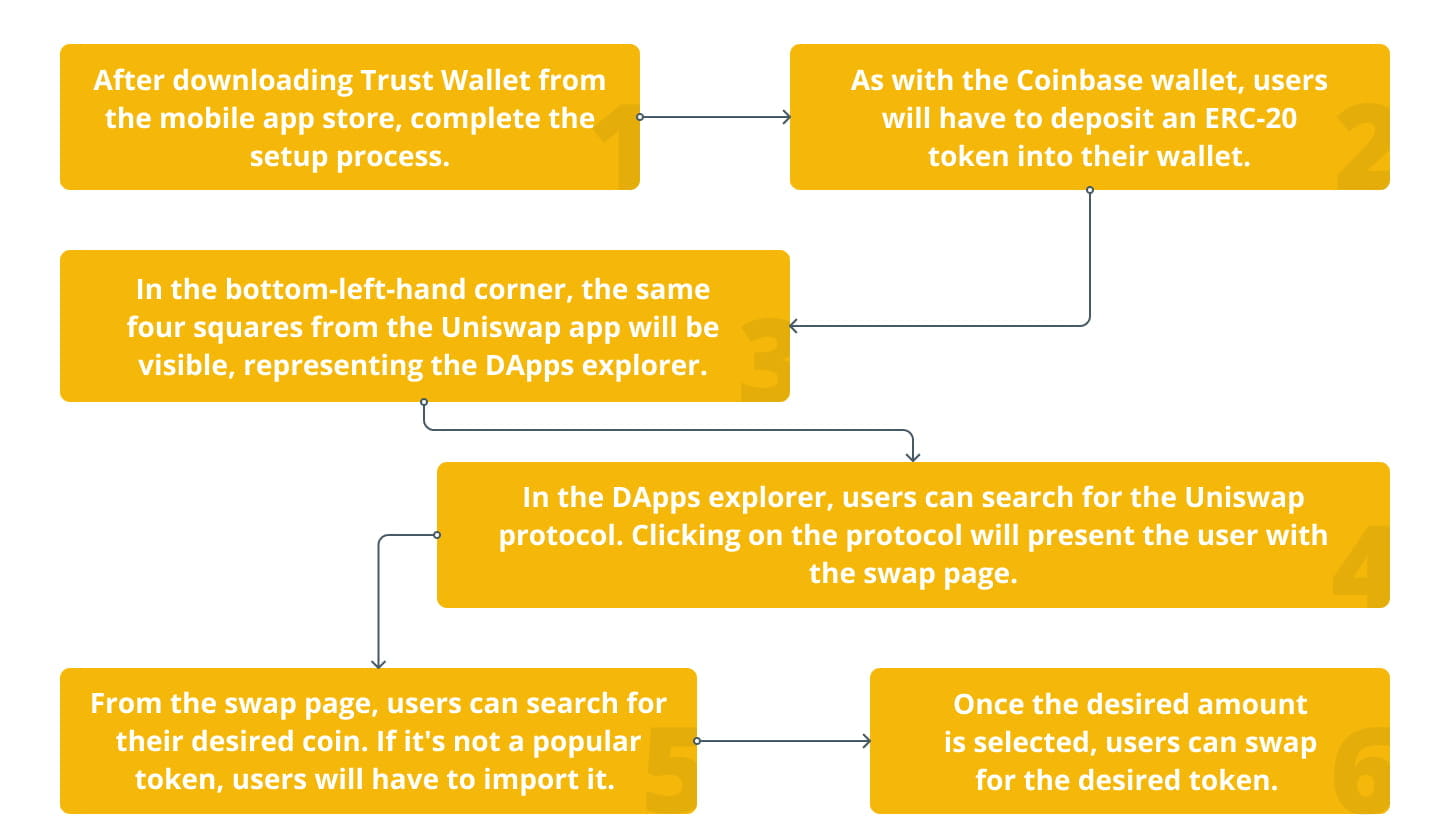
How to utilize Uniswap with Trust Wallet?
Trust Wallet ranks among the most popular mobile wallets for a reason. It offers ease of use, a friendly interface, and an array of tools for users. The following steps outline the process of using Uniswap with Trust Wallet:
One significant obstacle for new Uniswap users is the exorbitant fees associated with the platform. As Uniswap operates on the Ethereum blockchain, it relies on ETH for gas fees. Due to the design of Ethereum, increased congestion results in higher gas fees, as users engage in a bidding war to prioritize their transactions in the upcoming block.
To circumvent failed transactions, it is advisable to access the Uniswap Settings (accessible through the gear icon). Before executing a transaction, users should adjust the slippage tolerance to approximately 12%.
The slippage tolerance represents the difference in price between the confirmation of a transfer and the price at which sellers are willing to accept it. By adjusting the slippage tolerance, users ensure that their transactions receive priority, thus increasing the likelihood of inclusion in the next block.