Regret After a Rally: A Psychological Check for $DODO
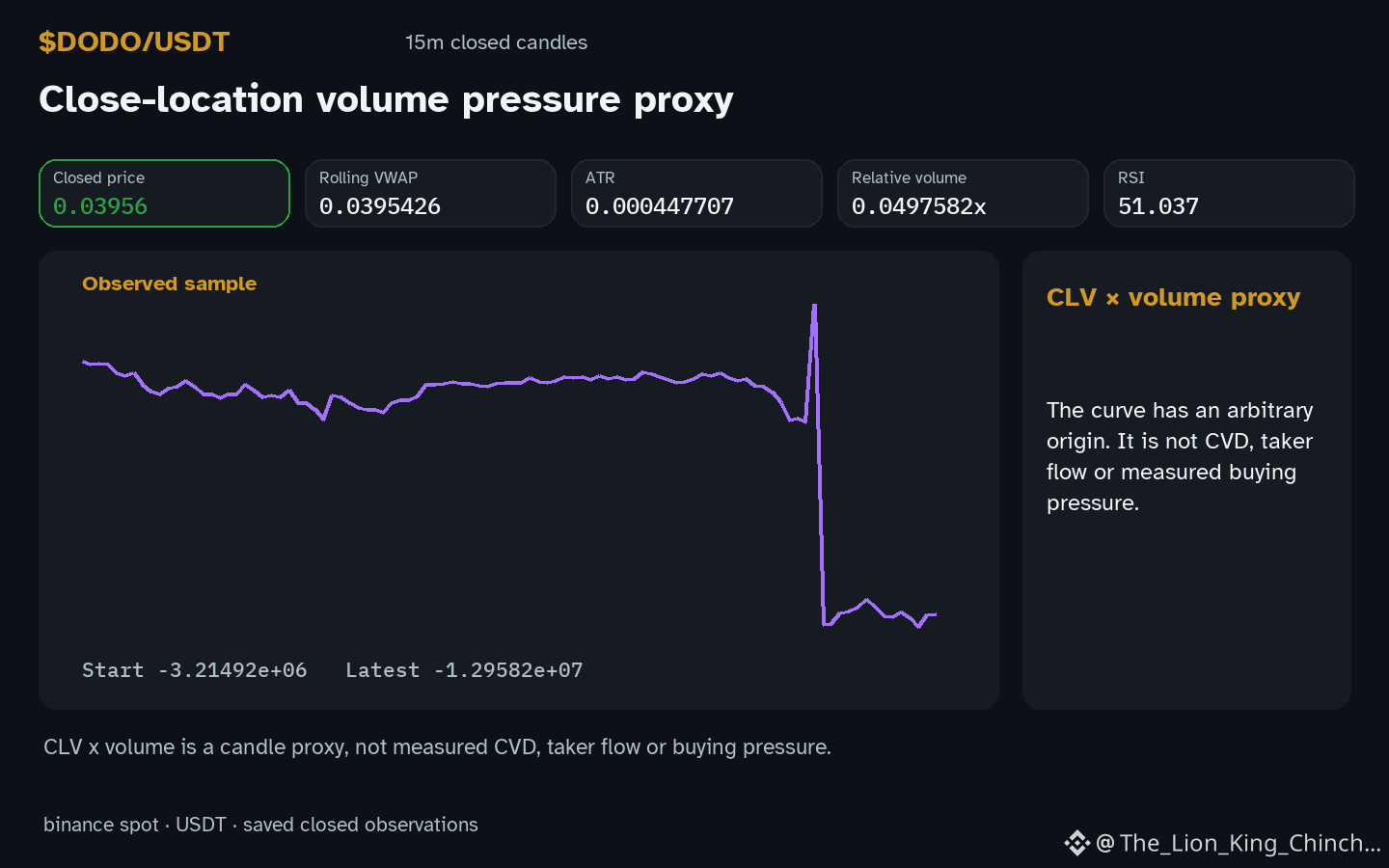
The hourly up move for $DODO sits inside its recorded range and volume is not above baseline, prompting a question about regret after a rally. Why might a trader feel a phantom debt when a price rise does not translate into a captured profit?
A common assumption is that a quick rise creates a sense of missed opportunity, leading to the regret bias. The observation of an upward candle with modest relative volume 0.05x suggests the market is not overwhelmingly bullish, yet the visual of a higher price can anchor expectations. If a trader later sees the price reverse, the earlier rally may feel like a debt owed, even though no trade was made.
A counterexample to consider is a scenario where the price continues upward for several candles, confirming the move. In that case, the same visual cue would reinforce confidence rather than regret.
What could change the reading? A subsequent candle that closes below the local support level 0.03848 while RSI 51.0 stays high could signal overextension, weakening the regret narrative. Conversely, a stable or higher close with low volume would support the idea that the rally was inconsequential.
Practical self‑check: before labeling a missed move as a loss, note whether you actually entered a position. Ask yourself if the feeling stems from an imagined debt or a real financial impact. This pause can reduce regret bias and keep decisions grounded in actual trades.
Probabilistic market research, not a recommendation or guaranteed return.
#DODO