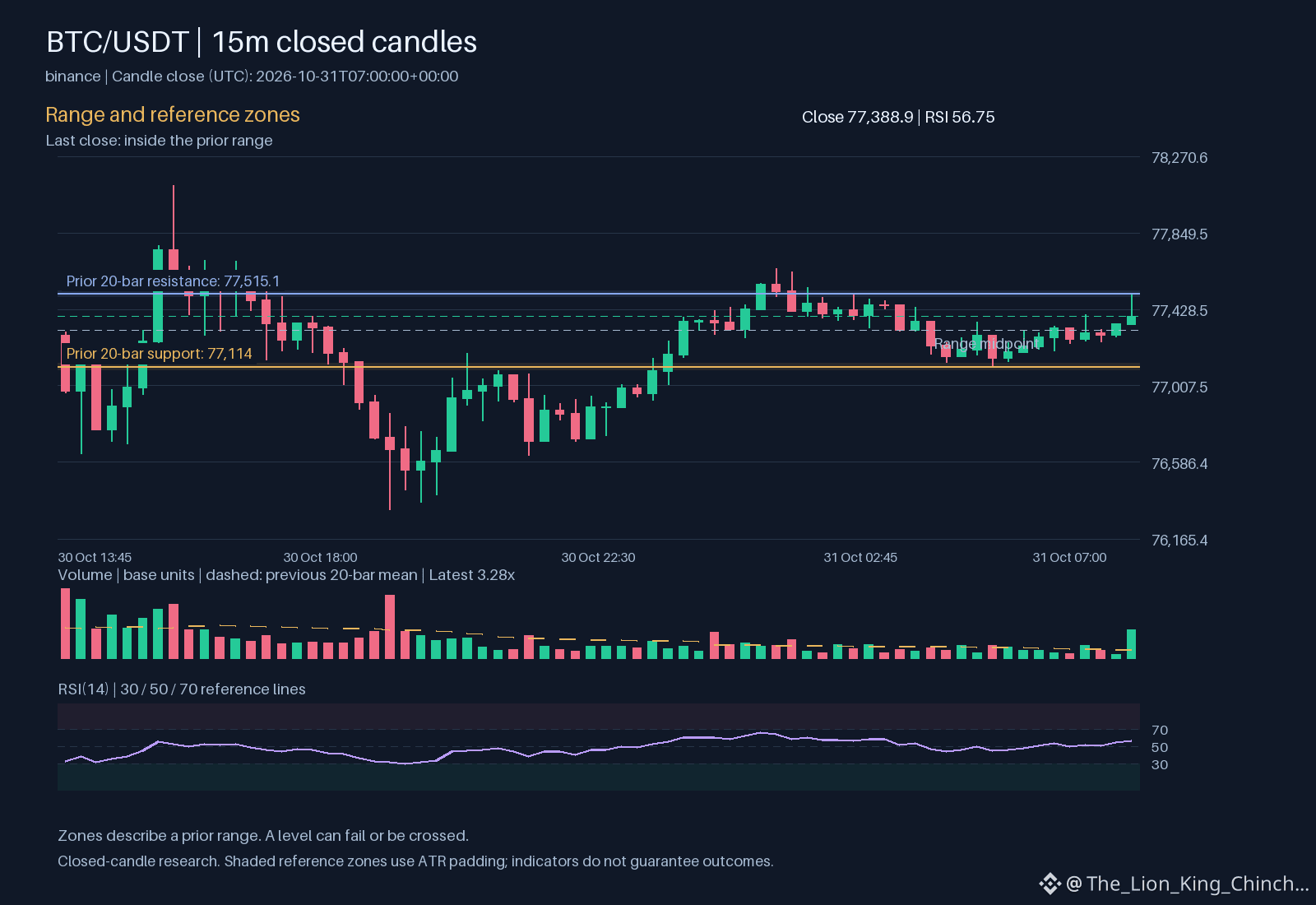
$BTC: When Volume Surges and Price Rises: A Psychology Check
The current observation shows $BTC moving hourly up while volume sits above baseline. This pattern often catches the eye and can trigger a common decision bias: loss aversion. Traders may focus on the fear of missing a potential gain and rush to add to a position, even if the price move is still tentative.
Loss aversion changes research behavior by shifting attention toward short‑term upside and away from the broader context. Instead of reviewing the full chart, a trader might anchor on the recent up tick and the elevated 3.2778 metric, assuming the rally will continue. This can lead to over‑committing capital before confirming whether the move has real support from other indicators.
A practical self‑check can break this cycle. First, pause and write down the original rule that guided the entry, such as waiting for a pull‑back to 77114. Next, ask: "Am I adjusting the rule because the price is higher, or because I fear losing the opportunity?" Finally, step away for a few minutes and revisit the chart with a neutral mindset, looking for confirmation signals like a stable 77294.8 or a balanced 20.1762 reading.
By recognizing loss aversion, traders can avoid premature actions and keep their strategies disciplined, even when excitement builds around a rising price and strong volume.
Probabilistic market research, not a recommendation or guaranteed return.
Would you keep the same rule after missing a move?
#BTC #TradingPsychology #CryptoLearning