

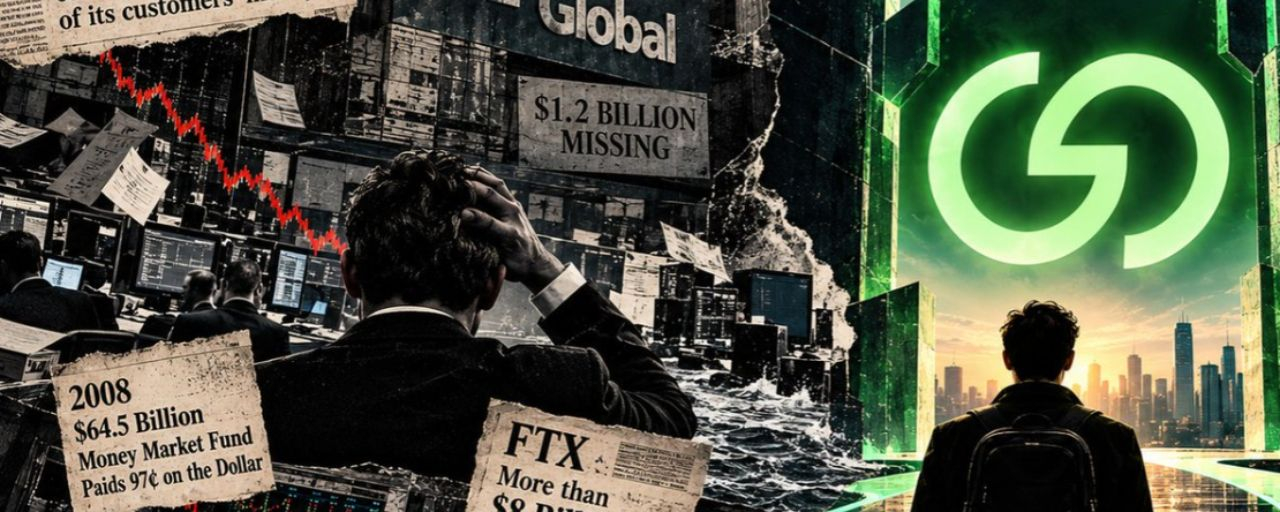


On October 31, 2011, MF Global collapsed.
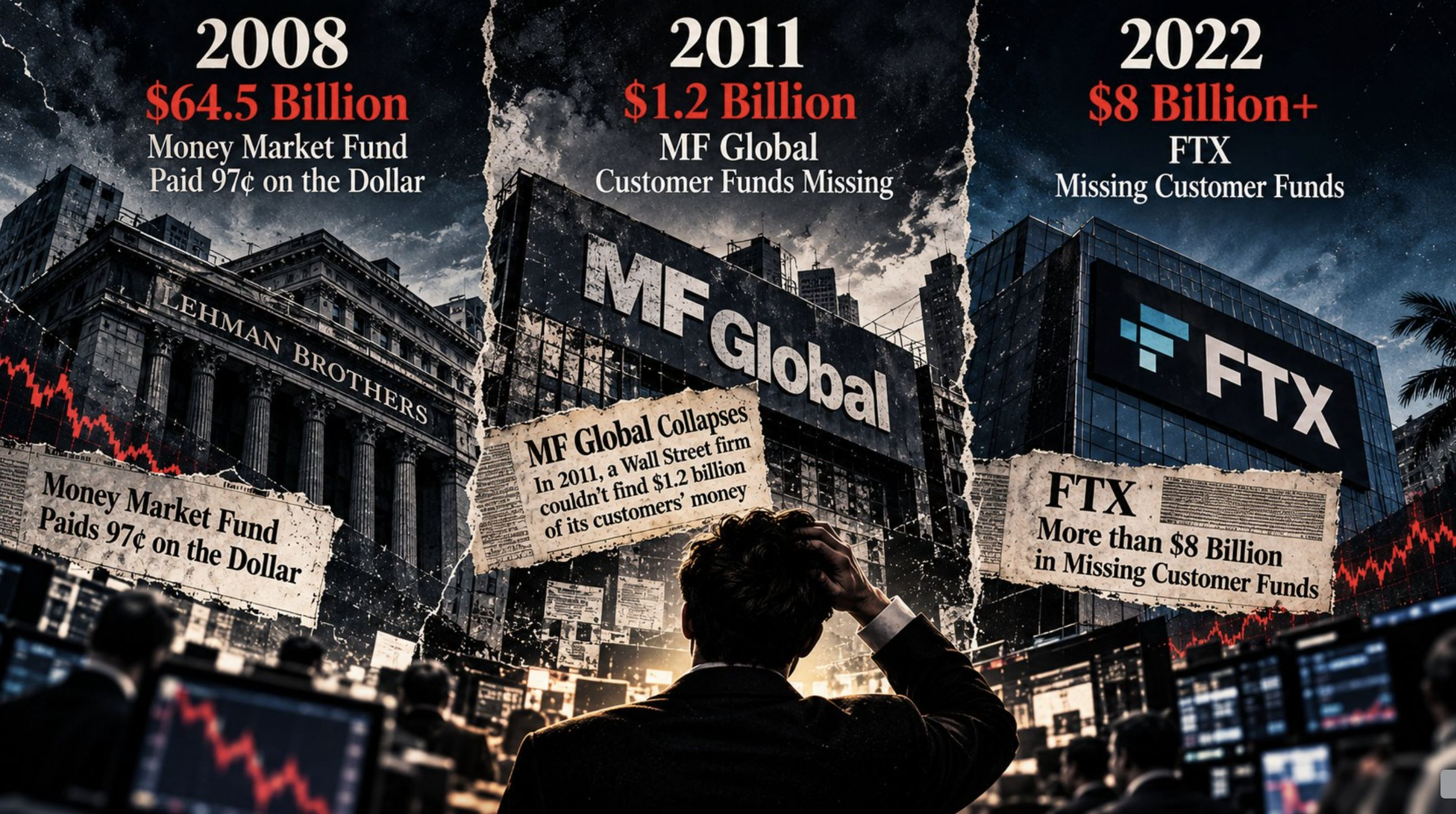
When the accounting began, about $1.2 billion in customer money was missing, spread across roughly 38,000 futures accounts. Bulk transfers later returned about 72% of it.
What's shocking is, it wasn’t the only time.
In 2008, a $64.5 billion money market fund paid investors 97 cents on the dollar and told them they couldn’t withdraw for at least a week. When FTX failed in 2022, the CFTC estimated more than $8 billion in missing customer funds.
Different markets, different decades, same moment: customers learned where their money really was only after it was gone.
The Question Every Exchange Has to Answer
A trade is a promise between two strangers, and someone has to stand in the middle and hold the money while it settles. In traditional markets that job belongs to clearing houses, regulators and licenses. The rules aren’t perfect, as MF Global showed, but there’s a rulebook and someone who can be held to it.
The answer an exchange gives to “who holds the money?” decides whether anyone should trade on it.
How Crypto Tried to Answer It
Crypto’s first answer was the centralized exchange: fast and familiar, but the exchange holds your funds. Its second was the decentralized exchange, where you keep your own assets. DEXs fixed custody but often traded slowly, and most operated with no regulator in sight.
The market spent years choosing between speed and control. A third model, the hybrid, tries to keep both.
Where GRVT Fits
$GRVT is a hybrid exchange. Order matching, risk management and position updates run off-chain, so trades execute at exchange speed, and sensitive data like margin balances and liquidation thresholds stays encrypted. Matched trades are batched into zero-knowledge proofs and submitted to a chain built on ZKsync’s Hyperchain stack, which anchors to Ethereum for final settlement. Users keep self-custody of their assets.
GRVT also went and got a license. On December 5, 2024, the Bermuda Monetary Authority issued it a Class M Digital Asset Business License under the Digital Asset Business Act. The application took about 15 months, and GRVT says it’s the first decentralized exchange to hold one. A full Class F license is the next step, and GRVT is pursuing approvals under MiCA in the EU and through ADGM in Abu Dhabi.
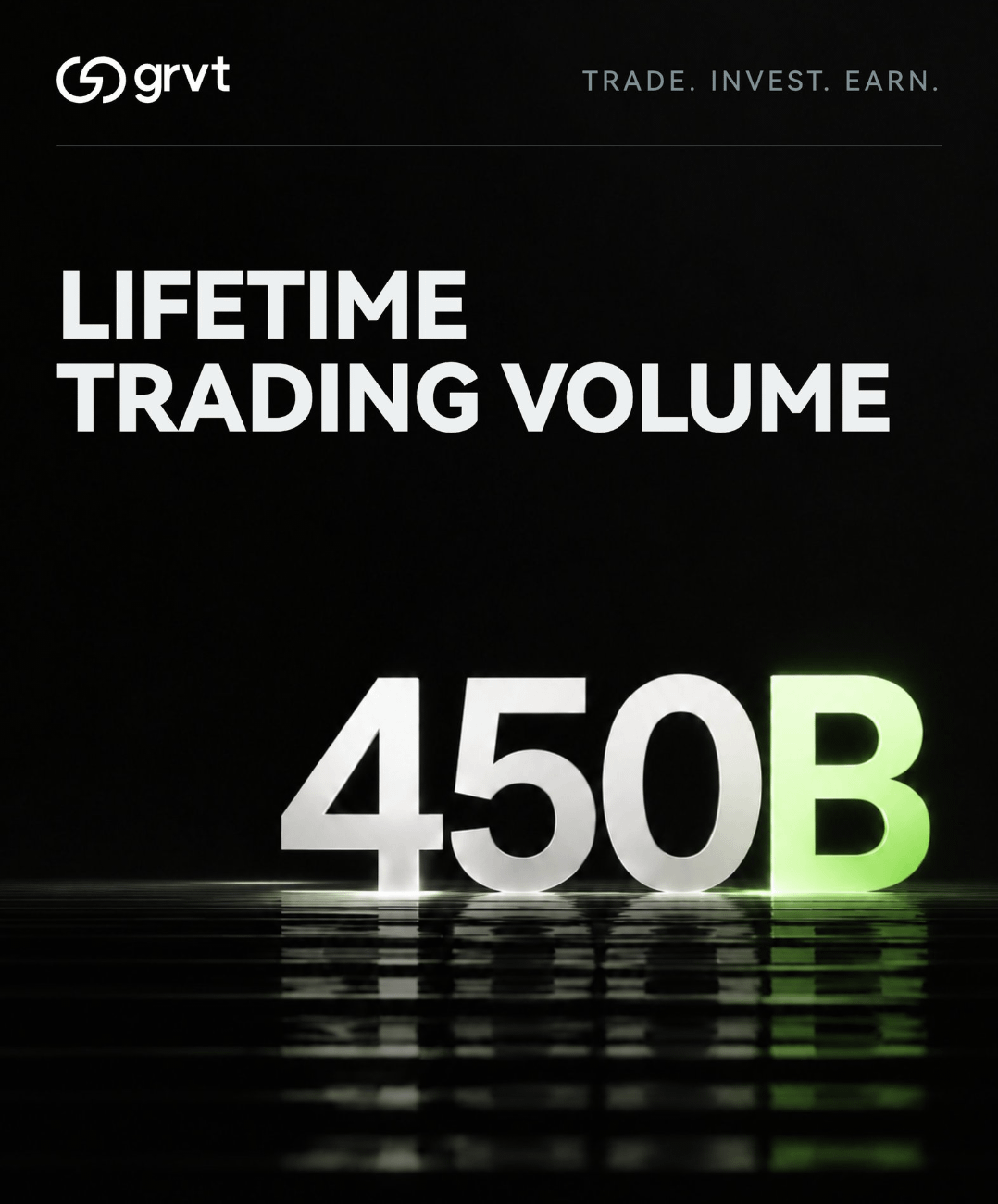
Backing came with it. GRVT closed a $19 million Series A in September 2025, co-led by the ZKsync Foundation, Further Ventures, EigenCloud and 500 Global. In January, it recorded $51.6 billion in monthly trading volume, $107.1 million in total value locked, $484.1 million in open interest and more than 10,000 monthly active traders.
What You Can Do There
The exchange runs around 200 crypto and real-world-asset perp markets from one self-custodial account.
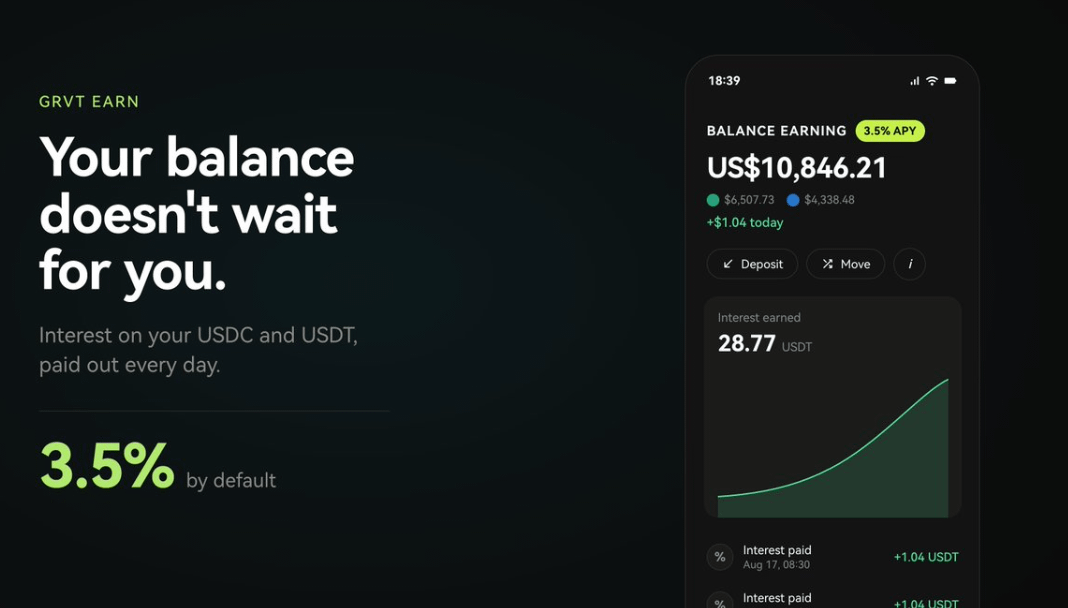
GRVT Earn pays a base yield of 3.5% by default, at US Treasury rates, on the same margin you trade with, and it keeps earning when you aren’t trading. The yield comes from DeFi protocols like Aave and from tokenized money market funds. Right now the mix includes sGHO stablecoin lending at 4.60% APY, USDY tokenized Treasuries at 3.74% and Aave lending at 3.61%. GRVT is building a $100 million USDY position with Ondo over 12 months, and it holds that position on its own balance sheet, so users don’t have to buy USDY or bridge to get the yield.
Stable Funding Perps are coming with zero trading fees and once-daily funding across commodities, stocks, FX and indices, with a target of more than 1,000 markets by the end of December. Yield as Margin arrives in November, letting Earn balances back positions while they keep accruing yield. At the end of November, GRVT 2.0 combines everything into a single self-custodial app.
The roadmap goes further. GRVT describes a Unified Margin where BTC, ETH, stablecoins and tokenized real-world assets can all serve as trading collateral while earning yield, and a prime brokerage lending product in which GRVT provides 80% of a loan and the trader supplies 20% in equity that absorbs losses first.
Final Thoughts
Every failure above came down to one question: who held the money, and what stood between it and the people who owned it. Clearing houses answer with layers of capital. GRVT’s answer combines a regulator, proofs for every settled trade and assets that stay in the user’s hands. Most exchanges grow first and think about regulation later. GRVT licensed first, then built the products on top, and that’s a stronger starting point than most of the market had when FTX fell.