💧 YOU FOUND THE PERFECT TRADE. BUT CAN YOU ENTER AND EXIT AT THE PRICE YOU WANT?
.
In crypto, being right about market direction isn't the whole game. Liquidity and slippage can affect your actual trading results.
.
Let's break down two concepts every trader should understand. 👇
.
🔹 1. WHAT IS LIQUIDITY?
.
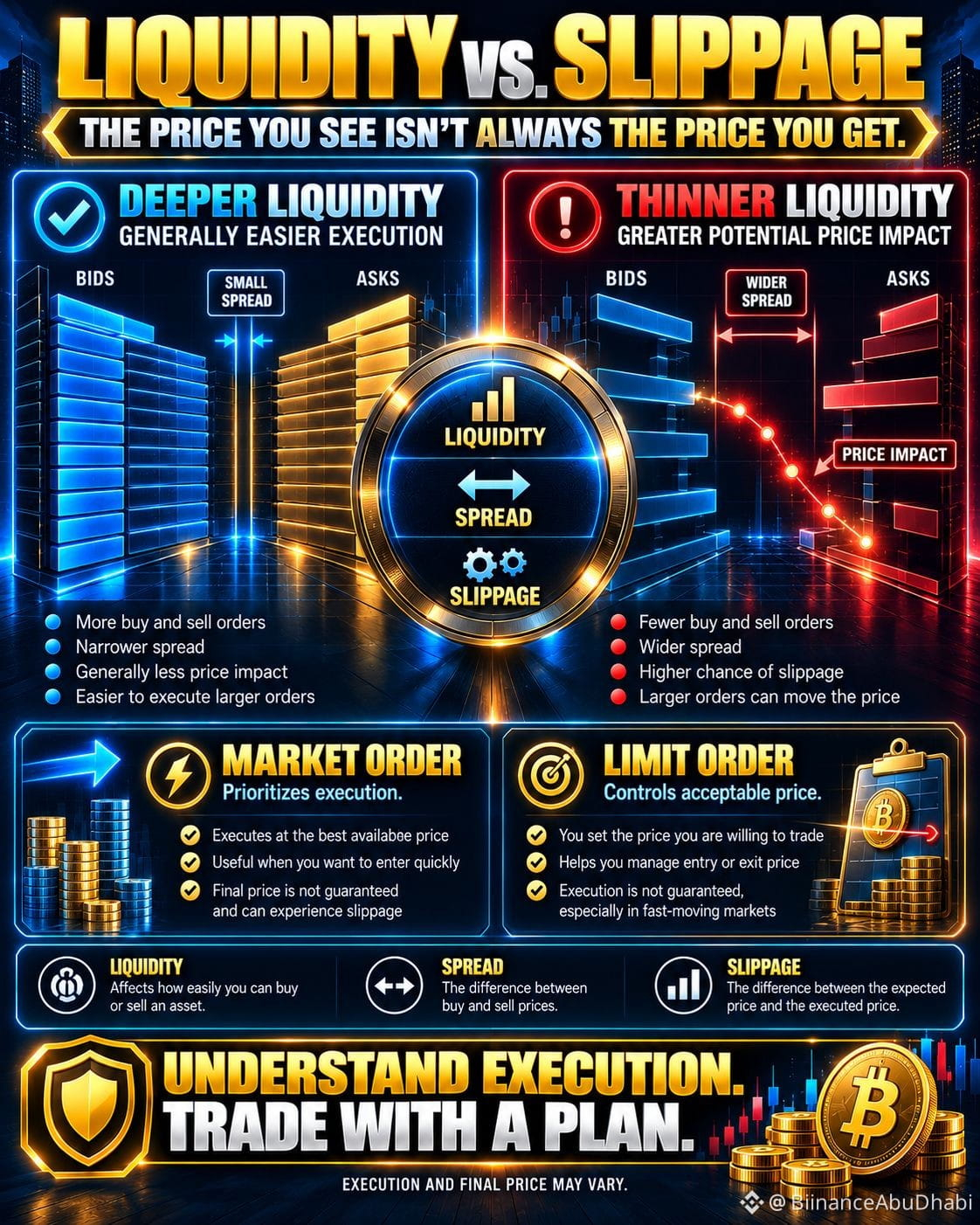
Liquidity describes how easily an asset can be bought or sold without significantly affecting its price.
.
Higher liquidity generally makes it easier to execute larger orders near the current market price.
.
Lower liquidity can mean wider spreads and greater price impact.
.
🔹 2. WHAT IS SLIPPAGE?
.
Slippage is the difference between the price you expect for a trade and the price at which it actually executes.
.
It can happen when prices move quickly, liquidity is limited, or an order consumes multiple price levels.
.
🔹 3. MARKET ORDER vs. LIMIT ORDER
.
📈 MARKET ORDER
Prioritizes execution, but the final price isn't guaranteed.
.
🎯 LIMIT ORDER
Specifies the price you're willing to accept, but execution isn't guaranteed.
.
Neither order type is perfect for every situation.
.
🔹 4. WHY TRADERS SHOULD CARE
.
A seemingly attractive setup can become less appealing when you account for:
• Bid-ask spreads
• Slippage
• Trading fees
• Market impact
.
🔹 5. HOW TO TRADE MORE CAREFULLY
.
✅ Check the order book before placing large orders.
✅ Compare the bid and ask prices.
✅ Be cautious when liquidity is thin.
✅ Consider limit orders when price control matters.
✅ Remember that stop-loss orders can also experience slippage.
.
🧠 THE KEY LESSON
.
The displayed price isn't always the price you'll receive.
.
Understanding liquidity and execution can help you make more informed trading decisions—but it cannot eliminate trading risk.
.
💬 DISCUSSION: When entering a crypto trade, do you prioritize execution speed or price control?
.
#BTC $BTC #BinanceSquare #TradingEducation #Slippage #Liquidity
.
In crypto, being right about market direction isn't the whole game. Liquidity and slippage can affect your actual trading results.
.
Let's break down two concepts every trader should understand. 👇
.
🔹 1. WHAT IS LIQUIDITY?
.
Liquidity describes how easily an asset can be bought or sold without significantly affecting its price.
.
Higher liquidity generally makes it easier to execute larger orders near the current market price.
.
Lower liquidity can mean wider spreads and greater price impact.
.
🔹 2. WHAT IS SLIPPAGE?
.
Slippage is the difference between the price you expect for a trade and the price at which it actually executes.
.
It can happen when prices move quickly, liquidity is limited, or an order consumes multiple price levels.
.
🔹 3. MARKET ORDER vs. LIMIT ORDER
.
📈 MARKET ORDER
Prioritizes execution, but the final price isn't guaranteed.
.
🎯 LIMIT ORDER
Specifies the price you're willing to accept, but execution isn't guaranteed.
.
Neither order type is perfect for every situation.
.
🔹 4. WHY TRADERS SHOULD CARE
.
A seemingly attractive setup can become less appealing when you account for:
• Bid-ask spreads
• Slippage
• Trading fees
• Market impact
.
🔹 5. HOW TO TRADE MORE CAREFULLY
.
✅ Check the order book before placing large orders.
✅ Compare the bid and ask prices.
✅ Be cautious when liquidity is thin.
✅ Consider limit orders when price control matters.
✅ Remember that stop-loss orders can also experience slippage.
.
🧠 THE KEY LESSON
.
The displayed price isn't always the price you'll receive.
.
Understanding liquidity and execution can help you make more informed trading decisions—but it cannot eliminate trading risk.
.
💬 DISCUSSION: When entering a crypto trade, do you prioritize execution speed or price control?
.
#BTC $BTC #BinanceSquare #TradingEducation #Slippage #Liquidity