

Jens_
9k Publications

Jens_
 Compte Square Vérifié+
Signaler
Bloquer l’utilisateur
Ouvert au trading
Trade régulièrement
4.9 an(s)
360 Suivis
38.8K+ Abonnés
46.9K+ J’aime
Publications
Portefeuille
Tous
Citations
Vidéos
Direct
PINNED
·
--
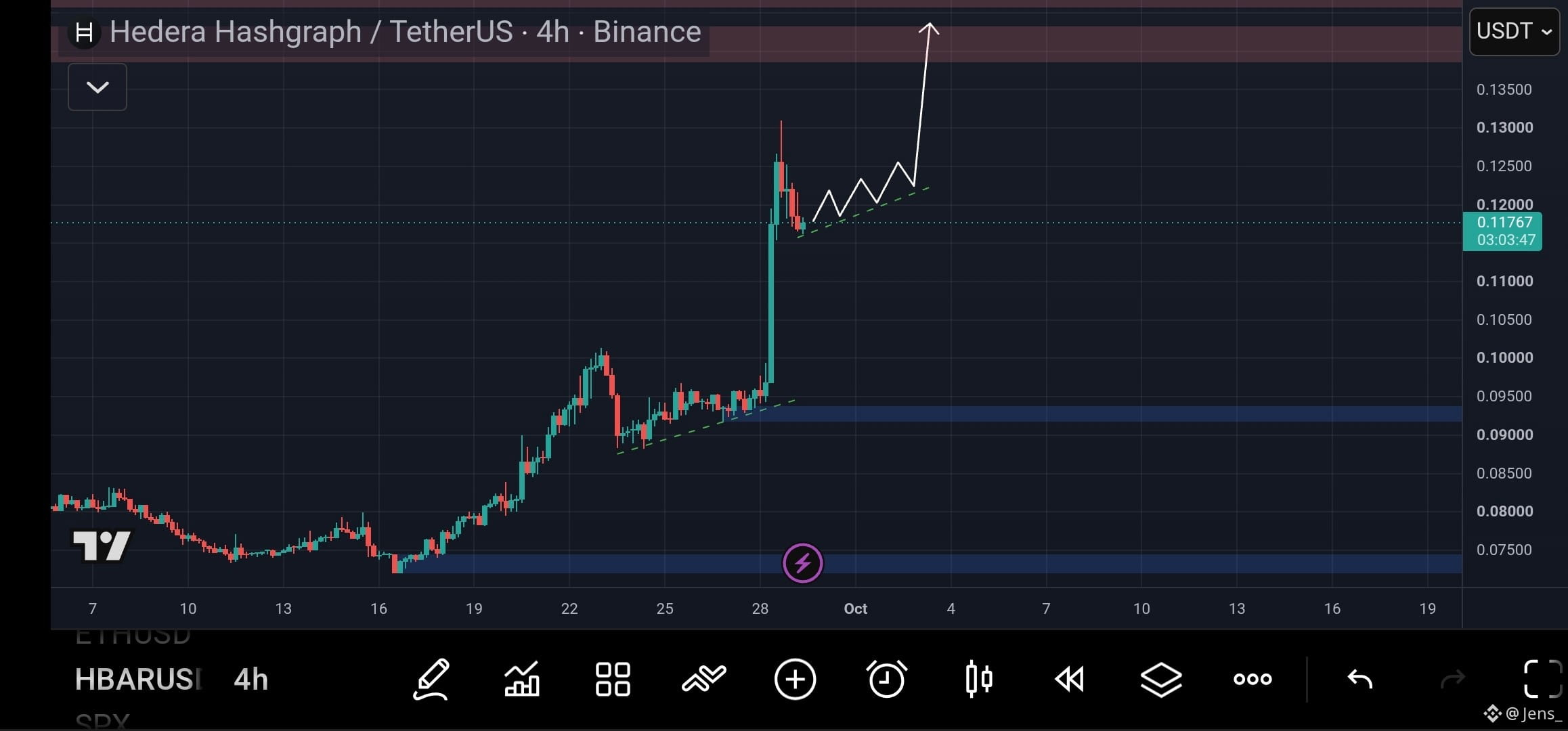
$HBAR is looking strong.
After the sharp breakout, price is consolidating around $0.117 while holding the new structure.
In my opinion, holding $0.115–$0.117 keeps the momentum positive. A clean break above $0.125 could open the way toward $0.135–$0.140.
I’m watching the breakout confirmation, not chasing the candle.
#hbar #crypto #Binance
53
93
72.5k
PINNED
·
--
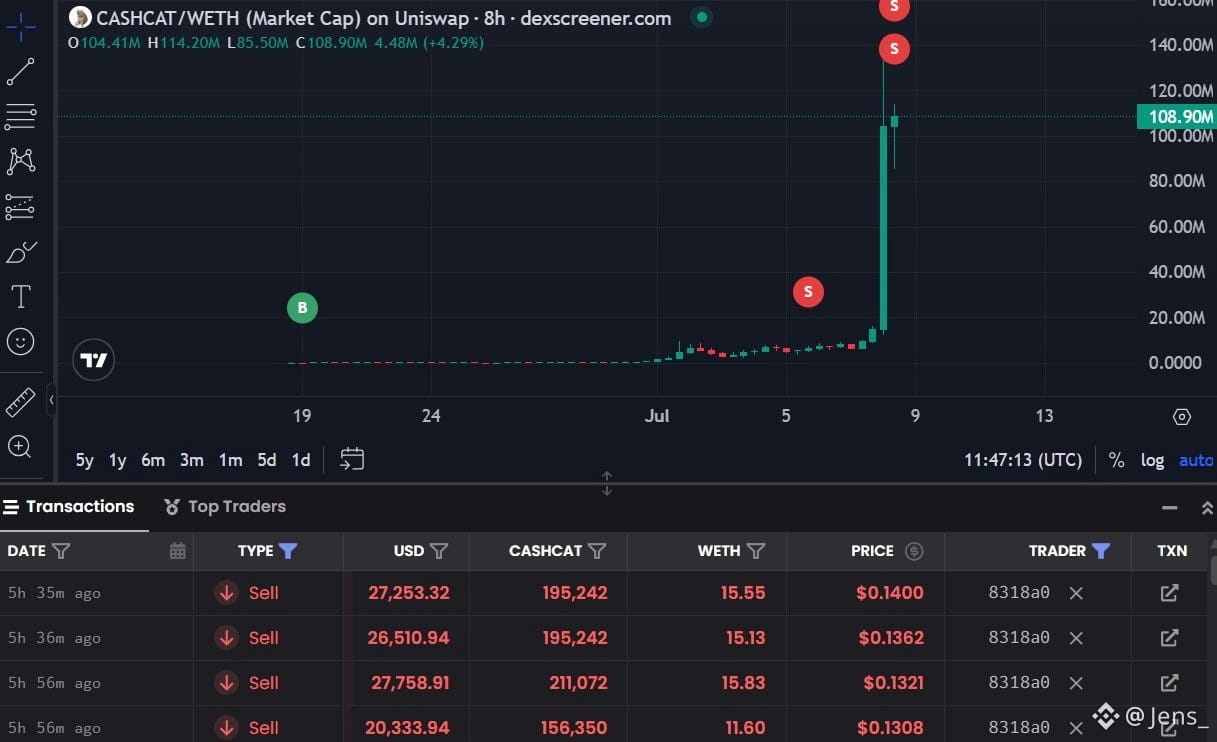
Someone made $1,600,000 with just $86.
Insane stuff.
Someone made $1,600,000 with just $86.
Insane stuff.
Insane stuff.
43
3
175
203.3k
·
--
🏆 A Special Request to My Community! 💛
I'm proudly supporting @Cas_Abb for the Blockchain 100 Awards 2026 Rising Star category!
I kindly ask all my friends and followers to cast their votes for him.👇
[Cast VOTE Here](https://app.binance.com/uni-qr/cpro/Cas_Abb?l=en&r=LPFUZDYE&uc=app_square_share_link&us=copylink)
Special thanks to everyone who votes and shows their support. It truly means a lot to me!
#RisingStars #Blockchain100
🏆 A Special Request to My Community! 💛
I'm proudly supporting @Cas Abbé for the Blockchain 100 Awards 2026 Rising Star category!
I kindly ask all my friends and followers to cast their votes for him.👇
Cast VOTE Here
Special thanks to everyone who votes and shows their support. It truly means a lot to me!
#RisingStars #Blockchain100
I'm proudly supporting @Cas Abbé for the Blockchain 100 Awards 2026 Rising Star category!
I kindly ask all my friends and followers to cast their votes for him.👇
Cast VOTE Here
Special thanks to everyone who votes and shows their support. It truly means a lot to me!
#RisingStars #Blockchain100


Best wishes for Cas
De Jens_
1
4
170
·
--
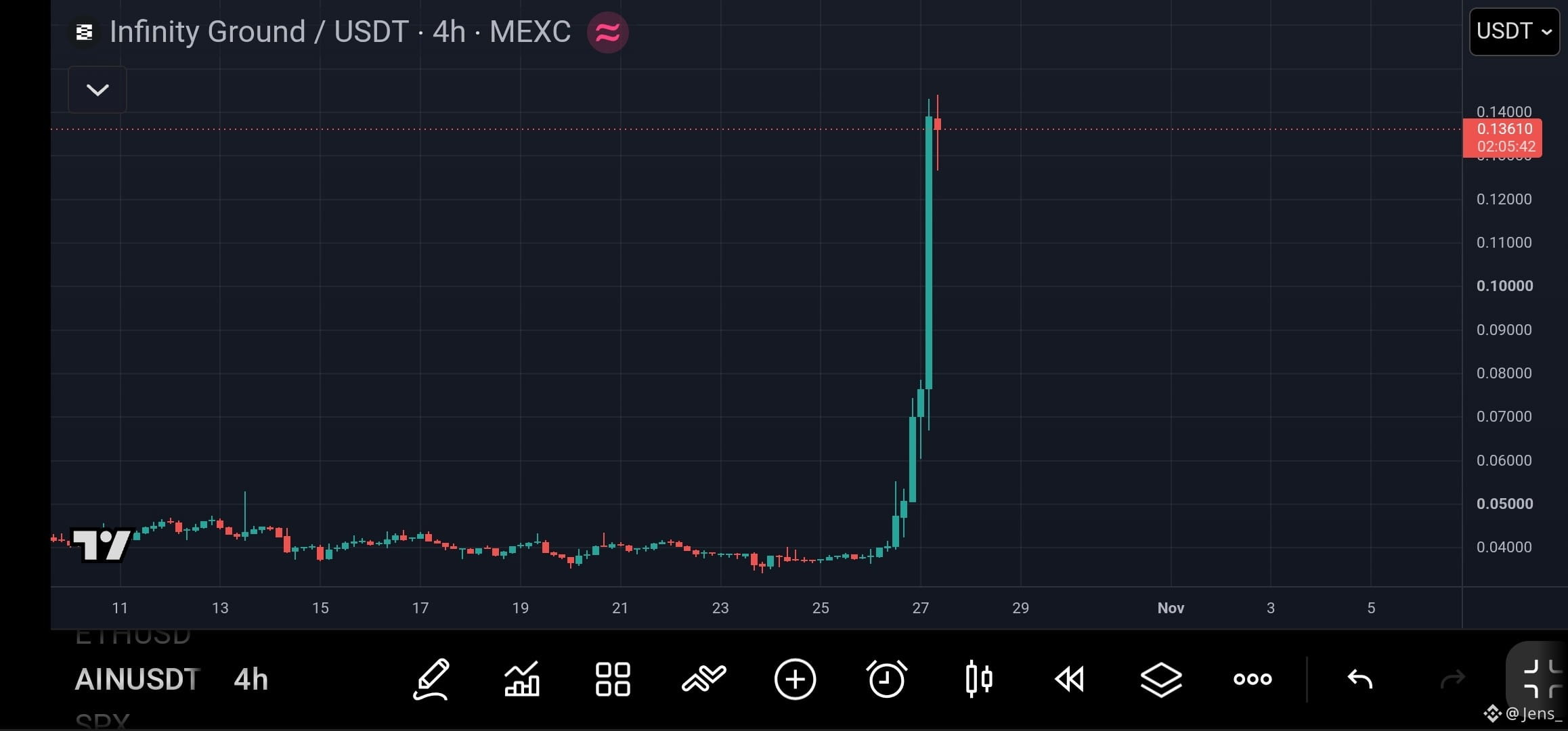
$AIN is showing explosive bullish momentum!
AIN/USDT has surged from $0.038 to nearly $0.14 on the 4H chart, breaking multiple resistance levels.
Key Levels:
🟢 Support: $0.125 – $0.130
🎯 TP1: $0.145
🎯 TP2: $0.155
🎯 TP3: $0.165
🛑 SL: Below $0.120
A breakout above $0.140 could extend the rally, but the sharp vertical move increases pullback risk.
I'm watching for consolidation before considering an entry. Avoid chasing the pump.
#AIN #crypto #Binance #Write2Earn
17
17
3.6k
·
--
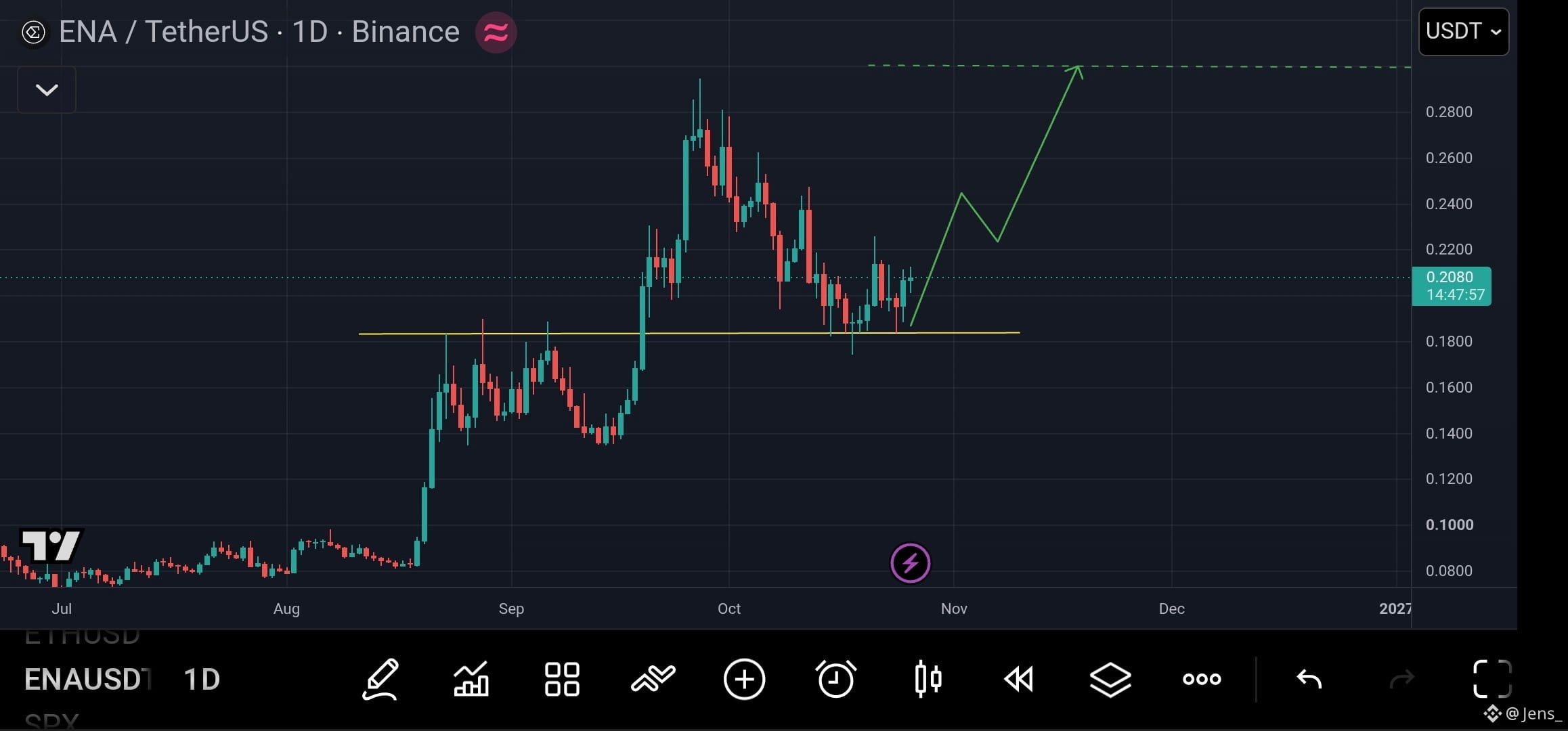
$ENA is showing signs of recovery on the daily chart!
Trading near $0.2080, buyers are defending the key $0.183 support zone.
Support: $0.183–$0.185
Targets: $0.240 / $0.270 / $0.300
A breakout above $0.220 could strengthen bullish momentum, while losing $0.183 would weaken the setup.
I'm bullish as long as support holds. 🚀
#ENA #crypto #Binance
Trading near $0.2080, buyers are defending the key $0.183 support zone.
Support: $0.183–$0.185
Targets: $0.240 / $0.270 / $0.300
A breakout above $0.220 could strengthen bullish momentum, while losing $0.183 would weaken the setup.
I'm bullish as long as support holds. 🚀
#ENA #crypto #Binance
31
24
7k
·
--
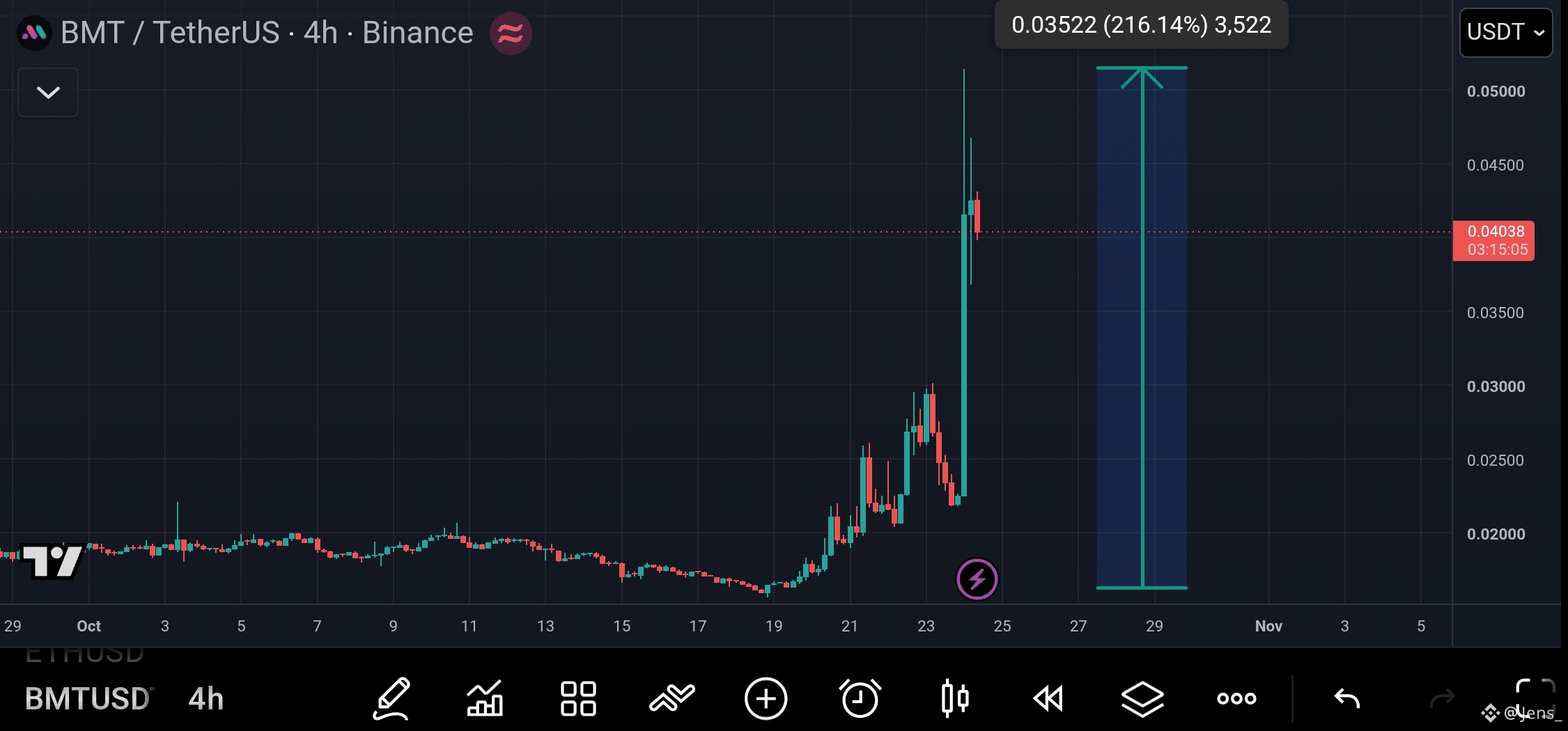
$BMT is showing explosive bullish momentum on the 4H
chart, surging over 216% from recent lows.
Current Price: $0.04038
Support: $0.037–$0.038
Resistance: $0.045–$0.050
Holding above $0.038 could trigger another push toward $0.050. However, a healthy pullback is possible after such a massive rally.
I'm watching for a confirmed retest before entering.
#BMT #crypto #Binance
32
2
43
22.3k
·
--
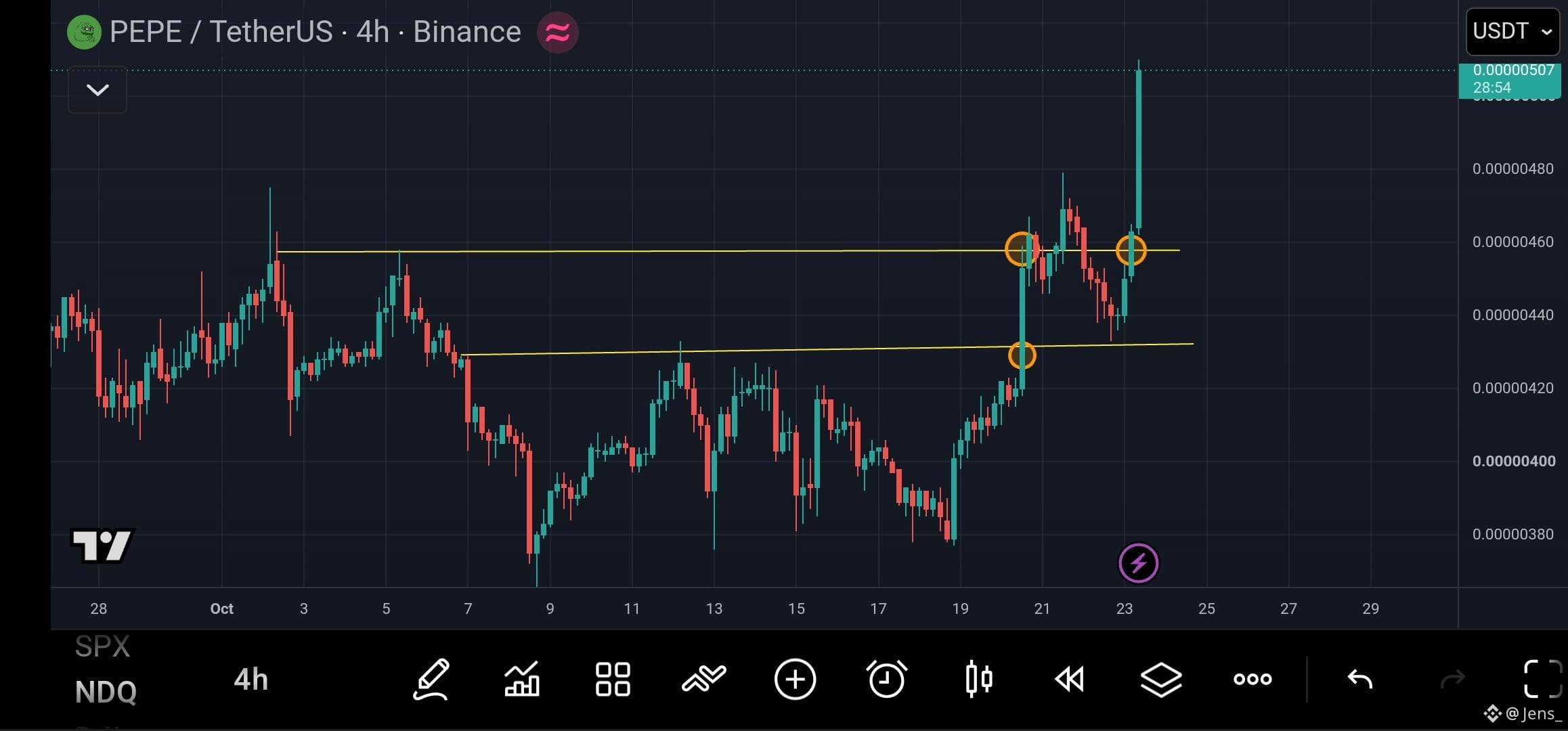
$PEPE is showing strong bullish momentum on the chart after breaking above the key $0.00000460 resistance.
The interesting part? Price retested the breakout zone and bounced strongly, reaching $0.00000507.
Key Levels:
- Support: 0.00000460
- Strong Support: 0.00000432
- TP1: 0.00000520
- TP2: 0.00000550
My view: Holding above 0.00000460 keeps the bullish setup alive. A drop below that level could weaken momentum.
I'm bullish but watching for confirmation before chasing.
Are you bullish on $PEPE ?
#PEPE #crypto #Binance
24
1
38
5.8k
·
--
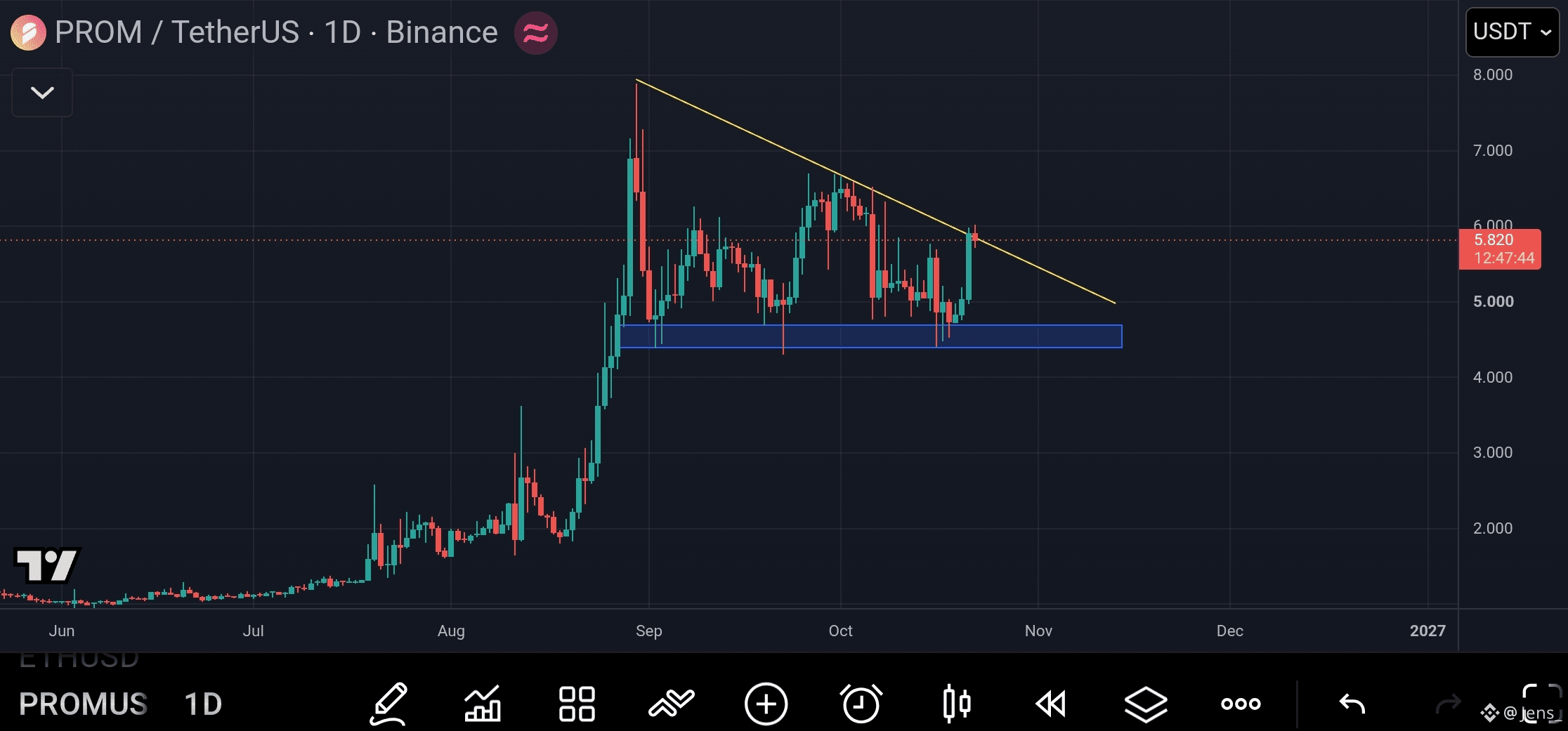
$PROM Testing a Major Breakout!
$PROM is trading near $5.82, testing a descending trendline on the daily chart.
Support: $4.40–$4.70
Resistance: $6.00 | $6.50 | $7.00
My Opinion: I'm cautiously bullish while support holds. A daily close above $6.00 could confirm a breakout toward $6.50–$7.00. A rejection may trigger another support retest.
I'm waiting for confirmation, not chasing.
#prom #crypto #Binance
25
19
4.9k
·
--
Would you let an AI agent spend $10 on your behalf?
My answer depends on whether I can set its limits and see where the money went.
That’s the angle that interests me about Kite and the agent economy: how software gets permission to make useful purchases while people retain control.
According to Kite’s documentation, Kite Passport lets users approve a spending session with a passkey. That session defines a total budget, a limit for each transaction, and a time window. The agent can then discover and pay for services within those approved limits.
Imagine a research assistant with a $3 budget, a maximum of $0.50 per purchase, and one hour to complete its work. Those are illustrative limits, but they show why bounded spending could be useful: small purchases can happen without interrupting the user for every payment.
Kite’s documented payment flow supports paid API requests through x402, with completed payments and session spending available to review in the Passport dashboard. That connects an agent’s access to a service with a record of what it spent.
My takeaway: payment controls are necessary, but the quality of the purchase still matters. An agent could stay within its budget and buy information that turns out to be useless.
For me, $KITE practical test is whether agents can complete worthwhile tasks, keep costs understandable, and leave users able to review the results. I’d judge progress through useful services and repeat usage.
What would you first trust an agent to pay for: research data, a software tool, or a routine digital service?
#KiteBBW

45
39
5.7k
·
--
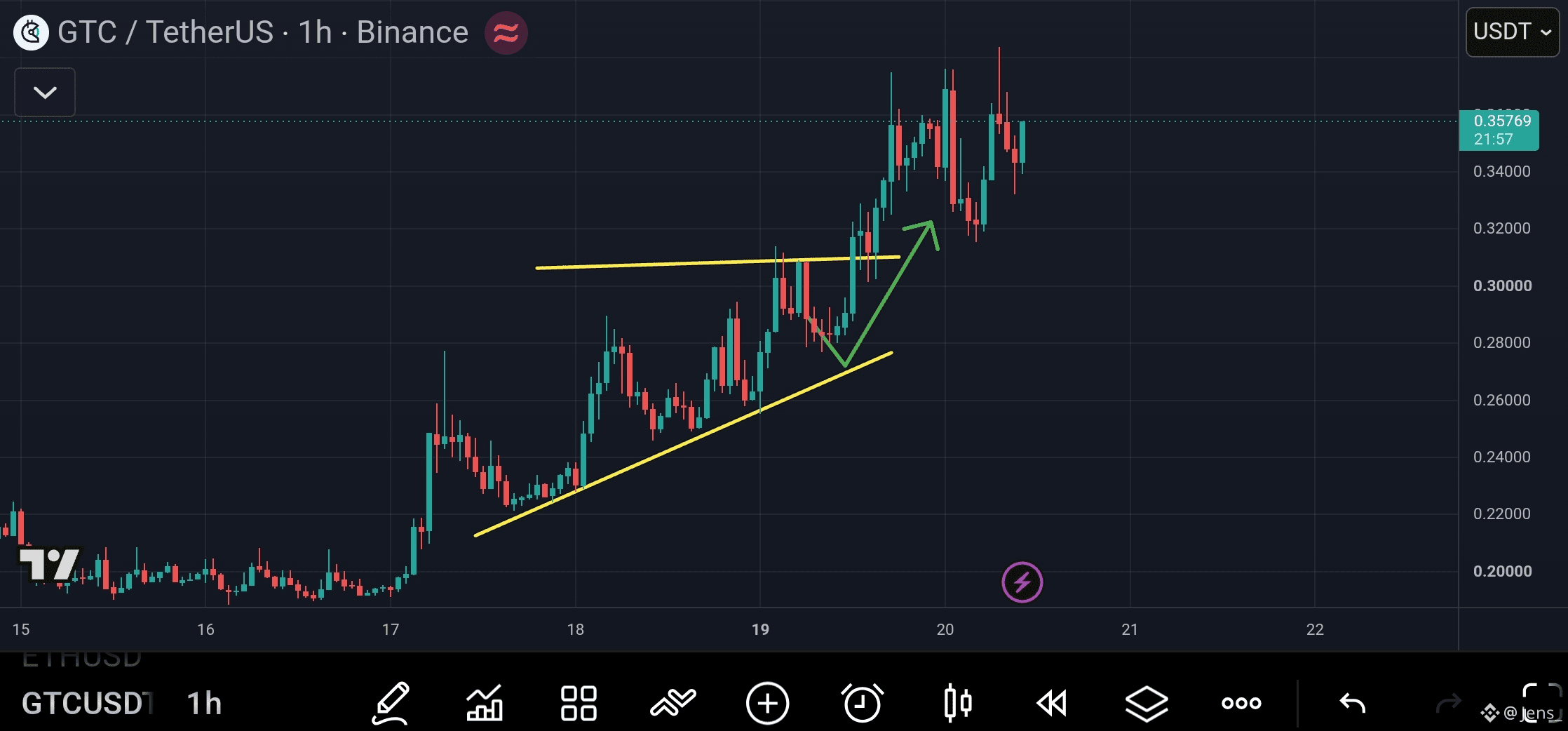
$GTC — My Breakout Call Played Out! 🎯
Yesterday, I highlighted $0.305 as the key breakout level, with $0.320 as my next target.
Today, GTC has pushed beyond both levels, reaching the $0.36–$0.37 area before pulling back.
The chart tells the story.
✅ $0.305 resistance broken
✅ $0.320 target reached
✅ Bullish momentum followed through
Now I'm watching $0.320–$0.330 as potential support and $0.360–$0.380 as the next resistance zone.
The original setup worked, but the next move still needs confirmation.
I shared the setup before the breakout. Now the chart shows what happened.
#GTC #crypto #Binance #Write2Earn
Jens_
·
--
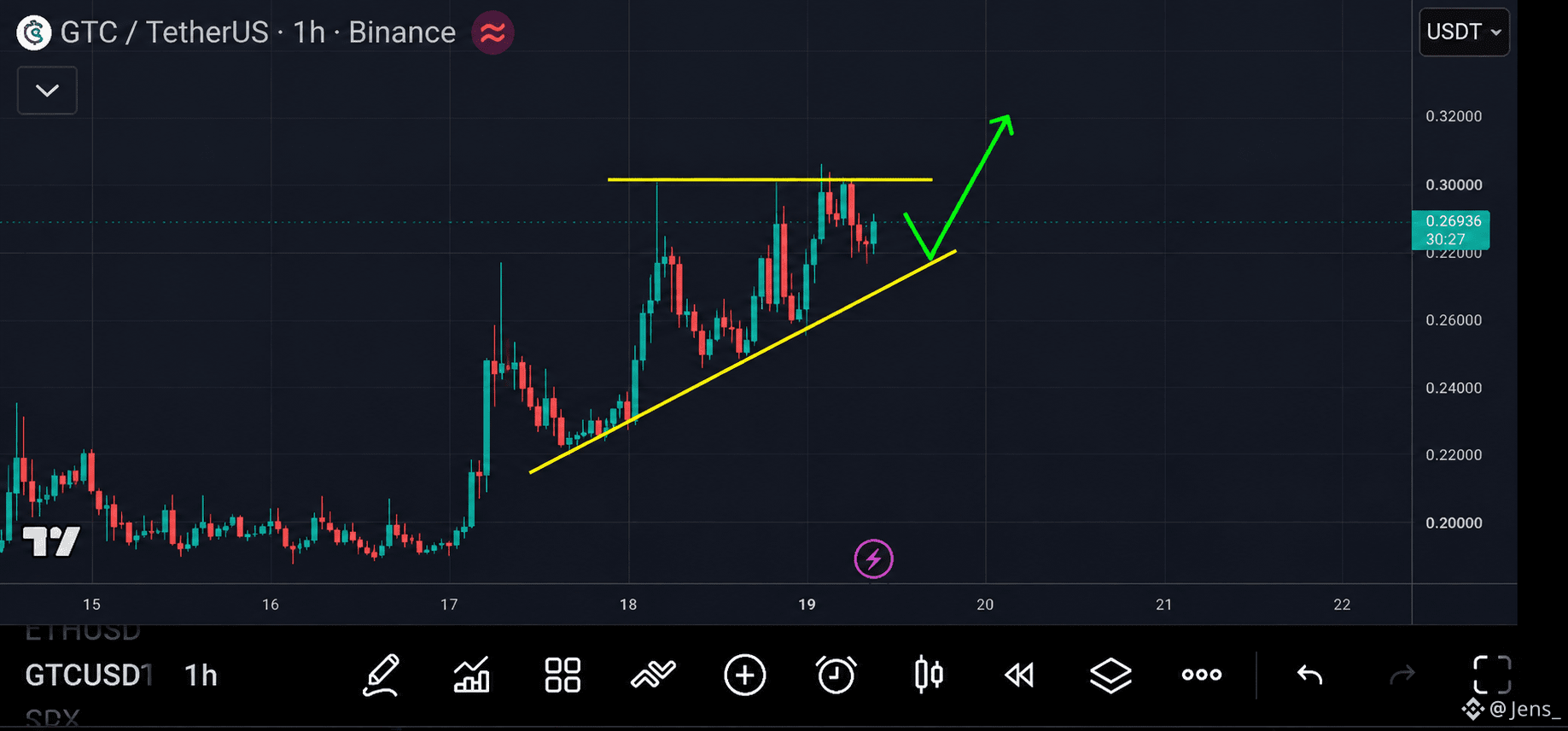
$GTC is showing bullish momentum.
$GTC is forming a potential ascending triangle, with resistance near $0.305.
A confirmed breakout could open the door toward $0.320, while $0.280 remains important support.
I'm bullish on confirmation, not chasing candles.
#GTC #crypto #Binance #Write2Earn
$GTC is forming a potential ascending triangle, with resistance near $0.305.
A confirmed breakout could open the door toward $0.320, while $0.280 remains important support.
I'm bullish on confirmation, not chasing candles.
#GTC #crypto #Binance #Write2Earn
26
30
12.2k
·
--
$GTC is showing bullish momentum.
$GTC is forming a potential ascending triangle, with resistance near $0.305.
A confirmed breakout could open the door toward $0.320, while $0.280 remains important support.
I'm bullish on confirmation, not chasing candles.
#GTC #crypto #Binance #Write2Earn
$GTC is showing bullish momentum.
$GTC is forming a potential ascending triangle, with resistance near $0.305.
A confirmed breakout could open the door toward $0.320, while $0.280 remains important support.
I'm bullish on confirmation, not chasing candles.
#GTC #crypto #Binance #Write2Earn
$GTC is forming a potential ascending triangle, with resistance near $0.305.
A confirmed breakout could open the door toward $0.320, while $0.280 remains important support.
I'm bullish on confirmation, not chasing candles.
#GTC #crypto #Binance #Write2Earn
33
1
24
7.3k
·
--
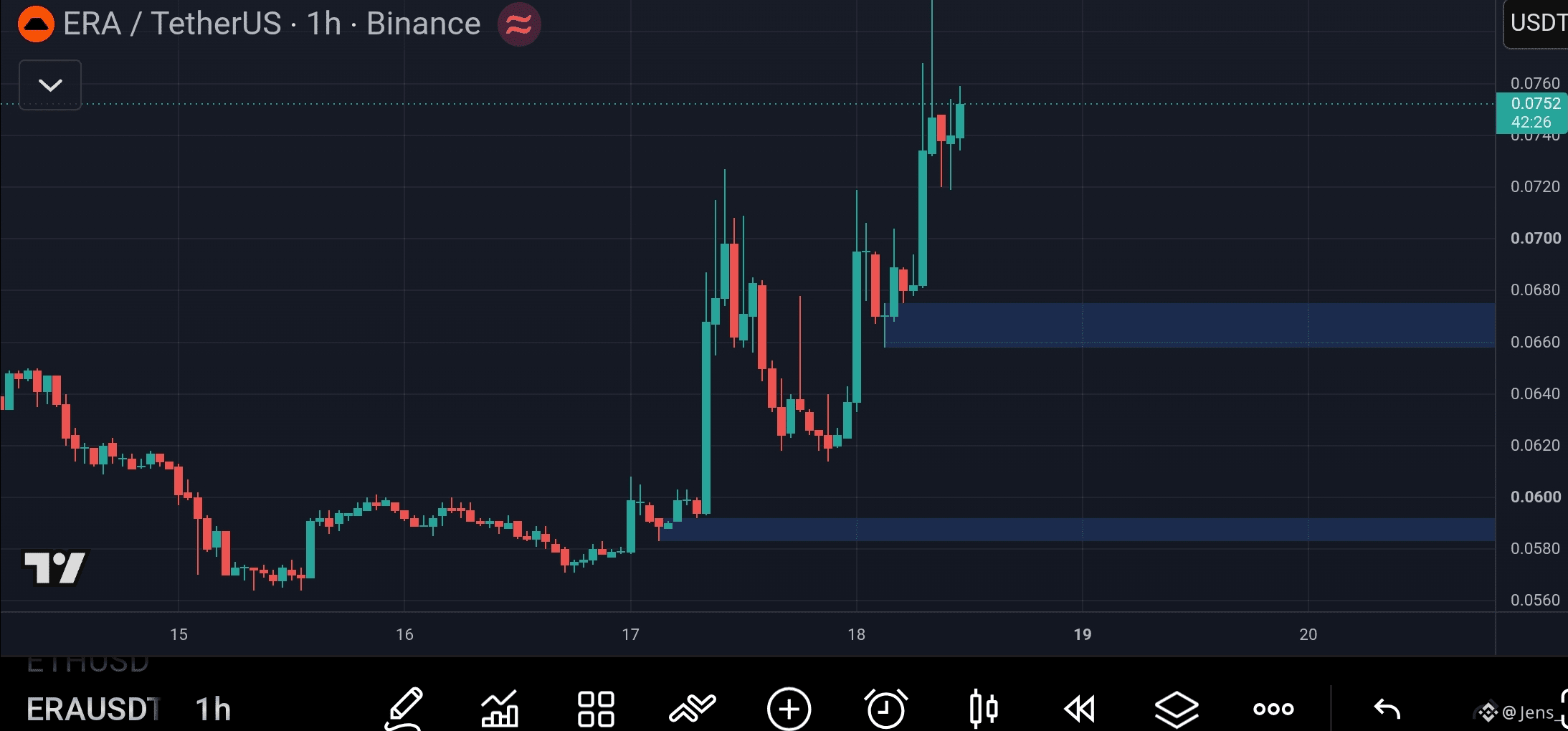
Called the $ERA breakout yesterday. Today, price has already hit $0.0752, clearing my first target at $0.0750! 🎯
Bullish momentum remains strong.
Key levels I'm watching:
Support: $0.0720–$0.0740
Next Target: $0.0780
Breakout Target: $0.0800
Not chasing this rally. A healthy retest would offer better confirmation.
Can $ERA keep pushing higher?
#ERA #crypto #Binance
Bullish momentum remains strong.
Key levels I'm watching:
Support: $0.0720–$0.0740
Next Target: $0.0780
Breakout Target: $0.0800
Not chasing this rally. A healthy retest would offer better confirmation.
Can $ERA keep pushing higher?
#ERA #crypto #Binance
Jens_
·
--
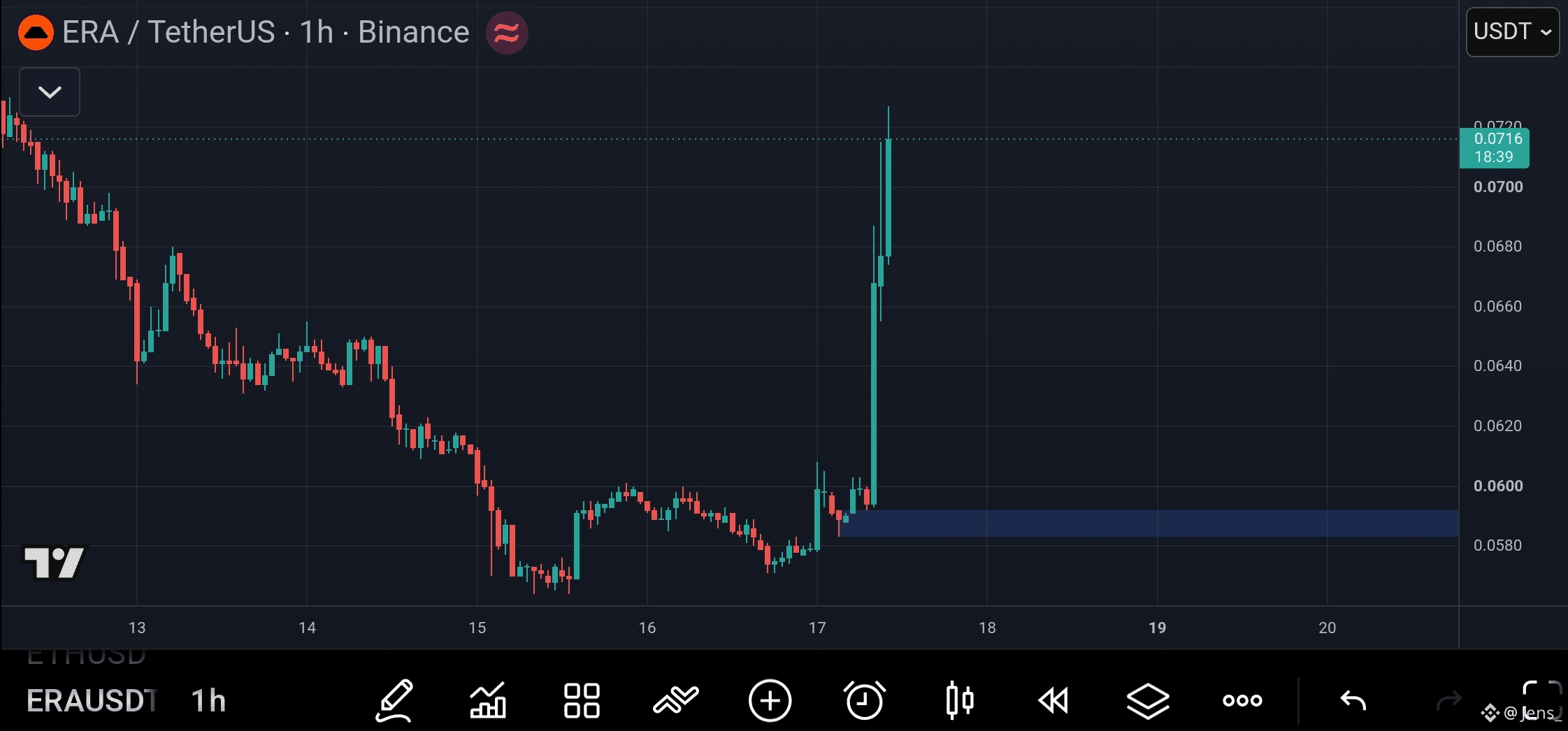
$ERA has made a strong bullish move on the chart, surging toward $0.0716 after breaking above $0.0600.
Key levels I'm watching:
Support: $0.0585–$0.0592
Resistance: $0.0720
Next Targets: $0.0750 / $0.0780
My view is bullish, but I prefer waiting for a healthy retest rather than chasing this sharp move.
Can $ERA sustain the breakout?
#ERA #crypto #Binance
Key levels I'm watching:
Support: $0.0585–$0.0592
Resistance: $0.0720
Next Targets: $0.0750 / $0.0780
My view is bullish, but I prefer waiting for a healthy retest rather than chasing this sharp move.
Can $ERA sustain the breakout?
#ERA #crypto #Binance
30
1
27
7k
·
--
$ERA has made a strong bullish move on the chart, surging toward $0.0716 after breaking above $0.0600.
Key levels I'm watching:
Support: $0.0585–$0.0592
Resistance: $0.0720
Next Targets: $0.0750 / $0.0780
My view is bullish, but I prefer waiting for a healthy retest rather than chasing this sharp move.
Can $ERA sustain the breakout?
#ERA #crypto #Binance
Key levels I'm watching:
Support: $0.0585–$0.0592
Resistance: $0.0720
Next Targets: $0.0750 / $0.0780
My view is bullish, but I prefer waiting for a healthy retest rather than chasing this sharp move.
Can $ERA sustain the breakout?
#ERA #crypto #Binance
35
1
26
10.4k
·
--
Vérifié
@nillionnetwork Privacy matters before a trading decision becomes public.
That’s what interests me about Covenants: encrypted instructions that stay sealed until a specified condition is met.
An order or bid could remain private until its release condition is satisfied. For me, that opens an interesting design space for developers building financial applications.
With DUSK, the first release of Covenants, on Ethereum mainnet, I’m watching how builders turn this capability into useful products.
Looking ahead at Nillion’s seven-phase roadmap, the planned expansion across EVM chains stands out. Bringing these capabilities to more ecosystems could give developers more room to experiment.
My long-term interest in $NIL comes down to practical adoption: applications people use, developers who keep building, and privacy with a clear purpose.
#NIL #crypto #Binance
@Nillion Privacy matters before a trading decision becomes public.
That’s what interests me about Covenants: encrypted instructions that stay sealed until a specified condition is met.
An order or bid could remain private until its release condition is satisfied. For me, that opens an interesting design space for developers building financial applications.
With DUSK, the first release of Covenants, on Ethereum mainnet, I’m watching how builders turn this capability into useful products.
Looking ahead at Nillion’s seven-phase roadmap, the planned expansion across EVM chains stands out. Bringing these capabilities to more ecosystems could give developers more room to experiment.
My long-term interest in $NIL comes down to practical adoption: applications people use, developers who keep building, and privacy with a clear purpose.
#NIL #crypto #Binance

40
46
6.8k
·
--
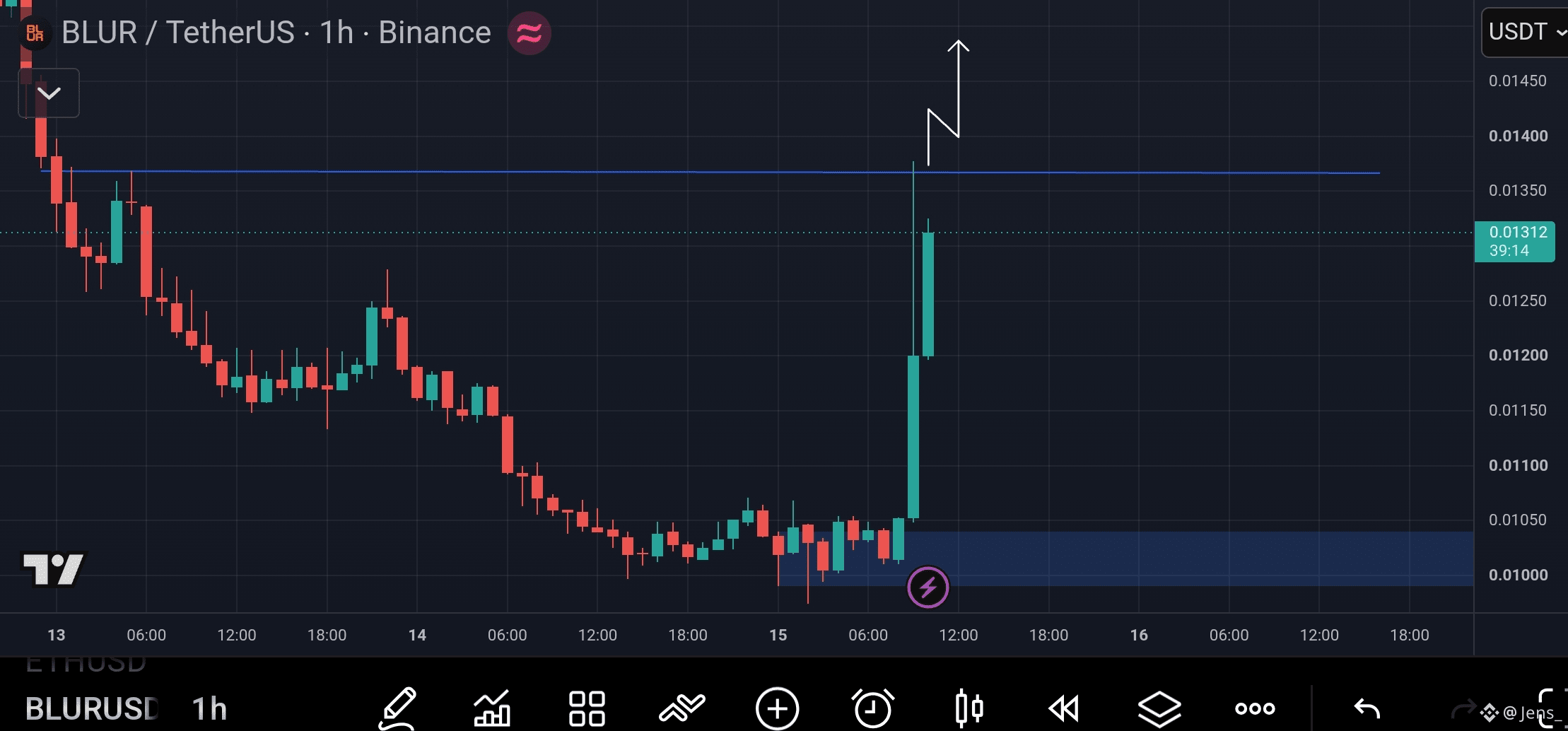
BLUR Showing Strong Bullish Momentum!
$BLUR has bounced strongly from the 0.0100 demand zone and is now trading near 0.0131.
The key resistance I'm watching is 0.0136–0.0137. A clean breakout could open the way toward 0.0140–0.0148.
My view: Bullish momentum is building, but I prefer confirmation above resistance before expecting another move.
#BLUR #crypto #Binance
30
28
5.7k
·
--
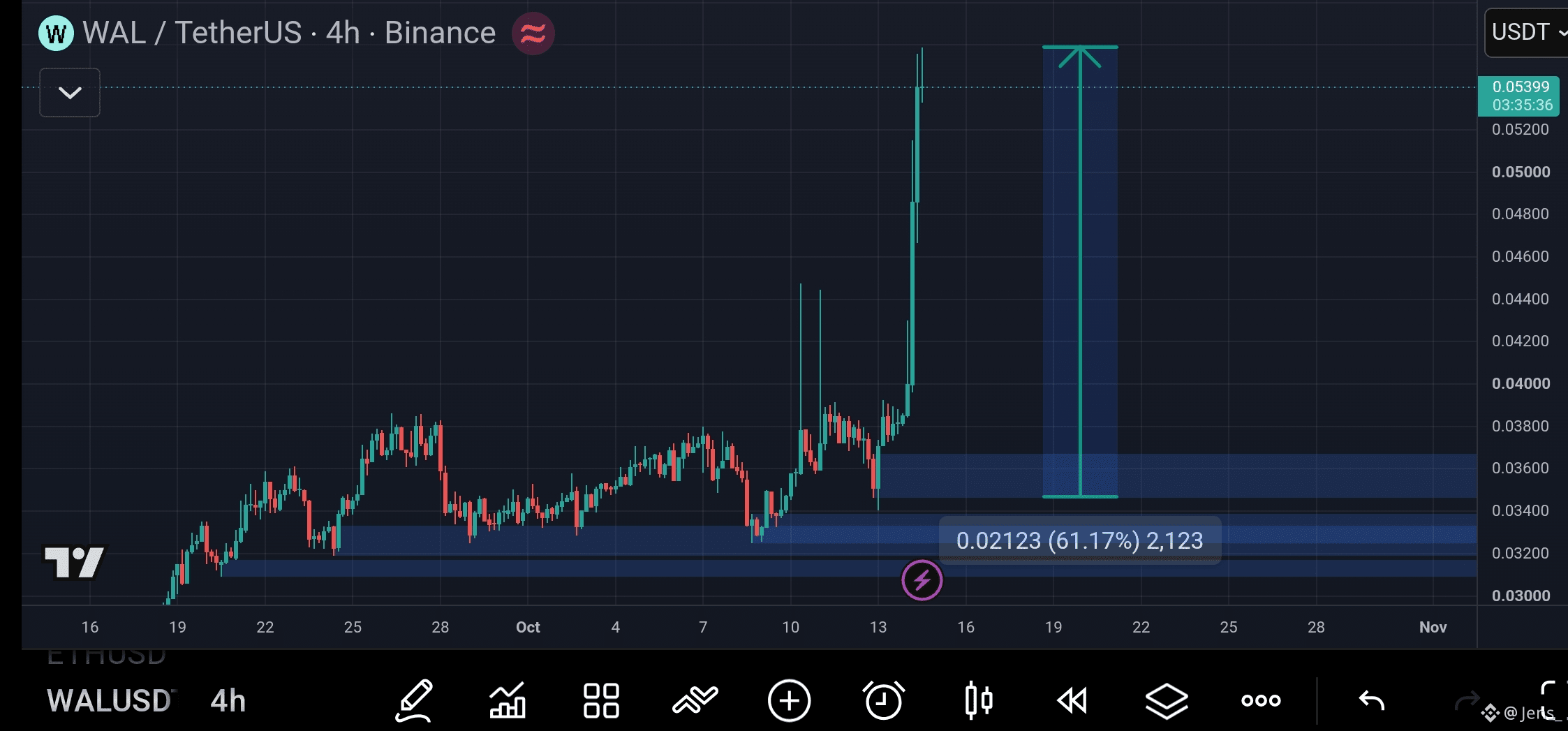
$WAL has made a strong move, breaking above the 0.038 resistance and pushing toward 0.054.
My view: Momentum looks bullish, but I wouldn't chase this spike.
Key levels:
Resistance: 0.054–0.055
First support: 0.038–0.040
Major demand zone: 0.035–0.036
A successful retest could support further upside, while losing 0.035 would weaken the bullish setup.
Bullish bias, but confirmation matters.
#wal #walrus #crypto #Binance
31
1
26
6.1k
·
--
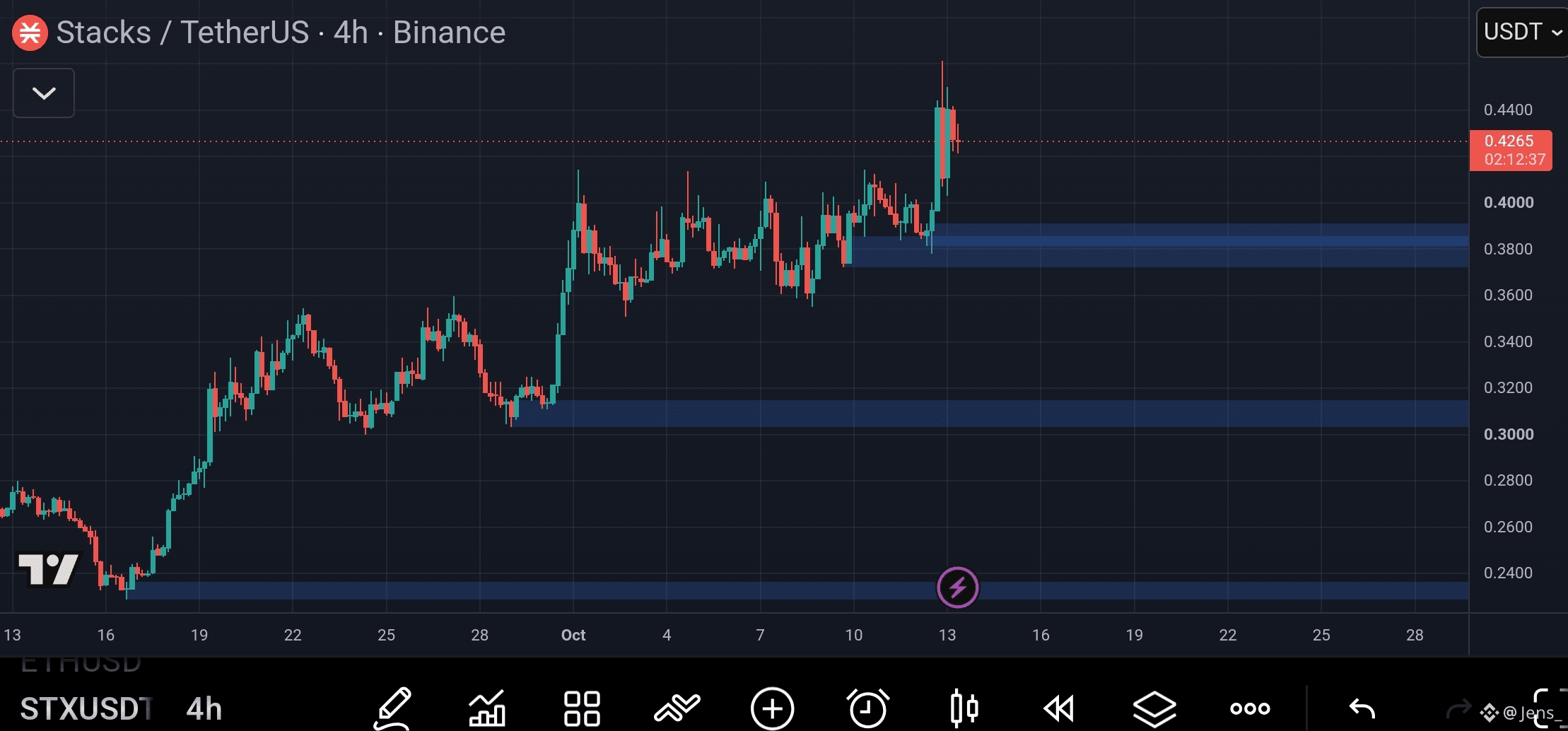
$STX showing strong bullish momentum on the chart.
$STX broke above 0.40 and pushed toward 0.44 before facing rejection.
Key support: 0.38–0.39
Resistance: 0.44–0.45
Holding above 0.40 keeps the bullish structure intact. A clean breakout above 0.44 could trigger another move higher.
My view: Bullish, but waiting for confirmation.
#STX #crypto #Binance
30
1
28
5.6k
·
--
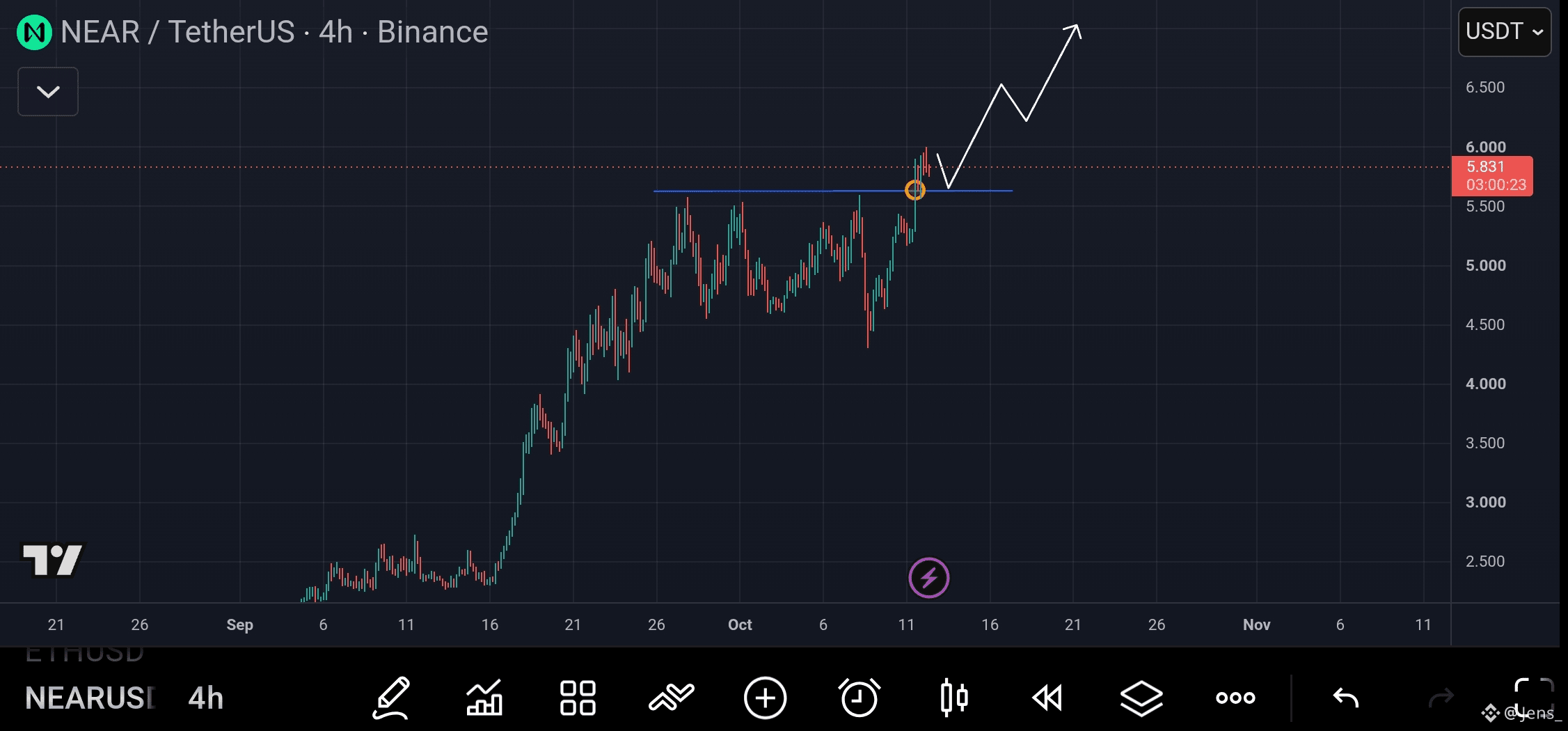
$NEAR Breakout Looks Promising!
NEAR is trading around $5.83 on the chart after breaking above key resistance near $5.60.
My view: A successful retest of $5.60 could open the door toward $6.00, $6.50 and $7.00.
If support fails, another pullback is possible.
Bullish sentiment, but waiting for confirmation.
#Near #crypto #Binance
NEAR is trading around $5.83 on the chart after breaking above key resistance near $5.60.
My view: A successful retest of $5.60 could open the door toward $6.00, $6.50 and $7.00.
If support fails, another pullback is possible.
Bullish sentiment, but waiting for confirmation.
#Near #crypto #Binance
36
45
18.1k
·
--
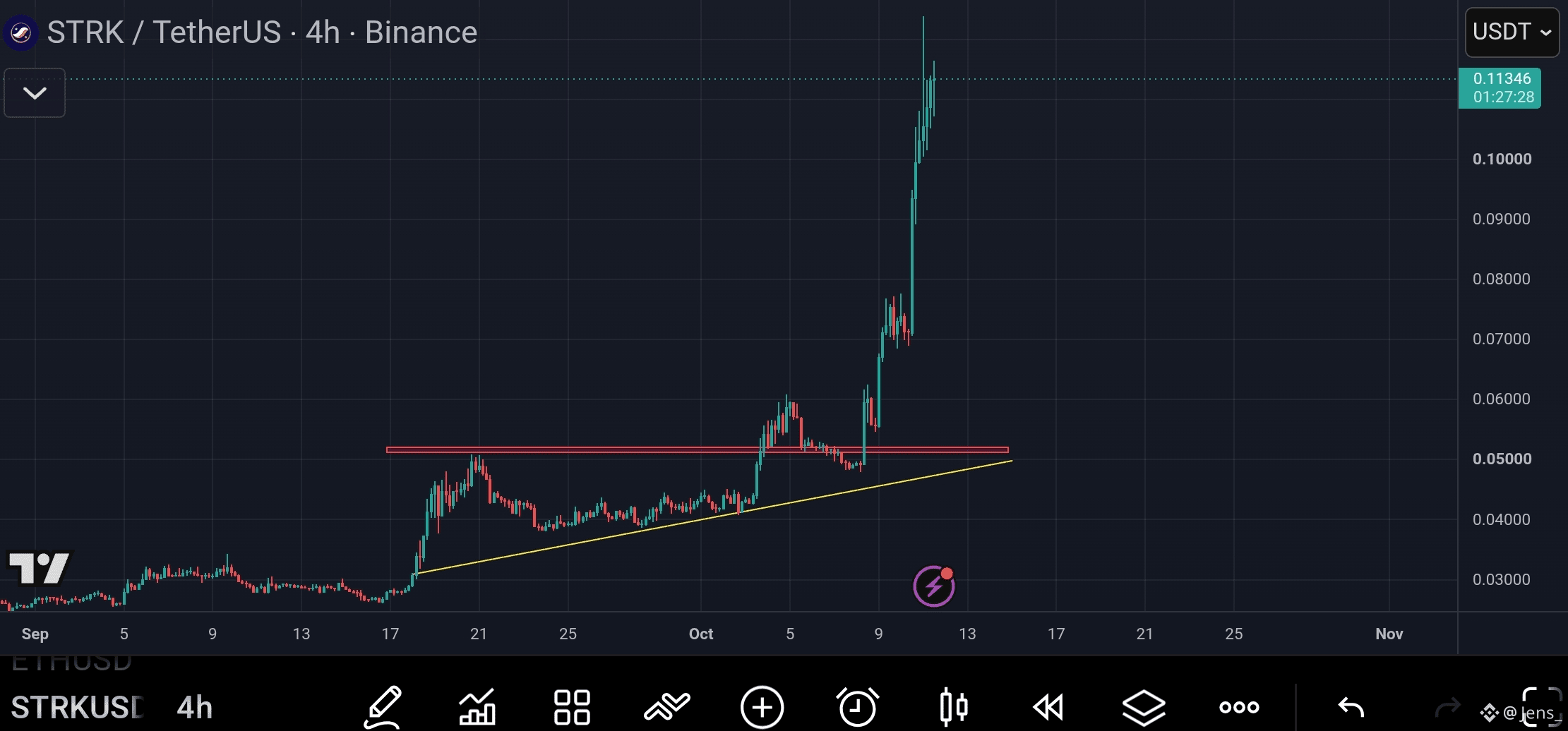
My previous $STRK breakout analysis played out even better than expected.
On October 4, I highlighted the breakout above 0.049–0.050, with 0.055 and 0.060 as my targets.
Both targets were cleared, and STRK has now surged above 0.11.
The chart tells the story. Patience, structure, and confirmation matter more than chasing candles.
What a move for $STRK !
#strk #crypto #Binance
Jens_
·
--
$STRK is showing a clean bullish breakout from an ascending triangle.
The $0.049–$0.050 resistance has been cleared with strong momentum. If this zone flips into support, $0.055 is the first level I’m watching, followed by $0.060.
A drop back below $0.049 would weaken the setup.
No chasing. I’d rather wait for the retest.
#strk #crypto #Binance
The $0.049–$0.050 resistance has been cleared with strong momentum. If this zone flips into support, $0.055 is the first level I’m watching, followed by $0.060.
A drop back below $0.049 would weaken the setup.
No chasing. I’d rather wait for the retest.
#strk #crypto #Binance
31
2
25
5.5k
·
--
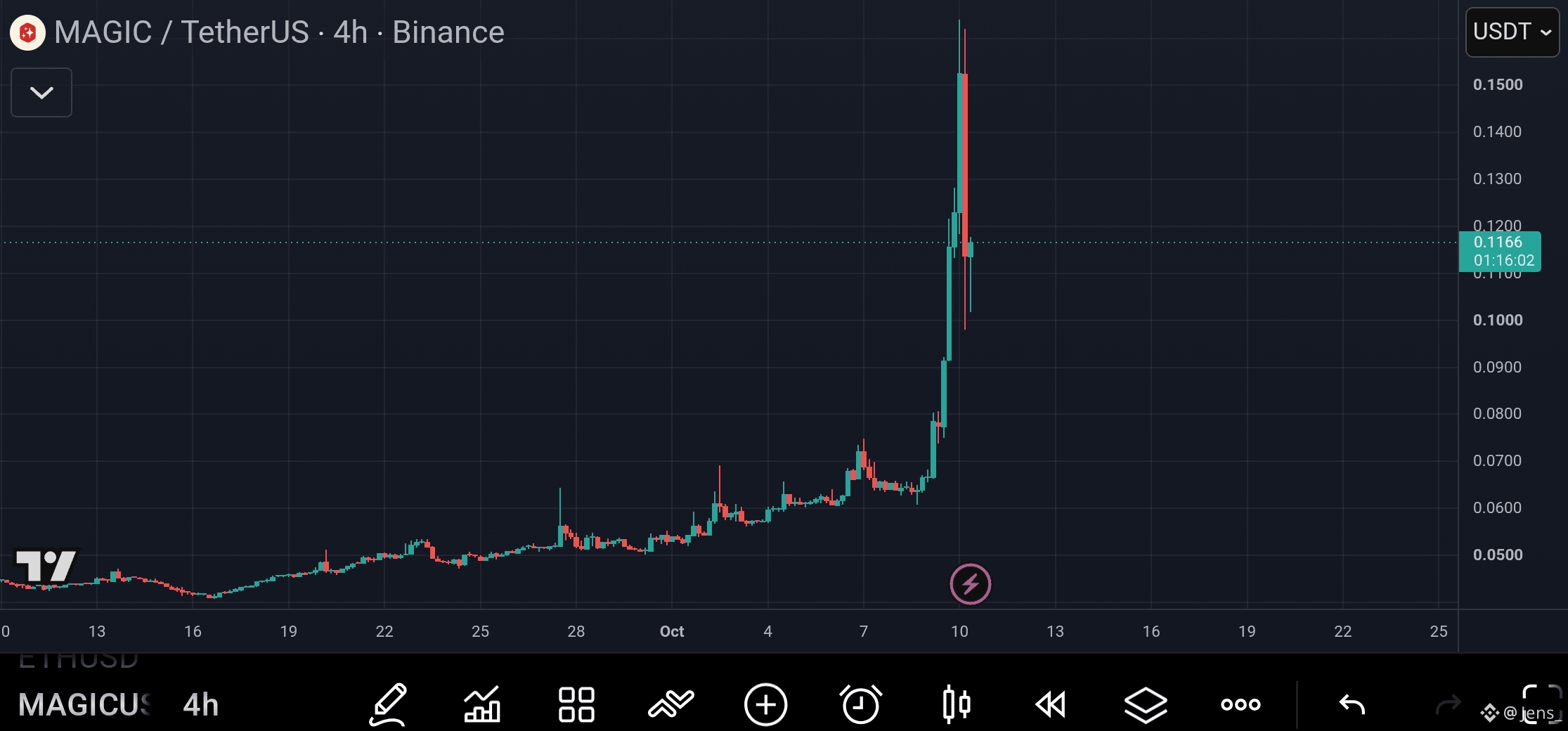
$MAGIC : Strong Rally, But Can Buyers Hold?
$MAGIC surged toward $0.15 before facing sharp selling pressure on the 4H chart.
Key levels:
Support: $0.110–$0.112
Resistance: $0.120–$0.125
Bullish targets: $0.130 → $0.150
My View: I'm cautiously bullish. Holding $0.110 could support another recovery, but reclaiming $0.125 is important. Losing $0.110 may trigger a deeper pullback.
I prefer confirmation over chasing pumps.
#MAGIC #crypto #Binance
28
2
26
5k
Connectez-vous pour découvrir plus de contenu
Rejoignez la communauté mondiale des adeptes de cryptomonnaies sur Binance Square
⚡️ Suviez les dernières informations importantes sur les cryptomonnaies.
💬 Jugé digne de confiance par la plus grande plateforme d’échange de cryptomonnaies au monde.
👍 Découvrez les connaissances que partagent les créateurs vérifiés.
Adresse e-mail/Nº de téléphone