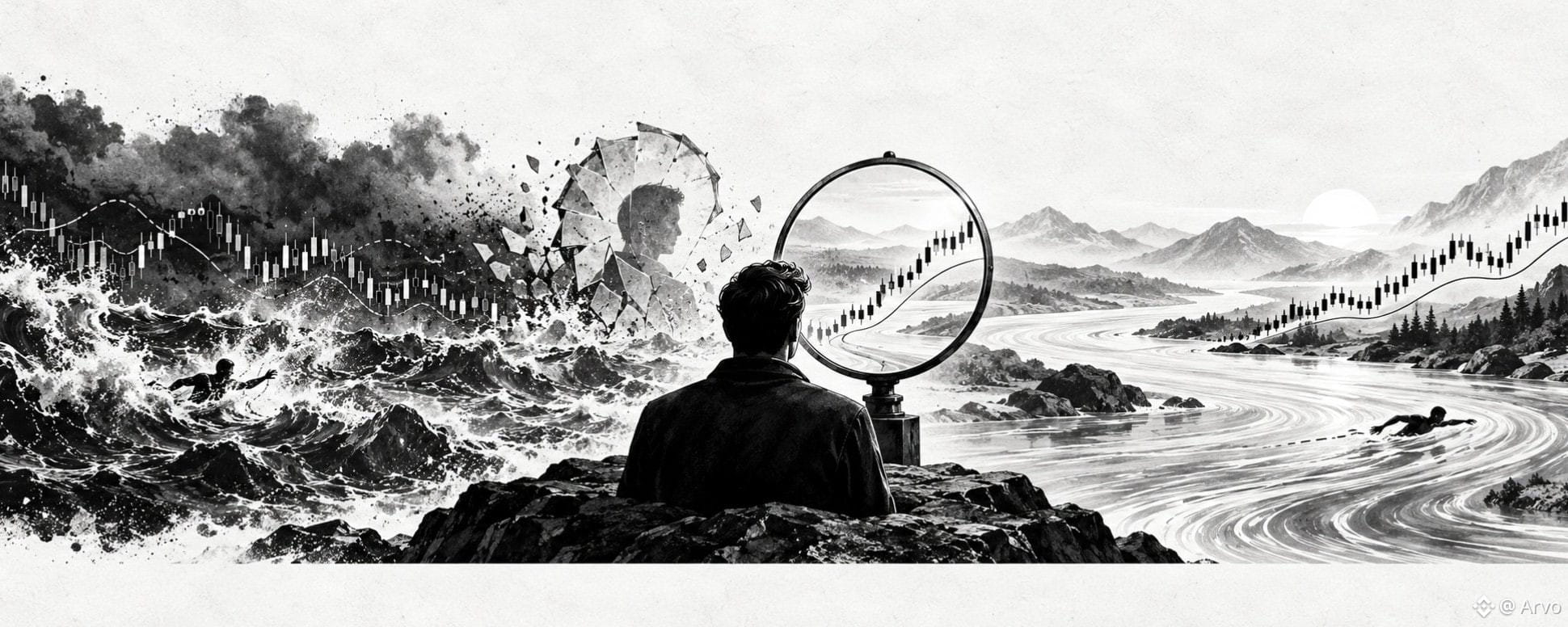
❕Stop Blaming Yourself. Start Looking at the Market.
When traders start losing money, they often blame their psychology. They assume they're too emotional, undisciplined, or simply not good enough.
But the problem often isn't the trader. It's the market environment.
A strategy that performs exceptionally well in trending markets can struggle when conditions turn choppy and unpredictable.
ㅤ
Here are 5 lessons every trader should understand:
1. The Market Determines Whether Your Strategy Works
Even a proven strategy will struggle in the wrong environment. A trend-following system needs trends. A breakout strategy needs follow-through.
2. Discipline Cannot Fix Bad Market Conditions
You can execute every trade perfectly and still lose money if the market isn't rewarding your approach. Sometimes the best decision is simply to stay on the sidelines.
3. Stop Trading What Should Happen
Analysts can build convincing arguments about why an asset should rise. But a brilliant thesis means nothing until price confirms it.
Being early is functionally the same as being wrong when it comes to your P&L.
4. Let the Market Confirm Your Trades
The best opportunities emerge when price action starts validating your position. Rather than predicting what might happen, focus on recognizing what is already happening.
5. Press Your Advantage When You're Right
Winning trades need to compensate for losing ones. Consistently cutting winners short while absorbing full losses makes profitability difficult, even with a good strategy.
ㅤ
Before blaming your trading psychology, ask yourself:
🟢 Does the current market favor my strategy?
🟢 Am I trading setups that worked months ago but have stopped producing results?
🟢 Am I expecting follow-through in a market that consistently fails to deliver it?
🟢 Am I forcing trades simply because I feel the need to participate?
ㅤ
Trading isn't just about executing your strategy correctly.
It's about knowing when the market is offering the conditions your strategy needs.
$DOOD $QNT $BULLA