


🚨
The next major escalation between Iran and the United States may not be limited to missiles, military bases, or oil tankers. A new warning involving underwater internet cables in the Strait of Hormuz is raising a different question: what happens when a geopolitical conflict threatens the infrastructure that keeps the digital world connected?
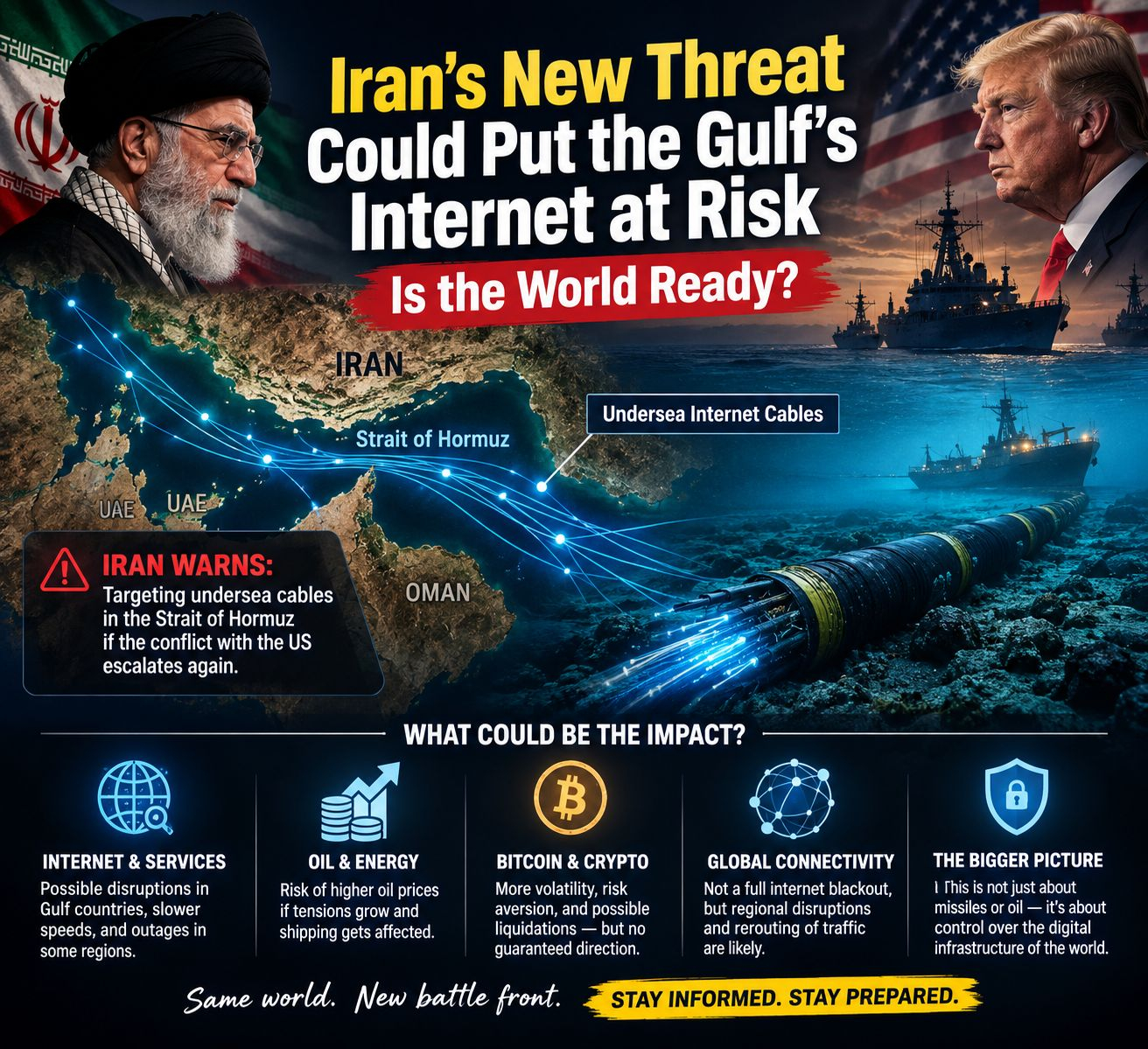

Reports published on October 20–21, 2026, describe warnings from Iranian officials about targeting critical digital infrastructure, including undersea cables, if the conflict with the US and its allies escalates again. These reports have drawn attention because the Strait of Hormuz is not only a strategic energy corridor but also an important passage for international telecommunications links.
Why do these cables matter so much?
Undersea fibre-optic cables carry enormous amounts of international data. They support financial transactions, cloud computing, business communications, video calls, and access to online platforms. Unlike satellites, which handle only a portion of global data traffic, submarine cables form the backbone of international internet connectivity.
However, one important detail should not be ignored: damaging cables in the Strait of Hormuz would not automatically shut down the internet worldwide. The global network uses many different cable routes, and traffic can sometimes be redirected. The more realistic concern is regional disruption, increased latency, service outages, and additional pressure on telecommunications infrastructure across parts of the Gulf.
Could this affect financial markets and crypto?
This is where the story becomes particularly interesting.
Modern financial markets depend on uninterrupted digital connectivity. If tensions escalate and critical infrastructure is damaged, businesses and financial institutions could face operational difficulties. Gulf-based services might experience connectivity problems, while uncertainty could spread across energy and financial markets.
For Bitcoin and other cryptocurrencies, the reaction would depend on the wider situation. A serious military escalation could trigger risk aversion, sudden volatility, and leveraged liquidations. Oil prices could also come under upward pressure if investors fear broader disruption around the Strait of Hormuz.
But there is a difference between a threat and an actual disruption. The announcement itself does not guarantee that Bitcoin will fall or that oil prices will rise. Traders need to watch confirmed developments, market liquidity, oil movements, and Bitcoin's actual price reaction rather than trading on a headline alone.
The bigger picture
This situation highlights something that often gets overlooked: geopolitical power is increasingly connected to digital infrastructure. Countries are not only concerned about territory, energy supplies, and military positions. Internet connectivity, data centres, cloud systems, and communication networks are also becoming strategically important.
For Pakistan and other countries connected to international data routes, the key question would be whether alternative routes could absorb traffic if regional links were disrupted. The actual impact would depend on which cables were affected and how quickly networks could reroute data.
For now, the reported warning should be taken seriously, but it should not be confused with confirmation that the cables have already been cut.
My take: The real story is bigger than an internet shutdown headline. It is about how a regional conflict could spill over into the digital infrastructure supporting global business and finance. If the situation escalates, the consequences could reach much further than the #EarningsSeason $NVDAB
#Geopolitics