

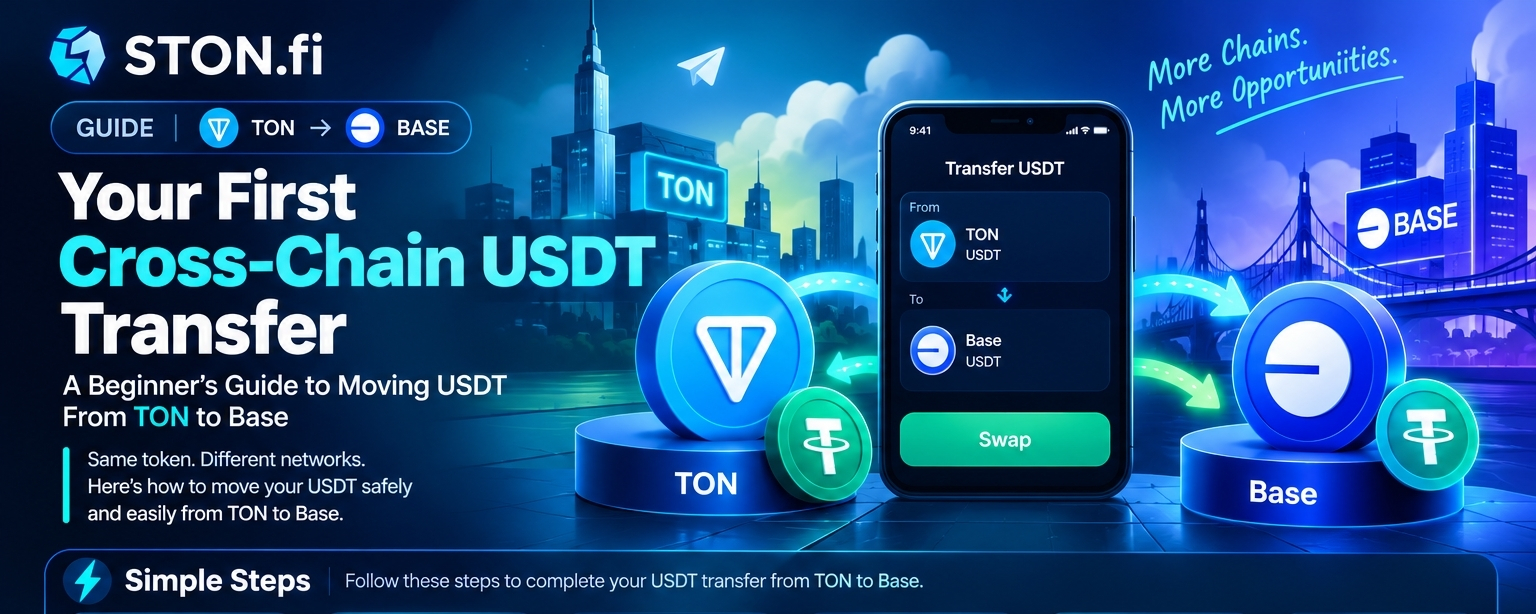

Imagine having USDT on TON but discovering an application on Base that requires an asset on that network.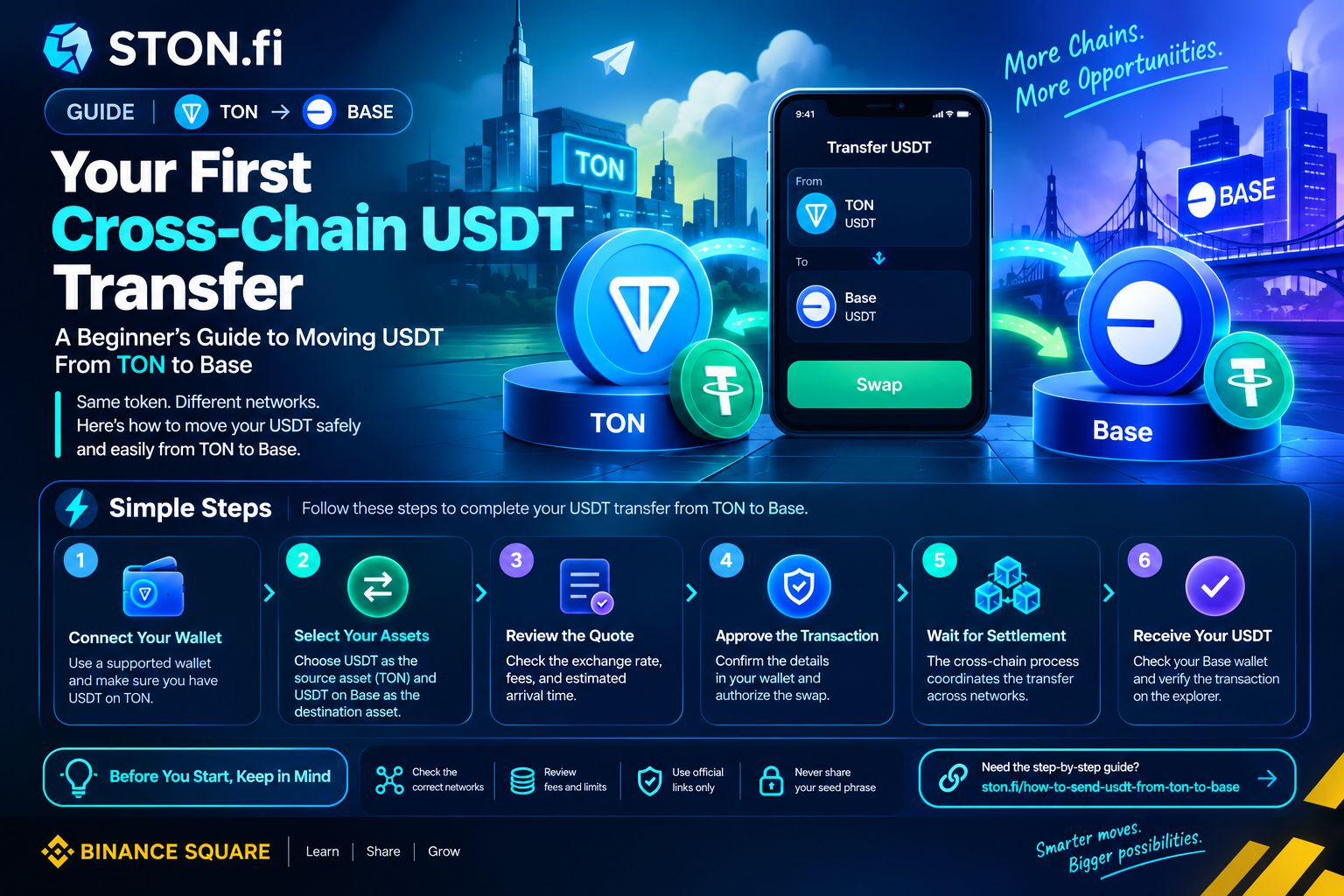
You have cryptocurrency. You have a destination in mind. But your funds are on a different blockchain.
This is one of the problems cross-chain swaps are designed to address.
Let's break it down. 👇
🔹 1. Why Can't You Simply Send Crypto Between Any Two Chains?
Blockchains maintain separate ledgers.
TON and Base do not automatically share balances, so sending a token through an ordinary transaction on one network will not automatically deliver the corresponding asset on another.
You need a compatible cross-chain route.
🔹 2. What Is a Cross-Chain Swap?
A cross-chain swap coordinates the exchange of assets between different blockchain networks.
For example, you may want to exchange an asset on TON for a supported asset on Base.
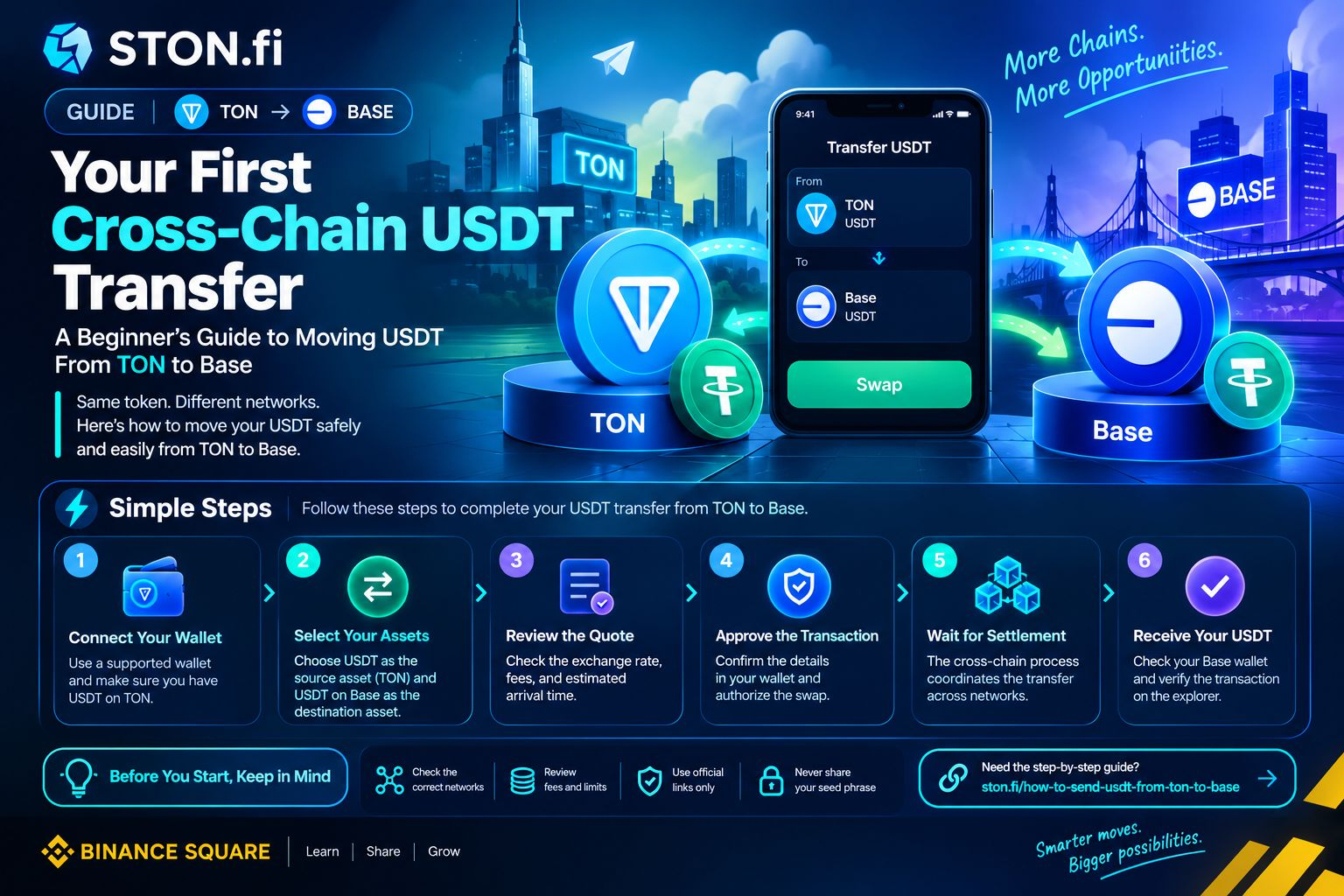
Instead of treating both networks as one blockchain, the service coordinates the transaction across the source and destination networks.
The exact mechanism depends on the service and route.
🔹 3. How Is This Different From a Bridge?
A traditional bridge may lock an asset on one network and issue a wrapped representation on another.
STON.fi's Omniston cross-chain execution model uses paired Hashed Timelock Contracts to coordinate supported swaps.
In simple terms, the mechanism is designed to link the source and destination sides of an exchange so settlement can complete under the required conditions or the refund process can take effect.
This is different from assuming that every bridge and cross-chain service uses the same technology.
🔹 4. When Would You Need One?
Cross-chain swaps may be useful when:
✅ Your destination application requires an asset on another network.
✅ You want to access a supported asset outside your current blockchain ecosystem.
✅ You need to move value between supported networks.
However, if both assets are already available on the same chain, an ordinary DEX swap may be simpler.
🔹 5. What Should You Check Before Swapping?
Never rush through a cross-chain transaction.
Before confirming, check:
🔸 Source and destination networks.
🔸 Supported tokens and token representations.
🔸 Expected amount received.
🔸 Transaction fees and conditions.
🔸 Wallet approval requests.
🔸 The official website you are using.
And remember: never share your seed phrase or private keys with anyone.
🔹 6. Want to Explore TON to Base?
STON.fi has published a guide for users interested in cross-chain swaps between TON and Base.
Read it here:
https://ston.fi/cross-chain-swap-from-ton-to-base
If you specifically want to move USDT from TON to Base, there is also a dedicated guide:
https://ston.fi/how-to-send-usdt-from-ton-to-base
Review the current instructions and confirm the available route before initiating a transaction.
Final Takeaway 💡
Cross-chain swaps help connect blockchain ecosystems, but convenience should never replace understanding.
Know which network holds your assets, where you want them to arrive, and what you are approving.
In Web3, the smartest transaction is the one you understand before you sign.
What do you think is the biggest barrier to cross-chain adoption: transaction complexity, fees, or security concerns?