
The IMF just released a sobering assessment of tokenized markets — and the numbers tell a story of potential outpacing reality.
What the data shows:
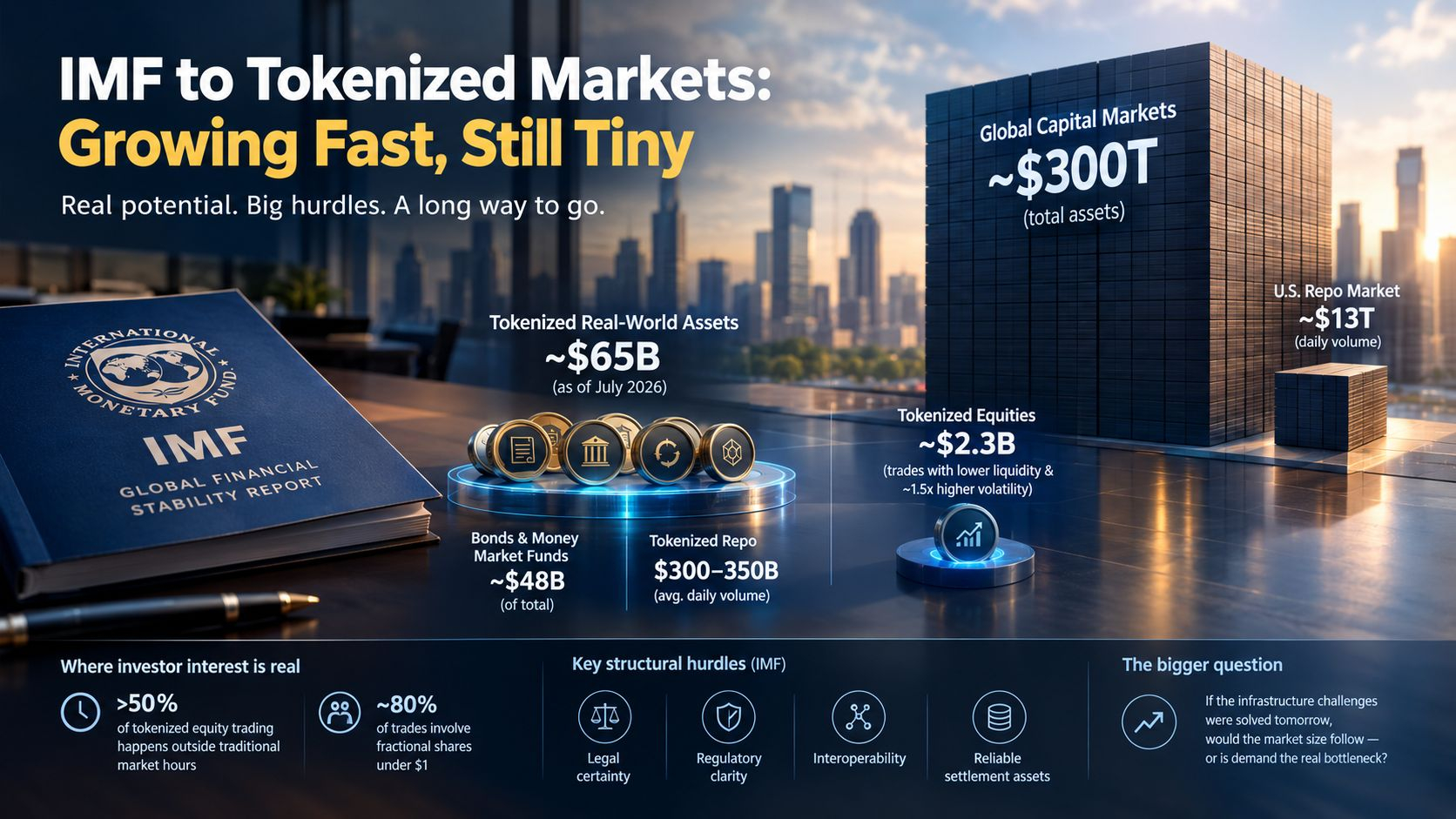
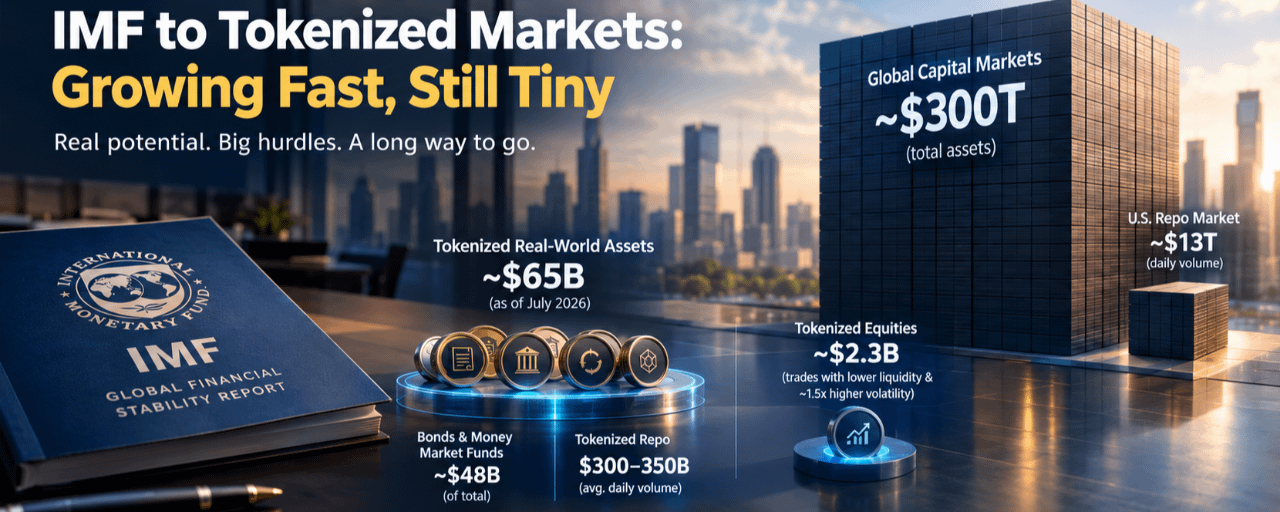
Tokenized real-world assets reached roughly $65 billion as of July 2026, with bonds and money market funds making up about $48 billion of that total. Tokenized repurchase agreements add another $300–350 billion in average daily transaction volume.
But here’s the context that matters: the entire tokenized market sits alongside global capital markets holding about $300 trillion in assets, while the traditional US repo market alone trades roughly $13 trillion daily. The gap is vast.
Where investor interest is real:
More than half of tokenized equity trading occurs outside traditional market hours, and roughly 80% of trades involve fractional shares under $1. That signals genuine demand for 24/7 access and lower entry barriers.
Yet tokenized equities — a mere $2.3 billion segment — trade with liquidity materially below traditional markets and roughly 1.5x higher volatility.
Why this matters:
The IMF flags four structural hurdles: legal certainty, regulatory clarity, interoperability, and reliable settlement assets. As tokenization scales, tighter linkages and leverage could amplify liquidity stress during downturns.
The path forward likely hinges less on technology and more on policy frameworks that can bridge fragmented platforms.
If the infrastructure challenges were solved tomorrow, would the market size follow — or is demand the real bottleneck?