

ENTRY HUNTER⁷⁸⁹
3.6k Publications

ENTRY HUNTER⁷⁸⁹
YOU NEED THREE THINGS IN CryptoCurrency : RISK-MANAGEMENT,KNOWLEDGE, PATIENCE.ONLY PSYCHOLOGY AND MACRO WORK NOWADAYS.X OF THIS LOOSER:
577 Suivis
26.4K+ Abonnés
14.5K+ J’aime
Publications
Portefeuille
Tous
Citations
Vidéos
Direct



ZainTem
·
--
BTC: “I’m going down.” 📉
Altcoins: “Wait for me!” 😭
Traders: “Just one more dip…” 🤡
Portfolio: “Bro, I’m finished.” 💀
But hey… at least the Red Packet is green! 🧧😂
#Binance
#Crypto
#RedPacket
#Bitcoin
Altcoins: “Wait for me!” 😭
Traders: “Just one more dip…” 🤡
Portfolio: “Bro, I’m finished.” 💀
But hey… at least the Red Packet is green! 🧧😂
#Binance
#Crypto
#RedPacket
#Bitcoin


aasho
·
--
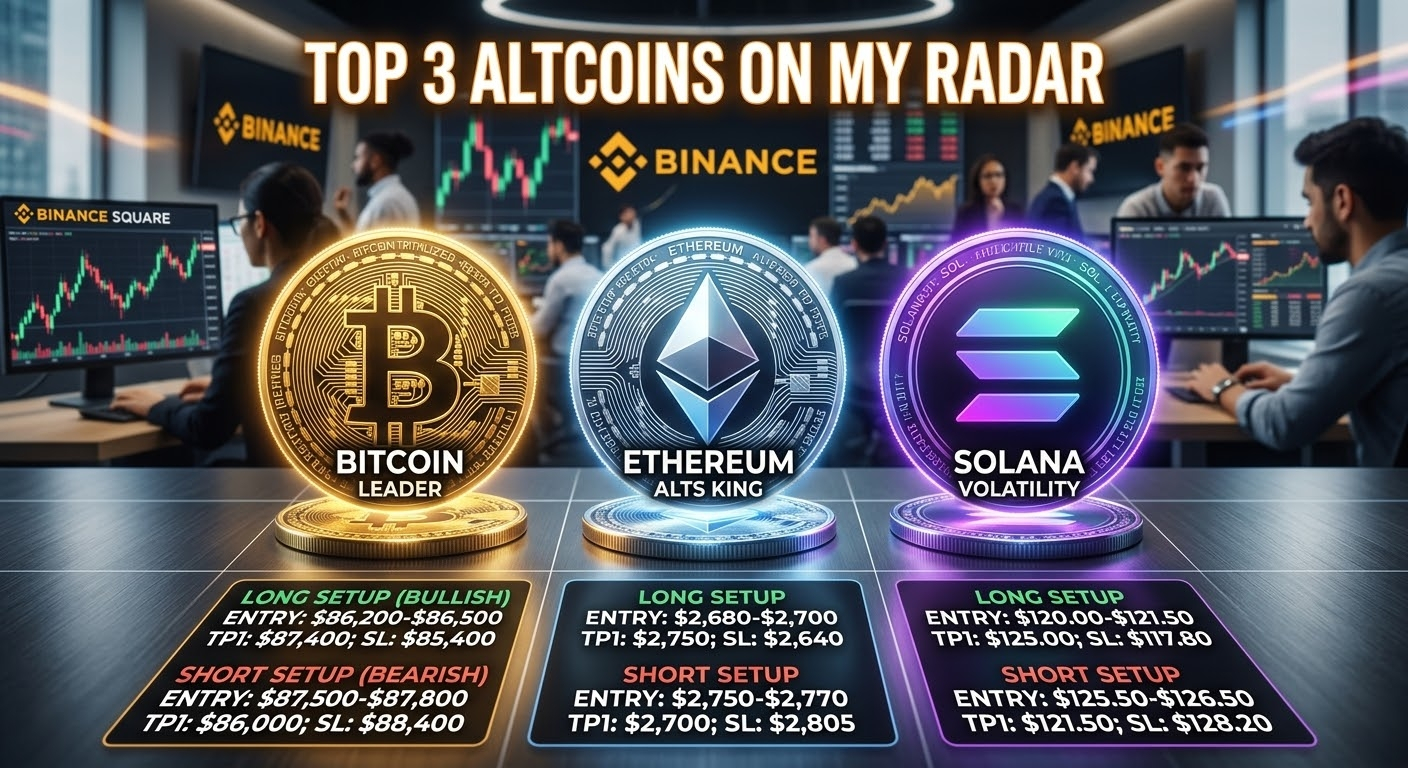
Let's break them down step-by-step 👇
1️⃣ $BTC
(Bitcoin) — Crucial Breakout Range 📈📉
Bitcoin is testing a key consolidation zone. We want to wait for price to hit our key reaction levels before entering.
* 🟢 LONG SETUP (Bullish Continuation):
* Entry Zone: $86,200 – $86,500 (On a confirmed pullback/retest of support)
* Take Profit 1 (TP1): $87,400
* Take Profit 2 (TP2): $89,500
* Stop Loss (SL): $85,400 (Keep it strict!)
* 🔴 SHORT SETUP (Range Rejection):
* Entry Zone: $87,500 – $87,800 (If price gets rejected hard at resistance)
* Take Profit 1 (TP1): $86,000
* Take Profit 2 (TP2): $84,800
* Stop Loss (SL): $88,400
2️⃣ $ETH
(Ethereum) — The Range Play ⚡
Ethereum is coiling up right around key moving averages. Patience is king here—let the level come to you.
* 🟢 LONG SETUP (Support Bounce):
* Entry Zone: $2,680 – $2,700 (Buying near local range low demand)
* Take Profit 1 (TP1): $2,750
* Take Profit 2 (TP2): $2,820
* Stop Loss (SL): $2,640
* 🔴 SHORT SETUP (Breakdown / Rejection):
* Entry Zone: $2,750 – $2,770 (Look for seller absorption or fakeout candle)
* Take Profit 1 (TP1): $2,700
* Take Profit 2 (TP2): $2,630
* Stop Loss (SL): $2,805
3️⃣ $SOL
(Solana) — High-Vol Speed Run 🏎️
Solana is offering clean volatility. Great for scalps and day trades, but mind your leverage!
* 🟢 LONG SETUP (Key Support Reclaim):
* Entry Zone: $120.00 – $121.50 (Entering at strong institutional accumulation zone)
* Take Profit 1 (TP1): $125.00
* Take Profit 2 (TP2): $128.50
* Stop Loss (SL): $117.80
* 🔴 SHORT SETUP (Resistance Rejection):
* Entry Zone: $125.50 – $126.50 (If price fails to break local highs)
* Take Profit 1 (TP1): $121.50
* Take Profit 2 (TP2): $117.00
* Stop Loss (SL): $128.20
#Crypto #TradingSetups #BinanceSquare #bitcoin #Ethereum #Solana #Write2Earn #CryptoTrading
1️⃣ $BTC
(Bitcoin) — Crucial Breakout Range 📈📉
Bitcoin is testing a key consolidation zone. We want to wait for price to hit our key reaction levels before entering.
* 🟢 LONG SETUP (Bullish Continuation):
* Entry Zone: $86,200 – $86,500 (On a confirmed pullback/retest of support)
* Take Profit 1 (TP1): $87,400
* Take Profit 2 (TP2): $89,500
* Stop Loss (SL): $85,400 (Keep it strict!)
* 🔴 SHORT SETUP (Range Rejection):
* Entry Zone: $87,500 – $87,800 (If price gets rejected hard at resistance)
* Take Profit 1 (TP1): $86,000
* Take Profit 2 (TP2): $84,800
* Stop Loss (SL): $88,400
2️⃣ $ETH
(Ethereum) — The Range Play ⚡
Ethereum is coiling up right around key moving averages. Patience is king here—let the level come to you.
* 🟢 LONG SETUP (Support Bounce):
* Entry Zone: $2,680 – $2,700 (Buying near local range low demand)
* Take Profit 1 (TP1): $2,750
* Take Profit 2 (TP2): $2,820
* Stop Loss (SL): $2,640
* 🔴 SHORT SETUP (Breakdown / Rejection):
* Entry Zone: $2,750 – $2,770 (Look for seller absorption or fakeout candle)
* Take Profit 1 (TP1): $2,700
* Take Profit 2 (TP2): $2,630
* Stop Loss (SL): $2,805
3️⃣ $SOL
(Solana) — High-Vol Speed Run 🏎️
Solana is offering clean volatility. Great for scalps and day trades, but mind your leverage!
* 🟢 LONG SETUP (Key Support Reclaim):
* Entry Zone: $120.00 – $121.50 (Entering at strong institutional accumulation zone)
* Take Profit 1 (TP1): $125.00
* Take Profit 2 (TP2): $128.50
* Stop Loss (SL): $117.80
* 🔴 SHORT SETUP (Resistance Rejection):
* Entry Zone: $125.50 – $126.50 (If price fails to break local highs)
* Take Profit 1 (TP1): $121.50
* Take Profit 2 (TP2): $117.00
* Stop Loss (SL): $128.20
#Crypto #TradingSetups #BinanceSquare #bitcoin #Ethereum #Solana #Write2Earn #CryptoTrading


AI随缘俱乐部
·
--
晨讯 | 10月5日隔夜重要动态一览💥💥💥
21:00-7:00关键词:Greenfield、鲍威尔、哈塞特、比特币期货ETF
1.美SEC批准3倍比特币期货ETF上市;
2.哈塞特:鲍威尔应离开美联储理事会;
3.美联储10月维持利率不变的概率升至77.9%;
4.哈塞特:不同意加息 但尊重沃什出于正确理由行事;
5.泽连斯基:乌德强化防务合作 对乌美俄三方会谈持积极态度;
6.Safe早期投资机构Greenfield向瑞士监管机构投诉,质疑Safe基金会治理。
$BTC
$ETH
$BNB
#BNB突破790美元
21:00-7:00关键词:Greenfield、鲍威尔、哈塞特、比特币期货ETF
1.美SEC批准3倍比特币期货ETF上市;
2.哈塞特:鲍威尔应离开美联储理事会;
3.美联储10月维持利率不变的概率升至77.9%;
4.哈塞特:不同意加息 但尊重沃什出于正确理由行事;
5.泽连斯基:乌德强化防务合作 对乌美俄三方会谈持积极态度;
6.Safe早期投资机构Greenfield向瑞士监管机构投诉,质疑Safe基金会治理。
$BTC
$ETH
$BNB
#BNB突破790美元


大丽7613
·
--
预约了一姐晚上8.00的直播


Sara_ k
·
--
Hottest Crypto Narratives Right now
.
claim here 👈🧧🧧🧧🧧
.
claim 2 👈🧧🧧🧧🧧🧧
.
claim here 👈🧧🧧🧧🧧
.
claim 2 👈🧧🧧🧧🧧🧧


Deepak_XBT
·
--
Robert Kiyosaki’s latest Bitcoin argument is less about getting rich and more about financial preparation.
He compared owning Bitcoin, gold and silver to having car insurance: you don’t buy insurance because you expect an accident, but because you want protection if something goes wrong.
His key point: governments can print more currency, potentially reducing purchasing power over time. Bitcoin’s 21 million supply cap is why he prefers it as an asset that cannot simply be printed.
But there’s an important caveat: limited supply doesn’t guarantee price stability. BTC can still fall sharply when demand weakens.
Kiyosaki also points to oil wells and rental properties as income-generating assets.
For me, the interesting question is:
Is Bitcoin becoming a form of financial insurance, or is it still primarily a risk asset?
He compared owning Bitcoin, gold and silver to having car insurance: you don’t buy insurance because you expect an accident, but because you want protection if something goes wrong.
His key point: governments can print more currency, potentially reducing purchasing power over time. Bitcoin’s 21 million supply cap is why he prefers it as an asset that cannot simply be printed.
But there’s an important caveat: limited supply doesn’t guarantee price stability. BTC can still fall sharply when demand weakens.
Kiyosaki also points to oil wells and rental properties as income-generating assets.
For me, the interesting question is:
Is Bitcoin becoming a form of financial insurance, or is it still primarily a risk asset?


AM-Capital
·
--
🎁🎁gift for the Binance Square family! 🎁🎁
Keep learning, keep growing, and stay confident in your crypto journey. 🚀💛🎁🎁
#BinanceSquare #CryptoCommunity
Keep learning, keep growing, and stay confident in your crypto journey. 🚀💛🎁🎁
#BinanceSquare #CryptoCommunity

大丽7613
·
--
[Revoir] 🎙️ 一起实盘交易BNB
02 h 18 min 51 sec · 9.1k auditeurs
TradeMaster_PK
·
--
HaussierReceived USDT Rewards Gift 🎁🎁🎁🎁🎁🎁🎁🧧🧧🧧🧧🧧🎁🎁🎁🎁
1 follow me
2 like
3 repos
#Ether ETFs extend inflow streak today
#USStrikesTargetsNearHormuzAndJask
1 follow me
2 like
3 repos
#Ether ETFs extend inflow streak today
#USStrikesTargetsNearHormuzAndJask


Raven Hei 黑
·
--
🧧 RED PACKET IS LIVE! 🧧
A little surprise for the community 👀🔥
💰 Red Packet: Up for grabs
🎁 Rewards: Limited
⚡ First come, first served!
Think you can catch one? 👇
Comment “🧧” and stay ready!
DYOR • NFA
#Binance #RedPacket #Crypto #CryptoCommunity
A little surprise for the community 👀🔥
💰 Red Packet: Up for grabs
🎁 Rewards: Limited
⚡ First come, first served!
Think you can catch one? 👇
Comment “🧧” and stay ready!
DYOR • NFA
#Binance #RedPacket #Crypto #CryptoCommunity


POCHITA 2113 保拉
·
--
[Terminé] 🎙️ FELIZ LUNES EXITO CON POCHITA
1.6k auditeurs

白鲨观点VN
·
--
Kế hoạch mua #Spot . Anh em tham khảo!
$NFLX — 5% entry 55,56 (dự phòng 5% dca)
$ORCL — 5% entry 112,8 (dự phòng 5% dca)
$HK1810 (xiaomi) — 5% entry 16,2 (dự phòng 5% dca)
Trong khoảng 3 ngày 6/10 -7/10 -8/10, spot 3 con này
#zen — 5% (dự phòng 5% dca)
#BTC —15% (dự phòng 15% dca)
#TAO — 5% (dự phòng 5% dca)
Tổng vốn phân bổ:
- BTC 30%
- Cổ phiếu: 30%
- altcoin: 20%
- Future: 20%
Điểm DCA sẽ thông báo sau
#baisha
$NFLX — 5% entry 55,56 (dự phòng 5% dca)
$ORCL — 5% entry 112,8 (dự phòng 5% dca)
$HK1810 (xiaomi) — 5% entry 16,2 (dự phòng 5% dca)
Trong khoảng 3 ngày 6/10 -7/10 -8/10, spot 3 con này
#zen — 5% (dự phòng 5% dca)
#BTC —15% (dự phòng 15% dca)
#TAO — 5% (dự phòng 5% dca)
Tổng vốn phân bổ:
- BTC 30%
- Cổ phiếu: 30%
- altcoin: 20%
- Future: 20%
Điểm DCA sẽ thông báo sau
#baisha


周周1688
·
--
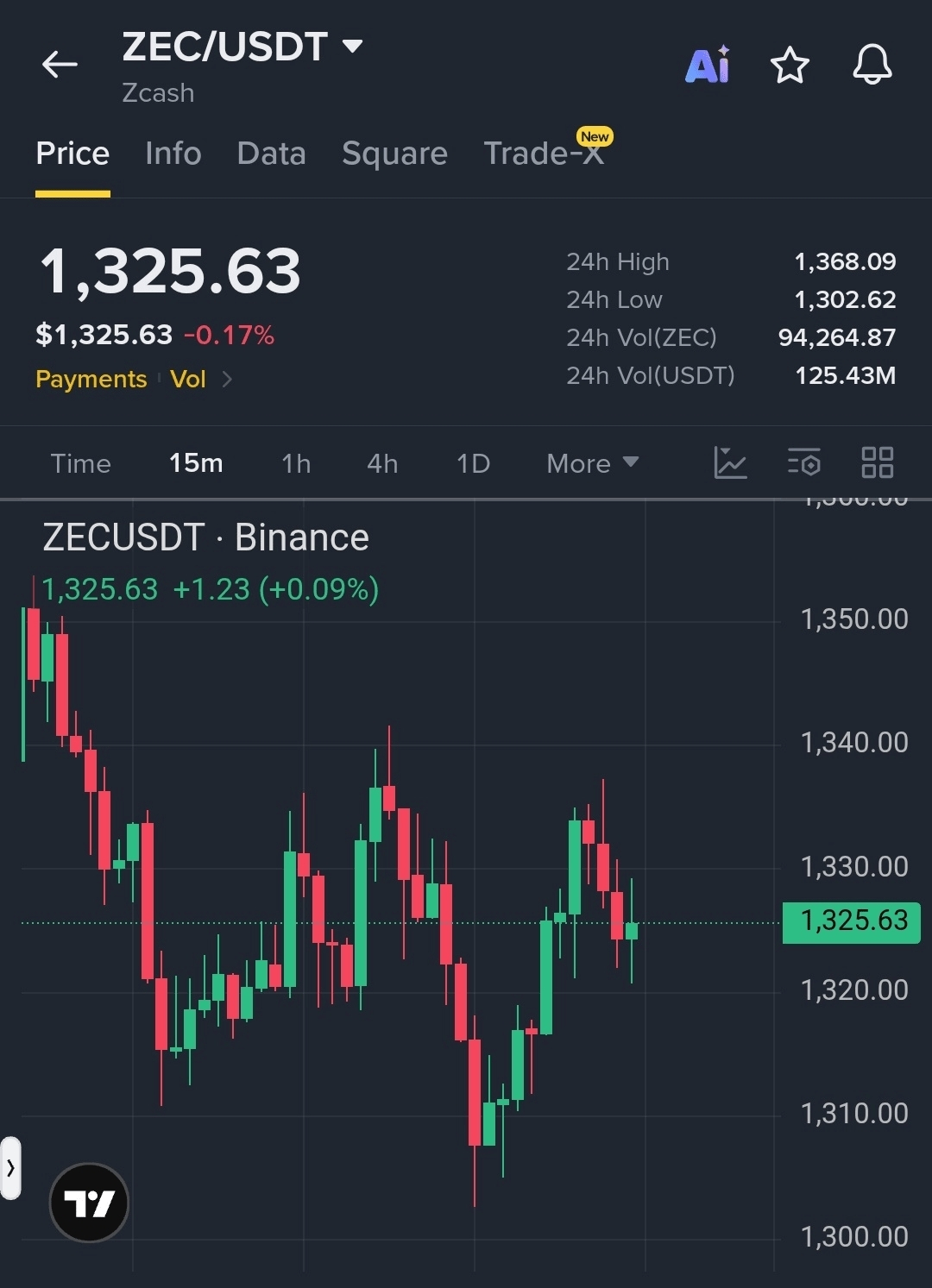
$ZEC 支撑位反弹 — 看涨动能正在增强。
杠杆:最高 10 倍
交易方向:做多
入场:1,322 – 1,326
止损:1,298
TP1:1,337
TP2:1,350
TP3:1,368
价格扫过 1,302 的低点后出现强劲的看涨位移,买方正在守住 1,320 区域。15分钟周期正在形成更高低点,因此只要 1,320 保持不破,价格有望继续向 1,337 至 1,368 的流动性区域移动。
买入并交易 $ZEC
本文不构成投资建议!
杠杆:最高 10 倍
交易方向:做多
入场:1,322 – 1,326
止损:1,298
TP1:1,337
TP2:1,350
TP3:1,368
价格扫过 1,302 的低点后出现强劲的看涨位移,买方正在守住 1,320 区域。15分钟周期正在形成更高低点,因此只要 1,320 保持不破,价格有望继续向 1,337 至 1,368 的流动性区域移动。
买入并交易 $ZEC
本文不构成投资建议!

Sherry长得帅不如跑的快1688
·
--
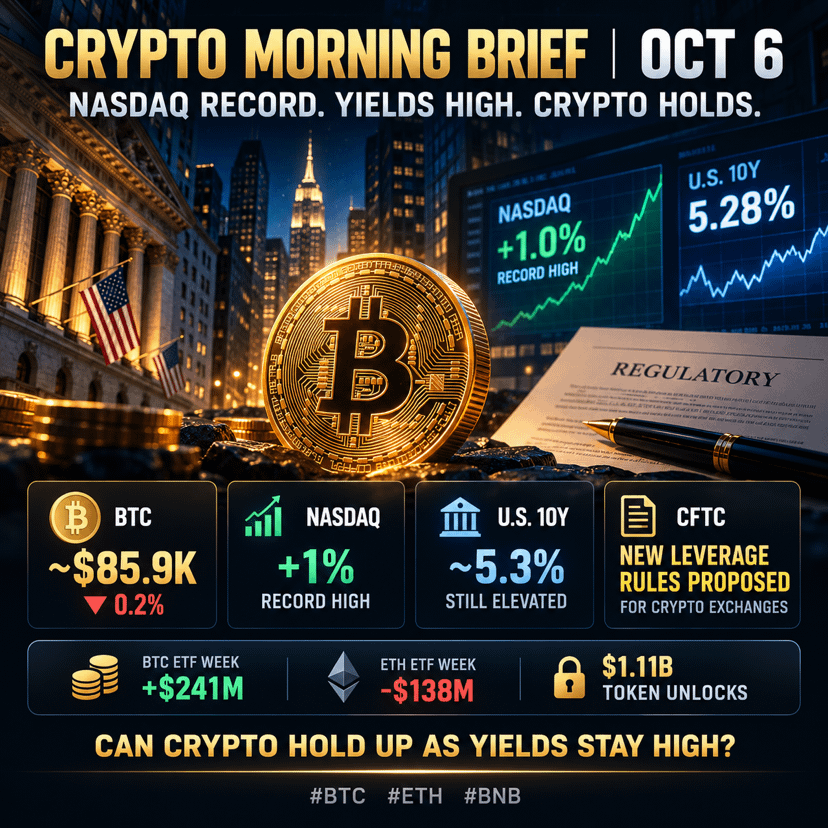
☀️ CRYPTO MORNING BRIEF|OCT 6
What happened overnight?
An interesting divergence is forming 👇
📈 NASDAQ → +1%|RECORD HIGH
₿ BTC → ~$85.9K|mostly flat
Ξ ETH → ~$2.72K
BNB → ~$789
Stocks are Risk-On.
Crypto hasn’t fully followed yet.
Here are the 5 things that matter today:
🇺🇸 1. NASDAQ HITS A RECORD
Mega-cap tech pushed Wall Street higher.
But the question is:
Why isn’t crypto breaking out with it?
📈 2. YIELDS ARE STILL HIGH
The U.S. 10Y remains near ~5.3%.
Weak jobs reduced the probability
of an October Fed hike,
but the bond market
still hasn’t fully turned.
That may be one reason BTC
remains stuck in its recent range.
💰 3. BTC AND ETH ETF DEMAND DIVERGE
Latest completed weekly data:
₿ BTC ETFs → +$241M
Ξ ETH ETFs → -$138M
Bitcoin ETFs have now recorded
three straight positive weeks.
Ether ETFs flipped back into outflows.
Important:
Full Oct. 5 daily ETF data
is not yet confirmed this morning,
so I’m not using incomplete numbers.
🏛️ 4. CFTC MOVES ON CRYPTO RULES
The CFTC proposed a new federal framework
for crypto platforms offering:
leverage,
margin,
or financed trading.
Key themes:
🔹 Federal registration
🔹 Anti-manipulation controls
🔹 Proof of reserves
🔹 Oversight of leveraged products
The regulatory question is changing from:
“Should crypto be regulated?”
to:
“How should crypto be regulated?”
🔓 5. $1.11B IN TOKEN UNLOCKS
Another market variable today:
Around $1.11B of token unlocks
are scheduled across early October.
HYPE alone has roughly
$340M scheduled today.
So the real question is:
STOCKS ARE RISK-ON.
CAN CRYPTO CATCH UP?
Today I’m watching:
₿ BTC testing the $87K area
📈 U.S. 10Y yields
💰 Fresh ETF flows
🏛️ CFTC rulemaking
🔓 Token-unlock volatility
👇 Your take?
CRYPTO CATCHES UP 🟢
or
HIGH YIELDS KEEP BTC RANGE-BOUND 🔴?
#BTC #ETH #BNB
What happened overnight?
An interesting divergence is forming 👇
📈 NASDAQ → +1%|RECORD HIGH
₿ BTC → ~$85.9K|mostly flat
Ξ ETH → ~$2.72K
BNB → ~$789
Stocks are Risk-On.
Crypto hasn’t fully followed yet.
Here are the 5 things that matter today:
🇺🇸 1. NASDAQ HITS A RECORD
Mega-cap tech pushed Wall Street higher.
But the question is:
Why isn’t crypto breaking out with it?
📈 2. YIELDS ARE STILL HIGH
The U.S. 10Y remains near ~5.3%.
Weak jobs reduced the probability
of an October Fed hike,
but the bond market
still hasn’t fully turned.
That may be one reason BTC
remains stuck in its recent range.
💰 3. BTC AND ETH ETF DEMAND DIVERGE
Latest completed weekly data:
₿ BTC ETFs → +$241M
Ξ ETH ETFs → -$138M
Bitcoin ETFs have now recorded
three straight positive weeks.
Ether ETFs flipped back into outflows.
Important:
Full Oct. 5 daily ETF data
is not yet confirmed this morning,
so I’m not using incomplete numbers.
🏛️ 4. CFTC MOVES ON CRYPTO RULES
The CFTC proposed a new federal framework
for crypto platforms offering:
leverage,
margin,
or financed trading.
Key themes:
🔹 Federal registration
🔹 Anti-manipulation controls
🔹 Proof of reserves
🔹 Oversight of leveraged products
The regulatory question is changing from:
“Should crypto be regulated?”
to:
“How should crypto be regulated?”
🔓 5. $1.11B IN TOKEN UNLOCKS
Another market variable today:
Around $1.11B of token unlocks
are scheduled across early October.
HYPE alone has roughly
$340M scheduled today.
So the real question is:
STOCKS ARE RISK-ON.
CAN CRYPTO CATCH UP?
Today I’m watching:
₿ BTC testing the $87K area
📈 U.S. 10Y yields
💰 Fresh ETF flows
🏛️ CFTC rulemaking
🔓 Token-unlock volatility
👇 Your take?
CRYPTO CATCHES UP 🟢
or
HIGH YIELDS KEEP BTC RANGE-BOUND 🔴?
#BTC #ETH #BNB

Noor221
·
--
$CAP HITS 🎯 0.1 SOON.... Agree or Not???

静姐168
·
--
今天不知道发点啥?
纯属太无聊,随便发个帖子吧,能不能爆呢?有没有好心的大哥大姐们支持一下🙊
#比特币冲击8.7万美元遇阻回落
纯属太无聊,随便发个帖子吧,能不能爆呢?有没有好心的大哥大姐们支持一下🙊
#比特币冲击8.7万美元遇阻回落

Connectez-vous pour découvrir plus de contenu