

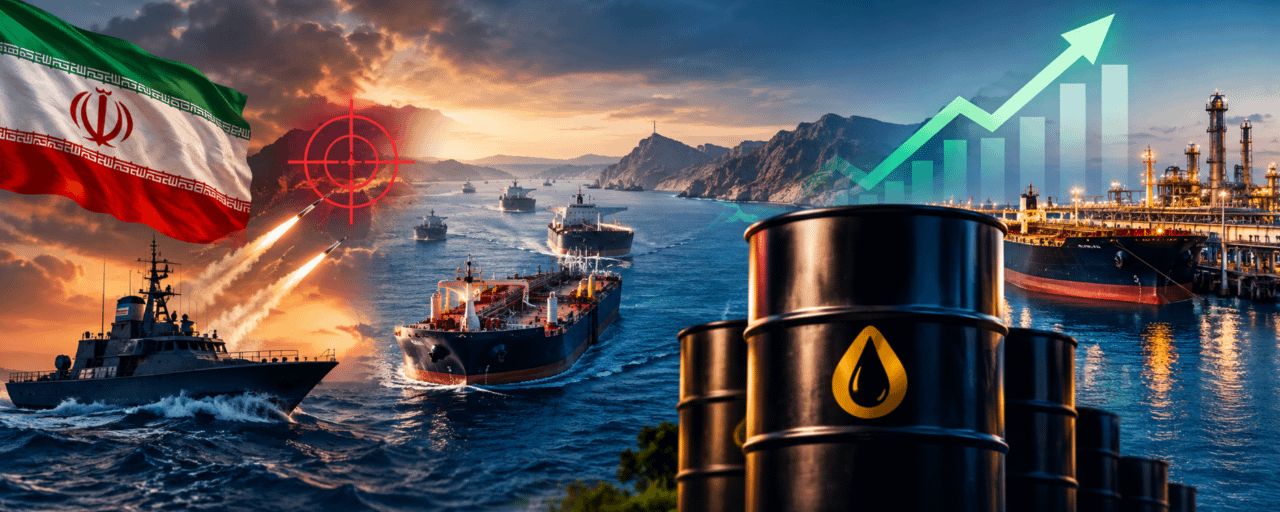

Bloomberg reported Tuesday that Iran has quickened its attacks on tankers in the Strait of Hormuz, just as oil flows through the chokepoint approach pre-war levels. Nine attacks have been reported in the waterway since Oct. 1 by U.K. Maritime Trade Operations, which is half of everything it reported for September in the strait and the Persian Gulf combined. Tellingly, four of September's attacks came in its last two days.
Over the past month, nearly 20 commercial ships have been attacked while sailing through Hormuz, the Persian Gulf or off Oman, the Joint Maritime Information Center says. Ships in the strait have been targets for much of the war, but never at a constant rate. Earlier bursts of heavy strikes brought brief dips in shipments, and higher volumes in the days after often made up the shortfall.
Marisks, the shipping intelligence service, had flagged the risk Saturday, Reuters reported: with traffic surging, merchant vessels crossing the chokepoint face a growing and less predictable threat of attack. Its count for the past week was at least seven incidents involving tankers.
Chief executive Dimitris Maniatis spelled out the thinking in a note. Iran, he wrote, appears to be seeking greater control over the strait through fear and uncertainty, which means it doesn't have to stop every vessel; it just has to persuade shippers that "any vessel could be next."
How much of this will cut into Hormuz shipments? Maritime security officials and shipping executives can't say yet. The impact on seaborne gas flows, which also edged up in recent weeks, is equally hard to read.
None of that has stopped the numbers from improving. Data from Kpler and Vortexa released Monday showed Middle East oil exports topping pre-war levels in September.
Kpler's provisional numbers: 18.3 million barrels per day for the region's seven-day average of crude exports on Sept. 30. Before the U.S.-Israeli war with Iran, the 12-month average was roughly 18 million. Fourteen days in September cleared that mark, counting transits through Hormuz and the Red Sea along with loadings at terminals.
June and July had already produced a handful of days at or above pre-war volumes, after Washington and Tehran reached a memorandum of understanding. That deal has lapsed.
Kpler pins the latest surge on Saudi Arabia, which has been shipping from the Red Sea and the Gulf alike, three weeks on from a Sept. 10 attack on its East-West pipeline. Iraq has done it differently. The state-owned Oil Tanker Company and some refiners now charter tankers to load Basrah crude inside the strait, an option that opened after Baghdad secured Iranian permission for Iraqi vessels to pass through Hormuz.
Vortexa tracks crude and condensate together and arrives at a similar answer: a 14-day moving average of 18.6 million barrels per day for Middle East exports, above the 10-year seasonal average and back at pre-conflict levels. (Condensate, if the term is new, is a blend of very light hydrocarbons that stays liquid at normal atmospheric pressure.)
Saudi Arabia accounts for most of September's month-over-month gain, says Xavier Tang, a senior market analyst at Vortexa, with the kingdom lifting volumes to win back market share from other Middle Eastern producers. All that extra supply should ease tightness in the oil market, he added, particularly for Asian refiners.
Estimates elsewhere run a little cooler. Flows have built since early summer, and last week some Wall Street banks said shipments were close to pre-war levels. Shell chief executive Wael Sawan, speaking Tuesday at the Energy Intelligence Forum in London, put the figure at roughly 80%.
Nobody can be too precise, though. Most tankers use a corridor off the Omani coast and, as a rule, cross with their digital signals off. Traders and analysts are left to reconstruct supply from satellite images and shipping data.
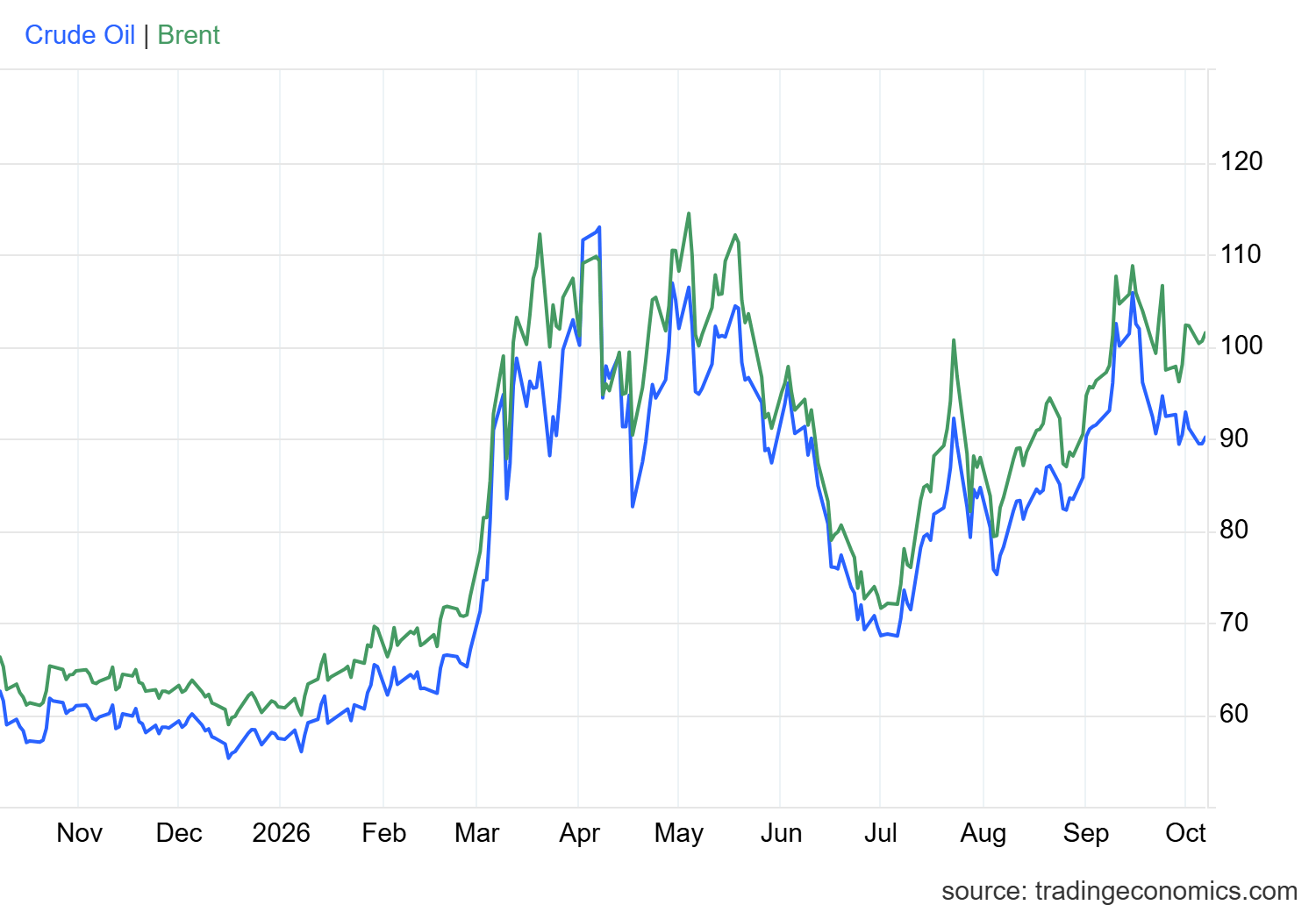
This has helped keep oil prices in check, with the interneational benchmark Brent Crude Oil rising holding steady around the $100 a barrel, while the North American Benchmark, West Texas Intermediate trading around $90 a barrel.
Gas is trailing oil. LNG cargoes leaving the strait climbed in September to their highest since February, yet the pace of recovery lags oil's, because the fuel moves in a far smaller fleet of highly specialized carriers that keep it cryogenic.
The Fine Print on the Good News
Amin Nasser, chief executive of Saudi Aramco, struck a gloomier note Monday at the Energy Intelligence Forum in London, delivering his first in-person speech since the war began in late February.
Nasser's tally: almost 3 billion barrels of oil supply lost since the conflict began, with 1 billion barrels released from global stocks. Topping every inventory back up would require an extra 2 million barrels per day of demand over the next 18 months, around 2% on top of consumption that already stands at just over 100 million barrels per day.
The kingdom can still open the taps. Its maximum sustainable production capacity, 12 million barrels per day, could be on offer within days, Nasser said, because strategic reserves and system flexibility have held up.
Storage tells a harsher story. Of the 6 billion barrels or so that remain in storage, much is practically unavailable, since as much as 90% is tied up in pipelines or needed to keep tanks above their minimum operating volume.
Then come the workarounds. Aramco, Nasser told the conference, is assessing more routes and wider use of overseas storage to cushion short-term disruptions. The East-West pipeline, which carries crude to the kingdom's Red Sea terminals, is the example he leaned on: strip it out, and Brent futures would have hit $200 a barrel.
His phrase for the global supply cushion was "scarily thin." G7 nations had agreed days earlier to release as much as 100 million barrels of crude and fuel from emergency stocks to ease supply fears. Even so, Nasser said, the system is under strain and there is little else for the world to turn to.
Why Hormuz Still Sets the Terms
Everything in that outlook rests on Hormuz. Until the strait fully reopens and confidence returns, he said, the squeeze will keep tightening, and rebuilding inventories while meeting demand could take up to two years even after that.
Tehran effectively closed the waterway on the heels of the U.S. and Israeli strikes that began Feb. 28, throttling one of the world's most important shipping bottlenecks. Traffic dwindled to a trickle, a few vessels attempting the passage on any given day.
For crude, that has changed. Producers and shippers have found other ways to move it out of the region.
Whether the improvement lasts is a different question. No negotiated settlement has materialized, Iran hasn't capitulated, and worries about the rebound's staying power persist.
Fuel Prices Meet the Midterms
Winter is coming to the Northern Hemisphere, and how much energy passes through Hormuz will help set oil and gas prices when it does. Recent gains have already raised fears that inflation could prove sticky enough to push interest rates up across major economies.
Governments are trying to head that off. Last week's emergency stock releases were meant to loosen the market, and President Donald Trump has been looking for ways to tame domestic fuel prices ahead of the midterm elections. Any pullback in Hormuz flows would add to the risks.
Monday night, Trump signed an executive order that temporarily lets red-dyed diesel, usually limited to farm use, run on the nation's highways and defers the federal tax on it through the end of the year. The White House puts the savings at about $60 for a 250-gallon fill from the federal tax alone, topping $100 where states match.
Tuesday brought the war back into focus. Trump said the United States has to finish it, and that it will soon be clear whether that happens "the nice way or the not so nice way." The biggest problem, he added, is that nobody knows who is running Iran, which points to the open questions over who holds authority in Tehran.
Qatar, for its part, says the line to Tehran is still open. Ibrahim Al-Hashmi of the Qatari Foreign Ministry told reporters Tuesday that indirect talks with Washington and Tehran are continuing and that messages are still passing between the two through Qatar and its regional partners. The sides remain at odds over Hormuz.
Trouble Beyond the Oil Fields
Sunday also brought two developments with an Iranian thread. Yemen's internationally recognized government launched a full-scale military campaign to retake Houthi-held territory, after weeks of escalating conflict between the Iran-backed group and Saudi Arabia.
In England, the Pentagon withdrew its bombers from the U.K. base at the center of last week's suspected terror plot, a move the New York Times reported followed fresh threats of Iran-backed plots. A Pentagon spokesman said all B-1 bombers deployed to RAF Fairford have returned to their home stations in the United States.
Houthi fire kept coming Wednesday. At dawn, the group said, drones struck King Khalid International Airport in Riyadh while ballistic missiles and drones hit Abha airport and an airbase at Khamis Mushait. Saudi Arabia has not confirmed the Riyadh or Abha claims.
The Saudi-led coalition confirmed something narrower. It intercepted and destroyed a Houthi ballistic missile headed for Khamis Mushait and, later, another north of Riyadh, and it traced the missile threats to Sanaa and the Saada and Amran governorates.
Two missiles also targeted Aden's international airport, the main gateway to parts of Yemen outside Houthi control. The city's security media office reported no casualties. Yemen's Transport Ministry said one missile came down near the runway minutes before a Cairo flight was due, and the plane diverted to Jeddah.
Fars News quoted Houthi official Mohammed al-Bukhaiti as saying the group can shut down every airport and port in Saudi Arabia, and that he thinks it unlikely Turkey and Pakistan will directly enter the war in Yemen. That second point comes in the wake of Monday's announcement that the two countries will rapidly deploy forces to Saudi Arabia under their mutual defense pact.