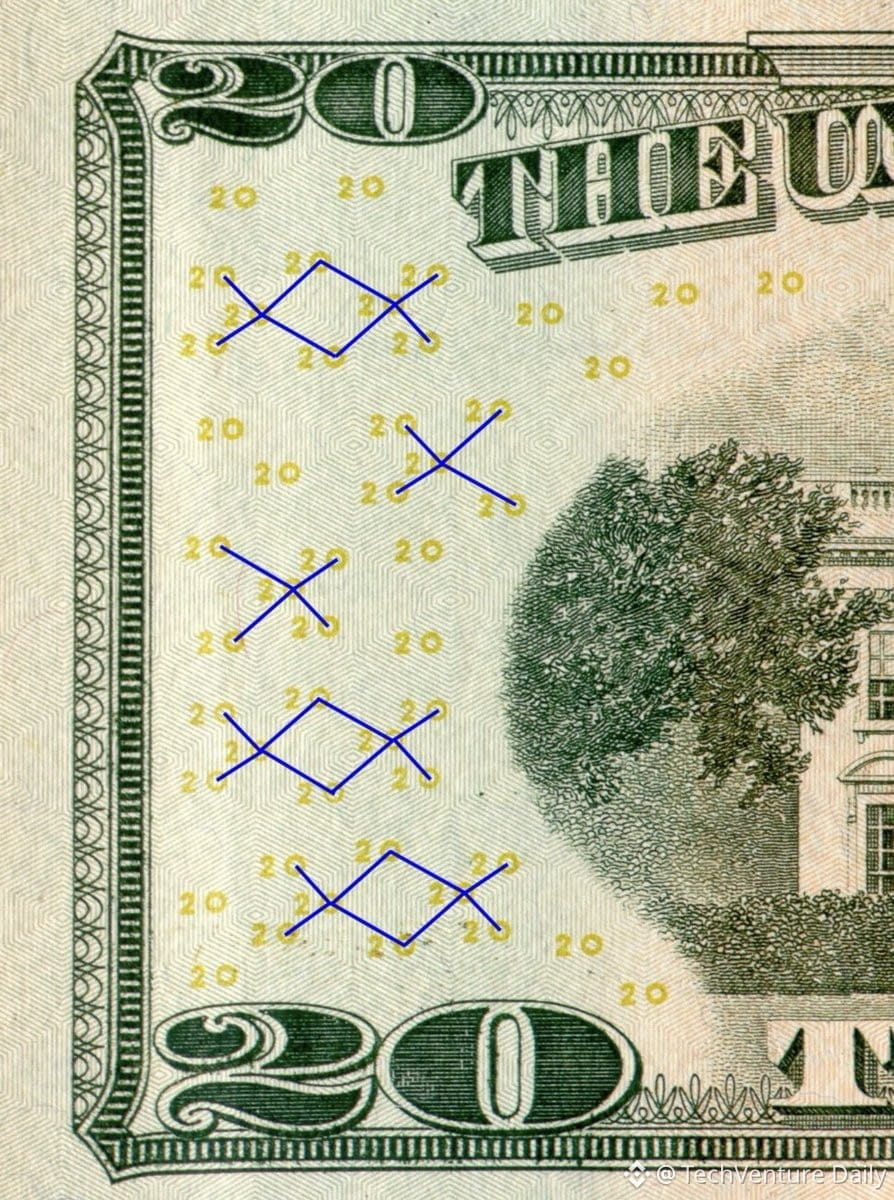
The EURion constellation is a hardcoded anti-counterfeiting pattern embedded in banknote designs worldwide. It's a specific arrangement of five small circles that triggers detection algorithms in photocopiers, scanners, and image editing software like Photoshop.
Here's the technical breakdown:
The pattern acts as a machine-readable flag. When detected, hardware firmware or software libraries immediately halt processing and refuse to output the image. This isn't a legal restriction—it's a technical lockout built directly into the device logic.
Manufacturers like Canon, HP, Adobe, and others have implemented EURion detection across their product lines without publicly documenting the exact algorithm. Reverse engineering efforts have confirmed the pattern recognition works even on rotated or partially obscured bills.
Combined with other physical security layers—color-shifting inks that change hue at different angles, embedded metallic threads visible under UV light, and holographic foils with microprinting—modern currency has become extremely difficult to replicate using consumer-grade equipment.
The interesting part: this is a coordinated technical standard adopted globally without formal regulation. It's an example of hardware-level content filtering that operates silently in the background of everyday devices.
Here's the technical breakdown:
The pattern acts as a machine-readable flag. When detected, hardware firmware or software libraries immediately halt processing and refuse to output the image. This isn't a legal restriction—it's a technical lockout built directly into the device logic.
Manufacturers like Canon, HP, Adobe, and others have implemented EURion detection across their product lines without publicly documenting the exact algorithm. Reverse engineering efforts have confirmed the pattern recognition works even on rotated or partially obscured bills.
Combined with other physical security layers—color-shifting inks that change hue at different angles, embedded metallic threads visible under UV light, and holographic foils with microprinting—modern currency has become extremely difficult to replicate using consumer-grade equipment.
The interesting part: this is a coordinated technical standard adopted globally without formal regulation. It's an example of hardware-level content filtering that operates silently in the background of everyday devices.