Bitget Hackers Move $4 Million Into Zcash’s Private Pool, Making Funds Harder to Trace
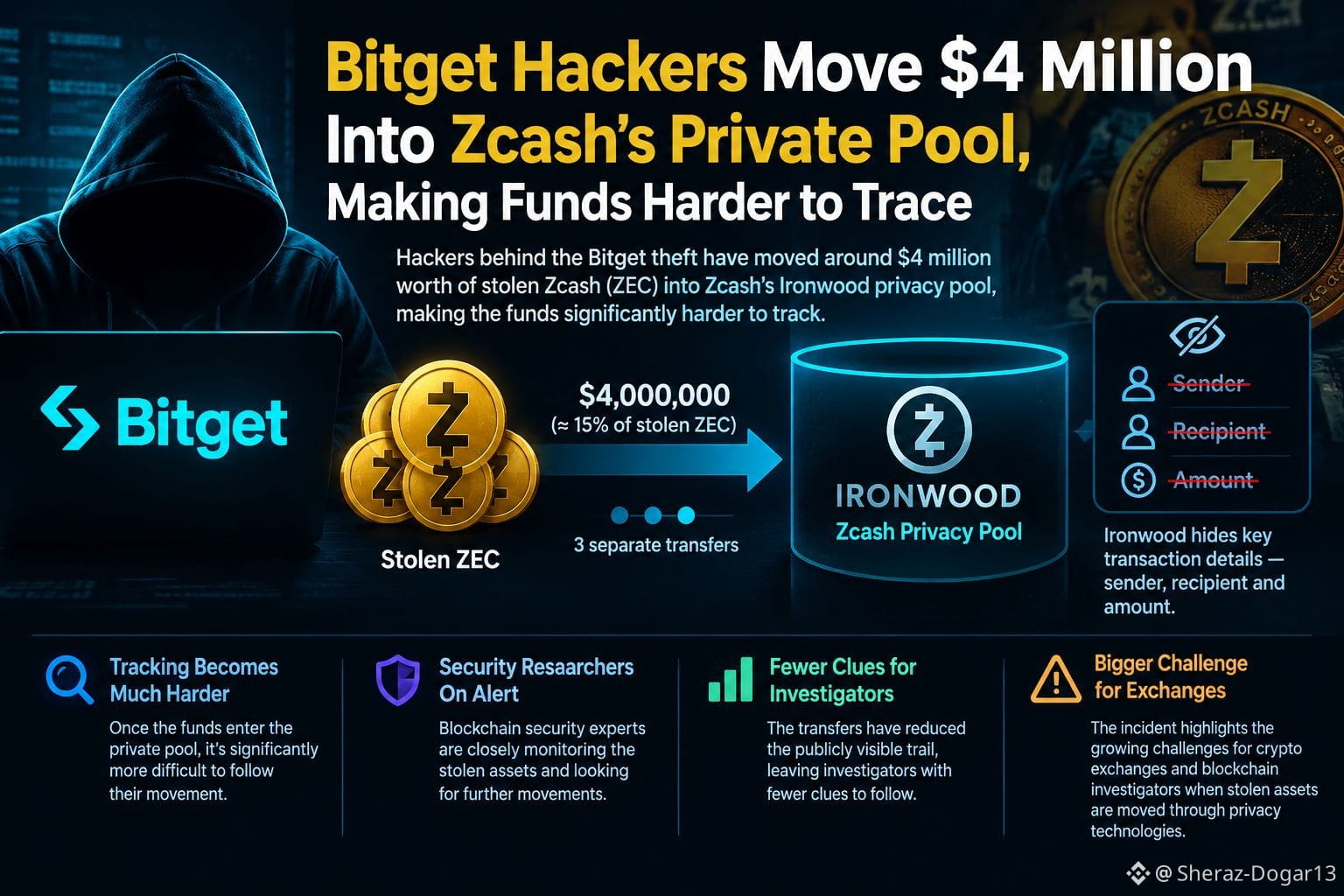
Hackers behind the Bitget theft have moved around $4 million worth of stolen Zcash (ZEC) into Zcash’s Ironwood privacy pool, making the funds significantly harder to track.
According to blockchain tracking data, the attackers carried out three separate transfers, moving roughly 15% of the stolen ZEC into the privacy-focused pool.
Ironwood is designed to hide key transaction details, including the sender, recipient, and transaction amount. As a result, tracking the movement of the stolen funds becomes much more difficult once they enter the private pool.
The transfers have raised concerns among blockchain security researchers, who are closely monitoring the stolen assets and looking for further movements. Investigators may now have fewer publicly visible clues to follow as the hackers attempt to obscure the trail.
The incident highlights the growing challenges faced by crypto exchanges and blockchain investigators when stolen digital assets are moved through privacy-enhancing technologies.
Hackers behind the Bitget theft have moved around $4 million worth of stolen Zcash (ZEC) into Zcash’s Ironwood privacy pool, making the funds significantly harder to track.
According to blockchain tracking data, the attackers carried out three separate transfers, moving roughly 15% of the stolen ZEC into the privacy-focused pool.
Ironwood is designed to hide key transaction details, including the sender, recipient, and transaction amount. As a result, tracking the movement of the stolen funds becomes much more difficult once they enter the private pool.
The transfers have raised concerns among blockchain security researchers, who are closely monitoring the stolen assets and looking for further movements. Investigators may now have fewer publicly visible clues to follow as the hackers attempt to obscure the trail.
The incident highlights the growing challenges faced by crypto exchanges and blockchain investigators when stolen digital assets are moved through privacy-enhancing technologies.