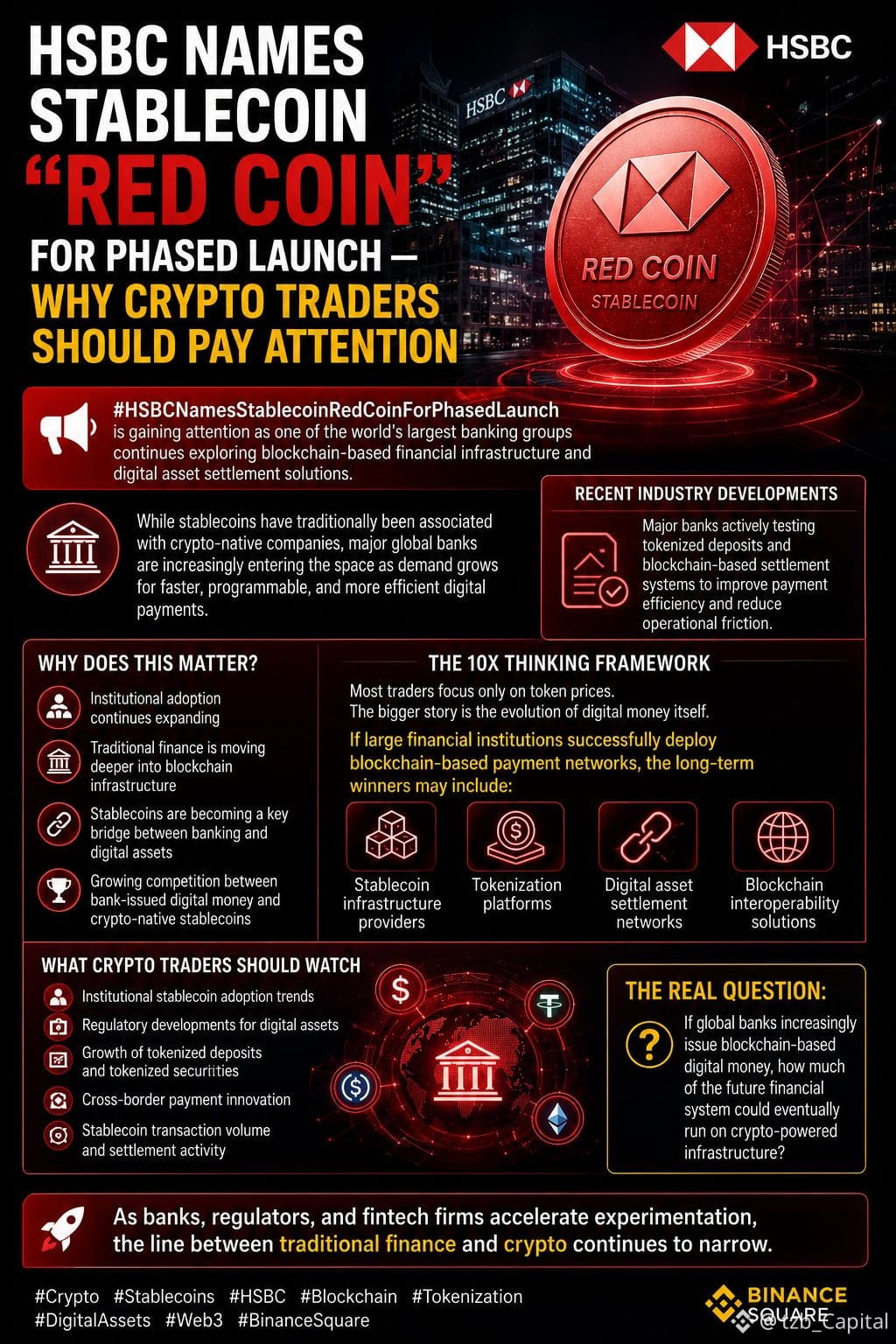
#HSBCNamesStablecoinRedCoinForPhasedLaunch
🚨 HSBC NAMES STABLECOIN "RED COIN" FOR PHASED LAUNCH — WHY CRYPTO TRADERS SHOULD PAY ATTENTION
The hashtag #HSBCNamesStablecoinRedCoinForPhasedLaunch is gaining attention as one of the world's largest banking groups continues exploring blockchain-based financial infrastructure and digital asset settlement solutions.
While stablecoins have traditionally been associated with crypto-native companies, major global banks are increasingly entering the space as demand grows for faster, programmable, and more efficient digital payments.
📊 WHY DOES THIS MATTER?
• Institutional adoption continues expanding
• Traditional finance is moving deeper into blockchain infrastructure
• Stablecoins are becoming a key bridge between banking and digital assets
• Growing competition between bank-issued digital money and crypto-native stablecoins
Recent industry developments show major banks actively testing tokenized deposits and blockchain-based settlement systems to improve payment efficiency and reduce operational friction.
💡 THE 10X THINKING FRAMEWORK
Most traders focus only on token prices.
The bigger story is the evolution of digital money itself.
If large financial institutions successfully deploy blockchain-based payment networks, the long-term winners may include:
✅ Stablecoin infrastructure providers
✅ Tokenization platforms
✅ Digital asset settlement networks
✅ Blockchain interoperability solutions
As banks, regulators, and fintech firms accelerate experimentation, the line between traditional finance and crypto continues to narrow.
⚡ WHAT CRYPTO TRADERS SHOULD WATCH
• Institutional stablecoin adoption trends
• Regulatory developments for digital assets
• Growth of tokenized deposits and tokenized securities
• Cross-border payment innovation
• Stablecoin transaction volume and settlement activity
$MOVR $QNT $BERA
🚨 HSBC NAMES STABLECOIN "RED COIN" FOR PHASED LAUNCH — WHY CRYPTO TRADERS SHOULD PAY ATTENTION
The hashtag #HSBCNamesStablecoinRedCoinForPhasedLaunch is gaining attention as one of the world's largest banking groups continues exploring blockchain-based financial infrastructure and digital asset settlement solutions.
While stablecoins have traditionally been associated with crypto-native companies, major global banks are increasingly entering the space as demand grows for faster, programmable, and more efficient digital payments.
📊 WHY DOES THIS MATTER?
• Institutional adoption continues expanding
• Traditional finance is moving deeper into blockchain infrastructure
• Stablecoins are becoming a key bridge between banking and digital assets
• Growing competition between bank-issued digital money and crypto-native stablecoins
Recent industry developments show major banks actively testing tokenized deposits and blockchain-based settlement systems to improve payment efficiency and reduce operational friction.
💡 THE 10X THINKING FRAMEWORK
Most traders focus only on token prices.
The bigger story is the evolution of digital money itself.
If large financial institutions successfully deploy blockchain-based payment networks, the long-term winners may include:
✅ Stablecoin infrastructure providers
✅ Tokenization platforms
✅ Digital asset settlement networks
✅ Blockchain interoperability solutions
As banks, regulators, and fintech firms accelerate experimentation, the line between traditional finance and crypto continues to narrow.
⚡ WHAT CRYPTO TRADERS SHOULD WATCH
• Institutional stablecoin adoption trends
• Regulatory developments for digital assets
• Growth of tokenized deposits and tokenized securities
• Cross-border payment innovation
• Stablecoin transaction volume and settlement activity
$MOVR $QNT $BERA