𝗪𝗵𝘆 𝗖𝗮𝗻’𝘁 𝗬𝗼𝘂 𝗦𝗲𝗻𝗱 𝗨𝗦𝗗𝗧 𝗗𝗶𝗿𝗲𝗰𝘁𝗹𝘆 𝗕𝗲𝘁𝘄𝗲𝗲𝗻 𝗕𝗹𝗼𝗰𝗸𝗰𝗵𝗮𝗶𝗻𝘀?
USDT is USDT, right?
Not exactly.
Blockchains maintain separate ledgers.
TON has its own state, Ethereum has its own, and neither automatically knows what happened on the other.
That’s why USDT on TON, Ethereum, TRON or another network should be treated as a network-specific asset.
𝗦𝗼 𝗵𝗼𝘄 𝗱𝗼𝗲𝘀 𝗰𝗿𝗼𝘀𝘀-𝗰𝗵𝗮𝗶𝗻 𝗺𝗼𝘃𝗲𝗺𝗲𝗻𝘁 𝘄𝗼𝗿𝗸?
You need infrastructure to coordinate the two chains.
A 𝗯𝗿𝗶𝗱𝗴𝗲 may lock an asset on one chain and create a corresponding representation on another.
A 𝗰𝗿𝗼𝘀𝘀-𝗰𝗵𝗮𝗶𝗻 𝘀𝘄𝗮𝗽 can exchange your source asset for the asset you want on the destination chain.
𝗪𝗵𝘆 𝗱𝗼𝗲𝘀 𝘁𝗵𝗲 𝗻𝗲𝘁𝘄𝗼𝗿𝗸 𝗺𝗮𝘁𝘁𝗲𝗿?
If you send a token using the wrong network, the receiving wallet or exchange may not recognize or access it as expected.
Before sending, check:
• Source network
• Token and contract/address
• Destination network
• Receiving address
• Amount and fees
𝗔 𝘃𝗮𝗹𝗶𝗱 𝗰𝗿𝗼𝘀𝘀-𝗰𝗵𝗮𝗶𝗻 𝗳𝗹𝗼𝘄:
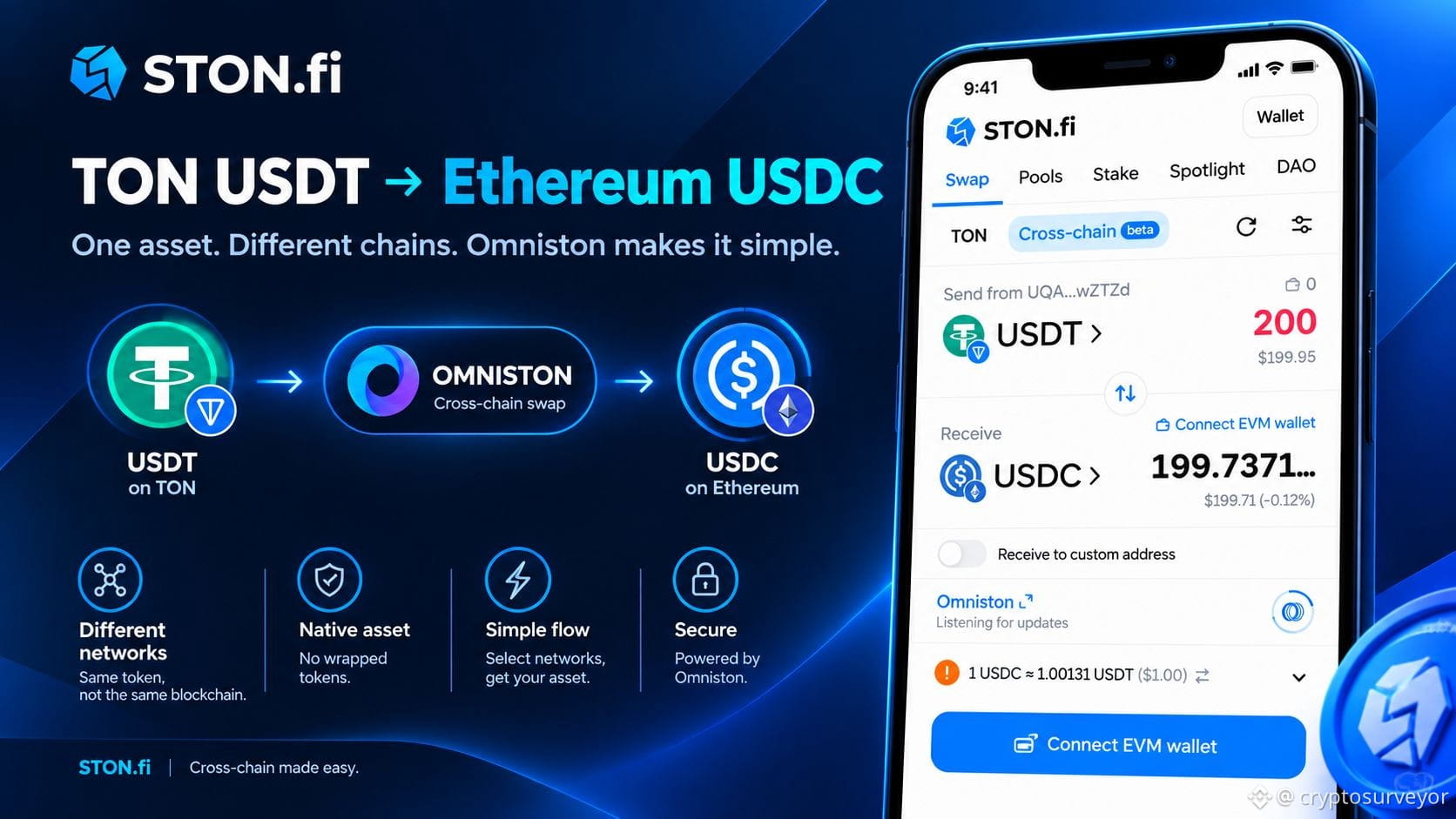
TON USDT → select Ethereum → receive the quoted destination asset.
With STON.fi’s cross-chain flow, the source and destination networks are selected explicitly.
Omniston coordinates the swap using paired HTLCs, with the destination asset delivered directly on supported routes.
The key idea:
𝗦𝗮𝗺𝗲 𝘁𝗶𝗰𝗸𝗲𝗿 ≠ 𝘀𝗮𝗺𝗲 𝗯𝗹𝗼𝗰𝗸𝗰𝗵𝗮𝗶𝗻 𝗮𝘀𝘀𝗲𝘁.
Always check the network before you send.
Source: STON.fi Blog + TON Docs.
USDT is USDT, right?
Not exactly.
Blockchains maintain separate ledgers.
TON has its own state, Ethereum has its own, and neither automatically knows what happened on the other.
That’s why USDT on TON, Ethereum, TRON or another network should be treated as a network-specific asset.
𝗦𝗼 𝗵𝗼𝘄 𝗱𝗼𝗲𝘀 𝗰𝗿𝗼𝘀𝘀-𝗰𝗵𝗮𝗶𝗻 𝗺𝗼𝘃𝗲𝗺𝗲𝗻𝘁 𝘄𝗼𝗿𝗸?
You need infrastructure to coordinate the two chains.
A 𝗯𝗿𝗶𝗱𝗴𝗲 may lock an asset on one chain and create a corresponding representation on another.
A 𝗰𝗿𝗼𝘀𝘀-𝗰𝗵𝗮𝗶𝗻 𝘀𝘄𝗮𝗽 can exchange your source asset for the asset you want on the destination chain.
𝗪𝗵𝘆 𝗱𝗼𝗲𝘀 𝘁𝗵𝗲 𝗻𝗲𝘁𝘄𝗼𝗿𝗸 𝗺𝗮𝘁𝘁𝗲𝗿?
If you send a token using the wrong network, the receiving wallet or exchange may not recognize or access it as expected.
Before sending, check:
• Source network
• Token and contract/address
• Destination network
• Receiving address
• Amount and fees
𝗔 𝘃𝗮𝗹𝗶𝗱 𝗰𝗿𝗼𝘀𝘀-𝗰𝗵𝗮𝗶𝗻 𝗳𝗹𝗼𝘄:
TON USDT → select Ethereum → receive the quoted destination asset.
With STON.fi’s cross-chain flow, the source and destination networks are selected explicitly.
Omniston coordinates the swap using paired HTLCs, with the destination asset delivered directly on supported routes.
The key idea:
𝗦𝗮𝗺𝗲 𝘁𝗶𝗰𝗸𝗲𝗿 ≠ 𝘀𝗮𝗺𝗲 𝗯𝗹𝗼𝗰𝗸𝗰𝗵𝗮𝗶𝗻 𝗮𝘀𝘀𝗲𝘁.
Always check the network before you send.
Source: STON.fi Blog + TON Docs.